A PAC dosing system for food processing doses 50–300 mg/L of polyaluminium chloride (Al2O3 10–18%) ahead of a DAF, removing 60–85% of suspended solids and 30–50% of COD from dairy, meat, beverage, and frozen-food effluent.
A properly sized skid includes a SS316L make-up tank with 5–10% w/w PAC stock, transfer pump, 0.5–2% w/w dosing line, and PLC-controlled metering pumps integrated with the upstream equalisation tank and downstream DAF unit. Those four blocks — storage and make-up, transfer, metering, and control — set both the chemical performance and the hygiene audit outcome.
Why Food Processing Wastewater Demands a Dedicated PAC Dosing Strategy
Food-processing effluent is not a generic municipal stream, and treating it with municipal dose assumptions is the fastest way to overrun a chemical budget and still breach discharge consent. Dairy effluent typically runs COD 1,000–5,000 mg/L with FOG 200–800 mg/L; meat processing pushes COD 5,000–15,000 mg/L and FOG 500–1,500 mg/L; beverage lines sit at COD 800–4,000 mg/L; frozen-food wash water delivers COD 2,000–6,000 mg/L and SS 1,000–3,000 mg/L (HydropureWater field data, 2025-09). Seasonal swings of 2–4× in flow and load are normal across cheese, ice-cream, and cooked-meat campaigns.
Conventional aluminium sulphate (alum) works in a narrow pH band of 6.5–7.5 and leaves a heavy hydroxide floc. Polyaluminium chloride (PAC) operates effectively from pH 5 to 9, requires 30–50% less mass for an equivalent COD removal, generates 20–40% less dry sludge, and forms settleable floc in 60–90 seconds versus 3–5 minutes for alum (per standard coagulant chemistry references, 2025). The decision trigger is straightforward: any food stream with FOG >100 mg/L or COD >2,000 mg/L almost always benefits from PAC, with a starting bench dose of 0.1–0.3 mg PAC per mg of influent COD. Under-dosing shows up as residual turbidity >30 NTU breaking through to the DAF, polymer wastage as the flocculant chases un-coagulated colloids, and white carry-over from the DAF air-saturation tank. Engineers specifying a new line should treat influent characterisation as a mandatory first deliverable in the skid-mounted food-processing treatment plant guide, not an optional jar test.
PAC Chemistry and Dose-Response by Food Sub-Sector
PAC belongs to the group of water-soluble aluminium salts used as coagulants in water and wastewater treatment (Wikipedia, Polyaluminium chloride). It is defined by two numbers on the supplier certificate: Al2O3 content (the active alumina, typically 10–18% w/w) and basicity (the OH/Al molar ratio, 40–85%). Higher Al2O3 means more coagulant per kilogram shipped; higher basicity means stronger neutralisation capacity and a wider effective pH window. A 17% Al2O3, 70% basicity PAC replaces roughly 2.5–3.0 kg of dry alum per kg of product on a COD-equivalent basis, which is why it dominates dairy and meat applications where sludge disposal cost is significant.
Starting doses for jar-test campaigns, based on commissioning data from food plants in 2024–2025, are:
| Sub-sector | Influent COD (mg/L) | Influent FOG (mg/L) | Starting PAC dose (mg/L) | Expected SS removal (%) | Expected COD removal (%) |
|---|---|---|---|---|---|
| Dairy (cheese, milk, yoghurt) | 1,000–5,000 | 200–800 | 80–200 | 70–85 | 35–50 |
| Meat processing (slaughter, rendering) | 5,000–15,000 | 500–1,500 | 150–300 | 65–80 | 30–45 |
| Beverage (brewery, soft drink, juice) | 800–4,000 | <100 | 50–150 | 75–90 | 35–50 |
| Frozen-food wash water | 2,000–6,000 | 100–400 | 100–250 | 60–80 | 30–45 |
| Edible-oil refinery | 3,000–10,000 | 1,000–5,000 | 200–400 | 55–70 | 25–40 |
PAC Dose for Dairy Wastewater
Dairy wastewater takes 80–200 mg/L of PAC at the DAF, delivering 70–85% SS removal and 35–50% COD removal when influent COD sits at 1,000–5,000 mg/L and FOG at 200–800 mg/L. Cheese and yoghurt campaigns push toward the upper end because casein and milk fat load both the COD and the emulsified-oil fraction. Most dairy plants we dose land near 120–150 mg/L once the jar test is calibrated.
PAC Coagulant for Meat Processing Effluent
Meat processing effluent needs 150–300 mg/L because COD reaches 5,000–15,000 mg/L and FOG 500–1,500 mg/L from slaughter and rendering streams. Rendering condensate usually runs at the top of the dose band.
Polyaluminium Chloride Dose for Beverage Wastewater
Sugar and dissolved solids pass through untouched, so the biological stage still carries the dissolved COD load. Brewery trub and spent-grain fines dominate the solids the PAC actually removes.
PAC Jar Test Protocol for Food Wastewater
PAC is rarely the whole story. An anionic or non-ionic polyacrylamide flocculant dosed at 0.5–3 mg/L, 30–90 seconds downstream of the PAC injection point, builds floc strength so the floes survive the shear of the dissolved air flotation unit contact zone. Jar-test protocol: 6 beakers, 1 L each, 200 rpm rapid mix for 1 minute, 30 rpm slow mix for 15 minutes, 30-minute settle, then read supernatant turbidity, COD, and residual aluminium. The optimum is the lowest combined dose that drives both turbidity below 10 NTU and residual Al below 1 mg/L — anything above 1 mg/L residual indicates over-dose and wasted chemical. That protocol follows standard coagulation practice, where identical samples are exposed to different coagulant doses and the lowest effective dose wins (Wikipedia, Coagulation water treatment). Marine scrubber buyers arriving here should note that pac for egcs dosing is a different application covered on its own page.
PAC Dosing System for Food Processing: Skid Component Design
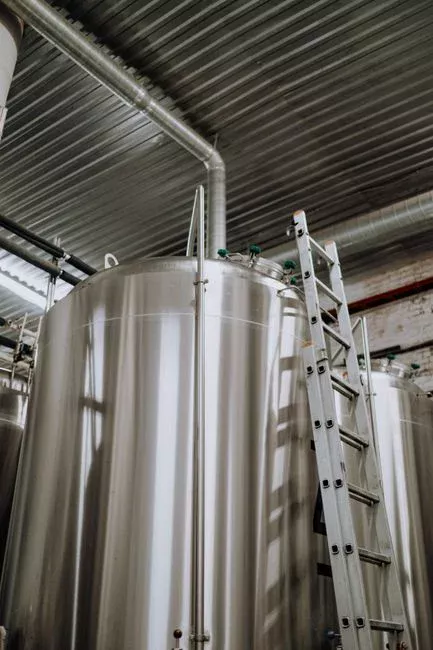
A complete Automatic Chemical Dosing System breaks into six functional blocks, and every line item should appear on the vendor datasheet before purchase order release. Dry PAC storage is either a 1–30 m³ SS304/316 hopper with vent filter and dust extraction, or a bag-dump station with local exhaust — PAC is hygroscopic and rated Kst class St-1 for dust explosibility, so dust control is a safety deliverable, not an option. The make-up tank is SS316L, 0.5–10 m³, fitted with a slow-speed paddle or propeller mixer running 30–60 rpm and sized for 5–10 W/m³ mixing power; above 10 W/m³ you start breaking pre-formed floc returning from the DAF pressate recycle, if applicable. The transfer pump should be peristaltic or progressive-cavity, sized at 1.2× the dosing-line peak demand, with a head that overcomes the static head to the dosing point plus 10 m of safety margin. Metering pumps are typically diaphragm type, 10–500 L/h, PVDF liquid end with ceramic ball checks — PAC is mildly acidic and will pit 304 stainless — and a 100:1 turndown ratio to ride CIP and night-shift low flows without re-priming. Inline maturation is a 5–15 minute retention coil (DN25–DN50) sized on a velocity of 0.5–1.0 m/s, located immediately after the dosing point so floc enters the DAF contact zone fully grown. Instrumentation is the part most often under-specified: radar or ultrasonic level in the make-up tank, electromagnetic flowmeter on the dosing line, pH probe 2–5 m downstream of injection, and on higher-end skids a streaming-current detector for closed-loop charge neutralisation control.
| Component | Material / spec | Operating range | Selection note |
|---|---|---|---|
| Dry PAC hopper | SS304, vent filter, dust extraction | 1–30 m³ | Kst St-1 dust, vent to safe location |
| Make-up tank | SS316L, Ra ≤0.8 μm | 0.5–10 m³, 5–10% w/w | Mixer 30–60 rpm, 5–10 W/m³ |
| Transfer pump | Peristaltic or PC | 1.2× peak dose flow | Head ≥ static + 10 m margin |
| Dosing pump | Diaphragm, PVDF head, ceramic checks | 10–500 L/h, 100:1 turndown | 4–20 mA + Profinet/EtherNet/IP |
| Maturation coil | SS316L sanitary tube | 5–15 min retention, DN25–DN50 | 0.5–1.0 m/s line velocity |
| Instrumentation | Radar level, mag-meter, pH, SCD | Dosing-line mounted | SCD enables 10–20% chemical savings |
Hygienic Construction for Sanitary Food Plants
A dosing skid that passes process duty but fails an EHEDG or 3-A audit puts the entire plant at risk of customer BRC non-conformance and recall exposure. All wetted components — make-up tank, piping, pump heads, maturation coil — must be SS316L with internal surface finish Ra ≤0.8 μm (mirror polish, electropolished preferred). SS304 is acceptable only for dry PAC storage where there is no water contact. Piping joints must be orbital-welded or sanitary clamp type (Tri-Clover or DIN 11851); threaded joints are not acceptable in the dosing line. Dosing lines must slope ≥1% toward a low-point drain for self-drain during CIP, and the skid must be cleanable in place — either via a CIP loop returning to the make-up tank or with removable spray balls covering all interior tank surfaces. The frame is SS304 tubular with a sloped top to shed wash-down water, and the control panel enclosure is NEMA 4X or IP66 with sealed cable glands; never a wall-mount plastic box in a wash-down zone. The compliance documents to call out on the datasheet are EHEDG Doc. 2 for sanitary design principles, 3-A Sanitary Standards 02-11 for chemical dosing equipment, and FDA 21 CFR 174.5 for indirect food-contact chemicals — this last one matters because in some dairy plants the same water loop touches product-contact surfaces, and the PAC has to be on the indirect-additive approved list. Chemical dosing sits next to the plant hygiene program, not inside it; haccp safety systems for food processing plants are covered separately on their own page.
PAC Dosing Skid for DAF Food Plant Integration
Where the PAC dose point sits in the process flow is the difference between 80% SS removal and 40% SS removal. DAF itself clarifies wastewater by removing suspended matter such as oil or solids, with released air forming tiny bubbles that adhere to the suspended matter (Wikipedia, Dissolved air flotation). The standard food-plant flow is: screen → grit removal → equalisation → PAC dosing → 5–15 min floc maturation → polymer dosing → DAF (rated 4–300 m³/h on a dissolved air flotation unit) → lamella polish on a lamella clarifier with sludge recirculation (20–40 m³/m²/h overflow rate) → biological or MBR stage. For DAF, dose PAC upstream of the saturation tank so the micro-bubbles attach to already-grown floc; an air-to-solids (A/S) ratio of 0.3–0.6 kg air per kg solids is the typical food-stream operating window. For lamella polish, dose into the flocculation zone with sludge recirculation — the recirculated TSS at 2,000–5,000 mg/L acts as seed, and documented field results show 20–30% PAC consumption reduction versus single-pass lamella. One hard rule: do not dose PAC directly into a raw high-FOG stream without an upstream oil-removal step. Emulsified oil coats the floc surface, neutralises the charge, and collapses removal to below 40% — no amount of dose increase recovers it.
Plants whose biological stage is a batch reactor reuse the same skid logic: PAC dosing for SBR tank feed runs flow-paced off the fill sequence, with the dose trimmed by the same jar-test calibration. The coagulant still belongs ahead of settling or flotation, not inside the reactor, so dose into the feed equalisation tank and let the SBR receive clarified influent.
Control, Automation, and 2026 Sizing Economics
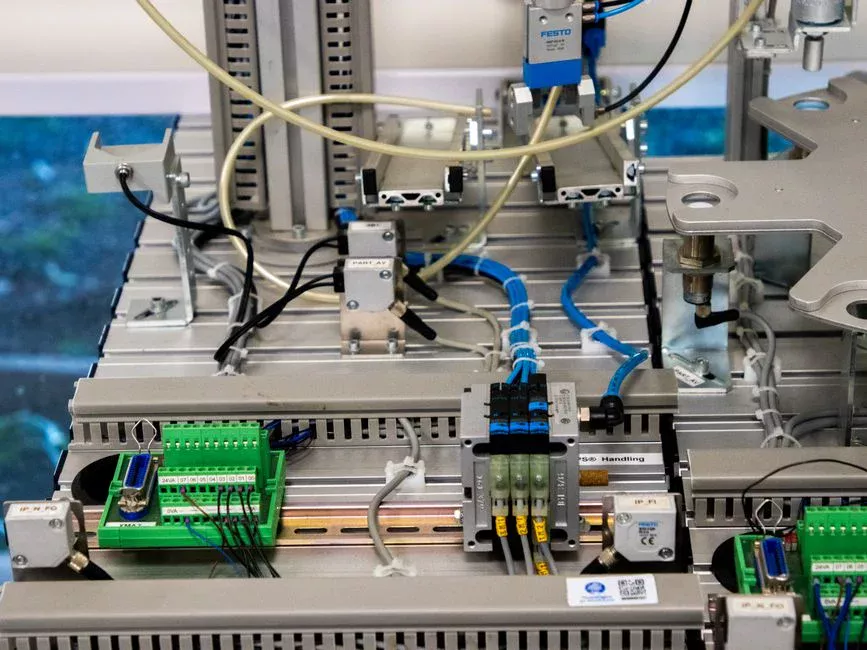
Three control philosophies are common in food-plant PAC skids in 2026. Flow-paced dosing ties the metering pump stroke to influent flow via a 4–20 mA signal from the upstream mag-meter and is the default for streams with relatively stable chemistry. Streaming-current feedback closes the loop on actual floc charge: a streaming-current detector downstream of the maturation coil trims the PAC pump every 5–10 seconds, recovering 10–20% of chemical spend and stabilising effluent turbidity through load swings. Feedforward from an online COD or TSS analyser is the most capital-intensive option and is reserved for the largest meat or dairy lines where chemical cost justifies the analyser maintenance burden. PLC and HMI should retain at least 30 days of trend logs and a recipe library for each product run. For pump integration, specify 4–20 mA plus Profinet or EtherNet/IP so the skid drops into the plant SCADA without a protocol gateway.
2026 order-of-magnitude CAPEX for an SS316L hygienic skid, FOB Asia, is $18K–$35K for 0.5–2 m³/h dosing capacity, $35K–$75K for 2–10 m³/h, and $75K–$120K for 10–30 m³/h; add 20–30% for full EHEDG certification, CIP loop, and streaming-current control. For deeper specification detail, cross-check against the chemical dosing system specifications reference and the sibling PAC Dosing System Specifications: 2026 Engineering Data guide. The skid is one line in the plant budget; the full cost of stp for food processing plants is budgeted separately. OPEX drivers: commercial-grade PAC at $180–$420 per tonne, polyacrylamide flocculant at $1.5–$4 per kg, and skid power draw 0.5–2 kW typical. Recalibrate the dose quarterly with a fresh jar test — influent COD drifts 10–25% across seasons even on the same product line.
Next Step: Specify and Quote the Skid
Send the influent COD, FOG, SS, average and peak flow, and the target discharge limits with your inquiry, and ask for the datasheet against the six functional blocks above. Specify SS316L wetted parts, PVDF metering heads, and the hygienic documents by name. Use the PAC dosing skid inquiry for food processing to get a budgetary quote tied to your jar-test results rather than a generic catalogue skid.
Frequently Asked Questions
What dose of PAC is typical for dairy wastewater?
Dairy effluent takes 80–200 mg/L of polyaluminium chloride (Al2O3 10–18%) to deliver 70–85% SS removal and 35–50% COD removal at the DAF, assuming influent COD 1,000–5,000 mg/L and FOG 200–800 mg/L (HydropureWater field data, 2025-09). Cheese and yoghurt campaigns sit at the top of the band because casein and milk fat raise both COD and the emulsified fraction.
Can I dose PAC into a high-FOG stream without pre-treatment?
No. Emulsified oil coats the floc surface, neutralises the charge, and drops SS removal to below 40% regardless of dose — no dose increase recovers it. Install oil removal upstream of the PAC injection point and target FOG below 100 mg/L before coagulation, so the coagulant sees water rather than an emulsion.
What construction material is required for a food-plant PAC skid?
SS316L with internal Ra ≤0.8 μm on every wetted surface, sanitary Tri-Clover or DIN 11851 fittings, and full compliance with EHEDG Doc. 2, 3-A 02-11, and FDA 21 CFR 174.5 for indirect food-contact chemicals. SS304 is acceptable only for dry PAC storage where there is no water contact, and the control enclosure must be NEMA 4X or IP66 for wash-down zones.
How do I size the PAC make-up tank?
Size for 24 hours of stock at the average dose plus one batch transfer, typically 0.5–10 m³ for food plants. Hold concentration at 5–10% w/w; above 10% the solution viscosity rises and precipitation risk increases. Keep mixer power at 5–10 W/m³ so floc returning in the DAF pressate recycle is not sheared apart during make-up.
Do I need a lamella clarifier after the DAF?
Not always, but a lamella polish step at 20–40 m³/m²/h overflow rate consistently cuts residual SS by 50–70% and protects downstream biological or MBR stages from shock loads during CIP and product changeovers. With sludge recirculation at 2,000–5,000 mg/L as seed, documented field results show 20–30% lower PAC consumption versus single-pass lamella, which usually pays for the extra unit.