Water disinfection equipment for food processing must deliver validated microbial kill while fitting HACCP, FDA, and EU food-hygiene rules. Chlorine dioxide (ClO₂) systems typically hold 0.2–0.8 mg/L residual for process water and CIP rinses, supporting haccp safety systems for food processing plants that treat rinse water as a Critical Control Point. Ozone and UV provide chemical-free kill when dose and water quality are controlled. Reverse osmosis (RO) cuts dissolved solids but still needs upstream disinfection to protect membranes and finished water.
Why Water Disinfection Fails Food Processing Plants: A HACCP Compliance Case Study
Water disinfection equipment for food processing is selected by required log kill, residual need, water turbidity, and FDA or EU food-contact approvals. ClO₂ at 0.2–0.8 mg/L residual suits distribution protection; ozone at 4–6 mg/L for 4–10 minutes or UV at 40 mJ/cm² suit chemical-free duty; RO lowers TDS but still needs upstream disinfection.
Food plants fail when rinse or process water is not validated as a Critical Control Point, allowing pathogens such as Listeria monocytogenes to recontaminate product-contact surfaces. A 2023 German dairy recall traced Listeria to inadequately treated rinse water via the EFSA Rapid Alert System. Hazard Analysis and Critical Control Point rules treat potable-quality water on food-contact surfaces as a CCP in most wet processes. FDA 21 CFR 173.300 still limits chlorine dioxide residual to 3 ppm (3 mg/L) in poultry process water and in water used to wash fruits and vegetables that are not raw agricultural commodities, as confirmed on eCFR (2026). Ozone remains permitted for food-contact antimicrobial use under 21 CFR 173.368. Plants usually compare four options: ClO₂, ozone, UV, and RO as a purity step paired with disinfection.
Chlorine Dioxide (ClO₂) Systems: Engineering Specs for Food-Grade Disinfection
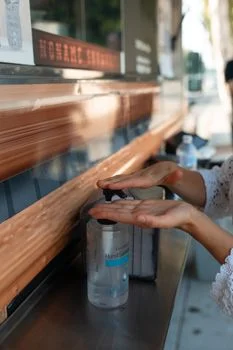
Chlorine dioxide (ClO₂) systems consistently achieve a 5-log reduction of common foodborne pathogens when dose and contact time are controlled. At 0.5–1.0 mg/L for primary disinfection, ClO₂ typically reaches 5-log (99.999%) kill of E. coli, Salmonella, and Listeria, and remains effective against Giardia and Cryptosporidium at low residual. Unlike chlorine, ClO₂ does not form trihalomethanes (THMs) with organic matter, which matters in high-COD wash water.
Stable residual at 0.2–0.8 mg/L in distribution lines helps prevent recontamination between the generator and the point of use. Contact time for 99.9% inactivation is typically 30–60 seconds at those residuals, shorter than the 4–10 minutes often needed for ozone at 4–6 mg/L. HydropureWater generators cover 50–20,000 g/h output with PLC dosing. Earlier EU drinking-water references cited Directive 98/83/EC; Directive (EU) 2020/2184 now sets the recast quality framework for water intended for human consumption (EUR-Lex, 2020). Optimal pH is 6–9; poor generation control can raise chlorite and chlorate, so online residual and byproduct checks belong in the CCP plan. For ClO₂-specific FDA dose limits and ROI detail, see the sibling guide on a ClO₂ disinfection system for food processing.
| Parameter | Chlorine Dioxide (ClO₂) Specifications |
|---|---|
| Target Pathogen Kill Rate | 5-log (99.999%) for *E. coli*, *Salmonella*, *Listeria* |
| Effective Concentration | 0.5–1.0 mg/L (for primary disinfection) |
| Residual Concentration | 0.2–0.8 mg/L (for distribution line protection, FDA-compliant) |
| Typical Contact Time | 30–60 seconds |
| Optimal pH Range | 6–9 |
| Regulatory Compliance | FDA 21 CFR Part 173.300, EU 98/83/EC, WHO Guidelines |
Plant engineers sizing generators can review the Chlorine Dioxide (ClO₂) Generator for Water Disinfection for capacity bands and control options that match CIP and process-water loops.
Ozone vs. UV Disinfection: Which Technology Fits Your Food Processing Line?
Ozone and UV disinfection both inactivate pathogens without leaving a lasting chemical residual, so selection depends on organic load, turbidity, and whether direct food contact is required. Ozone at 4–6 mg/L for 4–10 minutes typically delivers 99.9% kill of bacteria, viruses, and protozoa, then reverts to oxygen. That residual-free profile suits CIP and produce wash where chemical taste is unwanted, but HACCP plans must prove no recontamination after the contactor.
Ultraviolet (UV) disinfection inactivates microbes by damaging nucleic acids. A dose of 40 mJ/cm² is the common target for 99.9% inactivation across many pathogens under NSF/ANSI 55 Class A design practice. UV efficacy collapses when turbidity exceeds about 0.5 NTU because particles shield organisms. Ozone OPEX is typically $0.10–$0.20/m³ because of oxygen generation and power. UV OPEX is typically $0.05–$0.10/m³, driven by lamp replacement every 9,000–12,000 hours. Ozone is FDA-approved for direct food contact under 21 CFR 173.368; UV is widely used for clear potable and final-rinse water but is not a general FDA direct-food-contact clearance in the same way.
| Feature | Ozone Disinfection | UV Disinfection |
|---|---|---|
| Kill Rate Target | 99.9% (3-log) for bacteria, viruses | 99.9% (3-log) for bacteria, viruses |
| Effective Concentration/Dose | 4–6 mg/L | 40 mJ/cm² |
| Typical Contact Time | 4–10 minutes | Seconds (flow-through system) |
| Residual Effect | None (reverts to oxygen) | None |
| Primary Use Cases | CIP systems, surface sanitation, process water (higher organic load) | Clear process water, beverage bottling, final rinse |
| Key Operational Cost | Oxygen generators, energy | Lamp replacement |
| Estimated OPEX | $0.10–$0.20/m³ | $0.05–$0.10/m³ |
| FDA Approval for Direct Food Contact | Yes (21 CFR 173.368) | No (approved for potable water, not direct food contact) |
| Vulnerabilities | Higher energy consumption, ozone off-gassing management | Turbidity (>0.5 NTU), fouling of quartz sleeves |
What selection criteria apply to compact UV units for onsite reuse?
Compact UV units for onsite water reuse succeed only when feed turbidity stays below about 0.5 NTU, UV transmittance is measured at design flow, and the delivered dose meets or exceeds 40 mJ/cm² at end-of-lamp life. Require validated sensors for intensity and sleeve fouling, automatic lamp-hour logging, and a redundant barrier (ClO₂ residual or membrane) when reuse water returns to food-contact rinses. Match reactor diameter and lamp count to peak m³/h, not average flow, and confirm spare-lamp lead time before specifying a skid for beverage or final-rinse loops.
Reverse Osmosis (RO) for Food Processing: When Disinfection Requires More Than Microbial Control
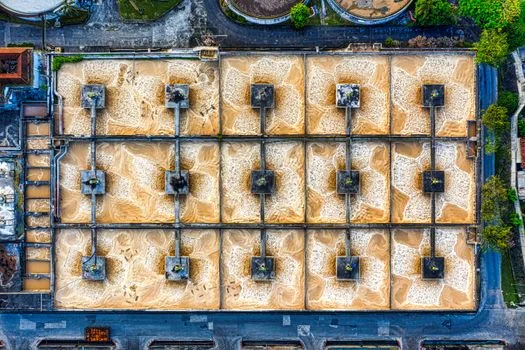
Reverse osmosis (RO) systems produce low-TDS ingredient and boiler water but do not replace validated disinfection. RO membranes typically remove about 99% of dissolved solids (often TDS <10 mg/L) while rejecting only 90–99% of bacteria and viruses, so pre-disinfection with ClO₂ or UV is required to protect membranes and finished water. Pre-treatment with dissolved air flotation (DAF) or multimedia filtration should hold turbidity below 1 NTU and Silt Density Index (SDI) below 3 before the membranes.
Industrial RO skids for food plants often target recovery up to 95%, use PLC backwash logic, and align with ISO 22000 food-safety management expectations. CAPEX commonly spans $50,000–$500,000 depending on capacity and pre-treatment depth. Energy use is typically 3–5 kWh/m³ of permeate at high feed pressure. Spec sheets for food-grade permeate duty are on the Industrial Reverse Osmosis (RO) Water Treatment System page.
HACCP Safety Systems for Food Processing Plants: Compliance Checklist
HACCP safety systems for food processing plants select disinfection hardware only after kill claims, residual strategy, and approvals are mapped to each CCP. Use the steps below before freezing CAPEX.
- Step 1: Validate Microbial Kill Rates and Spectrum. Ensure the chosen water disinfection equipment for food processing consistently achieves >99.9% (3-log) reduction for key pathogens relevant to your product, such as Listeria monocytogenes, E. coli O157:H7, and Salmonella. Request third-party validation reports or performance data that specifically address these microorganisms and the water quality parameters of your facility.
- Step 2: Confirm Residual Disinfection and Monitoring Capabilities. If a residual disinfectant is required (e.g., for distribution line protection), verify that the system can maintain the specified concentration within regulatory limits. For ClO₂, this typically means 0.2–0.8 mg/L residual, compliant with FDA 21 CFR Part 173.300. For non-residual systems like ozone or UV, confirm that robust post-treatment validation protocols are in place to prevent recontamination.
- Step 3: Check FDA and EU Approvals for Food Contact. Verify that the technology and any chemical additives (if applicable) are approved for use in food processing. Ozone, for instance, is FDA-approved for direct food contact under 21 CFR 173.368, while ClO₂ is regulated under 21 CFR 173.300. For operations within the European Union, ensure compliance with EU 853/2004 water treatment compliance standards, particularly for water used in food production and processing.
- Step 4: Assess Integration with Existing CIP Systems and Process Lines. Evaluate how the disinfection system will integrate with your current Clean-in-Place (CIP) systems, process water loops, and wastewater treatment infrastructure. Consider material compatibility (e.g., ozone compatibility with stainless steel) and automation possibilities for seamless operation and data logging. For complex wastewater streams, consider how disinfection fits into a broader treatment strategy, such as heavy metal removal in food processing wastewater or compliance with EU Directive 91/271/EEC compliance for food processing wastewater.
- Step 5: Verify Supplier Certifications and Support. Choose a supplier with a proven track record in the food industry. Look for certifications such as ISO 22000 for food safety management systems and NSF/ANSI 61 for drinking water components. A reliable supplier should offer comprehensive technical support, spare parts availability, and training for your operational staff.
What failure modes hit wet processing equipment most often?
Common failure modes on wet processing equipment include under-dosed disinfectant during peak flow, sensor drift that falsely reports residual, biofilm in dead legs after CIP, UV sleeve fouling when turbidity spikes, and RO fouling when SDI exceeds 3. Prevention starts with flow-paced dosing, calibrated residual or UV intensity meters, hygienic piping without dead legs, pre-filtration to <1 NTU, and documented CCP verification after every major CIP or product changeover.
Cost-Benefit Analysis: CAPEX, OPEX, and ROI for Food Processing Disinfection Systems
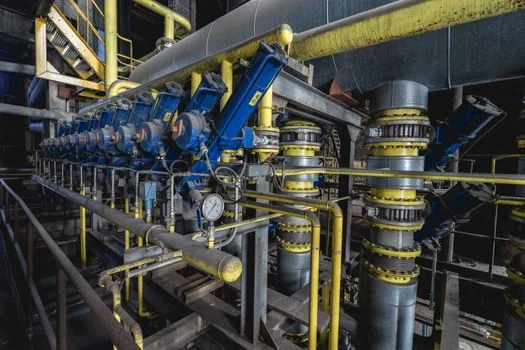
Total cost of ownership for industrial water disinfection systems is driven more by OPEX and recall risk than by sticker price alone. ClO₂ CAPEX typically runs $15,000–$100,000; ozone $20,000–$150,000; UV $10,000–$80,000; RO $50,000–$500,000 when pre-treatment is included.
ClO₂ OPEX is typically $0.05–$0.15/m³ for precursors and power. Ozone is about $0.10–$0.20/m³. UV is about $0.05–$0.10/m³. RO is about $0.50–$1.50/m³ because of high-pressure energy and membrane cleaning. Recall events averaging about $10M per incident dwarf these unit costs. One poultry plant that moved process water and CIP rinse from chlorine to a HydropureWater ClO₂ system cut water-treatment chemical spend by 30% and recovered CAPEX in 18 months through tighter kill control and simpler chemical handling. RO recovery up to 95% can also cut freshwater purchase and discharge fees when reuse is permitted.
| Technology | Typical CAPEX Range (USD) | Estimated OPEX per m³ (USD) | Key OPEX Drivers | Primary ROI Drivers |
|---|---|---|---|---|
| Chlorine Dioxide (ClO₂) | $15,000–$100,000 | $0.05–$0.15 | Chemical precursors, minor power | Reduced recalls, lower chemical usage, consistent disinfection |
| Ozone | $20,000–$150,000 | $0.10–$0.20 | Energy (ozone generation), oxygen supply | Chemical-free disinfection, reduced byproducts, strong oxidant |
| UV Disinfection | $10,000–$80,000 | $0.05–$0.10 | Lamp replacement, energy | Chemical-free, low contact time, easy integration |
| Reverse Osmosis (RO) | $50,000–$500,000 | $0.50–$1.50 | Energy (high pressure), membrane cleaning, pre-treatment | Ultra-pure water, water reuse, reduced discharge costs |
Who this is for: plant engineers and QA managers specifying process water, CIP rinse, or reuse disinfection under HACCP and FDA/EU rules. Who should look elsewhere: teams seeking only municipal potable polishing with no food-contact CCP, or projects that need wastewater nutrient removal rather than disinfection. Next step: share flow (m³/h), turbidity, pathogen targets, and residual needs so a duty sheet can be sized without over-buying RO when ClO₂ or UV is enough.
Frequently Asked Questions
Q: What is the primary difference between chemical and UV disinfection for food processing water?
A: Chemical options such as chlorine dioxide leave a measurable residual that continues to protect distribution lines after the contactor. UV is chemical-free and inactivates organisms in seconds at about 40 mJ/cm², but it leaves no residual and fails when turbidity rises above roughly 0.5 NTU. Choose UV for clear final rinse; choose ClO₂ when the CCP needs a documented residual between 0.2 and 0.8 mg/L.
Q: How does HACCP specifically address water quality for food contact surfaces?
A: HACCP treats water on food-contact surfaces as a Critical Control Point that must meet potable-quality microbial criteria with validated kill, monitoring, and verification records. Where a residual is used, operators log concentration against the approved band. EU plants also align process-water controls with Regulation (EC) 853/2004 hygiene rules for food of animal origin and related operations.
Q: Can RO systems alone ensure microbial safety in food processing?
A: No. RO typically removes 90–99% of bacteria and viruses and about 99% of dissolved solids, which is not a complete disinfection barrier. Pair RO with upstream ClO₂ or UV, keep feed SDI below 3, and verify permeate quality after CIP. Treating RO as a standalone CCP leaves membrane and product risk unaddressed.
Q: What are the main byproducts of chlorine dioxide disinfection and are they regulated?
A: The main inorganic byproducts are chlorite and chlorate.Keep generation chemistry and dose control tight so byproducts stay inside the facility’s validated limits and monitoring plan.
Q: When should a plant pick ozone instead of ClO₂ for CIP rinse?
A: Pick ozone when you need strong oxidation without a lasting residual, FDA direct-food-contact clearance under 21 CFR 173.368, and can provide 4–10 minutes of contact at 4–6 mg/L with off-gas control. Pick ClO₂ when distribution lines need 0.2–0.8 mg/L residual and contact time must stay near 30–60 seconds for high-throughput rinse loops.