Why Turkish Hospitals Need Specialized Wastewater Treatment
Turkish hospital wastewater contains over 55 hazardous substances, with 14 pharmaceutical compounds exhibiting Hazard Quotients (HQ) greater than 10, indicating a significant environmental risk (PubMed 28083795). While municipal wastewater treatment plants (WWTPs) are designed to handle domestic organic loads, they are fundamentally ill-equipped to neutralize the complex chemical cocktail found in medical effluent. Data from 2024 Environmental Monitoring and Assessment reports show that antibiotics such as ofloxacin and clarithromycin reach toxic concentrations in Turkish facility discharge, with ofloxacin recording an HQ as high as 9,090. These levels require specialized on-site treatment to prevent the contamination of local water bodies and the proliferation of antibiotic-resistant bacteria (ARB).
The presence of antibiotic-resistant genes (ARGs) is a critical public health concern in Turkey. Research indicates that resistance genes are detected in approximately 80% of hospital effluent samples, often utilizing polymerase chain reaction (PCR) or metagenomic sequencing for detection. These genes can persist through standard municipal treatment processes, potentially transferring resistance to environmental bacteria. the high toxicity of these wastewaters is often masked by dilution in municipal sewers; however, the total environmental load remains unchanged. To achieve "first-class" effluent quality as defined by Turkish standards, hospitals must move beyond simple dilution and implement advanced membrane filtration or oxidation processes.
| Compound Category | Primary Contaminants (Turkey) | Max Hazard Quotient (HQ) | Removal Requirement |
|---|---|---|---|
| Fluoroquinolones | Ofloxacin, Ciprofloxacin | 9,090 | >99% via AOP/MBR |
| Macrolides | Clarithromycin | 1,200 | >95% via Advanced Filtration |
| Analgesics | Diclofenac | 110 | >90% Biological + Oxidation |
| Pathogens | ARB, Resistance Genes (ARG) | N/A (High Risk) | 99.9% Pathogen Kill Rate |
Turkish Water Pollution Control Regulations: Compliance Checklist for Hospitals
The Turkish Water Pollution Control Regulations (Su Kirliliği Kontrolü Yönetmeliği) mandate that treated hospital effluent must meet "first-class" quality standards, characterized by a Chemical Oxygen Demand (COD) limit of 125 mg/L and a Biological Oxygen Demand (BOD5) limit of 25 mg/L. For facilities discharging into sensitive areas or seeking reuse for irrigation, these limits are often more stringent. Compliance is not merely a matter of meeting chemical parameters; it involves a rigorous schedule of monitoring and reporting to the Ministry of Environment, Urbanization and Climate Change.
Disinfection standards in Turkey have largely aligned with the EU Urban Waste Water Directive 91/271/EEC, requiring a 99.9% pathogen kill rate. Beyond standard parameters, Turkish hospitals are increasingly required to conduct quarterly toxicity tests. These assessments typically employ the Microtox (Vibrio fischeri) bioluminescence test or Daphnia magna acute toxicity assays to ensure that the effluent does not pose a lethal threat to aquatic ecosystems. While the separate collection of high-risk streams—such as those from oncology or radiology departments—is currently a recommendation per Umweltbundesamt studies, many new Turkish hospital projects are adopting this "source-separation" strategy to reduce the overall cost of treating the entire wastewater volume for pharmaceutical residues.
| Compliance Parameter | Turkish Regulatory Limit (First-Class) | Monitoring Frequency | Standard Test Method |
|---|---|---|---|
| COD (Chemical Oxygen Demand) | < 125 mg/L | Monthly/Quarterly | ISO 6060 / SM 5220 |
| BOD5 (Biological Oxygen Demand) | < 25 mg/L | Monthly/Quarterly | ISO 5815-1 |
| TSS (Total Suspended Solids) | < 35 mg/L | Monthly | EN 872 |
| Pathogen Kill Rate | 99.9% (3-log reduction) | Continuous/Weekly | Fecal Coliform Count |
| Toxicity (Microtox/Daphnia) | No acute toxicity | Quarterly | ISO 11348-3 / ISO 6341 |
Engineering Specs: How to Treat Hospital Wastewater in Turkey

Membrane Bioreactor (MBR) systems utilizing 0.1 μm pore size membranes achieve up to 98% COD removal and provide a physical barrier against antibiotic-resistant bacteria (ARB) and resistance genes (ARG). For Turkish facilities facing high influent COD (up to 1,200 mg/L), the MBR membrane bioreactor system for hospital wastewater offers a robust solution that combines biological degradation with ultrafiltration. The small pore size ensures that even large molecular weight pharmaceuticals are partially retained, while the high sludge age (SRT) allows for the development of specialized bacteria capable of breaking down complex organic compounds.
For pre-treatment, particularly in hospitals with high laundry or kitchen discharge, a DAF system for pre-treatment of hospital wastewater is essential. Dissolved Air Flotation (DAF) utilizes micro-bubble technology (typically 20-50 μm bubbles) to remove 90-95% of Total Suspended Solids (TSS) and associated fats, oils, and grease (FOG). This protects downstream biological processes from fouling. Regarding disinfection, chlorine dioxide disinfection for hospital effluent is the preferred method in Turkey over traditional chlorine. Chlorine dioxide (ClO2) provides a 99.9% kill rate with significantly lower formation of Disinfection By-Products (DBPs) like trihalomethanes, which are strictly regulated under Turkish environmental law.
Advanced Oxidation Processes (AOP), such as UV/H2O2 or Ozone systems, are often integrated as a tertiary step to address the most recalcitrant pharmaceuticals like ofloxacin. While AOP can reduce Hazard Quotients by over 99%, it typically increases operational expenditure (OPEX) by approximately 30% due to energy and reagent costs. Engineers must balance the need for pharmaceutical elimination with the facility's budget, often opting for a step-by-step guide to hospital effluent treatment plants to determine the optimal configuration.
| Technology | COD Removal Rate | Pathogen Removal | Key Engineering Specification |
|---|---|---|---|
| MBR (Membrane Bioreactor) | 95% – 98% | 99.99% | 0.1 μm PVDF membranes; MLSS 8,000-12,000 mg/L |
| DAF (Dissolved Air Flotation) | 60% – 80% | Minimal | Air-to-solids ratio 0.01-0.05; Micro-bubble gen |
| Chlorine Dioxide (ClO2) | Minimal | 99.9% | Residual level 0.1-0.5 mg/L; No THM formation |
| AOP (Ozone/UV) | 10% – 20% (Refractory) | 99.99% | Ozone dosage 5-15 mg/L for pharmaceutical removal |
Equipment Comparison: MBR vs. DAF vs. Integrated Systems for Turkish Hospitals
MBR installations in Turkish medical facilities require a 60% smaller physical footprint compared to conventional activated sludge (CAS) systems, making them the primary choice for urban hospitals with limited land availability. While the initial investment is higher, the MBR effluent quality benchmarks for hospital wastewater demonstrate that the system consistently exceeds Turkish regulatory requirements, effectively future-proofing the facility against tightening pharmaceutical limits. Membranes typically require replacement every 5 to 7 years, with costs currently ranging between $50 and $80 per square meter of membrane area.
For smaller regional clinics or private hospitals with flows between 1 and 80 m³/day, a compact medical wastewater treatment system for small hospitals (such as the WSZ or compact medical wastewater system) is often the most cost-effective choice. These integrated systems combine anoxic/oxic (A/O) biological treatment with a final disinfection stage in a single, skid-mounted or buried unit. DAF systems, conversely, are best utilized in large-scale facilities (4–300 m³/h) as a primary treatment stage to reduce the organic load on secondary biological units, thereby lowering the overall CAPEX of the aeration tanks.
| System Type | Footprint | CAPEX (Relative) | OPEX (Relative) | Best For... |
|---|---|---|---|---|
| MBR Systems | Very Small | High | Moderate | Urban hospitals, high-HQ removal, water reuse |
| DAF Systems | Moderate | Low-Moderate | Low (Chemicals) | Pre-treatment, high TSS/FOG removal |
| Integrated (WSZ) | Small | Low | Low | Small clinics, 1-80 m³/day capacity |
| ClO2 Generators | Compact | Moderate | Very Low | Pathogen control without DBPs |
Cost Breakdown: Hospital Wastewater Treatment in Turkey (2025 Data)
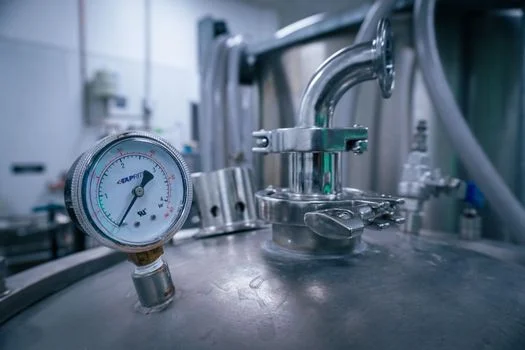
The average CAPEX for a 100 m³/day MBR system in the Turkish market ranges from $220,000 to $350,000, depending on the level of advanced oxidation integration required for pharmaceutical removal. This investment includes design, equipment procurement, installation, and commissioning. Operational expenditure (OPEX) is primarily driven by energy consumption for aeration and membrane scouring, as well as periodic chemical cleaning (CIP). In Turkey, the OPEX for an MBR system typically fluctuates between $0.80 and $1.20 per cubic meter of treated water.
For facilities utilizing Dissolved Air Flotation, CAPEX is significantly lower, ranging from $20,000 for small units to $150,000 for high-capacity industrial-grade machines. OPEX for DAF is lower ($0.30–$0.60/m³) but is highly dependent on the cost of coagulants and flocculants. The Return on Investment (ROI) for integrated medical wastewater systems in Turkey is typically achieved within 3 to 5 years. This calculation is based on the avoidance of environmental non-compliance fines—which can exceed ₺500,000—and the potential savings from reusing treated effluent for landscape irrigation or cooling tower make-up water.
| System Type | Capacity Range | CAPEX (USD) | OPEX (USD/m³) | Est. ROI (Years) |
|---|---|---|---|---|
| MBR (Integrated) | 50–200 m³/day | $150,000 – $500,000 | $0.80 – $1.20 | 4 – 6 Years |
| DAF Machine | 4–300 m³/h | $20,000 – $150,000 | $0.30 – $0.60 | 2 – 3 Years |
| Integrated | 1–50 m³/day | $15,000 – $80,000 | $0.40 – $0.70 | 3 – 5 Years |
| ClO2 Generator | Up to 5 kg/h | $15,000 – $50,000 | $0.05 – $0.15 | 1 – 2 Years |
Case Study: Treating Hospital Wastewater in Istanbul with MBR Technology
An Istanbul-based research hospital successfully reduced its influent COD from 1,100 mg/L to an average effluent concentration of 45 mg/L using a PVDF-based MBR system. The facility, which processes 100 m³ of wastewater daily, faced increasing pressure from municipal authorities due to high pharmaceutical toxicity levels. By implementing an MBR membrane bioreactor system for hospital wastewater, the hospital achieved a 96% COD removal rate and a 99.99% reduction in fecal coliforms.
The system utilizes chlorine dioxide for final disinfection, ensuring that no harmful DBPs are discharged into the Istanbul sewer network. The total CAPEX for the project was approximately $280,000, with an annual OPEX of $0.95/m³. Beyond regulatory compliance, the hospital achieved an ROI of 4.2 years by avoiding recurring environmental penalties and reducing water procurement costs through the reuse of "first-class" treated water for its extensive green areas. This project serves as a technical benchmark for other Turkish medical facilities aiming to balance environmental responsibility with operational efficiency.
Frequently Asked Questions
What are the penalties for non-compliance with Turkish hospital wastewater regulations?Under the Turkish Environmental Law, fines for discharging untreated or inadequately treated wastewater can reach up to ₺500,000 per violation. Repeated offenses or catastrophic environmental damage can lead to the temporary closure of facility wings or the entire medical center until a compliant treatment system is commissioned.
Can hospital wastewater be treated on-site or must it go to municipal WWTPs?While Turkish law allows discharge to municipal sewers if pre-treatment standards are met, on-site treatment is increasingly preferred. On-site systems prevent the spread of ARGs in public infrastructure and allow hospitals to manage high-toxicity streams (like chemotherapy waste) more effectively than diluted municipal processes.
How often should hospital wastewater treatment systems be maintained?A standard maintenance schedule includes monthly cleaning of membrane modules (CIP), quarterly calibration of sensors (pH, DO, ORP), and bi-annual inspections of blowers and pumps. Disinfection systems, particularly chlorine dioxide generators, require weekly checks of chemical precursor levels.
What is the best disinfection method for Turkish hospital wastewater?Chlorine dioxide (ClO2) is considered the best method for Turkish hospitals because it achieves 99.9% pathogen inactivation without producing trihalomethanes (THMs). While ozone is more effective at breaking down pharmaceuticals, ClO2 offers a superior balance of cost and compliance.
How much does a hospital wastewater treatment system cost in Turkey?Costs vary by technology: a small integrated system for a clinic may start at $15,000, while a full-scale MBR plant for a large research hospital can range from $250,000 to $500,000. OPEX typically ranges from $0.30 to $1.20 per cubic meter.