Why Hamilton Hospitals Need On-Site Wastewater Treatment in 2026
Hamilton hospitals are facing a critical juncture in wastewater compliance, driven by significant municipal infrastructure upgrades and increasingly stringent provincial environmental regulations. The City of Hamilton's ambitious $445 million Woodward Wastewater Treatment Plant (WWTP) Phase 2 expansion, slated for completion in 2026, will not only boost treatment capacity but also enforce more rigorous discharge limits. Simultaneously, major healthcare facilities like the Juravinski Hospital are undergoing substantial reconstructions, including their internal wastewater systems, to accommodate future demands. These developments underscore the necessity for healthcare institutions to proactively manage their effluent. Ontario's Regulation 267/03 sets strict benchmarks for wastewater discharge, mandating limits for Chemical Oxygen Demand (COD) at or below 50 mg/L, Biological Oxygen Demand (BOD) at or below 10 mg/L, and Total Suspended Solids (TSS) at or below 15 mg/L. the city's Wastewater Quality Management System (WWQMS) is expected to intensify monitoring of hospital discharges, making non-compliance a growing financial and operational risk. For hospitals that may struggle to meet these evolving standards through direct municipal discharge alone, investing in on-site treatment systems, such as Membrane Bioreactors (MBRs) or chlorine dioxide generators, becomes a strategic imperative to ensure consistent compliance and avoid costly surcharges.
Hospital Wastewater Characteristics: What Makes It Different
Hospital wastewater presents a unique treatment challenge compared to typical municipal sewage due to its distinct composition. It often carries significantly higher concentrations of organic pollutants, with COD levels ranging from 300–800 mg/L and BOD levels from 150–400 mg/L, according to EPA benchmarks. This elevated organic load stems from a complex mix of sources including laboratory waste, cleaning agents, and the presence of numerous pharmaceuticals. These pharmaceutical residues, such as antibiotics, hormones, and various active pharmaceutical ingredients (APIs), are not effectively removed by conventional wastewater treatment processes and can pose ecological risks. Beyond chemical contaminants, hospital effluent is a potential vector for a wide array of pathogens, including bacteria like E. coli and viruses such as norovirus, necessitating robust disinfection protocols. Typical influent parameters for Hamilton hospitals can include TSS concentrations of 200–500 mg/L, ammonia levels between 30–80 mg/L, and a pH range of 6.5–8.5. Crucially, disinfection requirements for hospital wastewater are far more stringent than for municipal sewage. While municipal standards often aim for a 4-log reduction in indicator bacteria, hospital effluent typically requires a 6-log reduction to ensure the inactivation of a broader spectrum of pathogens, including viruses and resistant bacterial strains.
| Parameter | Typical Hospital Influent Range (mg/L) | Ontario Effluent Limit (O. Reg. 267/03) | Required Removal Rate (Approx.) | Disinfection Target |
|---|---|---|---|---|
| Chemical Oxygen Demand (COD) | 300–800 | ≤ 50 | 90–95% | N/A |
| Biological Oxygen Demand (BOD) | 150–400 | ≤ 10 | 95–98% | N/A |
| Total Suspended Solids (TSS) | 200–500 | ≤ 15 | 98–99% | N/A |
| Pathogens (e.g., E. coli) | High (variable) | N/A (disinfection requirement) | N/A | 6-log reduction |
Engineering Specs: How to Meet Hamilton’s Hospital Effluent Limits
Achieving Hamilton's stringent hospital effluent limits requires a precise engineering approach, focusing on high removal efficiencies for key pollutants and robust disinfection. To meet the COD limit of ≤ 50 mg/L, treatment processes must achieve a 90–95% removal rate from typical hospital influent. This often involves advanced biological treatment stages, such as an Anoxic/Oxic (A/O) process or, more effectively for space-constrained environments, Membrane Bioreactors (MBRs), which provide superior effluent quality. For BOD, a 95–98% removal rate is necessary to consistently stay below the 10 mg/L threshold, a target well within the capabilities of optimized biological treatment systems, as supported by EPA 2024 data on hospital wastewater. TSS removal is equally critical, demanding 98–99% efficiency to comply with the ≤ 15 mg/L limit. Technologies like lamella clarifiers or Dissolved Air Flotation (DAF) systems are essential for achieving these high solids removal rates prior to final disinfection. The most critical engineering specification for hospital wastewater is disinfection. Ontario guidelines mandate a 6-log reduction for indicator organisms like E. coli, which is significantly more demanding than municipal standards. This level of inactivation typically requires advanced disinfection methods such as chlorine dioxide (ClO₂) or ozonation, which are highly effective against a broad spectrum of microorganisms. A typical process flow for an advanced hospital wastewater treatment system would include preliminary screening to remove large debris, an equalization tank to buffer flow and concentration variations, a robust biological treatment stage for organic and nutrient removal, followed by tertiary filtration to polish the effluent, and finally, a high-level disinfection stage to meet pathogen inactivation requirements. For advanced treatment and disinfection needs, consider a compact hospital wastewater treatment system with ozone disinfection.
| Parameter | Target Influent Quality (Typical) | Required Effluent Quality (Hamilton) | Treatment Technology Considerations | Typical Removal Efficiency |
|---|---|---|---|---|
| COD | 300–800 mg/L | ≤ 50 mg/L | MBR, Advanced Aerobic/Anoxic Processes | 90–95% |
| BOD | 150–400 mg/L | ≤ 10 mg/L | Activated Sludge, MBR | 95–98% |
| TSS | 200–500 mg/L | ≤ 15 mg/L | DAF, Lamella Clarifiers, MBR Membranes | 98–99% |
| Pathogen Inactivation | Variable, high risk | 6-log reduction (e.g., E. coli) | Chlorine Dioxide, Ozone, UV (supplemental) | 99.9999% |
Equipment Comparison: MBR vs. DAF vs. Chlorine Dioxide for Hospital Wastewater
Selecting the appropriate wastewater treatment technology is crucial for Hamilton hospitals to meet compliance obligations while managing operational costs and space constraints. Membrane Bioreactor (MBR) systems offer a high-quality effluent, consistently achieving COD levels below 30 mg/L and over 99% pathogen removal due to the integrated membrane filtration. However, MBRs typically come with a higher capital expenditure (CAPEX), ranging from $300,000 to $500,000 for a 50 m³/day system, and operational expenditure (OPEX) of $1.50–$2.50/m³, primarily for membrane maintenance and energy. Dissolved Air Flotation (DAF) systems, when coupled with effective disinfection, can achieve COD levels around 60 mg/L and 95% pathogen removal. They present a more accessible entry point with lower CAPEX ($120,000–$250,000) but incur higher chemical costs for coagulation and flotation ($0.50–$1.00/m³), in addition to disinfection expenses. Chlorine dioxide (ClO₂) generators, such as the on-site chlorine dioxide generator for hospital effluent disinfection, are primarily focused on disinfection. They excel at achieving the required 6-log pathogen reduction without generating harmful disinfection byproducts, and their footprint is minimal. Their CAPEX is generally lower than biological treatment systems, but they are often used in conjunction with other technologies for full wastewater treatment. The choice of technology hinges on specific needs: MBR systems are ideal for hospitals with limited space requiring near-reuse quality effluent. DAF systems offer a cost-effective solution for facilities with high TSS loads that can be effectively treated by a subsequent disinfection step. Chlorine dioxide generators are best suited for facilities that have existing biological treatment and filtration but require a highly effective, safe disinfection method.
| Technology | Typical Effluent Quality (COD) | Pathogen Removal | Approx. CAPEX (10-50 m³/day) | Approx. OPEX ($/m³) | Footprint | Key Advantages | Key Disadvantages |
|---|---|---|---|---|---|---|---|
| MBR System | ≤ 30 mg/L | > 99% | $300K–$500K | $1.50–$2.50 | Compact | High effluent quality, low footprint, automation | High CAPEX, membrane maintenance |
| DAF + Disinfection | ≤ 60 mg/L | ~95% (pre-disinfection) | $120K–$250K | $0.50–$1.00 (chemicals) + disinfection | Moderate | Lower CAPEX, effective for high TSS | Higher chemical usage, secondary disinfection needed |
| Chlorine Dioxide Generator | N/A (disinfection only) | 6-log reduction | $50K–$150K | $0.10–$0.30 | Minimal | Highly effective disinfection, no residuals, safe | No organic/solids removal, requires precise dosing |
Cost Breakdown: On-Site Treatment vs. Municipal Discharge for Hamilton Hospitals
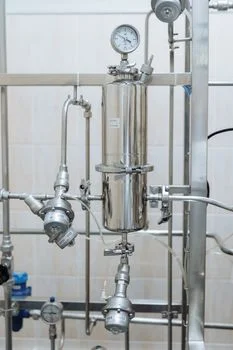
The decision between on-site wastewater treatment and relying solely on municipal discharge for Hamilton hospitals involves a detailed cost-benefit analysis, considering both capital and operational expenditures, alongside potential surcharges. On-site treatment systems can have a significant upfront CAPEX, ranging from $120,000 for a basic DAF system with disinfection to $500,000 for a comprehensive MBR system, depending on the hospital's daily flow rate and treatment complexity. The OPEX for these systems typically falls between $0.80 and $2.50 per cubic meter, encompassing energy, chemicals, maintenance, and consumables. In contrast, Hamilton's municipal discharge fees for 2025 are estimated to range from $0.45 to $0.75 per cubic meter. While these municipal fees might appear lower than on-site OPEX, the risk of non-compliance introduces substantial additional costs. Hamilton's penalty structure for exceeding effluent limits can add surcharges of $0.20 to $0.50 per cubic meter, effectively pushing the total cost of municipal discharge much higher. For hospitals with effluent consistently near or exceeding regulatory limits, the financial burden of surcharges can quickly outweigh the initial investment in an on-site system. A Return on Investment (ROI) analysis often reveals that on-site treatment systems can pay for themselves within 3 to 7 years, especially if municipal discharge fees approach the higher end of the spectrum or if surcharges are frequently incurred. For example, a hospital discharging 20 m³/day with a municipal fee of $0.60/m³ and incurring a $0.30/m³ surcharge would pay $18/day or over $6,500/year in penalties alone. An on-site system with an OPEX of $1.20/m³ would cost $24/day, a difference of $6/day or approximately $2,190/year in additional operational cost, which is significantly less than the penalty savings.
| Cost Component | On-Site Treatment (Typical Range) | Municipal Discharge (Estimated Hamilton 2025) | Notes |
|---|---|---|---|
| CAPEX | $120K–$500K (per system) | $0 (infrastructure shared) | One-time investment for on-site |
| OPEX ($/m³) | $0.80–$2.50 | $0.45–$0.75 (base fee) | Ongoing operational costs |
| Surcharges ($/m³) | $0 (if compliant) | $0.20–$0.50+ (for non-compliance) | Highly variable, risk-based |
| Total Cost ($/m³) | $0.80–$2.50 | $0.65–$1.25+ (assuming some non-compliance) | On-site offers predictable costs |
| ROI Horizon | 3–7 years | N/A | Based on penalty avoidance and fee structures |
Frequently Asked Questions
What are the primary pollutants in hospital wastewater that require specific treatment?
Hospital wastewater is characterized by elevated levels of COD (300–800 mg/L) and BOD (150–400 mg/L) due to organic waste and cleaning agents. It also contains pharmaceutical residues and a high concentration of pathogens like E. coli and viruses, necessitating advanced treatment and stringent disinfection to meet regulatory standards like Ontario's O. Reg. 267/03.
How does the Woodward WWTP expansion affect hospital discharge requirements in Hamilton?
The $445 million expansion of Hamilton's Woodward WWTP, expected in 2026, will increase treatment capacity but also enforce stricter effluent discharge limits. This means hospitals must ensure their wastewater meets provincial benchmarks (COD ≤ 50 mg/L, BOD ≤ 10 mg/L, TSS ≤ 15 mg/L) more consistently, as the city's wastewater monitoring systems become more sophisticated and compliance expectations rise.
What is the difference between municipal wastewater disinfection and hospital wastewater disinfection?
Municipal wastewater treatment typically aims for a 4-log reduction in indicator bacteria. However, hospital wastewater requires a more rigorous 6-log reduction to effectively inactivate a wider range of pathogens, including viruses and resistant bacteria, ensuring public health and environmental safety. Technologies like chlorine dioxide or ozone are often employed for this higher level of disinfection.
Are MBR systems the most cost-effective solution for hospital wastewater treatment in Hamilton?
MBR systems offer superior effluent quality and a compact footprint, but they typically have higher CAPEX ($300K–$500K for a 10-50 m³/day system) and OPEX ($1.50–$2.50/m³). While they can prevent costly surcharges, DAF systems combined with effective disinfection may present a lower initial investment, with overall cost-effectiveness depending on flow rates, specific effluent challenges, and the frequency of municipal surcharges.
What are the potential surcharges for non-compliant hospital wastewater discharge in Hamilton?
Hamilton's surcharges for non-compliant wastewater discharge can range from $0.20 to $0.50 per cubic meter. These penalties are applied when effluent quality exceeds the permitted limits for parameters such as COD, BOD, or TSS, adding a significant financial burden that can incentivize investment in on-site treatment systems to ensure consistent compliance.
Related Equipment
The following HydropureWater products are engineered for the wastewater challenges discussed above:
- MBR system for near-reuse-quality hospital effluent — view specifications, capacity range, and technical data
Need a customized solution? Request a free quote with your specific flow rate and pollutant parameters.