Why Hospital Wastewater in Washington Requires Specialized Treatment
Washington hospital wastewater treatment must achieve 99.9% pathogen removal and meet EPA NPDES permit limits (e.g., BOD ≤30 mg/L, TSS ≤30 mg/L) under WA DOH oversight. The state’s 121+ municipal plants accept pre-treated hospital effluent, but facilities with on-site systems must comply with stricter local ordinances. Key challenges include pharmaceutical residues, antibiotic-resistant bacteria, and variable flow rates—requiring specialized equipment like MBR systems or chlorine dioxide generators to ensure zero-risk discharge.
Hospital effluent contains 10–100 times higher pathogen loads than standard domestic sewage, according to 2023 World Health Organization data. The Pacific Northwest prioritizes aquatic ecosystem protection, and discharging untreated medical waste poses a severe risk of introducing antibiotic-resistant bacteria (AMR) into the Puget Sound and Columbia River basins. Unlike residential waste, hospital sewage carries concentrated loads of disinfectants, radioactive isotopes from oncology departments, and complex pharmaceuticals that persist through conventional activated sludge processes.
The Washington Department of Health (WA DOH) 2024 emerging contaminants list highlights 12 pharmaceuticals that require rigorous monitoring and removal. Compounds like carbamazepine (an anticonvulsant) and ciprofloxacin (an antibiotic) are frequently detected in hospital outfalls at levels exceeding 10 µg/L, necessitating advanced oxidation or high-efficiency membrane filtration. Without specialized treatment, these substances bypass municipal secondary treatment, leading to potential environmental toxicity and legal liability for the healthcare facility.
Real-world data from the Swedish Medical Center’s 2022 infrastructure upgrade demonstrates the necessity of high-spec systems. By implementing a combination of Membrane Bioreactor (MBR) technology and chlorine dioxide disinfection, the facility achieved a 95% reduction in Biological Oxygen Demand (BOD) and effectively eliminated municipal surcharges. This upgrade ensured Washington’s industrial wastewater treatment requirements were met and established a zero-risk discharge profile for the facility's sensitive urban location.
Washington State Compliance Requirements for Hospital Wastewater
The WA DOH Wastewater Management Program sets strict regulations for hospital wastewater treatment.The WA DOH Wastewater Management Program mandates that any on-site hospital treatment system must demonstrate a 99.9% (3-log) reduction in enteric pathogens before discharge. Compliance involves rigorous weekly sampling for E. coli and monthly testing for enterococci to ensure disinfection systems operate at peak efficiency. For hospitals discharging to municipal sewers, pre-treatment standards are governed by local utilities, which often impose strict limits on Chemical Oxygen Demand (COD) and Fats, Oils, and Grease (FOG) to prevent interference with municipal biological processes.
Under the EPA’s National Pollutant Discharge Elimination System (NPDES), Washington hospitals operating their own discharge outfalls must adhere to stringent concentration limits. Typical permit parameters include BOD ≤30 mg/L, Total Suspended Solids (TSS) ≤30 mg/L, and ammonia levels ≤10 mg/L. pH must be maintained between 6.0 and 9.0 at all times. In King County, hospitals with more than 100 beds face even tighter local ordinances, often requiring COD to be maintained below 250 mg/L and FOG below 50 mg/L to avoid heavy financial penalties.
The 2024 emerging contaminants program adds complexity to global benchmarks for hospital wastewater treatment compliance. Washington facilities must conduct quarterly testing for a suite of 12 compounds. The table below outlines primary regulatory benchmarks for hospital effluent in Washington State:
| Parameter | WA DOH / EPA Limit | Sampling Frequency | Target Compound (Example) |
|---|---|---|---|
| Biological Oxygen Demand (BOD) | ≤30 mg/L | Weekly | Organic Load |
| Total Suspended Solids (TSS) | ≤30 mg/L | Weekly | Particulate Matter |
| Pathogen Removal Rate | 99.9% (3-log) | Daily (Disinfection Monitoring) | E. coli / Enterococci |
| Ammonia (NH3-N) | ≤10 mg/L | Monthly | Nitrogenous Waste |
| Ciprofloxacin | ≤1 µg/L (Monitoring Goal) | Quarterly | Antibiotics |
| Fats, Oils, and Grease (FOG) | ≤50 mg/L (King County) | Monthly | Kitchen/Canteen Waste |
Navigating the permit application process for a new or upgraded system requires a 90- to 120-day lead time. The process begins with a formal submission to the WA DOH, including detailed engineering drawings, a comprehensive sampling plan, and an emergency response protocol for system failures. Application fees range from $500 to $2,500, depending on the facility size and discharge volume. Failure to secure these permits prior to operation can result in daily fines exceeding $10,000 per violation.
Hospital Wastewater Treatment Technologies: How They Work and Which to Choose
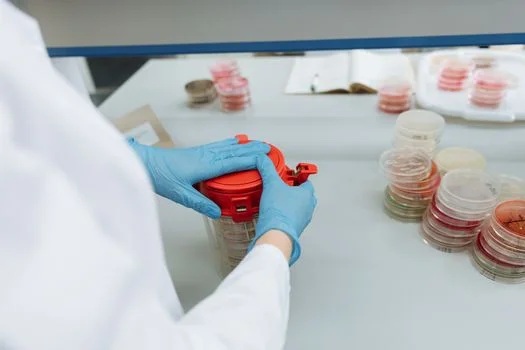
Membrane Bioreactor (MBR) systems are a top choice for high-performance medical wastewater treatment. By combining biological treatment with PVDF membrane filtration (pore sizes typically 0.03 to 0.4 microns), MBR systems for hospital wastewater treatment in Washington can produce effluent with COD ≤30 mg/L and TSS ≤5 mg/L. This technology is advantageous for space-constrained urban hospitals, requiring a footprint 60% smaller than conventional activated sludge systems.
For facilities dealing with high solids or significant grease loads, Dissolved Air Flotation (DAF) serves as an essential primary treatment stage. DAF systems utilize microbubble flotation to lift suspended solids and FOG to the surface for mechanical removal. Engineering data suggests DAF can achieve 92–97% TSS reduction, lowering the organic load before the water reaches secondary biological stages. Compact hospital wastewater treatment systems for Washington clinics offer a modular approach for smaller clinics or outpatient centers.
Disinfection is critical for compliance with WA DOH pathogen standards. While ultraviolet (UV) light is common, chlorine dioxide generators for hospital effluent disinfection are preferred for their ability to penetrate biofilms and neutralize antibiotic-resistant pathogens. Chlorine dioxide (ClO₂) does not produce harmful trihalomethanes (THMs) and provides a 6-log virus inactivation. Ozone systems offer higher oxidation potential for total pharmaceutical removal, though they have higher CAPEX and require a complex WA DOH approval process.
| Technology | Primary Removal Target | Typical Removal Rate | Footprint Requirement | WA DOH Compliance Level |
|---|---|---|---|---|
| MBR (Membrane Bioreactor) | BOD, TSS, Bacteria | 98–99% | Low (Compact) | Excellent (Exceeds Standards) |
| DAF (Dissolved Air Flotation) | FOG, Suspended Solids | 90–95% | Medium | High (Pre-treatment) |
| Chlorine Dioxide (ClO₂) | Pathogens, Viruses | 99.9999% (6-log) | Very Low | Excellent (Disinfection) |
| Ozone Oxidation | Pharmaceuticals, Color | 85–95% | Medium | High (Advanced) |
A hybrid approach is often resilient. For instance, Harborview Medical Center uses a sophisticated DAF + MBR + ClO₂ system designed to handle a flow of 50 m³/h. This multi-barrier configuration ensures 99.99% pathogen removal and addresses fluctuating flow rates, providing a zero-risk discharge.
Cost Breakdown: CAPEX, OPEX, and ROI for Hospital Wastewater Systems in Washington
Capital expenditure (CAPEX) for hospital wastewater systems in Washington depends on treatment capacity and contaminant profile.CAPEX for a system processing 50–200 m³/day ranges from $250,000 to $450,000 for an MBR setup, $120,000 to $200,000 for a DAF and chlorine dioxide combination, and $300,000 to $500,000 for ozone systems. Local installation costs, including engineering stamps and seismic anchoring, add $50,000 to $100,000. Operational expenditure (OPEX) is driven by energy consumption and chemical dosing. MBR systems consume $0.80 to $1.50 per cubic meter of treated water, while chemical costs range from $0.30 to $0.70 per cubic meter. Labor costs for monitoring and maintenance range from $30,000 to $80,000 annually.
The financial justification for on-site treatment lies in avoiding municipal surcharges. Seattle’s 2025 utility rates impose a $2.10/m³ surcharge for BOD levels exceeding 30 mg/L and $1.50/m³ for TSS over 30 mg/L. The Return on Investment (ROI) for an on-site MBR system is typically 3.5 years. Hospitals may qualify for 2025 Clean Water Fund grants of up to $250,000 for facilities in underserved or environmentally sensitive areas.
| Cost Category | MBR System | DAF + ClO₂ System | Ozone System |
|---|---|---|---|
| CAPEX (50–200 m³/day) | $250K – $450K | $120K – $200K | $300K – $500K |
| OPEX (per m³) | $1.10 – $1.50 | $0.60 – $0.90 | $1.40 – $2.00 |
| Annual Maintenance | $15K – $25K | $8K – $15K | $20K – $35K |
| Est. ROI (Years) | 3.5 – 4.5 | 2.0 – 3.0 | 5.0 – 7.0 |
Step-by-Step: Designing a Zero-Risk Hospital Wastewater System for Washington Compliance
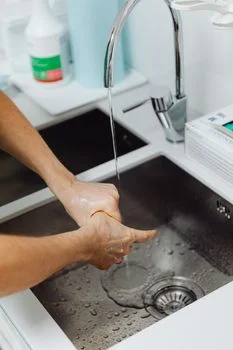
Engineers must account for extreme variability in hospital water usage, which peaks during morning shift changes and surgical schedules. Peak flow analysis is critical to ensure the system handles heavy rainfall events. Undersizing a system based on "average" flows is a leading cause of compliance failure.
Contaminant profiling targets the WA DOH’s 12 priority pharmaceuticals and pathogen indicators. Technology selection follows a decision tree: MBR is preferred for space-constrained urban sites, while a combination of DAF and ClO₂ is suitable for suburban facilities with higher solids loads.
The permit application stage requires a comprehensive package for the WA DOH, including stamped engineering drawings, a detailed sampling frequency plan, and a robust emergency response protocol. Common mistakes include underestimating the pharmaceutical load and ignoring peak