Why Poland’s Hospitals Must Upgrade Wastewater Treatment Now
Poland’s hospital wastewater treatment sector faces urgent upgrades under the EU Urban Wastewater Treatment Directive (UWWTD) 2024/3019, which lowers the population equivalent (p.e.) threshold to 1,000 and mandates quaternary treatment for micropollutants by 2045. Hospitals must now achieve 99% pathogen kill rates (e.g., E. coli <100 CFU/100 mL) and remove nitrogen/phosphorus to combat eutrophication in the Baltic Sea. This guide provides engineering specs, compliance timelines, and cost-optimized equipment solutions tailored to Polish regulatory and environmental conditions.
The recast Directive (EU) 2024/3019 entered into force on January 1, 2025, requiring Member States to transpose the rules into national law by July 31, 2027. For Polish hospitals, the most significant shift is the reduction of the secondary treatment threshold; all agglomerations of 1,000 p.e. or more must implement collecting systems and secondary treatment by 2035. Given that a typical 300-bed hospital can generate a load equivalent to 1,200–1,500 p.e., many facilities previously exempt from stringent on-site treatment must now modernize their infrastructure to meet these benchmarks.
Environmental data highlights the critical need for these upgrades. Research conducted in the regions of Silesia and Warmia-Mazury has identified high concentrations of antibiotic-resistant genes, including blaKPC and blaNDM, in municipal WWTPs receiving hospital effluent (Frontiers in Environmental Science, 2021). These "superbugs" pose a direct threat to public health; moreover, nutrient runoff from medical facilities contributes to the nitrogen and phosphorus loads that cause seasonal dead zones in the Baltic Sea. Organizations like Race For The Baltic emphasize that Polish investment needs are among the highest in the region, particularly for smaller agglomerations that must now implement nutrient removal.
Innovation is already taking root in Poland. The Jarocin WWTP (60,000 p.e.) serves as a model for circular economy compliance, utilizing advanced phosphorus recovery technology to extract nutrients from sewage sludge. However, hospital procurement strategies are currently complicated by Poland’s legal challenge to the Directive’s Extended Producer Responsibility (EPR) rules. Filed in March 2025, Warsaw argues that targeting only pharmaceutical and cosmetic producers for micropollutant removal costs violates the "polluter pays" principle. For hospital facility managers, this legal uncertainty necessitates flexible, modular treatment designs that can be upgraded as funding responsibilities are clarified.
Hospital Wastewater in Poland: Contaminant Loads and Discharge Limits
Hospital effluent in Poland is characterized by high variability in hydraulic loads and a complex chemical profile that includes antibiotics, contrast media, and disinfectants. Engineering designs must account for Chemical Oxygen Demand (COD) concentrations ranging from 500 to 1,500 mg/L and Biological Oxygen Demand (BOD₅) between 200 and 600 mg/L. Unlike standard municipal sewage, medical wastewater often contains elevated levels of Total Suspended Solids (TSS) and specific pathogens, with E. coli counts frequently reaching 10⁵–10⁷ CFU/100 mL before treatment.
The EU Directive 2024/3019 introduces stricter discharge limits that exceed many current Polish national standards, particularly for facilities discharging into "sensitive" areas—which includes the entire Baltic Sea catchment area.Hospitals must now target Total Nitrogen (TN) levels below 15 mg/L and Total Phosphorus (TP) below 2 mg/L. Quaternary treatment requirements mandate the removal of at least 80% of specific micropollutants, such as carbamazepine, diclofenac, and ciprofloxacin, by 2045. For smaller hospitals under 10,000 p.e., a risk assessment is required to determine if local water body sensitivity necessitates these advanced nutrient removal stages.
| Parameter | Typical Raw Hospital Effluent (Poland) | Current Polish National Limit (General) | EU Directive 2024/3019 Limit (Target) |
|---|---|---|---|
| COD (mg/L) | 500 – 1,500 | <125 | <125 (or 75% reduction) |
| BOD₅ (mg/L) | 200 – 600 | <25 | <25 (or 70-90% reduction) |
| TSS (mg/L) | 150 – 400 | <35 | <35 |
| Total Nitrogen (mg/L) | 50 – 150 | <30 | <15 (for sensitive areas) |
| Total Phosphorus (mg/L) | 10 – 30 | <3 | <2 (for sensitive areas) |
| E. coli (CFU/100 mL) | 10⁵ – 10⁷ | N/A (Variable) | <100 |
Managing antibiotic resistance is a critical technical requirement. Metagenomic studies of Polish WWTPs indicate that biological treatment alone often fails to eliminate resistant genes; in some cases, an increase in the abundance of the blaIMP gene has been observed after the biological stage. This necessitates the integration of advanced disinfection or membrane filtration to ensure that hospital outflows do not become environmental reservoirs for multi-drug resistant organisms.
Treatment Technologies Compared: MBR vs. DAF vs. Chlorine Dioxide for Polish Hospitals
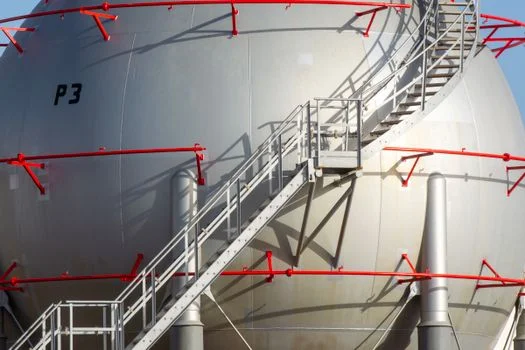
Membrane Bioreactor (MBR) systems have emerged as the gold standard for urban hospitals with space constraints. By combining activated sludge treatment with PVDF membrane filtration (typically 0.1 μm pore size), MBR systems for hospital wastewater treatment in Poland can achieve COD levels below 50 mg/L and virtually eliminate TSS. MBRs provide a 60% smaller footprint than conventional activated sludge systems and are highly effective at retaining bacteria and some micropollutants.
For facilities dealing with high fats, oils, and grease (FOG) or high TSS from laundry and cafeteria services, Dissolved Air Flotation (DAF) serves as an essential pre-treatment or primary treatment step. Dissolved Air Flotation (DAF) machines utilize microbubbles to float suspended solids to the surface for mechanical removal. HydropureWater’s DAF line, with capacities up to 300 m³/h, can achieve 92–97% TSS removal and significantly reduce the organic load before the wastewater enters the biological or disinfection stages, protecting downstream membranes from fouling.
Disinfection is crucial for medical facilities.While UV is common, chlorine dioxide generators for hospital effluent disinfection offer distinct advantages in the Polish climate, as ClO₂ remains effective across a wide pH range and provides a residual effect that prevents biofilm regrowth in discharge pipes. On-site generation of ClO₂ at dosages of 1–3 mg/L ensures a 99.9% kill rate for pathogens and significantly degrades antibiotic-resistant genes, complying with both the EU Urban Wastewater Directive and the EU Drinking Water Directive 98/83/EC for potential reuse applications.
| Technology | CAPEX (€/m³/day) | OPEX (€/m³) | Footprint | Effluent Quality | Best Suitability |
|---|---|---|---|---|---|
| MBR | €1,200 – €2,500 | €0.50 – €1.00 | Very Small | Excellent (TSS <1, COD <50) | Urban hospitals, reuse projects |
| DAF | €400 – €900 | €0.15 – €0.30 | Medium | Good (TSS removal >90%) | Pre-treatment for high-FOG sites |
| ClO₂ Disinfection | €150 – €400 | €0.10 – €0.20 | Small | Pathogen-free (<100 CFU) | Final polishing for all hospitals |
| Integrated compact medical wastewater system | €1,500 – €3,000 | €0.60 – €1.10 | Compact/Modular | Compliance-ready (All params) | Compact medical wastewater treatment systems for Polish clinics |
Step-by-Step Compliance Checklist for Polish Hospitals
Achieving compliance requires a phased approach.Phase 1 (2025–2027): Technical Audit and Baseline Assessment
The first priority is a comprehensive audit of existing discharge quality and hydraulic capacity. Facilities must collect 24-hour composite samples to determine peak flow rates and contaminant loads. This data is essential for determining whether the hospital falls into the 1,000 p.e. threshold and for preparing the technical documentation required for the July 2027 transposition deadline. Many hospitals find that global best practices for hospital wastewater disinfection often involve early adoption of modular systems to avoid future retrofitting costs.
Phase 2 (2027–2030): Risk Assessment and Technology Selection
During this window, hospitals under 10,000 p.e. must conduct risk assessments to evaluate the sensitivity of their local receiving water bodies. If the facility discharges into a catchment area feeding the Baltic Sea, nutrient removal (Nitrogen and Phosphorus) will likely be mandatory. This is the stage to evaluate how other EU countries are handling hospital wastewater compliance to select technologies—like MBR—that offer built-in nutrient removal capabilities.
Phase 3 (2030–2035): Implementation of Secondary and Tertiary Treatment
By 2035, all systems must meet secondary treatment standards (COD/BOD/TSS). Procurement should focus on equipment with high energy efficiency (target <0.8 kWh/m³) to mitigate rising electricity costs in Poland. This period will also see a rise in Public-Private Partnerships (PPP), similar to the Mława WWTP model, where private partners design, build, and operate the facility to spread financial risk.
Phase 4 (2035–2045): Quaternary Treatment and Resource Recovery
The final phase focuses on micropollutants. Hospitals should consider advanced treatment options for hospital wastewater reuse, such as Reverse Osmosis or Advanced Oxidation Processes (AOPs), to remove pharmaceuticals. Funding for these stages is often available through the EU Cohesion Fund, which can cover up to 85% of CAPEX for eligible environmental protection projects in Poland.
Cost Breakdown: CAPEX and OPEX for Hospital Wastewater Treatment in Poland
For a medium-sized Polish hospital (100 m³/day capacity), an integrated MBR system typically requires a CAPEX of €200,000 to €400,000, depending on the complexity of the pre-treatment and the degree of automation. This includes design, equipment procurement, installation, and commissioning. Smaller clinics may opt for modular compact plants, which offer lower installation costs due to their containerized design.
Operational costs are primarily driven by energy consumption and chemical requirements