Hospitals in Guadalajara must treat wastewater to NOM-003-SEMARNAT-1997 standards, requiring ≤200 MPN/100mL fecal coliforms and ≤30 mg/L BOD₅. Local WWTPs like Agua Prieta handle 67% of metropolitan wastewater, but medical facilities need onsite systems to manage pharmaceutical residues (e.g., carbamazepine ≤50 ng/L) and chlorine-resistant pathogens. Modular systems (e.g., MBR with 0.1 μm filtration) achieve 99.9% pathogen removal, while chlorine dioxide generators provide 99%+ disinfection without THM formation.
Why Guadalajara Hospitals Need Dedicated Wastewater Treatment Systems
NOM-003-SEMARNAT-1997 and the updated NOM-001-SEMARNAT-2021 establish strict discharge limits for Mexican hospitals.NOM-003-SEMARNAT-1997 and the updated NOM-001-SEMARNAT-2021 establish strict discharge limits for Mexican hospitals, mandating fecal coliform levels below 200 MPN/100mL and a Biochemical Oxygen Demand (BOD₅) of no more than 30 mg/L. While Guadalajara’s municipal infrastructure, including the Agua Prieta plant, processes 67% of the metropolitan area's wastewater, these centralized systems are not engineered to neutralize complex medical contaminants. Specifically, municipal plants lack the advanced oxidation or membrane filtration stages required to reduce pharmaceutical residues like carbamazepine to the ≤50 ng/L threshold recommended by 2023 WHO guidelines.
The financial risk of non-compliance is substantial. In 2023, a major hospital in Guadalajara was issued a fine of MXN 1.8M by PROFEPA (Procuraduría Federal de Protección al Ambiente) after an inspection revealed effluent discharging at 1,200 MPN/100mL fecal coliforms—six times the legal limit. Beyond regulatory fines, the biological risk to the Atemajac and Santiago river basins is acute; a 2024 study published in the Journal of Hospital Infection found that 30% of hospital wastewater in urban Mexico contains antibiotic-resistant bacteria, including strains of E. coli and Pseudomonas that can bypass conventional chlorine disinfection.
Dedicated onsite treatment is the only viable method for ensuring these pathogens and chemical residues are neutralized before entering the municipal sewer or local water bodies. For facilities evaluating global benchmarks, it is useful to compare how Lagos hospitals comply with NESREA standards (comparison to Guadalajara’s NOM-003), which highlights the universal shift toward onsite biological and chemical sterilization in high-density urban environments.
Hospital Wastewater Characteristics: What Makes It Different from Municipal Sewage
Hospital wastewater contains a distinct set of contaminants.Medical effluent contains a concentrated cocktail of pharmaceutical loads, including 10–50 mg/L of antibiotics, 1–10 mg/L of analgesics such as ibuprofen, and 0.1–1 mg/L of highly toxic cytostatics used in chemotherapy, according to a 2024 Water Research study. Unlike standard municipal sewage, which typically maintains a pathogen density of 10³–10⁵ CFU/mL, raw hospital wastewater often reaches 10⁵–10⁷ CFU/mL. This higher biological load requires more intensive disinfection protocols to prevent the spread of healthcare-associated infections (HAIs) through the water cycle.
Heavy metal contamination is another critical differentiator. Diagnostic laboratories and dental clinics within Guadalajara hospitals contribute mercury (up to 0.05 mg/L), silver (up to 0.1 mg/L), and chromium (up to 0.5 mg/L), all of which are strictly regulated under NOM-002-SEMARNAT-1996 for discharge into urban sewers. The physical properties of medical wastewater—specifically temperature and pH—fluctuate significantly. Effluent temperatures often range between 25–35°C due to industrial laundry and sterilization processes, while pH levels can swing from 5 to 9, necessitating robust equalization and neutralization stages to protect biological treatment microbes.
Operational flow rates in hospitals also present a unique engineering challenge. Unlike the steady diurnal patterns of residential areas, hospitals experience "shock loads" from surgical suites and dialysis units. During peak morning rounds, flow rates can spike by 300%, requiring systems with high hydraulic buffering capacity. The following table summarizes the key parameter differences between hospital and municipal wastewater based on 2023 EPA and Mexican regulatory benchmarks.
| Parameter | Municipal Sewage (Avg) | Hospital Effluent (Avg) | NOM-003 Limit |
|---|---|---|---|
| BOD₅ (mg/L) | 150 - 250 | 300 - 600 | ≤ 30 |
| COD (mg/L) | 250 - 450 | 600 - 1,200 | ≤ 70 |
| Fecal Coliforms (MPN/100mL) | 10³ - 10⁵ | 10⁵ - 10⁷ | ≤ 200 |
| Antibiotics (mg/L) | < 0.01 | 10 - 50 | N/A (Monitored) |
| Heavy Metals (Hg, Ag, Cr) | Trace | Up to 0.5 mg/L | Varies (NOM-002) |
Treatment Technologies Compared: MBR vs. DAF vs. Chlorine Dioxide for Hospital Effluent
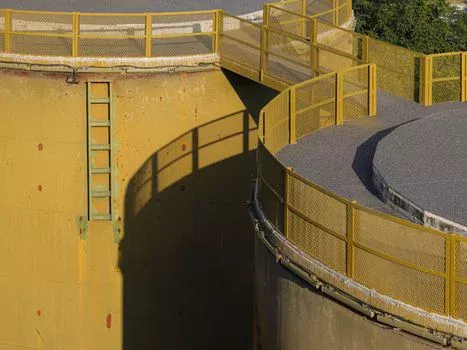
Membrane Bioreactor (MBR) technology has become the gold standard for Guadalajara hospitals due to its small footprint and high effluent quality. By utilizing 0.1 μm pore-size membranes, an MBR system for pharmaceutical residue removal in hospital wastewater can eliminate 99.9% of pathogens and up to 95% of pharmaceutical compounds. This process ensures that effluent COD remains below 50 mg/L, comfortably meeting NOM-003 standards. However, MBR systems require higher energy inputs, typically 0.8–1.2 kWh/m³, to maintain membrane scouring and prevent fouling.
Dissolved Air Flotation (DAF) is often deployed as a pre-treatment stage, particularly for hospitals with large commercial kitchens or laundry facilities. A DAF machine can achieve 90–95% removal of Total Suspended Solids (TSS) and Fats, Oils, and Grease (FOG), which otherwise would clog secondary biological systems. In the Guadalajara market, chemical costs for DAF operation average between MXN 0.30 and 0.50 per cubic meter, making it a cost-effective insurance policy for the downstream MBR or activated sludge units.
For primary disinfection, an on-site chlorine dioxide generator for hospital effluent disinfection is superior to traditional sodium hypochlorite. Chlorine dioxide (ClO₂) achieves 99%+ disinfection without the formation of harmful trihalomethanes (THMs) and is significantly more effective against chlorine-resistant pathogens like Cryptosporidium. For smaller clinics, a compact hospital wastewater treatment system with ozone disinfection or ClO₂ integration provides a "plug-and-play" solution that fits within existing parking or basement footprints.
| Technology | BOD₅ Removal | Pathogen Removal | CAPEX (per m³) | OPEX (per m³) |
|---|---|---|---|---|
| MBR | 98% + | 99.9% | High | MXN 0.70 - 1.50 |
| DAF (Pre-treatment) | 30 - 50% | Low | Medium | MXN 0.20 - 0.50 |
| Chlorine Dioxide | N/A | 99.99% | Low-Medium | MXN 0.40 - 0.80 |
| Activated Sludge | 70 - 85% | Low | Medium | MXN 0.50 - 0.90 |
Step-by-Step Compliance: How to Design a Hospital WWTP for NOM-003-SEMARNAT-1997
The design process starts with effluent characterization.Designing a compliant wastewater treatment plant (WWTP) in Guadalajara begins with a comprehensive effluent characterization. Engineers must measure flow rates, BOD₅, COD, and specific pharmaceutical markers during a 72-hour window that includes peak surgical hours. All samples should be processed by PROFEPA-approved laboratories, such as the Laboratorio Ambiental de Jalisco, to ensure the data is legally defensible for future audits.
Once the baseline is established, the technology selection must align with the hospital’s bed count and available space. For 200-bed hospitals, an MBR-based system is typically recommended to handle the high organic load in a compact area. Understanding how submerged MBR systems achieve 99% TSS removal in hospital effluent is critical during this phase, as it allows engineers to skip secondary clarifiers, saving up to 50% in land requirements. For smaller 50-bed clinics, a combination of DAF and ClO₂ disinfection may suffice if biological loads are lower.
The system must be sized for peak flow, not average flow. In Guadalajara, 500-bed hospitals often see morning flow spikes that are 3× the daily average; failing to size equalization tanks for these surges leads to hydraulic washout and compliance failure. Finally, the permitting process requires submitting a ‘Manifiesto de Impacto Ambiental’ (MIA) to SEMARNAT Jalisco. As of 2024, the average approval timeline for these permits in the Guadalajara metropolitan area is 60 to 90 days. A common pitfall is neglecting the tertiary disinfection stage; even the best biological systems often require a ClO₂ polish to consistently meet the ≤200 MPN/100mL fecal coliform limit.
Cost Breakdown: CAPEX and OPEX for Hospital WWTPs in Guadalajara (2025 Data)
The capital expenditure (CAPEX) for a hospital WWTP in Guadalajara is primarily influenced by bed count and the required level of pharmaceutical removal. For a 50-bed clinic, a basic system utilizing DAF and Chlorine Dioxide disinfection ranges from MXN 1.2M to 1.8M. Mid-sized facilities with 200 beds typically require MBR technology to meet NOM-003, with costs ranging between MXN 3.5M and 5M. Large, 500-bed teaching hospitals or specialized surgical centers may invest MXN 8M to 12M for integrated MBR and Reverse Osmosis (RO) systems designed for water reuse in cooling towers or irrigation.
Operating expenditure (OPEX) is driven by energy consumption and chemical reagents. MBR systems average MXN 0.70–1.50/m³, while chlorine dioxide disinfection costs roughly MXN 0.40–0.80/m³. When comparing disinfection methods, data shows why chlorine dioxide is 30% cheaper than UV for hospital disinfection in facilities with fluctuating turbidity. Local economic factors in Jalisco also play a role; labor costs for plant operators in Guadalajara are approximately 15% lower than in Mexico City, and concrete for civil works is roughly 10% cheaper based on 2024 INEGI data.
The Return on Investment (ROI) for these systems is often realized through fine avoidance and water savings. A 500-bed hospital that installs a