Which Municipal STPs Serve Johor in 2025?
Johor’s municipal wastewater infrastructure currently comprises 17 major sewage treatment plants (STPs) with design capacities ranging from 3 MLD to 120 MLD, predominantly utilizing extended aeration (EA) technology to handle high organic loads. As of 2025, the state has pivoted toward water reclamation, particularly in the Iskandar Malaysia region, where treated effluent is being repurposed for industrial cooling and data center operations. Six of these facilities discharge directly into the Johor River catchment, a critical water-supply zone that necessitates stringent nutrient removal protocols to prevent eutrophication and protect downstream intake points. two flagship plants in the Johor Bahru district have recently completed tertiary upgrades for phosphorus removal, achieving levels below 2 mg/L to meet heightened environmental sensitivity requirements.
| Plant Name | District | Design Flow (MLD) | Process Type | Status (2025) |
|---|---|---|---|---|
| Bandar Dato’ Onn STP | Johor Bahru | 104.0 | Extended Aeration | Operational |
| Medini Central STP | Iskandar Puteri | 45.0 | MBR (Membrane Bioreactor) | Operational / Reclaim |
| Kempas Regional STP | Johor Bahru | 120.0 | Oxidation Ditch | Operational |
| Pasir Gudang Industrial STP | Pasir Gudang | 60.0 | Extended Aeration | Upgrade Planned |
| Taman Perling STP | Johor Bahru | 35.0 | Extended Aeration | Operational |
| Senai Regional STP | Kulai | 50.0 | Extended Aeration | Operational |
| Bukit Indah STP | Iskandar Puteri | 40.0 | Extended Aeration | Operational |
| Mount Austin STP | Johor Bahru | 28.0 | Oxidation Ditch | Operational |
| Taman Molek STP | Johor Bahru | 15.0 | Extended Aeration | Operational |
| Mutiara Rini STP | Iskandar Puteri | 25.0 | Extended Aeration | Operational |
| Kota Tinggi Central STP | Kota Tinggi | 12.0 | Extended Aeration | Operational (Catchment) |
| Ulu Tiram STP | Johor Bahru | 18.0 | Extended Aeration | Operational (Catchment) |
| Masai Regional STP | Pasir Gudang | 85.0 | Extended Aeration | Operational |
| Skudai Regional STP | Johor Bahru | 70.0 | Extended Aeration | Under Construction |
| Pontian Kechil STP | Pontian | 8.0 | SBR | Operational |
| Batu Pahat Central STP | Batu Pahat | 42.0 | Extended Aeration | Planned |
| Muar Regional STP | Muar | 38.0 | Extended Aeration | Operational |
The six plants discharging into the Johor River catchment—specifically those in Kota Tinggi and Ulu Tiram—are under continuous monitoring by the Department of Environment (DOE) to ensure zero-fail compliance. Engineers should note that these facilities are the primary candidates for containerised MBR package plants during expansion phases, as their high-quality effluent facilitates immediate reuse in industrial cooling loops, bypassing the need for extensive municipal water draw-offs.
Inlet Characteristics and DOE Effluent Limits
Design parameters for Johor municipal STPs are dictated by high ambient temperatures (28°C–32°C) and a predominantly domestic-industrial blended influent profile. Based on 2024 JBA sampling data, typical raw sewage in Johor exhibits a BOD of 210 mg/L and a TSS of 230 mg/L, reflecting the high organic loading common in rapidly urbanizing Malaysian states. The Department of Environment (DOE) Environmental Quality (Sewage) Regulations 2025 have enforced stricter thresholds, particularly for ammoniacal nitrogen and phosphorus, to mitigate the impact of secondary effluent on local water bodies. Failure to meet these standards results in a 20% surcharge on the standard Schedule fee if any parameter exceeds 1.2 times the stated limit, a significant operational risk for plant managers (HydropureWater field data, 2025).
| Parameter | Raw Influent (Johor Avg) | DOE 2025 Standard A (mg/L) | DOE 2025 Standard B (mg/L) |
|---|---|---|---|
| BOD5 @ 20°C | 210 mg/L | 20 | 50 |
| COD | 450 mg/L | 120 | 200 |
| TSS | 230 mg/L | 50 | 100 |
| Ammoniacal Nitrogen (NH4-N) | 40 mg/L | 10 | 20 |
| Total Phosphorus (P) | 12 mg/L | 10 | N/A |
| Oil & Grease | 35 mg/L | 5 | 10 |
Standard A applies to discharges upstream of water supply intakes, which covers nearly 40% of Johor's municipal flow. For engineers evaluating technology, the TKN levels (averaging 40 mg/L) require robust nitrification/denitrification cycles. This makes the high-MLSS environment of an MBR system particularly attractive compared to traditional extended aeration, which may struggle with nitrogen removal during peak flow events without significant tank volume increases.
Process Comparison: MBR vs Extended Aeration for Johor Flows
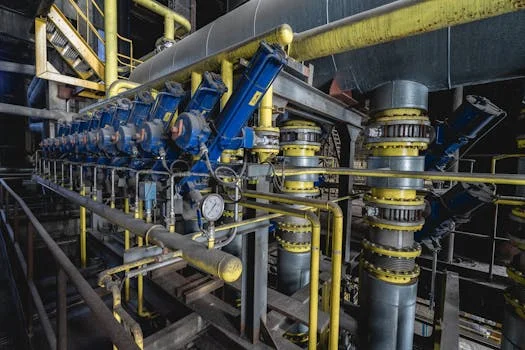
Membrane Bioreactor (MBR) technology offers a 45% footprint reduction over traditional extended aeration (EA) by eliminating the need for secondary clarifiers and tertiary sand filters. In the Johor context, where land prices in Iskandar Puteri and Johor Bahru have escalated, the footprint of 0.16 ha/MLD for MBR versus 0.35 ha/MLD for EA represents a decisive CAPEX offset during land acquisition. MBR systems consistently produce effluent with TSS < 5 mg/L and turbidity < 1 NTU, meeting the requirements for non-potable water reclamation for data centers without additional processing. This is a significant advantage over EA, which typically requires a separate tertiary filtration stage to reach similar clarity levels.
| Metric | Extended Aeration (EA) | Membrane Bioreactor (MBR) | Variance (%) |
|---|---|---|---|
| Footprint Requirement | 0.35 ha / MLD | 0.16 ha / MLD | -54% Area |
| Effluent TSS | 15–30 mg/L | < 2 mg/L | -90% Solids |
| Energy Consumption | 0.45 kWh/m³ | 0.90 kWh/m³ | +100% Power |
| Sludge Yield (kg DS/m³) | 1.1 kg | 0.8 kg | -27% Sludge |
| Operational Complexity | Moderate | High (PLC/SCADA) | N/A |
Energy remains the primary OPEX hurdle for MBR adoption in Malaysia. At a prevailing commercial electricity rate of RM 0.40 per kWh, the incremental power cost for MBR is approximately RM 0.35/m³ higher than EA. However, this is frequently offset by lower sludge dewatering chemical spend and reduced transport costs, as MBR sludge yields are roughly 27% lower due to longer sludge age (SRT) and higher biomass concentration. For a more detailed financial breakdown, engineers should consult the side-by-side MBR vs EA dataset which accounts for 20-year lifecycle costs in tropical climates. While EA remains the "safe" choice for rural Johor districts, MBR is becoming the default for urban reclamation projects where effluent quality and space are at a premium.
2025 CAPEX and OPEX Benchmarks for 5–100 MLD Plants
Budgetary estimates for Johor municipal projects in 2025 show a clear economies-of-scale curve, with CAPEX for a standard EA plant (including civil works) starting at USD 650 per m³/d for a 5 MLD facility and dropping to USD 380 per m³/d for 100 MLD regional hubs. MBR systems command a premium factor of approximately 1.28× over EA across this range, primarily due to the cost of membrane modules and sophisticated aeration/scouring systems. Procurement managers must also account for a 6% import duty and 5% VAT on Chinese-manufactured packaged plants under HS Code 8421.21, though these costs are often mitigated by the lower base manufacturing price compared to European alternatives.
| Design Capacity (MLD) | EA CAPEX (USD/m³/d) | MBR CAPEX (USD/m³/d) | Est. Annual OPEX (RM/m³) |
|---|---|---|---|
| 5 MLD | 650 | 830 | 1.15 |
| 20 MLD | 485 | 620 | 0.95 |
| 50 MLD | 410 | 525 | 0.82 |
| 100 MLD | 380 | 485 | 0.75 |
A critical component of the MBR financial model is the membrane replacement fund. Current field data indicates a membrane lifespan of 7–8 years in Johor’s municipal conditions, provided that pre-treatment systems—such as head-works screening systems—effectively remove hair and fibrous materials. Replacement costs typically represent 7% of the initial CAPEX every cycle. For comparison with other regional benchmarks, consultants may reference a comparable tropical-region design case to validate cost-per-capita assumptions in high-temperature environments.
Equipment Sourcing Checklist for Johor Municipal Projects
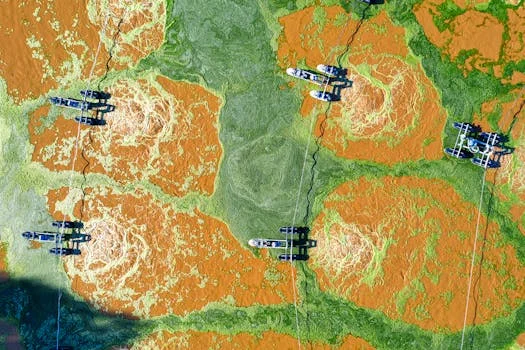
To ensure long-term mechanical reliability and compliance with Malaysia’s SPAN (National Water Services Commission) requirements, equipment sourcing must adhere to the Malaysian Standard MS 1228:2022 for mechanical and electrical works. Municipal projects in Johor require a minimum mechanical availability of 99.5%, particularly for critical components like blowers and return activated sludge (RAS) pumps. Given the humidity and salinity of coastal Johor regions (such as Pasir Gudang and Pontian), stainless steel 316 or epoxy-coated cast iron is mandatory for all submerged hardware to prevent premature corrosion.
- Regulatory Compliance: Verify that all equipment meets MS 1228:2022 and SPAN technical specifications for municipal use.
- Performance Guarantee: Demand a 2-year warranty on process performance, specifically for TN and TP removal, backed by a performance bond.
- Pre-treatment Integrity: Ensure fine screens (1mm to 2mm) are installed upstream of MBR units to prevent membrane fouling.
- Local Support: Vendor must maintain a local service centre within 150 km of the site (e.g., in Johor Bahru or Singapore) for membrane and automation support.
- Automation: Require SCADA integration with remote monitoring capabilities to track dissolved oxygen (DO) and Transmembrane Pressure (TMP) in real-time.
For projects requiring rapid deployment, containerised MBR package plants are often preferred as they arrive pre-tested and require minimal on-site civil work. This approach is particularly effective for 3–10 MLD expansions where the existing plant footprint is constrained. When evaluating vendors, engineers should prioritize those who can provide comprehensive documentation on flux rates and chemical cleaning frequencies (CIP) specific to Johor's influent profile.
Frequently Asked Questions
Can MBR plants in Johor be used for data center cooling?
Yes. Several plants in the Iskandar region are being upgraded to MBR specifically to provide high-clarity effluent (TSS < 2 mg/L) that meets the cooling tower make-up water standards required by large-scale data centers.
What is the typical lead time for a 10 MLD packaged plant?
For Chinese-manufactured packaged systems, the typical lead time is 12–16 weeks for fabrication, plus 2 weeks for shipping and customs clearance at Port of Tanjung Pelepas or Pasir Gudang.
Does the DOE 2025 standard apply to existing plants?
Existing plants are generally granted a grace period to upgrade, but any expansion or significant refurbishment triggers the requirement to meet the 2025 Standard A or B based on the discharge location.
What are the import duty implications for equipment?
Under HS Code 8421.21, water filtering or purifying machinery is subject to a 6% import duty and 5% VAT in Malaysia. Projects with "Pioneer Status" or specific industrial exemptions may apply for duty drawbacks.
Further Reading
Explore these in-depth articles on related wastewater treatment topics: