As of 2025, Tamil Nadu has grounded 18 sewerage projects worth ₹5,670.8 crore under AMRUT. Packages include the 10 MLD Nasapakkam tertiary STP in Chennai and the Koyambedu reuse plant cited at about 44 MLD (16 million m³/year). A municipal sewage treatment plant in Tamil Nadu now commonly pairs secondary biological treatment with ozonation, MBR, or A/O stages to meet CPCB discharge limits and supply industrial reuse water.
Municipal sewage treatment plant in Tamil Nadu: capacity and reuse status
Tamil Nadu’s municipal STP build-out centres on Chennai’s multi-zone network and statewide AMRUT sewerage packages. Chennai capacity already exceeds 550 MLD, with full collection targeted by 2027. Flagship reuse assets include Koyambedu’s ozonation train near 44–45 MLD and the 10 MLD Nasapakkam tertiary unit.
Current Status of Municipal Sewage Treatment in Tamil Nadu
Tamil Nadu has grounded 18 sewerage and septage management projects worth ₹5,670.8 crore under the AMRUT scheme, a major urban sanitation outlay (MoHUA SAAP data). Chennai leads installed capacity, with eight major municipal plants across its metropolitan zones. Long-running assets such as Kodungaiyur Zone-I (commissioned in 1991) sit beside newer Koyambedu trains and the Nasapakkam tertiary works.
The Chennai Metropolitan Water Supply and Sewerage Board (CMWSSB) reports that about 75% of Chennai’s sewage is collected through the underground network. CMWSSB still targets full sewage collection and treatment coverage by 2027. Beyond Chennai, the state mandates phased underground sewerage schemes in urban local bodies, starting with district headquarters and major towns (IJERA Salem study).
That rollout supports statewide sanitation upgrades while urban loads grow and national effluent rules tighten. For a comparative case study in another Indian state, see Municipal Sewage Treatment Plants in Rajasthan.
Key Municipal Sewage Treatment Plants in Tamil Nadu: Capacities and Technologies
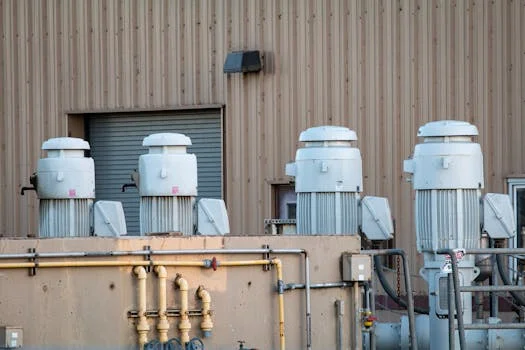
Chennai’s installed municipal sewage treatment capacity exceeds 550 MLD, with expansions underway to match rising urban flows. Plants use mixed process trains so operators can handle variable sewage strength and still hit effluent targets.
The Koyambedu STP is India’s largest municipal water-reuse project. Earlier project figures cite about 44 MLD (16 million m³/year). According to CSE India case documentation, the tertiary reuse train is rated 45 MLD (45,000 m³/day), expandable to 60 MLD.
That facility was commissioned in 2020 with ozonation disinfection. Treated water serves industrial users and cuts regional freshwater demand.
The Nasapakkam STP marks the shift to reuse-grade polishing. This 10 MLD tertiary plant was designed for advanced reuse, including potential potable blending pathways, and relies on multi-stage polishing after secondary treatment.
The Kodungaiyur STP Zone-I plant has run since 1991 and still anchors Chennai’s eastern sewerage zone. It treats mixed residential and commercial sewage with conventional secondary process trains refined over decades. City programmes have also planned about 120 MLD of additional STP capacity by 2026 to close coverage gaps.
Below is a summary of major municipal sewage treatment plants in Tamil Nadu:
| Plant Name | City | Capacity (MLD) | Primary Technology | Status/Key Feature |
|---|---|---|---|---|
| Koyambedu STP | Chennai | ~44 (16 million m³/year) | Conventional + Ozonation | Operational, India's largest water reuse project for industrial use |
| Nasapakkam STP | Chennai | 10 | Tertiary Treatment (Advanced) | Under construction, designed for potential potable reuse |
| Kodungaiyur STP (Zone-I) | Chennai | Significant, multi-phase | Conventional | Operational since 1991, treats mixed sewage |
| Perungudi STP | Chennai | ~54 | Conventional | Operational |
| Nesapakkam STP | Chennai | ~30 | Conventional | Operational |
For projects that need compact, reuse-grade effluent, an MBR system keeps footprint low while holding turbidity very low. Reuse disinfection can also use chlorine dioxide generation where ozone is not the preferred oxidant.
Technology Options for Modern STPs in Tamil Nadu
Anoxic/Aerobic (A/O) biological contact oxidation achieves 85–92% BOD and 80–90% COD removal under typical municipal loadings. Most plants we size for smaller urban local bodies in the 1 to 80 m³/h band run at the lower end of that removal band when inlet COD swings. Operators favour A/O for stable aeration control, simple staffing, and lower capital cost than membrane trains.
Membrane Bioreactor (MBR) systems are selected when land is scarce or reuse buyers demand tighter solids limits. Combining activated sludge with membrane filtration, MBR delivers effluent with turbidity typically below 1 μm and meets or exceeds CPCB secondary standards. Footprint can fall by up to 60% versus conventional secondary clarification.
Ozonation provides over 99% pathogen kill without chlorine residuals and is used at Koyambedu for industrial reuse where microbiological safety is critical. Ozone also oxidises colour and some emerging contaminants before industrial distribution.
Tertiary trains are required when discharge or reuse targets exceed secondary CPCB limits. Typical packages combine multi-media filtration, activated carbon, and UV or ozonation. Nasapakkam’s 10 MLD tertiary design follows that polishing logic for lake recharge and higher-purity end uses.
Here is a comparison of key treatment technologies for municipal STPs:
| Technology | Key Features | Typical Effluent Quality (BOD/TSS) | Footprint | Suitable Scale | Cost Factor (Relative) |
|---|---|---|---|---|---|
| A/O Biological Contact Oxidation | Robust, simple, good nutrient removal | <30 mg/L / <50 mg/L | Medium | 1-80 MLD (decentralized to medium) | Low to Medium |
| MBR (Membrane Bioreactor) | High effluent quality, compact, pathogen removal | <5 mg/L / <5 mg/L (turbidity <1 μm) | Small (up to 60% less) | 1-100+ MLD (medium to large) | Medium to High |
| Conventional Activated Sludge | Well-established, flexible, scalable | <30 mg/L / <50 mg/L | Large | 5-500+ MLD (medium to very large) | Low |
| Ozonation (Disinfection) | High pathogen kill, no chlorine residual, color removal | (Post-treatment) | Small (for disinfection unit) | All scales (as tertiary step) | Medium (as an add-on) |
| Tertiary Filtration (Multi-media) | Removes suspended solids, pre-treatment for advanced stages | <10 mg/L / <10 mg/L | Medium | All scales (as tertiary step) | Low to Medium (as an add-on) |
For constrained urban plots, WSZ series integrated plants fit underground or roadside envelopes. Where reuse buyers need lower TSS after secondary treatment, multi-media filtration systems are a common polishing step before UV or ozone.
Cost, Compliance, and ROI for Tamil Nadu STP Projects
Average construction cost for municipal STPs across the state runs ₹4–6 crore per MLD for conventional secondary systems. Advanced MBR or reuse-ready plants typically land at ₹7–9 crore per MLD because of membranes, tertiary units, and tighter instrumentation.
All municipal STPs serving Tamil Nadu urban local bodies must meet Central Pollution Control Board (CPCB) effluent discharge standards for the receiving environment. Key surface-water discharge parameters used in project briefs include Biochemical Oxygen Demand (BOD) ≤ 30 mg/L, Total Suspended Solids (TSS) ≤ 50 mg/L, and Fecal Coliform ≤ 1,000 MPN/100mL. Land application and sensitive water bodies often carry stricter consent conditions from the state board.
AMRUT central assistance can cover up to 35% of eligible project cost for qualifying Tamil Nadu cities and towns. That share lowers the cash burden on urban local bodies and accelerates sewerage packages. State incentives may stack on top for selected ULBs.
Reuse economics matter where industrial freshwater is scarce. At 70% recovery, avoided intake of ₹15–25/m³ can repay tertiary upgrades faster than discharge-only designs. For a deeper MBR cost comparison, see the MBR Effluent Quality vs Cost guide.
| Category | Parameter | Value/Range | Notes |
|---|---|---|---|
| Construction Cost | Conventional STP (per MLD) | ₹4–6 crore | For basic secondary treatment |
| Construction Cost | MBR/Reuse-ready STP (per MLD) | ₹7–9 crore | For advanced treatment and high-quality reuse |
| CPCB Discharge Norms | BOD | ≤ 30 mg/L | For discharge into surface waters |
| CPCB Discharge Norms | TSS | ≤ 50 mg/L | For discharge into surface waters |
| CPCB Discharge Norms | Fecal Coliform | ≤ 1,000 MPN/100mL | Surface-water discharge consent typical |
| Funding Support | AMRUT central assistance | Up to 35% of eligible cost | For qualifying Tamil Nadu ULBs |
| Reuse ROI | Avoided freshwater cost at 70% recovery | ₹15–25/m³ | Industrial zones with high intake tariffs |
How is wastewater managed across Tamil Nadu?
Wastewater in Tamil Nadu is managed through CMWSSB’s Chennai network plus phased underground sewerage schemes in other urban local bodies. About 75% of Chennai’s sewage is already collected, while AMRUT packages fund new STPs, pumping stations, and septage systems outside the metro core.
Outside large cities, many towns still mix networked sewage with septage trucking until UGSS packages finish. Decentralized trains in the 1–80 m³/h range are common for institutional campuses and fringe wards. Statewide policy pushes district headquarters first, then smaller ULBs, so treatment capacity tracks urban growth rather than waiting for one mega plant.
Which tannery effluent treatment technologies fit Tamil Nadu?
Tannery effluent treatment in Tamil Nadu needs chrome, sulfide, and high-COD controls that municipal STPs are not designed to accept undiluted. Typical industrial trains use screening, equalization, sulfide oxidation, coagulation for chrome precipitation, then biological treatment and tertiary polishing before sewer discharge or CETP acceptance.
Municipal plants listed above treat domestic and commercial sewage, not concentrated tannery liquor. Tanneries should route through a CETP or a dedicated industrial ETP sized for chromium and salinity. Mixing untreated tannery waste into a municipal STP risks consent failures on metals and COD spikes.
Selection checklist for Tamil Nadu municipal STP buyers
Use this short checklist before freezing process and bid documents:
- Confirm consent limits (BOD ≤ 30 mg/L, TSS ≤ 50 mg/L, fecal coliform ≤ 1,000 MPN/100mL, or stricter local conditions).
- Match capacity to 15–20 year population projections, not today’s average flow alone.
- Decide discharge-only versus industrial reuse; reuse usually needs tertiary filtration plus ozone or chlorine dioxide.
- Compare ₹4–6 crore/MLD conventional versus ₹7–9 crore/MLD MBR/reuse-ready capital.
- Check AMRUT eligibility for up to 35% central assistance and state co-funding.
- Reserve land early; MBR can cut footprint by up to 60% on constrained urban sites.
- Plan O&M staffing and power (kWh/m³) before selecting membranes or ozone.
Who this is for / Next step
This guide is for municipal engineers, EPC contractors, and ULB procurement teams sizing sewerage packages in Tamil Nadu. Look elsewhere if you need a tannery CETP design package or a non-Indian regulatory template. To size an MBR, underground integrated plant, or disinfection package for a Tamil Nadu bid, request a technical quote with flow, influent COD/BOD, and reuse targets.
Frequently Asked Questions
How many major municipal STPs does Chennai operate?
Chennai’s metropolitan area houses eight major municipal sewage treatment plants across its sewerage zones. Landmark assets include Kodungaiyur Zone-I (operating since 1991), Perungudi, Nesapakkam, Koyambedu reuse trains, and the 10 MLD Nasapakkam tertiary unit. CMWSSB reports roughly 75% sewage collection today and targets full collection and treatment coverage by 2027.
What does a municipal STP cost per MLD in Tamil Nadu?
Conventional secondary plants typically cost ₹4–6 crore per MLD to build in Tamil Nadu. MBR or reuse-ready trains rise to ₹7–9 crore per MLD because of membranes, tertiary filters, and disinfection. AMRUT support can cover up to 35% of eligible cost for qualifying urban local bodies, which often decides whether a reuse train clears financial appraisal.
Which effluent limits apply to municipal STP discharge?
Project briefs commonly use CPCB surface-water discharge values of BOD ≤ 30 mg/L, TSS ≤ 50 mg/L, and fecal coliform ≤ 1,000 MPN/100mL. Sensitive receivers and land application can impose tighter state consent conditions. Always confirm the TNPCB consent for the exact outfall before freezing process guarantees.
Is Koyambedu suitable as a reuse design reference?
Yes for industrial reuse benchmarking. Earlier figures cite about 44 MLD (16 million m³/year); CSE documents a 45 MLD tertiary reuse rating with ozonation, expandable to 60 MLD, commissioned in 2020. The plant supplies industrial users through a long distribution network and is a practical reference for ozone-based municipal reuse in India.
Can a municipal STP treat tannery wastewater directly?
No. Concentrated tannery effluent carries chrome, sulfide, and COD loads that municipal biology and consent envelopes are not sized for. Route tannery streams to a CETP or dedicated industrial ETP with metals precipitation first. Only pretreated, consent-compliant discharge should ever enter a municipal sewer leading to an STP.