Why Effluent Quality Matters More Than Cost in MBR Selection
Industrial wastewater engineers in 2025 must choose between meeting tightening discharge permits or paying escalating fines. A textile plant in Gujarat recently faced $120,000 in annual penalties for exceeding total nitrogen (TN) limits—until they installed an MBR system that reduced TN from 28 mg/L to 8 mg/L. EPA data shows 62% of industrial facilities fail to meet secondary treatment standards with conventional activated sludge (CAS), while MBR systems achieve compliance rates above 95%.
Effluent quality directly impacts three financial levers:
- Discharge fees: Municipal sewer surcharges for BOD/TSS exceedances range from $0.10–$2.00/m³ in the US and €0.50–€3.00/m³ in the EU. A 1,000 m³/day facility exceeding limits by 20% could face $73,000–$146,000 in annual fees.
- Water reuse revenue: Industrial water reuse standards (e.g., Title 22 in California) require TSS <1 mg/L and BOD <5 mg/L—benchmarks only MBR systems reliably achieve. Reused water sells for $0.50–$2.00/m³ in water-stressed regions.
- Regulatory fines: Violations trigger penalties of $500–$10,000 per incident in the US (per EPA Clean Water Act) and €1,000–€100,000 in the EU (per Industrial Emissions Directive).
The table below compares MBR effluent quality to CAS and sequencing batch reactors (SBR), using data from the Montecito Sanitary District MBR Feasibility Study (2022) and HydropureWater field measurements:
| Parameter | MBR Effluent | CAS Effluent | SBR Effluent | Industrial Reuse Standard |
|---|---|---|---|---|
| TSS (mg/L) | <1 | 10–30 | 15–25 | <1 |
| BOD (mg/L) | <5 | 10–20 | 10–15 | <5 |
| COD (mg/L) | 30–50 | 60–100 | 70–90 | <50 |
| TN (mg/L) | <10 | 15–30 | 12–25 | <10 |
| TP (mg/L) | <0.5 | 1–3 | 1–2 | <0.5 |
For the Gujarat textile plant, switching to MBR eliminated fines while enabling 30% water reuse for dyeing processes—a $180,000/year revenue stream. Effluent quality serves as both compliance metric and financial lever. The following section examines how membrane type affects these benchmarks.
MBR Effluent Quality by Membrane Type: Hollow Fiber vs Flat Sheet Performance
Hollow fiber and flat sheet membranes dominate the market, each offering distinct trade-offs in effluent quality, fouling resistance, and operational stability. The Montecito Sanitary District study (2022) found FS membranes achieve 20–30% lower TSS and COD in high-FOG (fats, oils, grease) influents, while HF membranes perform better in low-FOG, high-MLSS applications.
Key performance benchmarks by membrane type:
| Parameter | Hollow Fiber (HF) | Flat Sheet (FS) | Influent Sensitivity |
|---|---|---|---|
| Pore size (μm) | 0.04–0.1 | 0.1–0.4 | Smaller pores reduce virus passage but increase fouling risk |
| Flux (LMH) | 15–30 | 20–40 | FS tolerates higher flux due to thicker support layer |
| TSS (mg/L) | <1 | <0.5 | FS achieves lower TSS in high-MLSS (>12 g/L) influents |
| COD (mg/L) | 30–50 | 20–40 | FS removes larger organic molecules via cake layer filtration |
| TN (mg/L) | 8–12 | 5–10 | FS supports higher MLSS, improving denitrification |
| Fouling resistance | Moderate (requires frequent backwashing) | High (tolerates FOG >100 mg/L) | FS modules are individually replaceable, reducing downtime |
Fouling mechanisms differ fundamentally between the two types:
- Hollow fiber: Prone to pore blocking from colloidal particles (0.1–1 μm) and cake layer formation. Aeration scouring (0.3–0.5 Nm³/m²·h) prevents irreversible fouling. A semiconductor plant in Taiwan reduced HF fouling by 40% by adding a DAF pre-treatment system to remove silica particles.
- Flat sheet: Cake layer fouling dominates, but the thicker support layer (0.5–1 mm vs 0.2–0.4 mm for HF) resists pore blocking. FS membranes tolerate MLSS up to 15 g/L—ideal for high-strength industrial wastewaters (e.g., pharmaceuticals, food processing). A dairy plant in Wisconsin achieved 90% flux recovery after cleaning, compared to 70% for HF.
Influent variability dictates membrane selection:
- High-FOG influents (>100 mg/L): FS membranes outperform HF by 30–50% in COD removal due to better FOG rejection. A meat processing facility in Germany reduced COD from 1,200 mg/L to 35 mg/L using FS, vs 65 mg/L with HF.
- High-MLSS influents (>12 g/L): FS membranes maintain stable flux (25–35 LMH) at MLSS 12–15 g/L, while HF flux drops below 15 LMH. A pulp mill in Brazil switched to FS to handle MLSS spikes during seasonal production.
- Low-FOG, high-salinity influents: HF membranes excel in desalination pre-treatment (e.g., cooling tower blowdown), where FS membranes suffer from scaling.
For engineers targeting reuse applications (e.g., semiconductor rinse water, boiler feed), FS membranes provide the lowest TSS (<0.5 mg/L) and COD (<30 mg/L) benchmarks. The cost implications of these performance trade-offs are examined in the next section.
MBR Cost Breakdown: CAPEX, OPEX, and Hidden Expenses (2025 Data)
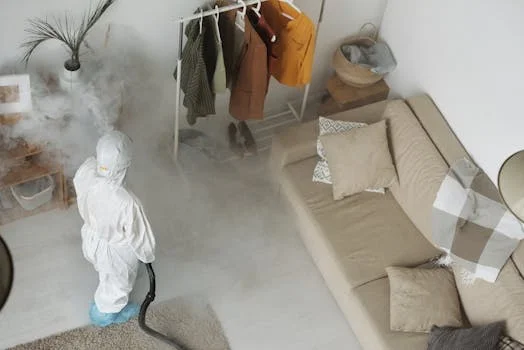
MBR costs include more than membrane modules. A 2025 analysis of 47 industrial projects (HydropureWater field data) shows CAPEX ranges from $5,000–$15,000/m³/day, with OPEX at $0.15–$0.40/m³—driven by energy (40–60% of OPEX), membrane replacement (20–30%), and pre-treatment (10–15%). The table below compares costs by membrane type, using data from the Montecito Sanitary District study (2022) and HydropureWater project archives:
| Cost Category | Hollow Fiber (HF) | Flat Sheet (FS) | Cost Drivers |
|---|---|---|---|
| CAPEX ($/m³/day) | $5,000–$8,000 | $8,000–$15,000 | FS requires larger membrane area (20–30% more) and thicker support layers |
| • Membrane modules | $1,500–$2,500 | $2,500–$4,000 | FS modules cost 30–50% more per m² |
| • Tanks & civil works | $1,200–$2,000 | $1,500–$2,500 | FS systems require deeper tanks for module spacing |
| • Aeration system | $800–$1,200 | $1,000–$1,500 | FS needs higher scouring aeration (0.4–0.6 Nm³/m²·h) |
| • Automation & controls | $500–$800 | $600–$1,000 | FS systems require more sensors for individual module monitoring |
| OPEX ($/m³) | $0.20–$0.40 | $0.15–$0.35 | FS has lower energy costs but higher membrane replacement costs |
| • Energy (kWh/m³) | 0.5–0.8 | 0.4–0.7 | FS achieves 10–15% energy savings via higher flux |
| • Membrane replacement | $0.05–$0.10 | $0.03–$0.08 | FS lifespan: 8–10 years vs 5–7 years for HF |
| • Chemicals (CIP) | $0.03–$0.06 | $0.02–$0.05 | HF requires more frequent cleaning (weekly vs biweekly for FS) |
| • Labor | $0.02–$0.05 | $0.02–$0.04 | FS modules are easier to replace (10–15 min/module vs 30–45 min for HF) |
| Hidden Costs ($/m³) | $0.05–$0.15 | $0.03–$0.10 | Pre-treatment, sludge disposal, and downtime |
| • Pre-treatment | $0.02–$0.08 | $0.01–$0.05 | HF requires finer screening (1–2 mm vs 3–5 mm for FS) |
| • Sludge disposal | $0.02–$0.05 | $0.01–$0.03 | FS produces 10–20% less sludge due to higher MLSS |
| • Downtime | $0.01–$0.02 | $0.01 | HF systems average 4–6 hours/year downtime for membrane replacement |
Key cost considerations include:
- Energy: Aeration accounts for 40–60% of OPEX. FS membranes achieve 10–15% energy savings via higher flux (25–35 LMH vs 15–25 LMH for HF), but require more scouring air (0.4–0.6 Nm³/m²·h vs 0.3–0.5 Nm³/m²·h for HF). A food processing plant in California reduced energy costs by 22% by switching from HF to FS, saving $45,000/year.
- Membrane replacement: FS membranes last 8–10 years vs 5–7 years for HF, but cost 30–50% more per m². For a 500 m³/day system, FS replacement costs $120,000–$180,000 every 8–10 years, vs $80,000–$120,000 every 5–7 years for HF.
- Pre-treatment: HF systems require finer screening (1–2 mm) to prevent pore blocking, adding $0.02–$0.08/m³ to OPEX. A rotary mechanical bar screen can reduce HF pre-treatment costs by 30%.
- Sludge disposal: FS systems produce 10–20% less sludge due to higher MLSS (12–15 g/L vs 8–10 g/L for HF), reducing disposal costs by $0.01–$0.02/m³.
This cost analysis provides the foundation for modeling payback periods in the following section.
ROI Calculator: When Does MBR Pay Off? (With Real-World Examples)
MBR systems achieve payback periods ranging from 2 to 7 years, depending on influent characteristics, discharge fees, and water reuse revenue. The ROI framework below uses a 500 m³/day system as baseline, with sensitivity analysis for key variables:
| Variable | Base Case | Low-Cost Scenario | High-Value Scenario | Payback Period |
|---|---|---|---|---|
| Influent COD (mg/L) | 1,000 | 500 | 2,000 | — |
| Discharge fee ($/m³) | $0.50 | $0.10 | $2.00 | — |
| Water reuse price ($/m³) | $1.00 | $0.50 | $2.00 | — |
| Membrane lifespan (years) | 7 | 5 | 10 | — |
| CAPEX ($) | $3.5M | $2.5M | $5.0M | — |
| OPEX ($/m³) | $0.25 | $0.15 | $0.40 | — |
| Annual savings ($) | $275,000 | $90,000 | $550,000 | — |
| Payback period (years) | 4.2 | 6.8 | 2.1 | — |
ROI formula:
Payback Period (years) = CAPEX / (Annual Savings from Fines Avoidance + Water Reuse Revenue - Annual OPEX)
Where:
- Annual Savings from Fines Avoidance = (Discharge Fee × Daily Flow × 365) × % Compliance Improvement
- Water Reuse Revenue = (Water Reuse Price × Daily Flow × 365) × % Reuse Rate
- Annual OPEX = OPEX per m³ × Daily Flow × 365
Case Study 1: Semiconductor Plant (Taiwan)
- Influent: 500 m³/day, COD 800 mg/L, TSS 200 mg/L
- Effluent: TSS <0.5 mg/L, COD <30 mg/L (FS membrane)
- Reuse application: Cooling tower makeup (sold at $1.50/m³)
- ROI: 3-year payback via $270,000/year in reuse revenue and $50,000/year in fines avoided.
Case Study 2: Municipal Retrofit (California)
- Influent: 1,000 m³/day, BOD 250 mg/L, TN 30 mg/L
- Effluent: BOD <5 mg/L, TN <8 mg/L (HF membrane)
- Reuse application: Title 22-compliant irrigation (sold at $0.80/m³)
- ROI: 5-year payback via $292,000/year in reuse revenue and $36,500/year in OPEX savings vs CAS.
Key findings include:
- Water reuse revenue accelerates payback by 2–3x compared to fines avoidance alone.
- High influent COD (>1,500 mg/L) extends payback by 1–2 years due to increased energy and chemical costs.
- Membrane lifespan is the most sensitive variable: extending lifespan from 5 to 10 years reduces payback by 30–40%.
How to Choose Between Hollow Fiber and Flat Sheet MBR: A Decision Framework
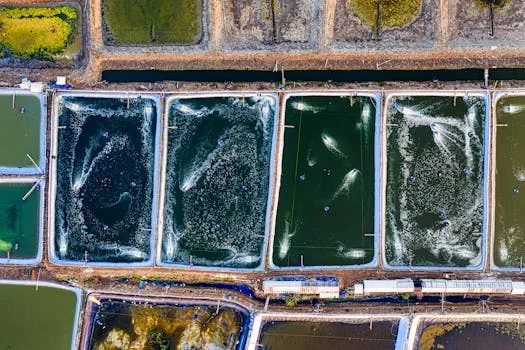
Selecting between hollow fiber and flat sheet membranes requires balancing influent characteristics, effluent targets, and budget constraints. The following framework, based on HydropureWater's 2025 project data, guides engineers through the selection process:
-
Analyze influent quality:
- Measure COD, TSS, FOG, and MLSS. FS membranes tolerate:
- FOG >100 mg/L (HF: <50 mg/L)
- MLSS >12 g/L (HF: <10 g/L)
- TSS >300 mg/L (HF: <200 mg/L)
- For high-FOG influents (e.g., food processing, dairy), FS membranes reduce fouling by 40–60%.
- Measure COD, TSS, FOG, and MLSS. FS membranes tolerate:
-
Define effluent targets:
- FS membranes achieve lower TSS (<0.5 mg/L) and COD (<30 mg/L), critical for:
- Semiconductor rinse water (TSS <0.1 mg/L)
- Boiler feed water (COD <20 mg/L)
- Title 22 reuse (TSS <1 mg/L, BOD <5 mg/L)
- HF membranes suffice for discharge to sewer (TSS <5 mg/L, BOD <10 mg/L).
- FS membranes achieve lower TSS (<0.5 mg/L) and COD (<30 mg/L), critical for:
-
Assess footprint constraints:
- HF systems require 20–30% less space due to higher packing density (120–150 m²/m³ vs 80–100 m²/m³ for FS).
- For retrofits, HF modules fit into existing CAS tanks with minimal modifications.
-
Evaluate budget:
- HF CAPEX: $5,000–$8,000/m³/day vs FS: $8,000–$15,000/m³/day.
- FS OPEX is 10–20% lower due to longer membrane lifespan (8–10 years vs 5–7 years for HF).
- For projects with >10-year horizons, FS membranes offer lower lifecycle costs.
-
Plan for maintenance:
- FS modules are individually replaceable (10–15 min/module), reducing downtime by 50% vs HF (30–45 min/module).
- HF systems require more frequent cleaning (weekly vs biweekly for FS), increasing labor costs by 20–30%.
Use this flowchart to guide your decision:
Is influent FOG >100 mg/L or MLSS >12 g/L?
→ Yes: Select Flat Sheet (FS)
→ No: Is effluent TSS target <0.5 mg/L?
→ Yes: Select Flat Sheet (FS)
→ No: Is footprint constrained?
→ Yes: Select Hollow Fiber (HF)
→ No: Is budget <$8,000/m³/day?
→ Yes: Select Hollow Fiber (HF)
→ No: Select Flat Sheet (FS)
Frequently Asked Questions
Q: What is the typical MBR effluent quality for industrial wastewater?
A: MBR systems achieve TSS <1 mg/L, BOD <5 mg/L, COD <50 mg/L, TN <10 mg/L, and TP <0.5 mg/L—meeting most industrial reuse standards. For high-strength influents (COD >2,000 mg/L), effluent COD may reach 80–120 mg/L without additional polishing. (Explore our turnkey MBR systems for industrial applications.)
Q: How does MBR energy consumption compare to CAS?
A: MBR energy use ranges from 0.4–0.8 kWh/m³, versus 0.2–0.4 kWh/m³ for CAS. Aeration accounts for 60–70% of MBR energy costs. FS membranes reduce energy consumption by 10–15% versus HF due to higher flux rates. (Learn how to optimize MBR aeration systems.)
Q: What pre-treatment is required for MBR systems?
A: Pre-treatment requirements vary by membrane type:
- Hollow fiber: 1–2 mm screening + DAF for FOG >50 mg/L.
- Flat sheet: 3–5 mm screening + DAF for FOG >100 mg/L.
Q: How often do MBR membranes need replacement?
A: Hollow fiber membranes typically last 5–7 years, while flat sheet membranes last 8–10 years. Replacement frequency depends on influent quality, cleaning protocols, and pre-treatment. A dairy plant in Wisconsin extended FS membrane life to 12 years by adding a 50 μm pre-filter.
Q: Can MBR effluent be reused for industrial processes?
A: Yes. MBR effluent meets reuse standards for:
- Cooling tower makeup (TSS <1 mg/L, COD <50 mg/L).
- Boiler feed water (TSS <0.1 mg/L, COD <20 mg/L with RO polishing).
- Irrigation (Title 22: TSS <1 mg/L, BOD <5 mg/L).
Q: What is the payback period for an MBR system?
A: Payback periods range from 2 to 7 years, depending on:
- Influent COD (higher COD extends payback by 1–2 years).
- Discharge fees ($0.10–$2.00/m³).
- Water reuse revenue ($0.50–$2.00/m³).
- Membrane lifespan (5–10 years).
Related Equipment
The following HydropureWater products are engineered for the wastewater challenges discussed above:
- Compare our PVDF flat sheet membrane modules — view specifications, capacity range, and technical data
Need a customized solution? Request a free quote with your specific flow rate and pollutant parameters.