Oregon operates over 100 municipal sewage treatment plants. Key examples include Corvallis (about 4.1 billion gallons/year), Clackamas Tri-City WRRF, Newberg (4.0 MGD oxidation ditch), Redmond (conventional activated sludge), and Ontario (aerated lagoons). Oregon municipal sewage treatment trains typically remove 90-98% of BOD and TSS under Oregon DEQ NPDES permits. Willamette Valley plants run high hydraulic loads; eastern systems face cold-weather kinetics and summer evaporation.
Oregon Municipal Sewage Treatment Capacity by Region
Oregon municipal sewage treatment covers over 100 permitted plants, from multi-MGD Willamette Valley hubs to eastern lagoon systems. Corvallis runs about 9.7 MGD average and 21 MGD peak, near 4.1 billion gallons yearly. Tri-City WRRF lists about 12.0 MGD design capacity. Process choice tracks land cost, winter I/I, and basin nutrient limits.
Portland-metro and Willamette Basin plants such as Tri-City WRRF use secondary and tertiary stages to protect the Willamette River. Eastern Oregon towns such as Ontario often keep aerated lagoons for lower average flows and agricultural runoff. Most plants we size for high-desert communities still run at the lower end of aeration power in winter, because cold sludge age is the binding constraint, not peak summer BOD.
Influent quality shifts with land use. Urban plants see more household chemicals and microplastics. Rural plants see BOD and TSS spikes from food processing and farm discharge. Newberg’s 4.0 MGD oxidation ditch is sized for steady suburban organic load while discharging to the Willamette under a conventional secondary permit.
| Facility Name | Location | Design Capacity (MGD) | Primary Technology | Annual Volume (Approx.) |
|---|---|---|---|---|
| Corvallis WWTP | Corvallis, OR | 9.7 (Avg) / 21 (Peak) | Activated Sludge / Trickling Filter | 4.1 Billion Gallons |
| Tri-City WRRF | Oregon City, OR | 12.0 | Conventional Activated Sludge | 4.3 Billion Gallons |
| Newberg WWTP | Newberg, OR | 4.0 | Oxidation Ditch | 1.4 Billion Gallons |
| Redmond WWTP | Redmond, OR | 2.8 | Conventional Activated Sludge | 1.0 Billion Gallons |
| Ontario WWTP | Ontario, OR | 2.5 | Aerated Lagoons | 0.9 Billion Gallons |
Treatment Technologies Used in Oregon: Process Comparisons and Efficiency Benchmarks
Newberg’s 4.0 MGD oxidation ditch is a common mid-size Oregon process when high BOD removal is needed without membrane complexity. Long solids retention time helps the ditch ride winter hydraulic surges. As DEQ phosphorus and nitrogen limits tighten, many owners evaluate high-efficiency MBR systems for Oregon’s strict NPDES permit standards. Those systems cut clarifier footprint and raise effluent quality versus conventional secondary trains.
Oregon BOD/TSS removal targets typically sit in the 90-98% band for well-operated secondary plants. Conventional activated sludge at plants such as Redmond usually lands near 90-95% removal. Membrane bioreactors can exceed 98-99% BOD/TSS removal and often support Class A reuse when polishing and disinfection are complete. That matters for Oregon water-reuse programs that send effluent to irrigation or industrial cooling.
Energy remains a design dial. CAS plants commonly use about 0.3 to 0.6 kWh/m³ treated. MBR trains often use about 0.8 to 1.2 kWh/m³, but they drop secondary clarifiers and many tertiary filters. Winter I/I can raise influent flow by 300-500% on older collection systems and wash out biomass in short-SRT tanks. Aerated lagoons stay cheap to staff, yet ammonia removal falters when water temperature drops. Owners weighing a retrofit often review national MBR system benchmarks and ROI analysis before locking CAPEX.
| Technology | BOD/TSS Removal % | Energy Use (kWh/m³) | Footprint Requirement | Best Use Case in Oregon |
|---|---|---|---|---|
| Aerated Lagoon | 80-90% | 0.2 - 0.4 | Very High | Rural, low-land cost areas (e.g., Eastern OR) |
| Oxidation Ditch | 90-96% | 0.4 - 0.7 | Moderate | Mid-sized cities (e.g., Newberg) |
| CAS (Activated Sludge) | 90-95% | 0.3 - 0.6 | Moderate | Regional hubs (e.g., Clackamas) |
| MBR (Membrane) | 98-99%+ | 0.8 - 1.2 | Low | Strict nutrient limits / Water reuse |
Cost Benchmarks for Oregon Municipal Plants: Capital, O&M, and Lifecycle Costs
Capital cost for Oregon municipal wastewater work commonly runs from about $5 million for small upgrades to more than $50 million for regional expansions. On a 1.0 MGD plant, civil works and tankage often take 40-50% of CAPEX, with mechanical and electrical packages filling the rest. Prevailing-wage rules and permit-driven nutrient stages move the number as much as equipment brand. Small towns still study Colorado’s approach to package plants for rural municipalities when modular civil savings matter.
O&M in Oregon typically ranges from $0.50 to $2.00 per 1,000 gallons treated. Energy leads the bill, then labor and biosolids. Landfill rules keep pushing sludge cost up, so many plants add digestion or composting. A 20-year NPV view often shows MBR CAPEX and energy higher up front, yet total lifecycle cost can fall 10-15% when tertiary filters would otherwise be mandatory for nutrient limits.
Project finance still leans on the Oregon Clean Water State Revolving Fund (CWSRF) for low-interest loans and principal forgiveness. According to Oregon DEQ’s CWSRF program page, 2026 application deadlines are April 10, 2026 and October 9, 2026. USDA Rural Development grants remain important for towns under 10,000 population. Lenders expect an engineering report that ties process selection to permit limits and life-cycle cost, not brochure claims.
| Cost Category | Small Plant (0.5 MGD) | Medium Plant (5 MGD) | Large Plant (20+ MGD) |
|---|---|---|---|
| Capital Cost (Est.) | $4M - $8M | $25M - $45M | $100M+ |
| Annual O&M | $150k - $300k | $1.2M - $2.5M | $6M+ |
| Cost per 1k Gallons | $1.80 - $2.50 | $0.90 - $1.40 | $0.50 - $0.85 |
| Primary Funding | CWSRF / USDA | CWSRF / Municipal Bonds | Revenue Bonds |
Oregon DEQ Compliance: NPDES Permits, Discharge Limits, and Reporting Requirements
Oregon DEQ NPDES permits for municipal plants generally require at least 85% BOD and TSS removal, with monthly average effluent limits often set at 30 mg/L for both parameters. Water-quality limited reaches such as the Tualatin River or selected Willamette segments can set total phosphorus near 0.1 mg/L, and some basin language goes as low as 0.07 mg/L. Flow, pH, and chlorine residual (when chlorine is used) remain high-frequency compliance parameters.
According to Oregon DEQ’s NPDES Domestic Treatment Facilities Monitoring Matrix, major plants above 1.0 MGD average dry-weather design capacity typically sample BOD and TSS three times per week as 24-hour composites. They also meter flow daily and measure total residual chlorine daily when chlorine disinfection is used. Many plants are leaving gaseous chlorine for safety reasons. Facilities now install on-site ClO₂ generators for Oregon’s secondary disinfection requirements or UV systems to hold fecal coliform below 200 organisms per 100 mL. Eastern Oregon ammonia limits can fall below 1.0 mg/L NH3-N in summer when dilution is scarce.
Reporting runs through Oregon DEQ’s Electronic Discharge Monitoring Report (EDMR) system. Stated civil penalty ranges in Oregon enforcement guidance still span about $1,000 to $25,000 per day per violation. The 2024 EPA and Oregon DEQ consent decree with the City of Sandy required a $250,000 civil penalty (EPA, 2024). That case followed years of NPDES limit violations and bypass events at the municipal WWTP. Blending during high-flow storms is under tighter permit language statewide, so I/I reduction and wet-weather capacity now sit on the same critical path as nutrient upgrades.
- BOD/TSS: Standard limit < 30 mg/L; Sensitive areas < 10 mg/L.
- Ammonia (NH3-N): Seasonal limits often < 1.0 mg/L during summer months.
- Total Phosphorus: Limits as low as 0.07 - 0.1 mg/L in specific basins.
- Disinfection: Fecal coliform < 200/100mL; Enterococcus limits emerging for coastal zones.
Vendor Selection Framework: How to Choose a Sewage Treatment Equipment Supplier for Oregon Projects
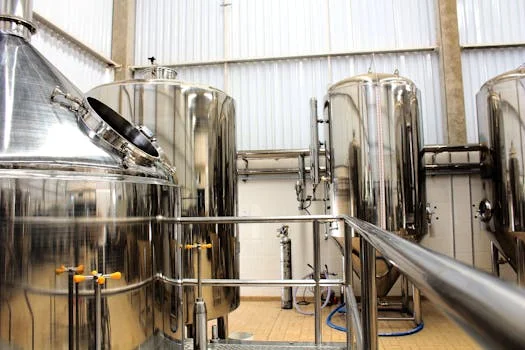
Vendor scoring for Oregon municipal projects should weight long-term reliability above the lowest bid. West-side plants need documented I/I surge performance. East-side plants need cold-weather nitrification data. For small cities and industrial parks, compact underground sewage treatment systems for Oregon municipalities can cut freeze risk and visual impact when land is scarce.
DEQ compliance experience is the first filter. Ask for pilot data or references from similar climates and verify MBR flux at peak cold-weather flow, not only at 20°C design points. Local service response within about 4-8 hours for blowers, pumps, or membrane modules often prevents a single failure from becoming an EDMR violation.
Reject bids that hide lifecycle cost or offer vague nutrient guarantees. Strong vendors state effluent quality across the full design temperature and flow envelope and show how modular trains shorten Oregon civil labor schedules. Use the weighting table below as a starting RFQ scorecard, then adjust for basin-specific phosphorus or ammonia limits.
| Selection Criteria | Weighting | Key Consideration for Oregon |
|---|---|---|
| DEQ Compliance Track Record | 35% | Proven ability to meet < 0.1 mg/L Phosphorus if required. |
| Cold Weather Performance | 25% | Insulated tanks or specialized biology for Eastern OR. |
| Lifecycle Cost (20-yr) | 20% | Energy efficiency and membrane replacement costs. |
| Local Support/Service | 15% | Technician proximity to site (within 4-8 hours). |
| Modular Scalability | 5% | Ease of adding capacity for future population growth. |
Who this is for: municipal engineers, EPC firms, and procurement managers sizing Oregon secondary or tertiary upgrades under DEQ NPDES limits. Who should look elsewhere: teams seeking only residential septic design, or out-of-state package pricing without Oregon permit language. Next step: send flow, influent BOD/TSS/NH3/TP, and permit limits through Request a project quote. Process options can then be screened against wet-weather peaking and nutrient caps.
Frequently Asked Questions
What is the average cost of a municipal sewage treatment plant in Oregon?
Mid-sized Oregon communities often see capital cost near $10 to $15 per gallon of daily treatment capacity. A 1 MGD plant commonly lands between $10 million and $15 million when nutrient removal and site civil work are included. Small 0.5 MGD upgrades in the cost table still cluster around $4M-$8M, while 20+ MGD regional plants exceed $100M. Local wage rules and phosphorus limits move the quote as much as equipment selection.
How does Oregon DEQ regulate phosphorus discharge?
Oregon DEQ sets phosphorus limits through basin TMDLs and individual NPDES permits, not a single statewide number. Sensitive basins such as the Tualatin and parts of the Willamette can require seasonal total phosphorus near 0.1 mg/L, with some language as low as 0.07 mg/L. Meeting those caps usually needs chemical precipitation, tertiary filtration, or MBR-class solids separation plus tight chemical dosing control.
Are package treatment plants allowed for Oregon municipalities?
Yes. Oregon DEQ can approve package and modular plants when they meet the same NPDES standards as site-built works. Small towns, parks, and industrial sites use them to cut civil cost and shorten construction. The permit still demands the same BOD/TSS removal, disinfection, and reporting as a conventional plant of equal design capacity.
What are the primary funding sources for wastewater upgrades in Oregon?
The Clean Water State Revolving Fund administered by Oregon DEQ is the primary low-interest loan path, with principal forgiveness for qualifying communities. Oregon DEQ lists 2026 CWSRF application deadlines of April 10, 2026 and October 9, 2026. Business Oregon’s Infrastructure Finance Authority and USDA Rural Development grants fill gaps for smaller populations under about 10,000.
How do Oregon plants handle high winter flows?
Most Oregon plants combine equalization volume, long-SRT processes such as oxidation ditches, and collection-system I/I reduction to ride winter peaks. Older systems remain under DEQ pressure to cut inflow and infiltration that drive sanitary sewer overflows. Blending partially treated flow during storms faces tighter permit language, so wet-weather capacity upgrades now compete with nutrient projects for capital.