MBR Wastewater Treatment System Cost in USA
The MBR wastewater treatment system cost in USA still runs $1,200–$3,500 per m³/day of installed capacity on 2025 municipal bids. O&M is $0.15–$0.40/m³. Energy is about 0.6–1.2 kWh/m³ when air scour and permeate pumping are both counted. Footprint is about 60% smaller than conventional clarification.
Screen the MBR wastewater treatment system cost in USA with three capital splits before vendor quotes. Membrane modules often represent 30–40% of capital, bioreactor tanks 20–25%, and aeration blowers 15–20%. Automation level, polymeric versus ceramic membranes, and influent complexity drive most of that spread. Budgeting an MBR plant in 2025 means separating installed capital from 20-year lifecycle cost.
In 2025, capital typically runs $1,200–$3,500 per m³/day, O&M $0.15–$0.40/m³, and energy about 0.6–1.2 kWh/m³ under municipal duty. USA capital still ranges from $1,200 to $3,500 per m³/day of capacity. Most plants we size for steady municipal flow land nearer the low half of that band when pretreatment is already in place.
O&M is dominated by energy and membrane replacement. Energy commonly costs $0.08–$0.15 per m³ at an assumed $0.12/kWh, mainly for air scour and permeate pumps. Membrane replacement over a 5–10 year life adds about $0.03–$0.08/m³. Clean-In-Place chemicals (sodium hypochlorite and citric acid) typically add $0.02–$0.05/m³.
Community-scale sizing questions such as what is the cost to buy and instal mbr sewer treatmrnt for 2500 people youtube need a CapEx versus OpEx breakdown, not a single unit-rate quote. A 500 m³/day plant at the published band is not the same check as a 20-year net present value.
| Cost Component (20-Year NPV) | MBR (500 m³/day) | Conventional (500 m³/day) |
|---|---|---|
| Initial Capital Investment | $1,250,000 | $750,000 |
| Annual Energy Cost | $22,000 | $8,000 |
| Membrane Replacement (Year 8) | $120,000 | $0 |
| Sludge Disposal Savings (Annual) | ($18,000) | $0 |
| Total Lifecycle Cost (NPV @ 5%) | $1,850,000 | $1,350,000 |
MBR NPV is higher on a like-for-like secondary plant, yet the gap often narrows when tertiary filters are deleted and sludge hauling falls. High-SRT MBR operation can cut sludge mass by about 20–40% versus conventional activated sludge at similar BOD load. Read the $1,850,000 MBR total against $1,350,000 for conventional only when both plants stop at secondary quality.
MBR Membrane Replacement Cost 20 Year Lifecycle
The year-8 membrane line on a 500 m³/day MBR is $120,000 in the 20-year NPV, and the volume slice of that duty is about $0.03–$0.08/m³. Hollow fiber replacement still prices at $50–$100/m², flat sheet at $80–$150/m², and tubular at $200–$400/m². Polymeric modules are planned on a 5–10 year life when flux and clean-in-place stay inside vendor limits. Most plants we size for municipal duty see hollow fiber nearer 5–7 years and flat sheet nearer 8–10 years if pretreatment holds.
What do MBR and RO systems cost together?
MBR-plus-RO trains cost more than MBR alone because RO adds membranes, high-pressure pumps, and concentrate handling on top of the $1,200–$3,500 per m³/day MBR band. Use MBR when reuse turbidity and solids limits are the driver; add RO only when dissolved salts, conductivity, or potable-reuse barriers require it. Rough screening starts with MBR CapEx, then layers RO CapEx and reject disposal before comparing against purchased water rates.
How MBR Systems Work: Process Flow and Key Components
An MBR wastewater treatment system in the USA pairs activated sludge with 0.04–0.4 μm membranes to reach TSS <1 mg/L and BOD <5 mg/L in about 60% less space than conventional clarification. The MBR process runs as a four-stage train that pairs biological degradation with a physical barrier. Fine screening at 0.5–2.0 mm protects membranes from hair and debris. The bioreactor then holds Mixed Liquor Suspended Solids (MLSS) at 8,000–12,000 mg/L—roughly triple conventional activated sludge (CAS) density.
Permeate is drawn through 0.04–0.4 μm pores, and disinfection finishes the train. Typical design targets use Hydraulic Retention Time (HRT) of 4–8 hours and Solids Retention Time (SRT) of 15–30 days for municipal-strength wastewater at ambient plant temperatures. Most plants we size for domestic sewage hold SRT near the short end of 15–30 days unless winter nitrification slips.
USA engineers choose between submerged and sidestream layouts. Submerged modules sit in the bioreactor or a dedicated membrane tank and remain the common municipal choice because scour energy is lower. Sidestream units are easier to isolate for maintenance, but high-pressure recirculation can raise energy use by 200–300% versus submerged duty. Air scour at 0.2–0.5 m³/m²/h keeps solids off the membrane face and stabilizes Transmembrane Pressure (TMP) when bubble distribution is uniform.
MBR Membrane Types: Hollow Fiber vs. Flat Sheet vs. Tubular
Membrane geometry drives long-term O&M cost and cleaning frequency for USA procurement teams. Hollow fiber packs many filaments into a small volume and offers the highest area density. Flat sheet panels resist ragging from fibrous solids better than fiber bundles. Tubular membranes handle high-solids industrial waste well, yet municipal USA projects rarely select them because of their high energy footprint.
| Parameter | Hollow Fiber (e.g., Polymeric) | Flat Sheet (e.g., Ceramic/Polymeric) | Tubular (Industrial) |
|---|---|---|---|
| Pore Size (μm) | 0.04–0.1 | 0.2–0.4 | 0.03–0.05 |
| Flux (LMH) | 15–30 | 10–25 | 40–80 |
| Energy (kWh/m³) | 0.6–1.0 | 0.4–0.8 | 1.5–3.0 |
| Fouling Risk | High (clogging/braiding) | Medium | Low |
| Replacement Cost | $50–$100/m² | $80–$150/m² | $200–$400/m² |
Flat sheet trains are often preferred where fats, oils, and grease (FOG) are elevated, because wide channels reduce sludge bridging common in hollow-fiber bundles. For basin retrofits with fixed footprints, DF series flat sheet membrane modules for MBR retrofits give modular area without expanding civil works. Large municipal plants still lean toward hollow fiber when capital cost per square meter of membrane area dominates the bid. Most plants we size for food waste pick flat sheet once ragging shows up in the screenings bin.
MBR Performance: Effluent Quality and Removal Efficiencies
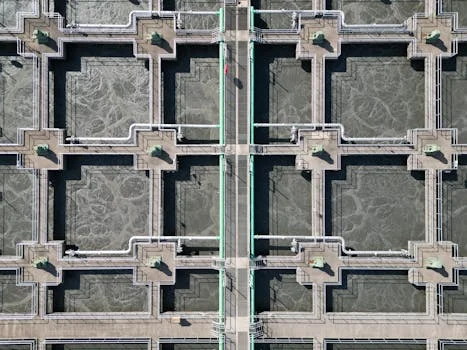
MBR trains replace gravity clarifiers with a physical barrier, so effluent solids no longer depend on sludge settleability. Under steady municipal operation, MBRs commonly reach about 99% TSS removal and 95–99% BOD removal when membranes and biology are both within design flux and SRT. MBR effluent is typically far below the 30 mg/L BOD5 and TSS secondary floor. Long SRT favors nitrifiers; with anoxic zones, many designs target TN below 3 mg/L.
Membrane retention of colloids and pathogens also makes MBR a strong pretreatment for reverse osmosis in indirect potable reuse schemes. Facilities facing peak-flow swings can specify an MBR Membrane Bioreactor Wastewater Treatment System sized for the design max-day load rather than average day alone. Most plants we size for reuse hold TSS under 1 mg/L only while net flux stays inside the design LMH window.
MBR vs. MBBR vs. Conventional Activated Sludge: Decision Framework
MBR, Moving Bed Biofilm Reactor (MBBR), and CAS selection turns on effluent limits versus footprint and energy. Choose MBR when land is scarce or Class A–type reuse solids limits apply. Choose MBBR when industrial pretreatment needs strong BOD cut but ultra-low TSS is not required. Most plants we size for a sewer-only outlet stop at MBBR once TSS can sit at 20–30 mg/L.
| Parameter | MBR | MBBR | Conventional (CAS) |
|---|---|---|---|
| Footprint | 60% smaller | 30–50% smaller | Largest |
| Effluent Quality | Near reuse (<1 mg/L TSS) | Secondary (20–30 mg/L TSS) | Secondary (30 mg/L TSS) |
| Nutrient Removal | High (TN <3 mg/L) | Moderate (TN 5–15 mg/L) | Low (TN 10–20 mg/L) |
| Energy Use (kWh/m³) | 0.6–1.2 | 0.3–0.6 | 0.2–0.4 |
| Capital Cost ($/m³/day) | $1,200–$3,500 | $800–$2,000 | $500–$1,500 |
| O&M Cost ($/m³) | $0.15–$0.40 | $0.10–$0.25 | $0.05–$0.15 |
| Sludge Production | Low | Moderate | High |
| Fouling Risk | High | Low | Low |
| Scalability | High (modular) | High | Low |
| Reuse Potential | Excellent | Limited | Poor |
Decision logic stays simple: pick MBR for irrigation or cooling-tower reuse, or when the site cannot fit clarifiers and tertiary filters. Pick MBBR when the outlet is a municipal sewer and capital is the binding constraint. For healthcare wastewater trade-offs, compare MBR with other healthcare wastewater treatment options before freezing the process train.
USA Compliance Requirements for MBR Systems: Permits, Standards, and Reuse
USA MBR compliance sits under federal NPDES permits plus state reuse rules. Federal secondary floors remain BOD5 and TSS at 30 mg/L as a 30-day average under 40 CFR 133.102, while local TMDLs often push phosphorus below 0.1 mg/L. Biosolids handling still follows 40 CFR Part 503; longer SRT sludge can ease pathogen-reduction pathways for Class B programs.
According to the eCFR text of 40 CFR 133.102, displayed as of 22 September 2026, those 30 mg/L 30-day averages are unchanged, and no edits to this section appear after 3 January 2017. The same section also caps the 7-day average at 45 mg/L for both BOD5 and suspended solids. Removal must be at least 85 percent on a 30-day average. A permitting authority may substitute CBOD5 at 25 mg/L as a 30-day average and 40 mg/L as a 7-day average, still with 85 percent removal.
Effluent pH must stay within 6.0 to 9.0 unless the plant meets the inorganic-chemical and industrial-source exceptions in 40 CFR 133.102. Most plants we size for municipal MBR already sit inside 6.0 to 9.0 without adding acid or caustic. Do not treat the 30 mg/L secondary floor as a reuse limit. State reuse rules sit well below that floor.
State reuse codes drive many MBR selections. Earlier summaries often cited California Title 22 unrestricted reuse as 12-log virus removal with turbidity <2 NTU. For membrane-filtered disinfected tertiary water, the EPA California reuse summary lists turbidity ≤0.2 NTU more than 5% of the time in 24 hours. The same summary also lists ≤0.5 NTU as a single-sample maximum.
Media-filtered trains still reference the ≤2 NTU 24-hour average pathway. Texas (30 TAC Chapter 210) and Florida (FAC 62-610) Type I reuse programs commonly require TSS <5 mg/L. Cross-border municipal practice is covered in learn about municipal MBR applications in North America for decentralized permitting patterns.
California Title 22 MBR Reuse Compliance Cost
California Title 22 MBR reuse compliance cost is the monitoring and disinfection scope inside the $1,200–$3,500 per m³/day capital band, not a separate state price list. According to 22 CCR 60301.230, disinfected tertiary recycled water needs a CT of not less than 450 milligram-minutes per liter at all times. Modal contact time must be at least 90 minutes, based on peak dry weather design flow. The alternative is demonstrated removal of 99.999 percent of F-specific bacteriophage MS2, or poliovirus, together with filtration.
According to 22 CCR 60301.320, membrane filtrate must not exceed 0.2 NTU more than 5 percent of the time within a 24-hour period. The same filtrate must not exceed 0.5 NTU at any time. Media filtration under that section must not exceed an average of 2 NTU within a 24-hour period. Media filtrate also must not exceed 5 NTU more than 5 percent of the time in that 24-hour period, or 10 NTU at any time.
US EPA's industry reuse summary reports the same 5-log MS2 or poliovirus requirement and the same 0.2 NTU and 0.5 NTU membrane caps. Coliform on that industrial tertiary class is a 7-day median of 2.2 MPN/100 mL, no more than one sample above 23 MPN/100 mL in 30 days, and no sample above 240 MPN/100 mL. Turbidity monitoring is continuous, and total coliform is at least once daily. Earlier 12-log citations do not match the tertiary definition in §60301.230, which is 99.999 percent, or 5-log.
Most plants we size for California cooling-tower reuse carry online turbidity on the membrane skid, because a 0.5 NTU spike fails 22 CCR 60301.320. Budget the meter, the membrane integrity test, and the chlorine contact tank with the membrane package. Those items move a project inside the capital band. They are not a second plant.
Permitting checklist:
- Identify receiving-water TMDLs and numeric nutrient caps.
- Confirm the state reuse class (for example, California Title 22 tertiary).
- Include membrane integrity test (MIT) protocols in the engineering report.
- Document sludge disposal under 40 CFR Part 503.
- Match design flux and redundancy to the permitted max-day and peak-hour flows.
MBR System ROI Calculator for Industrial Reuse

An MBR system ROI calculator for industrial reuse closes when water savings, surcharge cuts, and land value offset the membrane premium. In dense sites where land exceeds about $200/m², a 60% footprint cut can erase a large share of the civil and land delta versus CAS plus tertiary filters. Build the NPV on a 20-year water-price path; many USA utilities have seen multi-year rate growth near 4–6% annually in recent planning studies.
Consider a 1,000 m³/day food plant in California. A CAS plant at $1.2M with $400k/year discharge fees and $200k/year water purchases looks cheaper on day one. An MBR plant at $2.5M that reuses 80% of flow can save about $160k/year in water. Discharge fees can fall by about $250k/year, with roughly $40k/year less sludge hauling.
Simple payback lands near 3.8 years when those cash flows hold. Enter flow, reuse fraction, purchased-water price, surcharge, sludge hauling, and the two capital totals before anyone quotes a single payback year. Most plants we size for industrial reuse miss that 3.8 year mark when reused flow drops below 80% of the 1,000 m³/day design.
How does grit removal affect MBR ROI?
Professional sand and grit removal protects membrane life and cuts CIP frequency, which improves MBR ROI versus an unprotected in-house tank. Grit abrasion and inert solids raise TMP and shorten the 5–10 year membrane life assumed in most USA O&M models. Budget dedicated grit removal when influent grit is high; the avoided membrane replacements usually outweigh a basic tank-only layout.
Who this is for: municipal plants facing reuse or tight nutrient permits, and industrial sites that need low TSS in a small footprint. Who should look elsewhere: projects that only need secondary BOD cut to a sewer and cannot fund membrane energy or CIP. Next step: freeze influent design loads, state reuse class, and membrane geometry before you request a firm budget.
Frequently Asked Questions
Which is better, MBBR or MBR?
MBR is the better fit when reuse solids must stay under 1 mg/L TSS or TN must stay below 3 mg/L with anoxic zones. MBBR fits high-strength industrial pretreatment when BOD reduction matters more than ultra-low TSS. MBR CapEx is typically 30–50% higher than MBBR. Higher effluent quality can cut discharge fees by about 20–40% where surcharges track TSS and nutrients. Pick MBBR if the sewer limit is only secondary BOD near 30 mg/L.
What is the cost of an MBR STP?
In 2025, USA MBR capital still ranges from $1,200–$3,500 per m³/day of capacity. A 500 m³/day plant therefore lands near $600,000 to $1.75 million installed, before site-specific civil works. O&M usually runs $0.15–$0.40/m³, led by membrane replacement and air-scour energy at 0.6–1.2 kWh/m³. Civil rock, long forcemains, and redundant trains sit outside that unit rate.
What are the disadvantages of MBR systems?
Main drawbacks are higher capital cost, energy use of 0.6–1.2 kWh/m³, and CIP every 3–6 months with hypochlorite and acid. Membranes also tolerate FOG poorly above about 200 mg/L without strong pretreatment. Operators must track TMP and flux limits continuously to avoid irreversible fouling. Sidestream layouts can raise energy use by 200–300% versus submerged duty, so most municipal bids stay submerged.
Can MBR systems handle industrial wastewater?
Yes, when pretreatment removes FOG and grit before the membranes. Influent turbidity above about 500 NTU or FOG spikes will foul membranes quickly if left untreated. Pairing DAF systems for MBR pretreatment is standard practice for food and textile wastewater before the bioreactor. Leave that DAF step out and the 5–10 year membrane life in the O&M model will not hold.
What is the lifespan of MBR membranes?
Most polymeric membranes last 5–10 years under municipal duty when flux and CIP stay inside vendor limits. Flat sheet units often reach 8–10 years in high-fouling service, while hollow fiber often lands nearer 5–7 years. Pretreatment quality and conservative net flux remain the strongest levers for extending life. Air scour at 0.2–0.5 m³/m²/h is what keeps that life from collapsing when MLSS sits at 8,000–12,000 mg/L.