Healthcare Wastewater Systems vs Alternatives: Engineering Comparison & Decision Framework 2025
Healthcare wastewater systems must remove 99%+ pathogens, 90%+ COD/BOD, and 95%+ TSS to meet WHO and EPA discharge standards. Membrane Bioreactor (MBR) systems achieve <1 μm filtration, ensuring 99.9% pathogen removal, but they typically require 30–50% higher CAPEX than Dissolved Air Flotation (DAF) systems, which excel at removing 92–97% TSS at flow rates ranging from 4 to 300 m³/h. Chlorine dioxide generators offer 99%+ disinfection with a minimal footprint, making them highly effective for small clinics or as a tertiary polish. This guide provides a head-to-head engineering comparison of four primary systems across eight technical parameters to help facility engineers and procurement managers select the optimal technology based on specific influent characteristics and 2025 compliance mandates.
Why Healthcare Wastewater Systems Fail Compliance: A Hospital Engineer’s Diagnosis
Hospital wastewater is significantly more complex than standard municipal sewage, often containing COD levels between 500–3,000 mg/L and BOD concentrations of 200–1,500 mg/L. Unlike domestic waste, healthcare effluent is characterized by high pathogen densities—ranging from 10^3 to 10^6 CFU/mL—alongside residual pharmaceuticals, antibiotics, and radioisotopes. When a facility fails a compliance test, the root cause is typically the inability of conventional treatment plants to handle these concentrated, variable loads.
WHO and EPA discharge limits are stringent: effluent must typically maintain <10^3 CFU/mL for pathogens, <125 mg/L for BOD, and <250 mg/L for COD. In many jurisdictions, local standards are even tighter, requiring TSS levels below 30 mg/L. Standard Sewage Treatment Plants (STPs) using basic activated sludge often fail in healthcare settings for three primary reasons:
- Inadequate Pathogen Log-Reduction: Conventional secondary clarifiers rely on gravity, which is insufficient for removing microscopic pathogens, often leaving effluent counts as high as 10^5 CFU/mL.
- High Total Suspended Solids (TSS): Variable hydraulic loads in hospitals lead to "sludge bulking" in clarifiers, causing TSS to spike well above the 30 mg/L limit.
- Pharmaceutical Interference: Antibiotics in the influent can inhibit the biological floc in traditional systems, reducing the efficiency of organic matter breakdown.
For engineers, the frustration of failing a compliance audit often stems from using a "one-size-fits-all" STP when the influent requires a specialized Effluent Treatment Plant (ETP) approach. Understanding the delta between raw influent and regulatory limits is the first step in diagnosing why a current system is underperforming.
Healthcare Wastewater Systems vs Alternatives: 8-Parameter Engineering Comparison
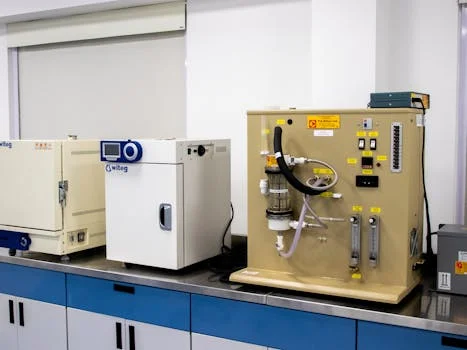
Selecting a healthcare wastewater system vs alternatives requires a granular look at performance metrics. The following comparison evaluates Membrane Bioreactor (MBR), Dissolved Air Flotation (DAF), Chlorine Dioxide (ClO₂) generators, and Secondary Clarifiers across the critical engineering parameters required for 2025 facility planning.
Parameter 1: Removal Efficiency
MBR systems are the gold standard for high-strength healthcare waste, achieving 99.9% pathogen removal and 95% COD reduction. Discover DAF systems for high-TSS healthcare wastewater which provide 92–97% TSS removal and are particularly effective at stripping fats, oils, and grease (FOG) at an 80% efficiency rate. Chlorine dioxide generators focus almost exclusively on disinfection, providing 99.99% viral and bacterial inactivation. Secondary clarifiers typically lag, offering only 70–80% TSS removal and negligible pathogen reduction without heavy downstream chemical dosing.
Parameter 2: Physical Footprint
In urban hospital environments, space is a premium. MBR systems are approximately 60% smaller than conventional STPs because they eliminate the need for large secondary sedimentation tanks. DAF units require roughly 20–30 m² per 100 m³/h of flow. Chlorine dioxide generators are the most compact, often requiring only 1–2 m² of floor space. Conversely, secondary clarifiers are land-intensive, requiring 50–100 m² for similar flow rates due to the required settling time.
Parameter 3: Energy Consumption
MBR systems have higher energy demands (0.6–1.2 kWh/m³) due to the air scouring required to prevent membrane fouling. DAF systems are more efficient at 0.1–0.3 kWh/m³, while Chlorine Dioxide systems use minimal power (0.05–0.1 kWh/m³). Secondary clarifiers are the lowest energy consumers (0.02–0.05 kWh/m³) but often fail to meet modern discharge standards independently.
| Parameter | MBR System | DAF System | ClO₂ Generator | Secondary Clarifier |
|---|---|---|---|---|
| Pathogen Removal | 99.9% | Low (needs ClO₂) | 99.99% | Minimal |
| TSS Removal | >99% | 92–97% | N/A | 70–80% |
| Footprint (m²/100m³/h) | 15–25 | 20–30 | 1–2 | 50–100 |
| 2025 CAPEX (per m³/d) | $1,200–$2,500 | $800–$1,500 | $500–$1,000 | $300–$800 |
| 2025 OPEX (per m³) | $0.15–$0.30 | $0.05–$0.15 | $0.02–$0.05 | $0.01–$0.03 |
Parameter 4: Influent Flexibility
MBR is highly resilient to COD fluctuations (50–500 mg/L). Explore MBR systems for healthcare wastewater treatment to see how they manage biological variations. DAF is the superior choice for high-solids influent (200–1,000 mg/L TSS), while ClO₂ is an "add-on" technology that works regardless of influent type, provided it follows primary solids removal.
Parameter 5: Compliance Reliability
MBR inherently meets WHO/EPA pathogen limits through physical filtration. DAF meets TSS limits but requires a disinfection stage (like ClO₂) to achieve microbiological compliance. Secondary clarifiers rarely meet 2025 standards without extensive tertiary upgrades.
Parameter 6 & 7: CAPEX and OPEX
MBR carries the highest CAPEX ($1,200–$2,500/m³/day) and OPEX ($0.15–$0.30/m³). DAF offers a middle ground ($800–$1,500 CAPEX). Chlorine dioxide is cost-effective for disinfection but does not treat organic loads. (HydropureWater field data, 2025).
Parameter 8: Maintenance Requirements
MBR requires membrane cleaning (CIP) and eventual replacement every 5–7 years. DAF maintenance involves automatic skimming and pump checks. Learn about chlorine dioxide generators for hospital effluent disinfection, which primarily require chemical precursor refills every 1–3 months.
How to Match Your Influent Characteristics to the Right System: A Decision Framework
Engineers must move beyond generalities and use a data-driven framework to select a system. This process begins with an accurate characterization of the facility's raw effluent.
Step 1: Quantify the Influent
Conduct a 24-hour composite sampling to determine average and peak values for COD, TSS, and pathogen counts (CFU/mL). Note any high concentrations of disinfectants or antibiotics that could inhibit biological growth.
Step 2: Define Compliance Targets
Identify the strictest applicable standard. For example, the regional compliance standards for hospital wastewater treatment in many areas now mandate pathogen counts below 100 CFU/100mL for water reuse in irrigation.
Step 3: Apply the Decision Matrix
Use the following logic to filter your options:
| Influent Condition | Primary Recommendation | Secondary/Tertiary Add-on |
|---|---|---|
| COD > 500 mg/L + High Pathogens | MBR System | Optional ClO₂ Polish |
| TSS > 300 mg/L + High FOG | DAF System | ClO₂ for Disinfection |
| Low Organic Load + Pathogens > 10^5 | Chlorine Dioxide Generator | Multimedia Filter |
| Large Site + Low Budget + Basic TSS | Secondary Clarifier | Extensive Tertiary Treatment |
Step 4: Evaluate Site Constraints
If the facility is an urban clinic with no basement space, MBR's compact footprint is often the only viable choice despite the higher CAPEX. If the facility is a large rural research lab with high suspended solids from laundry or animal housing, a DAF system followed by disinfection is more cost-effective.
Step 5: Finalize the ROI
Compare the 5-year Total Cost of Ownership (TCO). While MBR is more expensive upfront, the elimination of separate clarifiers, sand filters, and heavy chlorination tanks often results in a lower TCO for high-compliance projects.
2025 Cost Benchmarks: CAPEX, OPEX, and ROI for Healthcare Wastewater Systems

Budgeting for healthcare wastewater infrastructure in 2025 requires accounting for increased material costs and energy efficiency mandates. Based on HydropureWater field data, the following benchmarks represent current market rates for equipment and installation.
CAPEX Breakdown:
- MBR Systems: $1,200–$2,500 per m³/day capacity. The variance depends on automation levels and membrane material (flat sheet vs. hollow fiber).
- DAF Systems: $800–$1,500 per m³/day. Costs are driven by the saturation system and chemical dosing pumps.
- Chlorine Dioxide Generators: $500–$1,000 per m³/day (as a component of the overall plant).
- Secondary Clarifiers: $300–$800 per m³/day, largely consisting of civil engineering and concrete costs.
OPEX Breakdown:
- MBR: $0.15–$0.30 per m³. This includes electricity for aeration and chemical costs for Membrane Cleaning-In-Place (CIP).
- DAF: $0.05–$0.15 per m³. Primary costs are flocculants/coagulants and electricity for the air saturation pump.
- Chlorine Dioxide: $0.02–$0.05 per m³, primarily for precursor chemicals (Sodium Chlorite and HCl).
ROI and Payback Period:
For a 500-bed hospital, an MBR system typically sees a payback period of 3–5 years when compared to the costs of frequent compliance fines and the higher chemical/water usage of older systems. Facilities can learn how MBR systems combine biological treatment with ultrafiltration to reduce the need for tertiary treatment steps, further accelerating ROI. DAF systems in medium-compliance facilities often achieve a payback in 2–4 years through the reduction of sludge disposal costs and improved TSS management.
Case Study: How a 200-Bed Hospital Reduced Compliance Failures by 90% with MBR + Chlorine Dioxide
A 200-bed general hospital in São Paulo faced critical regulatory pressure after failing three out of four quarterly compliance tests. The existing activated sludge system was unable to handle influent peaks where TSS reached 400 mg/L and pathogen counts exceeded 10^6 CFU/mL.
The Solution:
The facility replaced its failing secondary clarifier with an integrated MBR system (capacity 100 m³/day) and installed a 50 g/h chlorine dioxide generator as a final safety barrier. The MBR was selected specifically for its ability to handle high organic loads within a very tight 30 m² footprint.
Technical Results:
- Pathogen Removal: Achieved a 99.9% reduction, bringing effluent from 10^6 down to consistently <10^3 CFU/mL.
- TSS Removal: Effluent TSS dropped from an average of 65 mg/L to <5 mg/L, a 95% improvement.
- Compliance: Compliance failures were reduced by 90% in the first year of operation.
Financial Summary:
The total CAPEX was $250,000, with an OPEX of $0.25/m³. The hospital calculated a payback period of 4 years, factoring in the avoidance of government fines and the ability to reuse treated water for cooling tower make-up. The primary lesson learned was that the synergy between MBR filtration and ClO₂ disinfection is the most robust defense against high-pathogen healthcare effluent.
Frequently Asked Questions

What are the 4 types of healthcare wastewater treatment systems?
The four primary systems are Membrane Bioreactors (MBR) for high-efficiency filtration and pathogen removal (99.9%), Dissolved Air Flotation (DAF) for removing suspended solids and grease (92–97% TSS removal), Chlorine Dioxide (ClO₂) generators for targeted high-level disinfection (99.99%), and Secondary Clarifiers for traditional gravity-based solids settling (70–80% TSS removal).
What is the difference between STP and ETP for healthcare wastewater?
A Sewage Treatment Plant (STP) is designed for domestic waste with predictable BOD/TSS levels. An Effluent Treatment Plant (ETP) is engineered for "industrial-strength" wastewater, such as healthcare effluent, which contains higher COD (up to 3,000 mg/L), pathogens, and pharmaceutical residues. ETPs use more advanced technologies like MBR or DAF to meet stricter regulatory standards that STPs cannot reach.
What are the disadvantages of healthcare wastewater systems?
Each system has trade-offs: MBR has high CAPEX and requires membrane fouling management; DAF requires continuous chemical dosing and has limited pathogen removal on its own; Chlorine Dioxide involves handling concentrated chemicals; and Secondary Clarifiers have a massive footprint and low removal efficiency for modern standards.
How do I choose between MBR and DAF for my hospital?
The choice depends on your influent and space. Choose MBR if your COD is >500 mg/L, space is limited, or you need 99.9% pathogen removal. Compare DAF systems against API separators or other solids-removal tools if your primary concern is high TSS (>300 mg/L) or fats and oils, and you have the space for a secondary disinfection step.
What are the compliance standards for hospital wastewater in the EU/US?
In the EU, Directive 91/271/EEC mandates <125 mg/L COD and <35 mg/L TSS. In the US, EPA guidelines typically require <30 mg/L BOD, <30 mg/L TSS, and pathogen counts below 10^3 CFU/mL. Many local jurisdictions now require even lower limits for facilities discharging near sensitive water bodies or seeking water reuse certification.