What Are MBR and Extended Aeration Systems?
Membrane Bioreactor (MBR) is a hybrid wastewater treatment process that integrates conventional activated sludge treatment with a physical barrier: submerged microfiltration or ultrafiltration membranes. These membranes, typically made of polyvinylidene fluoride (PVDF) with a pore size of 0.1–0.4 micrometers, act as an absolute barrier to suspended solids and most bacteria, effectively replacing the secondary clarifier and tertiary filtration steps in a single tank.
Conversely, extended aeration is a modification of the conventional activated sludge process. It operates at a long sludge retention time of 20–30 days and a hydraulic retention time of 24–48 hours, which promotes the stabilization of organic matter and reduces excess sludge production. It typically includes an aeration basin followed by a secondary clarifier but omits primary settling.
While both are secondary treatment methods, the fundamental distinction is that MBR uses membranes for solids separation, yielding a superior effluent and a more compact footprint, while extended aeration relies on gravity settling in clarifiers.
Effluent Quality: Turbidity, TSS, and Bacterial Removal
MBR systems deliver consistently superior effluent quality, making them the definitive choice for projects with stringent discharge limits or water reuse goals. The membrane's physical barrier produces effluent with turbidity consistently below 1 NTU and total suspended solids (TSS) reliably under 5 mg/L. Critically for reuse, fecal coliform counts are typically reduced to less than 100 CFU/100mL, meeting stringent standards like California's Title 22 for unrestricted reuse without additional filtration.
Extended aeration effluent quality is more variable and depends heavily on clarifier performance. Typical effluent TSS ranges from 10–20 mg/L, with turbidity between 3–5 NTU. Fecal coliform levels are significantly higher, often between 1,000–10,000 CFU/100mL. To achieve reuse-quality water, an extended aeration system would require additional tertiary processes—such as sand filtration and advanced disinfection (UV or ozone)—adding complexity, footprint, and cost. For a detailed analysis of how this quality impacts project economics, see our guide on MBR effluent quality and cost benchmarks.
Footprint and Space Requirements
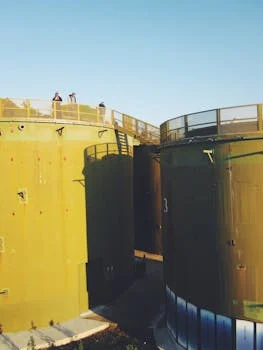
MBR systems require 40–60% less physical space than equivalent capacity extended aeration plants. This compactness is due to the ability to operate at a much higher mixed liquor suspended solids (MLSS) concentration—typically 8,000–12,000 mg/L compared to 2,000–4,000 mg/L for extended aeration. This allows for smaller bioreactor volumes. MBRs eliminate the need for large secondary clarifiers and tertiary filters, consolidating the entire treatment train into a smaller area.
An extended aeration plant for a flow rate of 1,000 m³/d can require a footprint of 1,000–1,500 m². For space-constrained urban sites, brownfield redevelopments, or installations requiring underground placement, an underground extended aeration package plant can be a solution, though MBR technology is often the only viable option for achieving high treatment standards in a minimal footprint.
Operational Parameters: Sludge Age, Retention Time, and Energy Use
The core operational differences between MBR and extended aeration technologies lie in their sludge age, energy consumption, and maintenance routines, which directly impact OPEX and staffing requirements.Extended aeration operates at a long sludge age (20–30 days), which allows for endogenous decay and reduces sludge production by 30–40% compared to conventional activated sludge. Its energy use is primarily for aeration blowers, consuming 0.8–1.2 kWh/m³. Operation is relatively simple but requires careful control of the clarifier to prevent upsets.
MBR systems operate at similarly long or even longer sludge ages (25–40 days), ensuring robust nitrification even in cold weather. However, energy consumption is higher, ranging from 1.5–2.5 kWh/m³. This extra energy is primarily used for membrane scouring air, which is critical to mitigate fouling. Operationally, MBRs require more attention, including daily maintenance cleans (Chemically Enhanced Backwashes - CEB) and quarterly or annual recovery cleans (Clean-In-Place - CIP), which consume chemicals and require skilled labor. For guidance on managing aeration in such systems, our extended aeration process optimization guide provides technical details.
| Parameter | Extended Aeration | Membrane Bioreactor (MBR) |
|---|---|---|
| Sludge Retention Time (SRT) | 20–30 days | 25–40 days |
| MLSS Concentration | 2,000–4,000 mg/L | 8,000–12,000 mg/L |
| Energy Consumption | 0.8–1.2 kWh/m³ | 1.5–2.5 kWh/m³ |
| Membrane Cleaning | N/A | Daily CEB, Quarterly CIP |
| Process Stability | Subject to clarifier upsets | Highly stable, immune to clarifier issues |
Capital and Operating Costs by Flow Rate
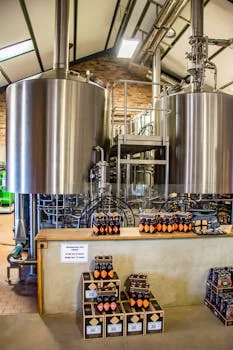
The cost differential between MBR and extended aeration is a primary decision factor. MBR commands a significant capital cost premium due to the expense of membrane modules and more sophisticated control systems. However, this gap narrows with scale and can be justified by the value of reclaimed water.
Based on CAPDETWorks TM simulation data rebased to 2024 price indices (HydropureWater project data), for a standard medium-strength domestic wastewater:
- 500 m³/d Plant: MBR CAPEX is approximately $750,000 vs. $500,000 for extended aeration (a 50% premium). OPEX is ~$0.85/m³ for MBR vs. $0.60/m³ for EA.
- 5,000 m³/d Plant: MBR CAPEX is approximately $5.0M vs. $3.5M for extended aeration. The OPEX gap narrows to ~$0.75/m³ for MBR vs. $0.65/m³ for EA due to economies of scale in membrane aeration and chemical usage.
The financial viability of MBR shifts dramatically when effluent reuse is factored in. The ability to produce Title 22-quality water on-site can offset higher operational costs by providing a revenue stream or eliminating the cost of purchasing potable water for irrigation or industrial use. Our analysis of MBR effluent quality and cost benchmarks provides a detailed ROI model for reuse scenarios.
| Flow Rate (m³/d) | Technology | CAPEX Estimate | OPEX Estimate ($/m³) |
|---|---|---|---|
| 500 | Extended Aeration | $450,000 - $550,000 | $0.55 - $0.65 |
| MBR | $700,000 - $800,000 | $0.80 - $0.90 | |
| 5,000 | Extended Aeration | $3.2M - $3.8M | $0.60 - $0.70 |
| MBR | $4.7M - $5.3M | $0.70 - $0.80 |
When to Choose MBR vs Extended Aeration
The choice between MBR and extended aeration depends on specific project constraints and goals.Choose a Membrane Bioreactor (MBR) when:
- Your project requires high-quality effluent for unrestricted reuse (e.g., irrigation, cooling towers).
- Available land is severely limited, requiring a compact footprint.
- Strict discharge limits (e.g., <5 mg/L TSS, <10 mg/L BOD) must be met reliably.
- The plant operates in a cold climate where stable nitrification is critical.
- You are considering an integrated MBR membrane bioreactor system for a packaged solution.
Choose Extended Aeration when:
- The primary goal is cost-effective compliance for discharge to a sewer or a receiving body with less stringent standards.
- Land is readily available and not a constraining factor.
- The operating budget is limited, and lower energy consumption is a priority.
- Staff technical expertise for membrane maintenance is a concern.
A hybrid approach, using MBR to handle peak flows or a high-quality sidestream while using extended aeration for base load treatment, can also be a cost-effective strategy for some facilities.
Frequently Asked Questions
What are the disadvantages of MBRs?
The primary disadvantages are higher capital cost, susceptibility to membrane fouling which requires rigorous cleaning protocols, higher energy consumption (1.5-2.5 kWh/m³), and a need for more skilled operational maintenance compared to conventional systems.
What is the age of sludge for extended aeration?
Extended aeration systems are designed to operate at a long sludge age, typically 20–30 days. This allows for complete biodegradation and stabilization of organic matter, resulting in a well-digested sludge with reduced volume for disposal.
Can extended aeration meet reuse standards?
Not on its own. While it provides excellent secondary treatment, meeting reuse standards like Title 22 requires additional tertiary processes, including filtration and advanced disinfection, which add significant capital and operational costs.
Is MBR better than extended aeration?
MBR is superior in effluent quality and footprint but is more expensive. Extended aeration is more economical for applications where its effluent quality is sufficient. The "better" technology is the one that meets the project's specific effluent, space, and budget requirements.
How much does an MBR system cost per m³?
Operating expenses for MBR systems typically range from $0.70–$0.90 per cubic meter of treated wastewater, depending on the plant's scale, influent strength, and local energy/chemical costs.