Cardiff industrial sites must meet NRW limits of pH 6-9, COD ≤250 mg/L, BOD ≤80 mg/L, TSS ≤60 mg/L and NH4-N ≤15 mg/L in 2025. A dissolved-air-flotation stage followed by MBR reliably hits these values at 25-35% lower OPEX than chemical precipitation plus sand filters, with CAPEX from £650k for 100 m³/h systems. For EHS managers and production engineers operating within the CF postcode, these updated Natural Resources Wales (NRW) mandates represent a significant tightening of previous consent levels, particularly regarding nitrogenous compounds and chemical oxygen demand. Navigating these changes requires a shift from legacy primary treatment to integrated secondary and tertiary systems that can handle the unique hydraulic challenges of the Severn Estuary’s tidal influences and local sewer network constraints.
Which discharge limits apply to Cardiff factories in 2025?
Natural Resources Wales (NRW) has standardised 2025 industrial discharge permits in the Cardiff area to pH 6-9, COD 250 mg/L, BOD 80 mg/L, TSS 60 mg/L, and NH4-N 15 mg/L. These figures are not merely suggestions but are hard limits derived from the latest environmental quality standards (EQS) designed to protect the River Taff and the Severn Estuary. For many sites in the Wentloog and Leckwith industrial estates, these values represent a 20-30% reduction in allowable pollutant loading compared to permits issued five years ago. The regulatory focus has shifted heavily toward ammonia (NH4-N) and total suspended solids, as these contribute most significantly to the eutrophication and turbidity of local water bodies.
Local environmental factors play a critical role in how these limits are enforced. The Cardiff tidal estuary provides a nominal dilution ratio of 8:1 under normal conditions; however, during heavy rainfall events, the storm overflow threshold is strictly capped at 10 times the Dry Weather Flow (DWF). If a factory exceeds these limits, the financial consequences are immediate. Variable penalties for non-compliance currently range from £4,000 to £40,000 per incident, often accompanied by a legally binding "forced upgrade" timetable that removes the engineer's ability to phase CAPEX over multiple fiscal years.
| Parameter | 2025 NRW Consent Limit | Typical Raw Industrial Effluent | Required Removal Efficiency |
|---|---|---|---|
| pH Value | 6.0 – 9.0 | 4.0 – 11.0 | Neutralisation Required |
| COD (Chemical Oxygen Demand) | ≤ 250 mg/L | 800 – 2,500 mg/L | 68% – 90% |
| BOD (Biochemical Oxygen Demand) | ≤ 80 mg/L | 300 – 1,200 mg/L | 73% – 93% |
| TSS (Total Suspended Solids) | ≤ 60 mg/L | 250 – 1,500 mg/L | 76% – 96% |
| NH4-N (Ammoniacal Nitrogen) | ≤ 15 mg/L | 40 – 120 mg/L | 62% – 87% |
Technology matrix: what removes each pollutant?
A combination of Dissolved Air Flotation (DAF) and Membrane Bioreactor (MBR) technology achieves cumulative COD removal efficiencies of 92-97% for high-strength industrial effluent. In the context of Cardiff's 2025 limits, a single-stage treatment is rarely sufficient. Engineers must look at unit operations as a sequence of barriers. For instance, removing Fats, Oils, and Grease (O&G) is essential before the effluent reaches a biological stage, as these compounds can blind membranes and inhibit bacterial activity. A stainless DAF unit shown in the CAPEX table below uses a 6-bar recycle system to create micro-bubbles that lift O&G and light solids to the surface, achieving discharge levels of <5 mg/L for oils.
For the more stringent COD and BOD limits, a containerised MBR delivering the 92-97% COD removal quoted above is the industry standard for 2025. This technology utilizes PVDF membranes with a 0.1 µm pore size, acting as an absolute barrier to suspended solids. This ensures TSS levels remain consistently below 20 mg/L, well within the 60 mg/L NRW requirement. Ammonia removal is handled through nitrification within the MBR tank; by maintaining a Solids Retention Time (SRT) of 10-12 days at a minimum temperature of 12°C, the biomass can effectively convert NH4-N to nitrate even during the colder winter months typical of South Wales.
| Pollutant | Primary Technology | Secondary/Tertiary Polish | Typical Exit Value |
|---|---|---|---|
| COD/BOD | DAF (60-70% removal) | MBR (92-97% removal) | <50 mg/L COD |
| Suspended Solids (TSS) | Lamella Clarifier (50 m/h) | MBR PVDF Membranes | <10 mg/L |
| Ammonia (NH4-N) | Anoxic/Aerobic Tanks | MBR Nitrification (12d SRT) | <5 mg/L |
| Oils & Grease (O&G) | DAF (6 bar recycle) | Coalescing Plate Separator | <5 mg/L |
| Micropollutants | PAC Dosing (20-40 mg/L) | Cloth Disk Filter | <0.1 mg/L |
For sites dealing with pharmaceutical or specialized chemical manufacturing, micropollutant removal is becoming a focus for NRW. Powdered Activated Carbon (PAC) dosing at rates of 20-40 mg/L, followed by a cloth disk filter, provides the necessary tertiary polishing to meet emerging toxicity standards. This modular approach allows Cardiff factories to add units as their specific permit evolves without needing to scrap the entire primary plant.
Cardiff CAPEX and OPEX snapshot (2025 supplier quotes)
A 100 m³/h stainless steel DAF skid currently carries a CAPEX of £310,000 ±15%, with an energy demand of approximately 0.9 kWh per cubic metre treated. When budgeting for a full plant upgrade, engineers must account for the total lifecycle cost rather than just the initial purchase price. While a traditional Chemical Activated Sludge (CAS) system paired with sand filters might appear cheaper upfront, the 10-year Net Present Value (NPV) analysis shows that MBR systems are 28% lower in total cost. This is primarily due to the reduced chemical consumption for flocculation and the significantly smaller footprint, which reduces civil engineering costs in land-constrained Cardiff industrial zones.
Operating expenses (OPEX) are increasingly driven by energy and chemical reagents. For a packaged MBR system treating 150 m³/d, membrane replacement costs are now stabilised at approximately £0.04/m³ of treated water. Chemical dosing for pH correction and coagulation (using PAC and PAM skids) adds roughly £0.08/m³ to the running costs. Many Cardiff sites are now leveraging Carbon Credits to offset OPEX; by integrating high-efficiency blowers and potentially anaerobic digestion for high-strength streams, sites can save 0.75 t CO₂e per MWh of energy recovered, which translates to roughly £50/t in ROCs or equivalent carbon savings. You can view a full cost curve for MBR membranes up to 2 MLD to see how scale affects these unit rates.
| Equipment Package | Typical CAPEX (2025) | Power Demand | OPEX (per m³) |
|---|---|---|---|
| DAF Skid (100 m³/h) | £310,000 | 0.9 kWh/m³ | £0.12 |
| Packaged MBR (150 m³/d) | £950,000 | 1.2 kWh/m³ | £0.34 |
| Chemical Dosing Skid | £45,000 | 0.2 kWh/m³ | £0.08 |
| Tertiary Cloth Filter | £85,000 | 0.3 kWh/m³ | £0.05 |
Installation and supply chain inside CF postcode
Industrial wastewater plant commissioning in the CF postcode is supported by three NIWR-approved contractors located within 25 miles of Cardiff city centre, specifically in Cardiff, Newport, and Bridgend. This local presence is vital for minimizing downtime during the installation and commissioning phases. For a standard DAF installation, the typical delivery timeframe from order to site is 12 weeks, whereas more complex MBR systems—incorporating PVDF membranes often sourced from specialized hubs like Stockport—require a 16-week lead time. This timeframe includes the fabrication of the stainless steel skids and the integration of the PLC control systems.
Site footprint is a major concern for factories in established areas like Tremorfa. A modern DAF unit requires approximately 8 m × 2.5 m of floor space, while a 150 m³/d MBR can be housed in a single 40 ft container with an adjacent 15 m² control kiosk. This modularity allows for rapid site integration. Regarding waste disposal, Welsh Water (Dŵr Cymru) sludge acceptance criteria for 2025 remain strict; sludge must be dewatered to at least a 4% dry solids (DS) cake to be accepted at local treatment works, with gate fees currently set at £28 per tonne. Engineers should ensure their plant design includes a sludge thickening stage to avoid excessive haulage costs from the site.
Permit application checklist for NRW
NRW permit amendments for industrial effluent upgrades require a minimum of 12 months of flow data, including peak-day and storm event calculations. This data forms the basis of the "H1 Risk Assessment" which NRW uses to determine if your proposed discharge will impact the local environment. Before engaging a consultant, an internal EHS engineer can begin gathering the necessary documentation to speed up the process. A country-agnostic permit checklist with timelines can provide a foundational structure, but the following Cardiff-specific points are mandatory for 2025.
- Flow Survey: 1-year historical data showing maximum daily volume and storm-related surges.
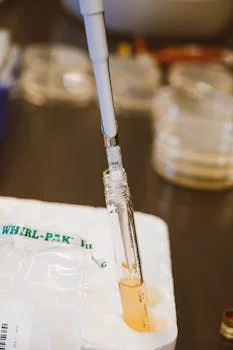
- Treatability Report: Bench-scale data from DAF or MBR pilot tests proving the proposed tech can hit <250 mg/L COD.
- Water Resources Assessment: Required if your site abstracts more than 50 m³/d from local boreholes or the Taff.
- Noise Management Plan: Proof that new blowers or pumps will not exceed 55 dB(A) at the