Industrial wastewater treatment in Quebec is governed by an environmental authorization regime that covers new industrial projects and modifications to existing ones. Discharge limits and guidance vary by sector and by the sensitivity of the receiving water. Plants discharging to aquatic environments must size treatment for sector rules, Effluent Discharge Objectives where applied, and practical CAPEX/OPEX constraints.
What Industrial Wastewater Treatment in Quebec Requires Under MELCC
Quebec requires environmental authorization for industrial wastewater discharges to the environment, including significant process changes. Sector regulations and ministry guidelines set parameter-specific limits such as BOD, TSS, and listed pollutants. Plants must match treatment performance to those limits before selecting equipment or expanding capacity.
According to Quebec's official industrial wastewater page (environnement.gouv.qc.ca, accessed 2026), the ministry oversees industrial wastewater discharged into the environment to protect uses such as drinking water, fishing, and swimming. The page still refers to the MELCC abbreviation; the ministry banner names the Ministère de l'Environnement, de la Lutte contre les changements climatiques, de la Faune et des Parcs. Applications go through the provincial environmental authorization process. Sector tools include the Regulation respecting pulp and paper mills (Q-2, r.27), petroleum-refinery effluent rules, and guidance for non-domestic discharges to municipal sewers. The Water Atlas - Industries (arcg.is/0SnqbG0) maps industrial discharge points and related public compliance data.
Most plants we size for Quebec work start with influent characterization and the receiving pathway—direct to water, storm sewer, or municipal sewer—before locking a process train. Limits are not one number for the whole province; they track sector rules and site-specific acceptability assessments.
Key Industries and Wastewater Characteristics in Quebec
Quebec industrial facilities produce wastewater streams with very different contaminant profiles, so treatment trains must be sector-specific. Pulp and paper mills generate high-BOD, lignin-rich wastewater with elevated COD and color, which usually needs biological treatment plus chemical clarification. Food and beverage plants discharge FOG, TSS, and organic load, with average BOD often in the 1,200–2,500 mg/L range. Metalworking and petrochemical sites add oils, heavy metals, hydrocarbons, phenols, and solids that need separation and precipitation steps.
Average industrial flows also span a wide band: small factories often run 5–20 m³/h, mid-size sites 20–80 m³/h, and large industrial zones exceed 100+ m³/h. A typical train still starts with physical-chemical primary separation, moves to secondary biological treatment, and adds tertiary filtration or advanced oxidation only when discharge or reuse targets demand it.
| Industry Sector | Typical Contaminants | Key Treatment Needs |
|---|---|---|
| Pulp & Paper | High BOD, COD, Lignin, TSS, Color | Biological treatment, chemical clarification, color removal |
| Food & Beverage | High FOG, TSS, BOD (1,200–2,500 mg/L), Nutrients | FOG/TSS removal (DAF), aerobic/anaerobic digestion, nutrient removal |
| Metalworking | Oils, Greases, Heavy Metals, Suspended Solids | Oil/water separation, heavy metal precipitation, filtration |
| Petrochemical | Hydrocarbons, Phenols, Oily wastewater, COD | API separators, dissolved air flotation, activated carbon, biological treatment |
Best Treatment Technologies for Quebec Industrial Applications
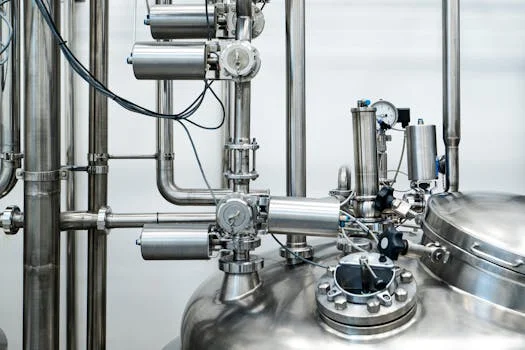
Technology choice for Quebec industrial effluent depends on influent chemistry, available footprint, and the MELCC authorization target for the outfall. Dissolved Air Flotation (DAF) systems remove 90–95% of FOG and TSS from food processing and similar oily/solids-heavy streams. Compact MBR systems deliver less than 1 NTU effluent and achieve over 98% BOD removal when space is tight or reuse is planned.
Chemical dosing remains necessary for pH adjustment, coagulation, and flocculation when metals or fine solids drive the permit. Lamella clarifiers provide compact primary clarification at surface loading rates of 20–40 m/h. Rotary screens at headworks protect downstream units by cutting coarse debris before clarification or flotation.
| Technology | Key Features & Benefits | Typical Removal Efficiency | Ideal Application |
|---|---|---|---|
| Dissolved Air Flotation (DAF) | Rapid FOG/TSS removal, compact design, sludge thickening | 90–95% FOG/TSS, 30–60% BOD | Food processing, meat packing, pulp & paper primary treatment |
| Membrane Bioreactor (MBR) | High-quality effluent (<1 NTU), small footprint, water reuse potential | >98% BOD, >99% TSS, pathogen removal | Space-constrained sites, high discharge standards, water reuse |
| Chemical Dosing Systems | Precise pH control, enhanced coagulation/flocculation | Heavy metal precipitation, improved TSS removal | Pre-treatment for various industries, pH neutralization |
| Lamella Clarifiers | Compact footprint, high surface loading, efficient solids settling | 60–90% TSS, 20–40% BOD | Primary/secondary clarification, industrial stormwater treatment |
| Rotary Screens | Removes large solids, protects downstream equipment, continuous operation | >70% coarse solids, rags, and debris | Headworks protection, high-debris industrial influent |
Cost of Industrial Wastewater Treatment Systems in Quebec (2025)
Capital and operating cost for industrial wastewater treatment in Quebec hinge on flow, contaminant load, automation level, and sludge handling. A 50 m³/h DAF system typically ranges from CAD $150,000 to $220,000 installed. MBR systems cost 25–40% more than conventional activated sludge because of membranes and controls, while using about 60% less land.
Annual OPEX for a medium-sized plant at about 50 m³/h usually falls between CAD $45,000–$80,000 for energy, chemicals, maintenance, labor, and sludge disposal. Plants that add real-time remote monitoring often improve ROI by 18–22% through predictive maintenance and tighter chemical dosing. Budget early for polymer, sludge haulage, and spare membranes—those three line items surprise owners more than the skid price.
| System Type (approx. 50 m³/h) | Estimated CAPEX (CAD, installed) | Key OPEX Factors | Notes |
|---|---|---|---|
| DAF System | $150,000 – $220,000 | Energy, polymers/coagulants, sludge disposal, maintenance | Cost varies with automation and material selection |
| MBR System | $187,500 – $308,000 | Energy (aeration, membranes), membrane cleaning chemicals, maintenance | 25-40% higher than conventional activated sludge, 60% less land use |
| Automatic Chemical Dosing Skid | $25,000 – $60,000 | Chemicals, energy, calibration, maintenance | Cost depends on chemicals used and PLC complexity |
| Annual OPEX (Medium Plant) | $45,000 – $80,000 | Energy, chemicals, labor, maintenance, sludge disposal | ROI improved by 18-22% with mobile monitoring for predictive maintenance |
How to Choose the Right System for Your Quebec Facility
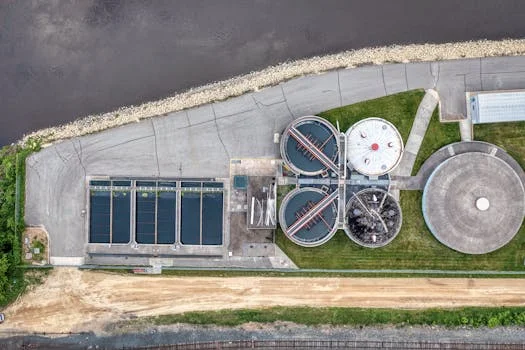
Facility owners should match measured influent BOD, TSS, and FOG to proven removal ranges before comparing footprints or vendor quotes. Fully automated packages matter when no dedicated operator is on shift. Tight sites may need buried or trailer-mounted units. Equipment and sampling points must support MELCC reporting, and modular expandability should be designed in if production growth is likely.
Selection checklist for Quebec industrial plants:
- Confirm discharge pathway: environment, storm sewer, or municipal sewer.
- Map sector rules (for example Q-2, r.27 for pulp and paper) and any Effluent Discharge Objectives.
- Characterize peak and average flow in m³/h, plus BOD, TSS, FOG, pH, and metals.
- Compare DAF, clarifier, biological, and MBR options against permit and reuse targets.
- Budget CAPEX, annual OPEX, sludge disposal, and monitoring labor together.
- Verify automation, spare parts lead time, and room for future capacity.
- Align sampling, flow metering, and data logging with authorization conditions.
Who This Is For / Next Step
This guide is for plant engineers, EPC contractors, and procurement managers sizing or upgrading industrial wastewater treatment in Canada’s Quebec plants that discharge under provincial authorization. Look elsewhere if you only need municipal sewage plant design under ROMAEU, or if your project is outside Quebec’s authorization regime. When you have influent data and a target permit envelope, request a quote with flow (m³/h), key contaminants, and discharge pathway so the process train can be sized against MELCC expectations.
Frequently Asked Questions
What MELCC limits apply to industrial wastewater in Quebec?
MELCC discharge limits are sector- and site-specific rather than a single province-wide BOD or TSS number. Pulp and paper mills, for example, fall under the Regulation respecting pulp and paper mills (Q-2, r.27). Petroleum refineries, pits and quarries, and other listed sectors have their own rules or guidelines. Confirm the receiving pathway and authorization conditions before locking treatment targets.
How much does a small industrial treatment system cost in Quebec?
Capital cost for a small-to-medium package often starts near CAD $150,000 for a 50 m³/h DAF unit installed. Annual OPEX for a medium plant at that flow commonly averages about CAD $60,000 within a CAD $45,000–$80,000 band. Final price moves with automation, materials, sludge handling, and whether an MBR or dosing skid is added.
Which technology works best for Quebec food-processing wastewater?
Dissolved Air Flotation (DAF) is generally the first-line choice for food-processing wastewater with high FOG and TSS, typically removing 90–95% of those fractions. Downstream aerobic or anaerobic steps then cut BOD and nutrients if the permit requires it. Add chemical dosing when coagulation improves solids capture or pH must stay inside authorization bounds.
Do all industrial discharges in Quebec need MELCC authorization?
Yes. According to Quebec’s industrial wastewater guidance, all new industrial projects and changes to existing projects that discharge wastewater to the environment fall under the environmental authorization regime. Significant process or treatment modifications should be reviewed before construction. Direct-to-sewer cases still need the municipal acceptability assessment path where non-domestic effluent is involved.
Can treated industrial wastewater be reused in Quebec?
Treated wastewater can be reused when the authorization allows it and water quality meets the intended use. Plants typically need advanced treatment such as MBR, often followed by reverse osmosis (RO) for higher-purity reuse. Document monitoring and fail-safe diversion so non-compliant water cannot enter the reuse loop.
Further Reading
Explore these in-depth articles on related wastewater treatment topics: