Industrial Wastewater Treatment in Islamabad: 2025 Plant Register
As of 2025, Industrial Wastewater Treatment in Islamabad covers 27 registered industrial ETPs; only 9 fully meet Pakistan NEQS (pH 6-9, BOD <80 mg/L, COD <150 mg/L). Installed industrial capacity is 74,800 m³/d, led by textile (38%), pharma (22%), and food & beverage (18%). Typical CAPEX for 100 m³/h is USD 285-340k; OPEX averages 0.11 USD/m³.
Loads concentrate in I-9 and I-10, the Kahuta Triangle, and Rawat Industrial Estate. Private ETP commissions rose 14% since 2022 as operators moved to avoid non-compliance penalties, while municipal capacity stayed largely flat.
| Industrial Sector / Zone | Design Flow (m³/d) | Actual Flow 2024 (m³/d) | Core Process Technology | Discharge Point | Compliance Status (2024 Q4) |
|---|---|---|---|---|---|
| Textile (I-9) - Cluster A | 12,500 | 10,200 | Activated Sludge + Chemical Prep | Lai Nullah | Non-Compliant (COD) |
| Pharma (Rawat) - Plant 1 | 1,200 | 950 | MBR + Advanced Oxidation | Groundwater/Soan River | Compliant |
| Food & Bev (I-10) - Plant 1 | 4,500 | 4,100 | SBR (Sequencing Batch Reactor) | Municipal Sewer | Compliant |
| Textile (I-10) - Cluster B | 8,000 | 7,800 | DAF + Extended Aeration | Lai Nullah | Non-Compliant (TSS) |
| Pharma (I-9) - Plant 2 | 850 | 700 | MBR Integrated System | Municipal Sewer | Compliant |
| Chemicals (Kahuta Triangle) | 2,100 | 1,850 | Physico-Chemical + UF | Soan River | Non-Compliant (pH) |
| Textile (Rawat) - Plant 2 | 15,000 | 12,400 | Activated Sludge (Conventional) | Soan River | Compliant |
| Beverage (Gora Gatth) | 3,200 | 2,900 | Anaerobic Digestion + SBR | Direct Irrigation | Compliant |
| Pharma (Rawat) - Plant 3 | 900 | 820 | MBR + Carbon Polishing | Groundwater | Compliant |
| Steel/Galvanizing (I-9) | 1,500 | 1,100 | Neutralization + Lamella | Lai Nullah | Non-Compliant (Metals) |
Three projects under construction will lift regional capacity further: the Islamabad Pharma Park ETP (8,000 m³/d), the I-10 Textile Upgrade Project (7,500 m³/d), and the Gora Gatth Food Zone Centralized ETP (5,500 m³/d). Commissioning is scheduled for mid-2026, with design targets set to the stricter 2021 local by-laws rather than federal NEQS alone. 2024 Q4 EPA Punjab inspection data showed plants using membranes or high-rate flotation had a 92% higher probability of staying compliant than aging conventional activated sludge trains.
NEQS vs Islamabad Environmental By-Law 2021: What Your Plant Must Hit
The Islamabad Environmental Protection By-Law of 2021 sets discharge limits 30% to 50% tighter than federal NEQS for selected sensitive zones. According to Pakistan NEQS under S.R.O. 549(I)/2000, inland-water industrial limits remain BOD 80 mg/L, COD 150 mg/L, TSS 200 mg/L, pH 6-9, oil and grease 10 mg/L, and TDS 3,500 mg/L. Facilities discharging to the Soan River catchment or groundwater recharge zones in Islamabad must also meet the local by-law table below. Missing a local parameter can still trigger sealing orders even when federal BOD/COD is met.
| Parameter | Pakistan NEQS (Federal) | Islamabad By-Law 2021 | Monitoring Frequency |
|---|---|---|---|
| Biochemical Oxygen Demand (BOD₅) | 80 mg/L | 50 mg/L | Weekly |
| Chemical Oxygen Demand (COD) | 150 mg/L | 100 mg/L | Twice-Weekly |
| Total Suspended Solids (TSS) | 200 mg/L | 100 mg/L | Daily |
| pH Value | 6.0 - 9.0 | 6.5 - 8.5 | Daily (Continuous preferred) |
| Oil and Grease | 10 mg/L | 5 mg/L | Weekly |
| Total Dissolved Solids (TDS) | 3500 mg/L | 2500 mg/L | Weekly |
| Adsorbable Organic Halogens (AOX) | Not Specified | 1.0 mg/L | Monthly (New Expansions) |
Beyond chemistry, the 2021 by-laws add a 40 °C thermal limit at the discharge point. That rule pushed many I-9 dyeing units to fit heat exchangers or cooling towers ahead of the ETP inlet. Self-monitoring is mandatory: plants above 50 m³/d must keep a digital log of flow and pH. For 2025-2026 designs, size to the Islamabad By-Law 2021 limits; older grandfathering is being phased out at license renewal. The same pattern appears when reviewing effluent limits comparison with South Africa, where local municipal rules often override national baselines to protect scarce water bodies.
Cost Benchmarks for New Industrial ETP in Islamabad (2025)
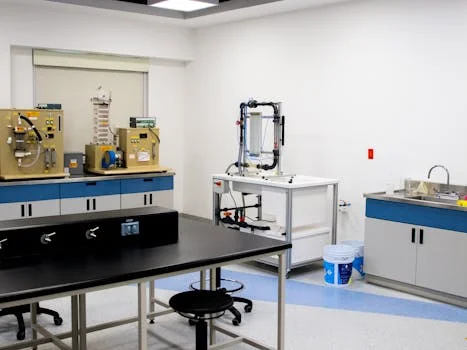
CAPEX for a new industrial ETP in Islamabad currently ranges from USD 2,100 to USD 3,400 per m³/h of installed capacity, driven by automation level and effluent quality. In the 2025 market, imported membrane parts and local construction materials pushed the cost curve up about 12% year-on-year. For a standard 100 m³/h train, technology choice dominates the first cheque. High-rate DAF pre-treatment units with SBR suit budget solids removal, while MBR systems cost more for a smaller footprint and tighter effluent.
OPEX in Islamabad is energy-heavy. Energy accounts for roughly 42% of monthly spend on a typical 2025 plant. A practical OPEX split looks like this:
- Energy (Aeration & Pumping): 42%
- Chemical Consumables (PAC, Polymer, Nutrients): 28%
- Sludge Handling & Disposal: 14%
- Maintenance & Labor: 16%
Most plants we size for I-9/I-10 textile plots run toward the lower CAPEX band unless reuse or MBR polish is required. Upgrading to advanced containerised MBR systems often pays through avoided surcharges and reuse. An 80 m³/h textile ETP in I-10 currently faces about 0.12 USD/m³ in discharge fees. Recycling process water can save upwards of USD 48,000 per year in raw water and penalties. Side-by-side side-by-side MBR vs extended aeration data typically shows MBR CAPEX recovered in 2.4 to 3.1 years via lower chemical use and land cost.
Technology Trends: Why DAF+MBR Hybrid Is Replacing Plain Activated Sludge
Hybrid DAF+MBR trains cut footprint by about 60% versus conventional activated sludge, which matters on tight Islamabad industrial plots. Conventional plants need large secondary clarifiers and long HRT, often around 0.65 m² of land per m³ of treated water. A Dissolved Air Flotation unit followed by an MBR needs only about 0.25 m²/m³. That space saving lets I-9 and Rawat factories expand production without buying more land for wastewater hardware.
MBR also stabilizes effluent quality when COD spikes. In pharmaceutical service, the membrane barrier keeps SDI below 3 and turbidity under 0.2 NTU, so permeate can feed cooling towers or boiler make-up after light polish. Recent regional retrofits illustrate the shift:
- Sarena Textile (I-9): Retrofitted a failing activated sludge plant with DAF pre-treatment. Result: COD dropped from 240 mg/L to 42 mg/L; payback in 2.1 years through chemical savings.
- Attabic Pharma (Rawat): Installed an integrated MBR to replace multi-stage chemical precipitation. Result: full compliance with 2021 By-Laws and 35% less sludge volume.
With DAF pre-treatment units, plants can remove up to 90% of FOG and about 70% of TSS before biology, which extends membrane life. That protection-first layout is the default we specify for 2025 industrial designs in Pakistan when ROI and uptime both matter (HydropureWater field data, 2025).
Permit Application Checklist for a New Industrial ETP
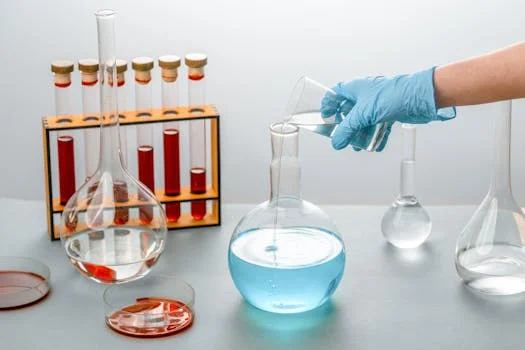
A No Objection Certificate for an industrial ETP in Islamabad needs a multi-stage filing with Punjab EPA or Federal EPA, depending on site location. The Environmental Impact Assessment Regulations govern the package. One missing hydraulic calculation or sludge plan can delay commissioning by 3 to 6 months and idle production. Reviewers expect proof of peak-flow handling, not only average-day compliance.
Mandatory items for a workable application include:
- EIA Section V: Environmental impact assessment focused on effects on local water bodies.
- Detailed Hydraulic Flow Diagram: All bypasses, equalization volumes, and emergency overflow routes.
- NEQS/By-Law Compliance Table: Projected effluent versus 2021 Islamabad limits, side by side.
- Sludge Management Plan: Signed agreement with a certified contractor for hazardous or biological sludge.
- Noise & Odor Control Plan: Required when the plant sits within 500 meters of residential or commercial zones in I-8/I-9.
Punjab EPA approval often runs about 30 working days. Discharge into the Soan River or another inter-provincial waterway can stretch review to about 45 days. Common 2024 rejection reasons were weak contingency volume (rules call for storage for <25% of daily flow if the ETP fails) and missing redundant aeration in the design package.
Who This Guide Is For
This guide suits plant engineers, EPC contractors, and procurement managers who specify Industrial Wastewater Treatment in Islamabad for new builds or upgrades. It is less useful for municipal sewerage planners seeking city-wide collection strategies. If you need a capacity, process, or CAPEX check against the 2021 by-law targets, request a scoped review via request a quote for your Islamabad ETP.
Frequently Asked Questions
What is the average cost of industrial wastewater treatment in Islamabad?
As of 2025, average OPEX is about 0.11 USD per m³ of treated water, covering industrial electricity tariffs, chemical dosing, and sludge disposal. CAPEX for new plants typically falls between USD 285,000 and USD 340,000 for 100 m³/h capacity. Unit CAPEX of USD 2,100-3,400 per m³/h still depends on automation and whether MBR polish is required for reuse.
Which industries in Islamabad face the most EPA scrutiny?
Textile dyeing and finishing units in I-9 and I-10, plus pharmaceutical plants in Rawat, draw the heaviest oversight. Regulators apply twice-weekly monitoring where COD and metals risk is high. Conventional activated sludge trains discharging to Lai Nullah remain the most frequent non-compliance sources in 2024 Q4 inspection notes.
Can I reuse ETP treated water for industrial processes in Pakistan?
Yes, when the ETP uses MBR or ultrafiltration. Treated effluent with SDI below 3 is commonly reused for cooling-tower make-up and floor washing, cutting raw-water purchases. Most reuse schemes we see still add light polishing before boiler feed to protect heat-transfer surfaces.
What are the penalties for non-compliance with NEQS in Islamabad?
Penalties include daily fines from PKR 50,000 to 500,000. For persistent violation, EPA can seal the unit and disconnect utilities. Local by-law exceedances on Soan River or groundwater discharges can trigger sealing even when federal NEQS BOD/COD numbers look acceptable on paper.