Why Food Processors Are Switching to Skid Mounted Treatment Plants
Food processing facilities face mounting pressure to meet stringent environmental regulations, with EPA fines reaching up to $54,833 per day for non-compliance with pretreatment standards (40 CFR Part 405), based on 2025 enforcement data. Compounding these challenges are significant space constraints and a persistent shortage of skilled wastewater labor. Traditional concrete-basin wastewater treatment plants require extensive permitting and construction periods, typically spanning 12–18 months, a timeline that often jeopardizes compliance deadlines. In contrast, skid-mounted systems offer a dramatically accelerated solution, with installation times averaging just 8–12 weeks, as reported by HWT in 2023.
The inherent advantage of factory-tested modular skids lies in their ability to preemptively address commissioning failures. Issues such as improper piping or electrical miswiring, which account for approximately 30% of field-built plant delays according to EPA 2024 data, are systematically eliminated. This pre-testing ensures a predictable and rapid deployment. the modular design facilitates scalable capacity expansion. Systems can be readily augmented in 20 m³/h increments by adding parallel skids, a critical capability for seasonal food processors, such as those in the canning or dairy industries, who experience fluctuating production demands. A real-world example illustrates this benefit: a dairy plant in Wisconsin successfully avoided potential fines totaling $2.1 million by deploying a 100 m³/h dissolved air flotation (DAF) skid system within a 10-week timeframe. This rapid implementation reduced their wastewater's total suspended solids (TSS) from 1,200 mg/L to a compliant 25 mg/L.
Engineering Specs: Treatment Performance and Sanitary Design Requirements
Effective wastewater treatment in the food processing sector necessitates a deep understanding of specific influent characteristics and stringent effluent targets. Typical influent wastewater from food processing operations presents significant challenges, with Chemical Oxygen Demand (COD) ranging from 500–5,000 mg/L, Total Suspended Solids (TSS) between 300–2,000 mg/L, Fats, Oils, and Grease (FOG) from 200–1,500 mg/L, and a pH range of 4.5–9.0, as detailed in EPA 2024 Food Processing Pretreatment Guidelines. To meet regulatory compliance, effluent quality targets are rigorously defined: COD must be reduced to ≤50 mg/L, TSS to ≤30 mg/L, FOG to ≤10 mg/L, and the pH must be maintained between 6.0–9.0, aligning with standards such as 40 CFR Part 405 and the EU Directive 91/271/EEC.
Achieving these targets requires adherence to strict sanitary design principles. Equipment must comply with 3-A Sanitary Standard 63-03, mandating hygienic welds, and ensuring compatibility with Clean-In-Place (CIP) and Sterilize-In-Place (SIP) protocols. EHEDG certification is crucial for verifying that all materials used are food-grade and suitable for hygienic applications. all gaskets must meet FDA compliance, typically utilizing food-grade silicone or EPDM materials. Material specifications are paramount: wetted components are universally constructed from 316L stainless steel to resist corrosion and facilitate cleaning, while structural frames are typically made from 304 SS. External surfaces often feature food-grade epoxy coatings, meeting NSF/ANSI 61 standards for potable water contact safety.
Process parameters are carefully engineered for optimal performance. For Dissolved Air Flotation (DAF) systems, hydraulic loading rates generally fall within 2–5 m³/m²·h, while Membrane Bioreactor (MBR) skids operate at 15–30 Liters per square meter per hour (LMH). Biological treatment stages within these systems require a sludge retention time (SRT) of 15–30 days to ensure effective microbial activity. For disinfection stages, a contact time of 30–60 minutes is typically required for chlorine dioxide at a dosage of 2–5 mg/L to achieve the necessary pathogen reduction.
| Parameter | Typical Influent Range (Food Processing) | Target Effluent Limit | Design Consideration |
|---|---|---|---|
| COD (mg/L) | 500–5,000 | ≤50 | Biological treatment, advanced oxidation |
| TSS (mg/L) | 300–2,000 | ≤30 | DAF, MBR filtration |
| FOG (mg/L) | 200–1,500 | ≤10 | DAF, grease traps, oleophilic media |
| pH | 4.5–9.0 | 6.0–9.0 | Chemical dosing (acid/alkali) |
| Hydraulic Loading Rate (DAF) | N/A | 2–5 m³/m²·h | Skid-mounted DAF system design |
| Flux Rate (MBR) | N/A | 15–30 LMH | MBR skid membrane selection |
| SRT (Biological) | N/A | 15–30 days | Activated sludge process control |
| Disinfection Contact Time | N/A | 30–60 minutes | UV, chlorine dioxide, ozonation |
For advanced FOG and TSS removal, consider our skid-mounted DAF system for food processing wastewater. For facilities aiming for water reuse or near-zero discharge, our MBR skid plant for water reuse in food processing offers superior effluent quality.
DAF vs. MBR vs. Hybrid Skids: Which System Matches Your Wastewater Profile?
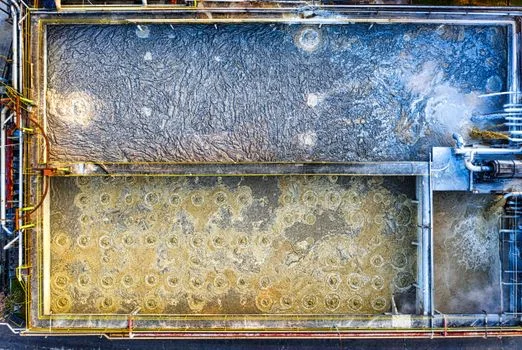
Selecting the optimal skid-mounted treatment system hinges on a thorough analysis of your facility's specific wastewater characteristics, budgetary constraints, and desired effluent quality. Dissolved Air Flotation (DAF) skids are particularly effective for treating wastewater with high concentrations of FOG and TSS, commonly found in meat processing and dairy operations. These systems typically achieve FOG removal rates of 85–90% and TSS removal rates of 92–97%, according to EPA 2024 data. DAF skids are an excellent choice for pre-treatment or when moderate effluent quality is sufficient.
Membrane Bioreactor (MBR) skids, on the other hand, are engineered to deliver exceptionally high-quality effluent, often suitable for direct reuse within the plant. They consistently achieve COD levels below 50 mg/L and Biological Oxygen Demand (BOD) below 10 mg/L. However, MBR systems involve a higher capital investment and ongoing operational expenditure due to membrane replacement, which typically occurs every 5–7 years, contributing $0.15–$0.30/m³ to operational costs. For facilities processing high-strength wastewater, such as those with COD exceeding 3,000 mg/L, or experiencing highly variable loads, hybrid DAF-MBR skids offer a robust solution. These systems integrate DAF for initial solids and FOG removal, followed by an MBR for biological polishing. This pre-treatment significantly reduces the organic load on the MBR, mitigating membrane fouling by up to 40% and extending membrane lifespan.
When considering footprint, DAF skids generally require 0.5–1.0 m²/m³·d of space, MBR skids are more compact at 0.3–0.6 m²/m³·d, and hybrid systems typically range from 0.7–1.2 m²/m³·d, based on 2026 industry benchmarks. Energy consumption also varies: DAF skids use 0.2–0.4 kWh/m³, MBR skids consume 0.8–1.2 kWh/m³ (including aeration and pumping), and hybrid systems fall in the middle at 0.5–0.9 kWh/m³. A decision framework can guide your selection: opt for DAF for low-COD, high-FOG wastewater; choose MBR for stringent reuse applications or zero-discharge goals; and consider a hybrid system for high-strength or fluctuating wastewater streams. Exploring hybrid DAF-MBR systems for high-strength organic wastewater can provide a comprehensive solution.
| Feature | DAF Skid | MBR Skid | Hybrid DAF-MBR Skid |
|---|---|---|---|
| Primary Application | High FOG, High TSS, Pre-treatment | High Effluent Quality, Water Reuse, Zero Discharge | High Strength Wastewater, Variable Loads |
| Typical COD Removal (%) | 50–70% | 95–99% | 90–98% |
| Typical TSS Removal (%) | 92–97% | >99% | >99% |
| Typical FOG Removal (%) | 85–90% | 90–95% | 95–98% |
| Footprint (m²/m³·d) | 0.5–1.0 | 0.3–0.6 | 0.7–1.2 |
| Energy Consumption (kWh/m³) | 0.2–0.4 | 0.8–1.2 | 0.5–0.9 |
| Membrane Replacement Cost (OpEx $/m³) | N/A | 0.15–0.30 | 0.10–0.20 (reduced fouling) |
| CapEx Range ($/m³) | $200–$350 | $350–$500 | $320–$450 |
Cost Breakdown: CapEx, OpEx, and ROI for Skid Mounted Systems
The economic advantages of skid-mounted treatment systems are substantial, offering significant reductions in both capital expenditure (CapEx) and operational expenditure (OpEx) compared to traditional concrete-basin plants. For skid-mounted systems, CapEx benchmarks for 2026 indicate a range of $200–$350/m³ for DAF systems, $350–$500/m³ for MBR systems, and $320–$450/m³ for hybrid systems. These figures represent a considerable saving over the $500–$1,200/m³ cost typical for field-built concrete structures, as noted by EPA 2024 data.
Operational expenses are also optimized. The OpEx breakdown for skid systems includes chemicals, which range from $0.10–$0.30/m³ for DAF (coagulants, flocculants) and $0.05–$0.15/m³ for MBR (biocides, cleaning agents). Energy consumption typically falls between $0.20–$1.20/m³, varying with the specific technology and operational intensity. For MBR systems, membrane replacement is a key OpEx component, estimated at $0.15–$0.30/m³ over their lifespan.
The return on investment (ROI) for skid-mounted systems is driven by several factors. A 40–60% reduction in installation time translates to faster project completion and reduced disruption. The 30–50% smaller footprint minimizes land acquisition or repurposing costs. 20–30% lower labor requirements for installation and operation contribute to overall cost savings compared to traditional plants, according to EPA 2024 insights. For instance, a 200 m³/h hybrid skid system can realize CapEx savings of approximately $1.2 million and annual OpEx reductions of $80,000 when compared to a similarly sized traditional plant, leading to a payback period of roughly 3.5 years.
A simple ROI calculation can be performed using the formula: (Annual Savings – Annual OpEx) / CapEx = Payback Period (years). For example, if annual savings are $150,000, annual OpEx is $70,000, and CapEx is $500,000, the payback period is ($150,000 - $70,000) / $500,000 = 0.16 years, or approximately 2 months. Implementing a skid-mounted chemical dosing for pH adjustment and coagulation can further optimize OpEx.
| Cost Component | DAF Skid | MBR Skid | Hybrid DAF-MBR Skid | Traditional Plant (Concrete Basin) |
|---|---|---|---|---|
| CapEx ($/m³) | $200–$350 | $350–$500 | $320–$450 | $500–$1,200 |
| OpEx: Chemicals ($/m³) | $0.10–$0.30 | $0.05–$0.15 | $0.08–$0.20 | Variable (depends on treatment) |
| OpEx: Energy ($/m³) | $0.20–$0.40 | $0.80–$1.20 | $0.50–$0.90 | Variable (depends on treatment) |
| OpEx: Membrane Replacement ($/m³) | N/A | $0.15–$0.30 | $0.10–$0.20 | N/A |
| Installation Time Savings (%) | 40–60% | 40–60% | 40–60% | 0% |
| Footprint Savings (%) | 30–50% | 40–60% | 30–50% | 0% |
Case Study: Skid Mounted DAF System for a Meat Processing Plant
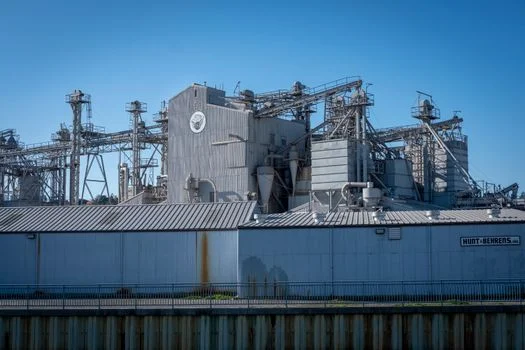
A prominent meat processing plant located in Iowa faced significant challenges in meeting EPA pretreatment standards for its wastewater, which was characterized by high levels of organic pollutants and suspended solids. The plant's existing treatment infrastructure was struggling to cope, leading to potential non-compliance and substantial fines. To address this, a 150 m³/h skid-mounted Dissolved Air Flotation (DAF) system was implemented in 2025 as a rapid and effective solution.
The influent wastewater presented a demanding profile: COD levels averaged 4,200 mg/L, TSS at 1,800 mg/L, and FOG at 1,200 mg/L, with a pH range of 5.2–6.8. The deployment of the skid-mounted DAF system achieved remarkable treatment results, consistently reducing COD to 220 mg/L, TSS to 45 mg/L, and FOG to 15 mg/L. This represented a removal efficiency of 95% for FOG and 97% for TSS, ensuring compliance with the stringent requirements of 40 CFR Part 432.
Beyond the impressive effluent quality, the project delivered significant benefits in terms of project timeline and cost. The skid system was delivered and commissioned in just 8 weeks, a stark contrast to the estimated 14 months required for a traditional concrete-basin plant. The capital expenditure for the skid system was $950,000, compared to an estimated $2.1 million for a conventional build. Annual operational costs, including chemicals, energy, and labor, were reduced to approximately $65,000, contributing to substantial long-term savings and enabling the plant to avoid an estimated $1.8 million in potential fines. This case highlights the efficacy and economic viability of skid-mounted DAF technology for demanding food processing wastewater applications. For similar applications, explore our DAF skid system for food processing wastewater.
Frequently Asked Questions
What are the typical COD and TSS limits for food processing wastewater effluent?
Effluent limits for food processing wastewater typically require COD below 50 mg/L and TSS below 30 mg/L, as per EPA pretreatment standards like 40 CFR Part 405.
What is the main advantage of a skid-mounted treatment plant?
The primary advantage is reduced installation time (40–60%) and lower CapEx ($200–$400/m³ vs. $500–$1,200/m³ for concrete) due to pre-fabrication and factory testing, minimizing site disruption and risk.
Is sanitary design a critical factor for food processing wastewater treatment skids?
Yes, sanitary design is essential, requiring compliance with 3-A standards, EHEDG certification, FDA-approved materials, and hygienic welds to prevent contamination and ensure cleanability.
How does a DAF system work for FOG removal in food processing wastewater?
DAF systems inject micro-bubbles into the wastewater, which attach to suspended solids and FOG, causing them to float to the surface for removal by a skimming mechanism, achieving 85–90% FOG removal.
What is the lifespan of membranes in an MBR skid plant?
MBR membranes typically have a lifespan of 5–7 years, with replacement costs contributing $0.15–$0.30/m³ to the operational expenditure.
Can skid-mounted systems handle high FOG loads?
Yes, DAF and hybrid DAF-MBR skid systems are specifically designed to handle high FOG loads, often exceeding 1,000 mg/L, with effective removal rates.
What is the typical footprint reduction of a skid-mounted plant compared to a traditional one?
Skid-mounted plants can occupy 60% less floor space than traditional concrete-basin plants, offering significant advantages for facilities with limited space.
Further Reading
Explore these in-depth articles on related wastewater treatment topics: