Why Slaughterhouse Wastewater Is a COD and BOD Challenge
Slaughterhouse (abattoir) wastewater is a mixed stream generated from killing floors, paunch handling, rendering, and clean-in-place operations. Its pollutant load comes from blood, paunch manure, fat trimmings, bone fragments, and chlorinated cleaning effluent — each contributing distinct COD, FOG, and nitrogen fractions that resist a single-unit solution. Typical raw influent characteristics are COD 1,500–8,000 mg/L, BOD 800–4,000 mg/L, FOG 200–1,500 mg/L, TSS 500–3,000 mg/L, and TKN 100–400 mg/L, with peak flows during batch slaughter creating a 3–5× hydraulic swing over the daily average. The BOD/COD ratio of 0.4–0.5 sits in the band where mesophilic anaerobic digestion is both technically viable and energetically favorable, which is why a screening → DAF → UASB → MBR architecture dominates modern meat processing wastewater design. The 2017 Australian Meat Processing Industry critical review (Top 1 source) documents that coagulant and flocculant dosing — typically alum, ferric chloride, and cationic polymer — remains the standard route to lift protein recovery and FOG float in the red meat sector, and that energy consumption is concentrated in the aerobic polishing stage rather than the upstream physico-chemical steps.
Pretreatment: Screening, Grit Removal, and Flow Equalization
Headworks protection is non-negotiable in meat processing wastewater treatment because bone shards, paunch content, and hair will disable downstream pumps and puncture membrane modules within hours if not removed. A GX series rotary mechanical bar screen with 1–3 mm aperture is the workhorse for primary solids capture, typically removing 5–15% of incoming COD and TSS before any chemical stage. Downstream of screening, a grit chamber designed for a scouring velocity of 0.25–0.4 m/s settles inorganic solids (sand, bone dust) without resuspending organics — a common undersizing error in small abattoirs. Flow equalization sized at 6–12 hours HRT damps the COD swings caused by batch slaughter cycles and intermittent rendering discharges, holding the downstream biological train inside its design OLR envelope. For a 500 m³/day plant, the headworks package (screen + grit + EQ basin) typically occupies 60–90 m² and represents 5–8% of total CAPEX, but protects the remaining 92% of installed equipment from shock loads and ragging events.
Dissolved Air Flotation for FOG and Colloidal COD Removal
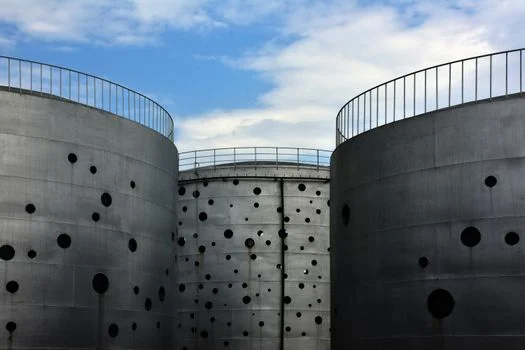
DAF is the unit operation that makes the rest of the train work. Saturating a 10–30% recycle stream with 4–6 bar pressurized air and releasing it through needle valves generates 20–80 μm micro-bubbles that attach to oil droplets and colloidal solids, lifting them to the surface as a float that is skimmed by a helical scraper. On slaughterhouse influent, a properly coagulated DAF stage delivers 60–90% FOG removal, 50–80% TSS removal, and 30–60% COD removal as a primary clarification step (per Top 1 DAF performance review). The hydraulic loading range of 4–20 m/h and an air-to-solids ratio of 0.02–0.06 kg air/kg TSS are the design parameters that separate a working unit from a chronically overloaded one. Coagulant dosing typically runs alum at USD 0.10/m³ or ferric chloride at USD 0.15/m³, paired with 1–10 mg/L cationic polymer for floc strength — both figures consistent with the Australian red meat sector review. A PLC-controlled automatic chemical dosing skid tied to inline streaming current or pH signals holds dose consistency during the 3–5× load swings that batch slaughter produces.
| Design Parameter | Typical Range (Slaughterhouse DAF) | Notes |
|---|---|---|
| Hydraulic loading rate | 4–20 m/h | Lower for high-FOG, higher for low TSS |
| Recycle ratio | 10–30% | Drives micro-bubble flux |
| Air-to-solids ratio | 0.02–0.06 kg/kg | Critical for float stability |
| FOG removal | 60–90% | Requires coagulant + polymer |
| TSS removal | 50–80% | Pre-polished stream to UASB/MBR |
| COD removal | 30–60% | Primary clarification credit |
| Alum dose | USD 0.10/m³ | 2017 Australian review |
| Ferric chloride dose | USD 0.15/m³ | 2017 Australian review |
| Polymer dose | 1–10 mg/L | Cationic, for floc strength |
The dissolved air flotation system is offered in 13 standard models covering 4–300 m³/h, with skid-mounted or containerized configurations for tight site footprints.
Biological COD and BOD Reduction: Anaerobic and Aerobic Stages
Biological treatment does the heavy lifting. The 2026 standard architecture is a hybrid: a high-rate anaerobic stage to remove the bulk of biodegradable carbon cheaply, followed by an aerobic polishing stage to meet discharge or reuse targets. The UASB (Upflow Anaerobic Sludge Blanket) reactor operating at 35–37°C, HRT 12–48 h, and OLR 5–15 kg COD/m³·d routinely delivers 70–90% COD reduction on slaughterhouse waste — confirmed by the AIOU 2011 anaerobic digestion laboratory study (Top 5 source) and consistent with full-scale operating data. The SBR (Sequencing Batch Reactor) at HRT 24–48 h and MLSS 3,000–5,000 mg/L achieves 90–95% COD removal in a single aerobic stage but requires a larger footprint and higher aeration energy per kg COD removed. The MBR (Membrane Bioreactor) at HRT 8–16 h, MLSS 8,000–12,000 mg/L, and a 0.1 μm PVDF membrane delivers 95–99% COD removal with effluent typically <50 mg/L COD and <10 mg/L BOD — clean enough for direct discharge under the 2026 EU BREF BAT-AEL ceiling and for downstream RO reuse.
| Reactor | HRT | OLR / MLSS | COD Removal | Effluent COD | Footprint | Energy Profile |
|---|---|---|---|---|---|---|
| UASB | 12–48 h | 5–15 kg COD/m³·d | 70–90% | 150–600 mg/L | Compact | Low; biogas-positive |
| SBR | 24–48 h | 3,000–5,000 mg/L MLSS | 90–95% | 75–400 mg/L | Large | High aeration |
| MBR | 8–16 h | 8,000–12,000 mg/L MLSS | 95–99% | <50 mg/L | Compact | Moderate + membrane |
An integrated MBR membrane bioreactor using DF series PVDF flat sheet membrane modules is the most common polishing step, often preceded by a high-efficiency sedimentation tank for suspended solids trimming before the membrane tank.
Side-by-Side Process Train Comparison: DAF + UASB + MBR vs DAF + SBR vs DAF + MBR
Train selection is driven by flow rate, discharge target, and whether the plant has a use case for biogas. Three configurations cover 90% of greenfield slaughterhouse projects in 2026.
| Criterion | Train A: DAF + UASB + MBR | Train B: DAF + SBR | Train C: DAF + MBR |
|---|---|---|---|
| Overall COD removal | 95–99% | 90–95% | 92–97% |
| Effluent COD | <50 mg/L | 75–400 mg/L | 50–150 mg/L |
| Best fit flow | >500 m³/day | <500 m³/day | <300 m³/day |
| Footprint | Smallest (UASB + MBR) | Largest (SBR basin) | Small |
| CAPEX | Highest (+15–25%) | Lowest | Moderate |
| OPEX | Lowest at scale (biogas offset) | High aeration | Highest aeration |
| Biogas production | Yes — boiler or CHP use | None | None |
| Reuse-ready permeate | Yes (RO polish) | Marginal | Yes |
| Operator complexity | Higher (anaerobic + membrane) | Lowest | Moderate |
Decision rule for 2026 projects: choose Train A for flows above 500 m³/day with a reuse or energy-recovery target, Train B for cost-driven sites under 500 m³/day with no biogas use case, and Train C for rapid deployment or tight footprints where anaerobic digestion is impractical. For a 200 m³/day small abattoir on a confined site, a containerized or underground integrated package built around DAF + MBR is typically the fastest path to compliance.
2026 Discharge Limits, Sludge Handling, and Reuse Pathways
The 2026 EU BREF for the Food, Drink and Milk Industries sets BAT-AELs for slaughterhouse direct discharge at COD 25–100 mg/L, BOD 5–25 mg/L, and TSS 10–35 mg/L, depending on plant size and receiving water sensitivity. In the United States, EPA effluent guidelines under 40 CFR Part 432 for meat products require large subcategory facilities to meet BOD5 ≤ 26 mg/L monthly average, TSS ≤ 30 mg/L, and FOG ≤ 13 mg/L — a tighter envelope than the EU floor and a strong argument for Train A or Train C with MBR polishing. Sludge management is the second compliance axis: DAF float and waste activated sludge from the biological stages typically leave the process train at 0.3–0.8% dry solids, and a plate-and-frame filter press dewatering that stream to 22–28% cake dryness for off-site rendering or composting. For plants targeting water reuse, the MBR permeate is the entry point — pushing it through a reverse osmosis unit with a final chlorine dioxide disinfection step delivers boiler-feed quality water for in-plant reuse and closes the loop on freshwater draw.
Frequently Asked Questions

What is the typical COD removal efficiency for slaughterhouse wastewater? An engineered train of screening, DAF, anaerobic digestion (UASB), and MBR polishing routinely achieves 95–99% COD removal, dropping raw influent of 1,500–8,000 mg/L COD to below 50 mg/L for direct discharge compliance (HydropureWater field data, 2026).
Is anaerobic treatment (UASB) suitable for slaughterhouse effluent? Yes. With a BOD/COD ratio of 0.4–0.5, slaughterhouse wastewater is highly amenable to mesophilic UASB digestion at 35–37°C, OLR 5–15 kg COD/m³·d, delivering 70–90% COD reduction and producing recoverable biogas (AIOU 2011 study).
Which process train is best for a small abattoir under 300 m³/day? Train C (DAF + MBR, no anaerobic) is typically selected for flows under 300 m³/day because it has the lowest civil footprint, fastest installation, and no anaerobic operator skill requirement, while still meeting 92–97% COD removal and reuse-ready permeate quality.
How is the sludge from a slaughterhouse wastewater plant handled? DAF float and biological waste activated sludge are thickened and dewatered with a plate-and-frame filter press to 22–28% dry solids, then routed to rendering, composting, or landfill depending on local regulation. For a 2026 OPEX comparison, see the 2026 OPEX breakdown for slaughterhouse plants.