Industrial Wastewater Challenges in Taipei’s High-Tech Zones
Taipei's high-tech zones face a unique convergence of high-volume, complex effluents and stringent urban spatial constraints. The recent NT$900 million Linkou industrial park project, designed to handle 4,700 m³/day, exemplifies the scale of infrastructure required to support Taiwan's tech transformation, accommodating major manufacturers like ASML and Foxconn. Semiconductor fabrication and precision machinery operations generate process wastewater characterized by low biochemical oxygen demand (BOD) but high concentrations of total suspended solids (TSS), fluorides, and heavy metals like copper and nickel, necessitating specialized pretreatment before biological processing. This complexity is often compounded by variable flow rates, requiring robust equalization tanks to stabilize the load.
Urban density is a primary driver for system design. Available land is scarce and expensive, pushing engineers toward compact, odor-free, and indoor-compatible solutions. Packaged or containerized treatment units are no longer a luxury but a necessity for integration within manufacturing buildings or tight urban plots. This infrastructure investment signals a long-term government commitment to environmental compliance, raising the bar for private sector dischargers who must now meet elevated standards within these space-constrained environments. Noise pollution from blowers and pumps is another key consideration, often mandating acoustic enclosures for equipment installed near residential areas.
Key Treatment Technologies for Taipei’s Industrial Sectors
Selecting the right technology is critical for compliance and operational efficiency. For high-tech industrial streams, Membrane Bioreactor (MBR) and Dissolved Air Flotation (DAF) systems are foundational technologies.
An integrated MBR membrane bioreactor for high-efficiency industrial treatment combines biological degradation with membrane filtration. Utilizing 0.1 μm PVDF membranes, MBR systems achieve superior effluent quality, with removal rates exceeding 95% for COD and 99% for TSS, producing water with turbidity consistently below 1 NTU. This makes the effluent suitable for high-quality reuse applications, such as cooling tower make-up water in semiconductor fabs, directly addressing water scarcity concerns. The membranes also act as an absolute barrier for pathogens and most bacteria.
For metalworking, machining, and food processing effluents, a high-efficiency DAF system for oil, grease, and suspended solids removal is indispensable. DAF units dissolve air under pressure, creating microbubbles that attach to and float oils, greases, and colloidal particles (FOG) for skimming removal, achieving 90–95% efficiency. This process is a critical pretreatment step to protect downstream biological systems from shock loads. Coagulants and flocculants like polyaluminum chloride (PAC) are often dosed upstream to enhance removal efficiency.
For nitrogen removal to meet Taiwan's strict Total Nitrogen (TN) limits, Anoxic/Oxic (A/O) biological processes are integrated. This system alternates between oxygen-deficient (anoxic) and oxygen-rich (aerobic) zones to facilitate nitrification and denitrification, effectively reducing ammonium and nitrate concentrations. Careful control of the internal recycle rate is essential for optimal performance.
| Technology | Primary Function | Key Performance Metric | Ideal Application |
|---|---|---|---|
| MBR (Membrane Bioreactor) | Organic & Solids Removal | >95% COD, >99% TSS removal | Semiconductor, Electronics Reuse |
| DAF (Dissolved Air Flotation) | Oil, Grease & TSS Removal | 90-95% FOG removal | Metalworking, Machining, Food Processing |
| A/O (Anoxic/Oxic) | Nitrogen Removal | TN < 15 mg/L effluent | All sectors requiring TN compliance |
Compliance Standards and Effluent Requirements in Taiwan
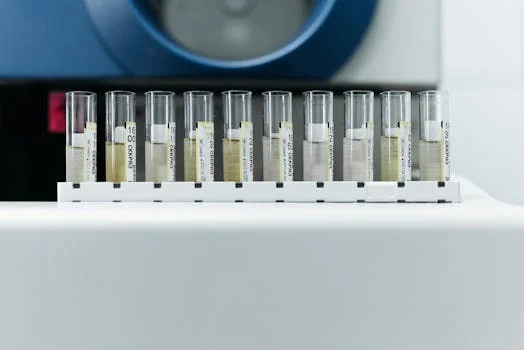
Taiwan EPA discharge standards fundamentally govern system design. For direct discharge into water bodies, Class A standards are the benchmark, including BOD <20 mg/L, COD <100 mg/L, SS <30 mg/L, Total Nitrogen (TN) <15 mg/L, and Total Phosphorus (TP) <1 mg/L. Heavy metals are strictly regulated, with limits such as Cadmium (Cd) <0.1 mg/L, Lead (Pb) <1.0 mg/L, and Chromium (Cr) <2.0 mg/L, often requiring tertiary polishing steps like chemical precipitation or ion exchange post biological treatment. Regular self-monitoring and reporting to the EPA are mandatory for all permitted facilities.
For facilities connecting to municipal sewers, pretreatment standards apply to protect the public sewer system. These typically mandate the removal of FOG, settleable solids, and pH neutralization upstream of discharge. The trend, however, is moving toward water reuse. Industrial parks like HwaYa Technology Park are reusing 70–80% of their treated effluent, driven by corporate ESG goals and water security. This pushes the requirement for advanced post-treatment, such as reverse osmosis (RO) or ultrafiltration, after the secondary biological process to achieve the purity needed for industrial reuse, such as for ultra-pure water (UPW) production.
Staying ahead of evolving regulations is crucial; a detailed analysis is available in our article on global heavy metal discharge limits and compliance strategies.
System Comparison: MBR vs DAF vs Integrated Package Plants
The choice between core technologies hinges on wastewater characteristics, required effluent quality, available footprint, and capital vs. operational expenditure trade-offs. A detailed influent characterization study is the critical first step in any project.
MBR Systems represent the high-end solution for effluent quality and footprint reduction. They are typically deployed for flows between 10–2,000 m³/day. Their key advantage is a 60% smaller footprint compared to conventional activated sludge systems, achieved by eliminating secondary clarifiers. While CAPEX is higher due to membrane costs, OPEX over a 10-year lifecycle is often lower due to reduced sludge production (30-40% less) and automation. They are the default choice for semiconductor plants requiring high-quality reuse.
DAF Systems are workhorses for pretreatment. With capacities from 4–300 m³/h, they efficiently remove emulsified oils, greases, and fine suspended solids that would disrupt biological systems. They operate with lower energy consumption than alternative technologies like centrifuges. DAF is seldom a standalone solution but is a critical first step in a treatment train for specific industrial streams, particularly those with high fat, oil, and grease content.
Integrated Package Plants (e.g., WSZ series) offer a complete, pre-engineered solution for flows from 1–80 m³/h. These systems often incorporate A/O biology, clarification, and disinfection in a single, skid-mounted or underground unit. They are fully automated, requiring minimal operator intervention, making them ideal for small to mid-sized factories or remote sites with limited technical staff, reducing long-term labor costs.
| Parameter | MBR System | DAF System | Integrated Package Plant |
|---|---|---|---|
| Typical Flow Range | 10 - 2,000 m³/day | 4 - 300 m³/h | 1 - 80 m³/h |
| Footprint | Smallest (60% reduction) | Compact | Compact to Moderate |
| Key Removal | Organics, Solids, Pathogens | FOG, TSS, Colloids | Organics, Nitrogen, Solids |
| Best For | High-Quality Reuse | Pretreatment of Oily Wastewater | Small Facilities, Full Treatment |
| Automation Level | High | Medium | High (Unmanned Operation) |
Designing for Urban Constraints: Compact and Modular Solutions
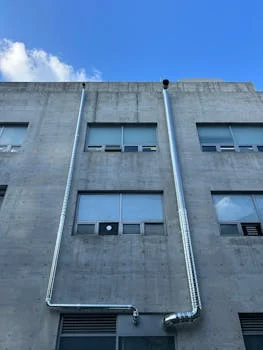
Taipei's urban reality demands innovative engineering for space efficiency. Underground and containerized systems provide viable answers, allowing for green space retention, noise abatement, and odor control—critical factors in mixed-use industrial zones. HydropureWater’s WSZ series, for example, can be fully buried with landscaping above, completely hiding the treatment process from view.
Modularity is key for scalability and phased investment. Both DAF and MBR technologies can be implemented in modular units that scale from 10 to 300 m³/h, enabling capacity expansion in sync with production ramp-ups without a complete system overhaul. Full automation with PLC-based control systems drastically reduces the need for on-site skilled labor, a significant advantage in a competitive job market. This combination of a small physical footprint and unmanned operation makes advanced treatment feasible for virtually any facility in Taipei. For a deeper analysis of installation options, see our data-driven comparison of containerized vs permanent wastewater plants.
Frequently Asked Questions
What is the typical flow rate for industrial wastewater in Taipei?
Systems are highly variable, ranging from small 10 m³/day units for specialized clinics or labs to massive central plants like the Linkou park project designed for 4,700 m³/day. Flow rates are directly tied to production output and can fluctuate significantly.
How do MBR systems compare to conventional plants in footprint?
By integrating clarification and filtration into the biological tank, MBR systems require approximately 60% less space than conventional activated sludge plants, making them ideal for land-constrained urban areas like Taipei. This space saving can translate into significant cost savings on expensive urban land.
What technologies are used for oil and grease removal?
Dissolved Air Flotation (DAF) is the predominant technology, effectively removing 90–95% of free oils, greases, and suspended solids from metalworking and food processing effluents through physical separation. API separators are also used for initial free oil removal from larger flows.
Are there government incentives for wastewater reuse in Taiwan?
While direct subsidies are limited, compliance with water reuse benchmarks significantly streamlines the permitting process and enhances a company's ESG rating, which is increasingly important for securing business with multinational corporations. This provides a strong indirect financial incentive.
Can small factories in Taipei use automated systems?
Yes. Fully automated package plants like the WSZ series are designed specifically for this purpose, requiring no dedicated on-site operator and often fitting on a footprint of under 10 m². Remote monitoring via SCADA systems allows for off-site management and troubleshooting.