Global heavy metal discharge limits 2026 are country-specific maximum concentrations for toxic metals in treated industrial effluent. Cadmium is typically held to 0.003–0.05 mg/L, lead to 0.1–1.0 mg/L, and mercury to 0.001–0.05 mg/L. Hexavalent chromium is commonly capped at ≤ 0.05 mg/L for a direct industrial discharge. The ceiling moves with the receiving water and with the industry category.
WHO sets a drinking-water guideline of 0.003 mg/L (3 μg/L) for cadmium, and that figure protects a source, not a sewer permit. US EPA enforces metal-specific effluent guidelines under the Clean Water Act through the NPDES permit program. Meeting the permit takes chemical precipitation, ion exchange, or membrane filtration matched to each metal. A generic package sized only on flow will miss the species that stays dissolved.
Global Heavy Metal Discharge Limits 2026
Heavy metal discharge limits are numeric ceilings in mg/L on metals in treated effluent, not one worldwide number. A direct discharge to a sensitive river can sit near 0.005 mg/L cadmium. A sewer tie-in ahead of a modern plant may allow 0.05 mg/L cadmium under local rules. Metal finishing, mining, and battery plants each use a separate sub-category.
According to 40 CFR 433.14, as displayed on the eCFR on 21 September 2026, metal-finishing BAT monthly averages for an existing point source are 0.26 mg/L total cadmium and 0.43 mg/L total lead. Daily maxima are 0.69 mg/L for both metals, and the same section shows no text change after 3 January 2017. Earlier secondary summaries often cited 0.025 mg/L cadmium and 0.5 mg/L lead, and those older figures remain in the comparison table below. Most plants we size for a US direct discharge run at the lower end of that monthly pair when the receiving stream is small.
The same BAT table sets monthly averages of 1.71 mg/L total chromium, 2.07 mg/L total copper, 2.38 mg/L total nickel, and 1.48 mg/L total zinc. Daily maxima on that table are 2.77 mg/L chromium, 3.38 mg/L copper, 3.98 mg/L nickel, and 2.61 mg/L zinc. Total silver is 0.43 mg/L for any one day and 0.24 mg/L as a monthly average. All of those values are total metal, in mg/L, for the metal-finishing subcategory.
Total cyanide under the same BAT limit is 1.20 mg/L daily and 0.65 mg/L as a monthly average. Where the control authority agrees, amenable cyanide may replace total cyanide at 0.86 mg/L daily and 0.32 mg/L monthly. Total toxic organics are capped at 2.13 mg/L as a daily maximum, with no monthly average in that row. Paragraph (c) of 40 CFR 433.14 bars dilution as a substitute for treatment.
These BAT numbers are industry effluent guidelines, not ambient water-quality criteria, so the analytical method and the sample type follow the permit. A full walk-through of how NPDES applies BPT, BCT, and BAT sits in the updated EPA BPT/BCT/BAT limits and NPDES compliance guide. Do not mix a drinking-water guideline into a metal-finishing permit without reading both instruments.
Global Heavy Metal Effluent Standards by Country
The table below is the working set for global heavy metal discharge limits 2026, and each row is a typical ceiling from the named instrument. Most plants we size for multi-country work keep the strictest metal on the data sheet, not an average of the rows. Always cross-check the current local regulation before you freeze a design basis.
| Country/Authority | Metal | Typical Limit (mg/L) | Notes |
|---|---|---|---|
| China (GB 8978-1996) | Cadmium (Cd) | ≤ 0.05 | First/Second Level Direct Discharge |
| China (GB 8978-1996) | Mercury (Hg) | ≤ 0.05 | First/Second Level Direct Discharge |
| China (GB 8978-1996) | Lead (Pb) | ≤ 1.0 | First/Second Level Direct Discharge |
| USA (EPA BAT - e.g., Metal Finishing) | Cadmium (Cd) | 0.025 | Industry-specific effluent guidelines |
| USA (EPA BAT - e.g., Metal Finishing) | Lead (Pb) | 0.5 | Industry-specific effluent guidelines |
| Nigeria (NEQS 2024) | Cadmium (Cd) | ≤ 0.01 | Aligned with WHO recommendations |
| Nigeria (NEQS 2024) | Mercury (Hg) | ≤ 0.01 | Aligned with WHO recommendations |
| Nigeria (NEQS 2024) | Lead (Pb) | ≤ 0.1 | Aligned with WHO recommendations |
| Indonesia (PerMenLH No. 11/2025) | Cadmium (Cd) | ≤ 0.01 | Specific industrial effluent standards |
| Indonesia (PerMenLH No. 11/2025) | Chromium (VI) (Cr(VI)) | ≤ 0.05 | Specific industrial effluent standards |
| Indonesia (PerMenLH No. 11/2025) | Nickel (Ni) | ≤ 0.2 | Specific industrial effluent standards |
| EU (IED/UWWTD - Sensitive Areas) | Cadmium (Cd) | ≤ 0.005 | Strict limits for sensitive receiving waters |
| WHO (Drinking Water Guideline) | Cadmium (Cd) | 0.003 (3 μg/L) | Reference for drinking water sources |
Read the cadmium cells as a set, not as a single answer. China, the United States, Nigeria, Indonesia, the EU, and WHO each cite a different instrument and a different sampling point. The notes column tells you whether the number is a workshop outlet, a monthly average, or a drinking-water reference. Using the wrong column is the usual reason a new skid fails its first compliance sample.
What Are China's GB 8978 Heavy Metal Limits?
China's GB 8978-1996 Table 1 sets Class I pollutant ceilings at the workshop outlet: total cadmium 0.1 mg/L, total mercury 0.05 mg/L, and total lead 1.0 mg/L. That sample point is the workshop outlet, not the factory fence. On China projects we size, the workshop sample is the one that fails Class I cadmium when rinse water is still concentrated. Design the reaction tank for that location, not only for the final outfall.
Earlier summaries often listed cadmium at ≤ 0.05 mg/L for first- and second-level direct discharge, and that older cell is still in the table above. Use the Table 1 value of 0.1 mg/L total cadmium for Class I metals at the workshop outlet. The full limit set, including GB 18918 for municipal plants, is in the complete guide to GB 8978 and GB 18918 limits in China. Keep both numbers on the datasheet until the local bureau confirms which table your permit cites.
What Heavy Metal Limits Does the EU IED Set?
The EU Industrial Emissions Directive 2010/75/EU does not publish one cadmium number for every plant; sensitive-area cadmium ceilings cited for this comparison reach ≤ 0.005 mg/L. The Urban Waste Water Directive 91/271/EEC sits beside the industrial rule and regulates municipal organic load, not a universal metal list. Most EU plants we size still take the site permit, not the directive title, as the design basis. Advanced polishing shows up when that permit is tighter than hydroxide precipitation can hold.
Operators comparing a Hungarian permit with that EU frame should read industrial wastewater discharge limits – hungary before they freeze equipment. The national table can be tighter than a generic sensitive-area cadmium note of ≤ 0.005 mg/L. Ask for the permit page, not a brochure summary, when the bid covers more than one member state.
How Do Nigeria NEQS 2024 Metal Limits Compare?
Nigeria NEQS 2024 sets cadmium at ≤ 0.01 mg/L, mercury at ≤ 0.01 mg/L, and lead at ≤ 0.1 mg/L, close to WHO health references. Those three ceilings are tighter than China's Class I workshop lead limit of 1.0 mg/L and tighter than the US metal-finishing monthly lead average of 0.43 mg/L. Detail and penalties are in the Nigeria industrial effluent limits 2024 guide. Most plants we size for a Nigerian direct discharge treat the 0.01 mg/L mercury row as the controlling spec.
What Metals Does Indonesia Limit under PerMenLH 11/2025?
Indonesia PerMenLH 11/2025 sets cadmium at ≤ 0.01 mg/L, hexavalent chromium at ≤ 0.05 mg/L, and nickel at ≤ 0.2 mg/L for the industrial effluent schedules covered in that rule. The nickel ceiling is often the surprise, because hydroxide precipitation at a single pH can miss nickel while lead already complies. The Indonesia wastewater discharge standards 2025 compliance guide walks that schedule in more detail. Confirm whether your line is under that ministerial rule or under a local permit that copies only part of it.
For operators sourcing one package across borders, the Indian CPCB frame is summarized on the page about who effluent limit of cadmium and nickel discharge into wastewater. A parallel 2026 global overview sits in the heavy metals discharge standard 2026 guide, which covers treatment selection once the limit is known. Read the permit metal list before you open an equipment catalog, because the wrong metal drives the process choice.
Teams that also bid southern Africa should check wastewater effluent discharge standards before they copy an EU sensitive-area cadmium note into the spec. The South African instrument is a different table, with its own sample point and its own metals list. Most plants we size for that market ask for the metals schedule in the enquiry, not after the skid is built.
How Treatment Technologies Remove Heavy Metals
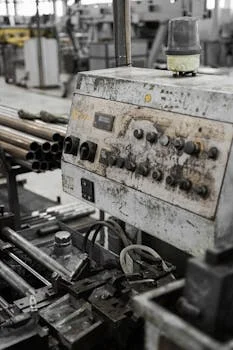
Heavy-metal removal depends on matching the metal species to the unit process, and that match is where compliance is won or lost. Chemical precipitation with hydroxide or sulfide routinely achieves >90% removal for lead, cadmium, trivalent chromium, copper, nickel, and zinc when pH is held in the right window. Hexavalent chromium does not precipitate in that step, so the stream needs reduction first, typically ferrous sulfate at pH 2-3, then precipitation at pH 8-9. Most plants we size for mixed rinse water run the hydroxide step at the lower end of the pH band and still miss mercury.
Ion exchange resins pull mercury, cadmium, and hexavalent chromium down to μg/L levels and work as a polish after precipitation. Reverse osmosis and nanofiltration reject >95% of divalent ions and are the usual membranes on a zero liquid discharge train. For colloidal metals, a DAF system for colloidal metal removal (HydropureWater) typically achieves 85-92% TSS and FOG removal. Pairing that float step with an MBR system using 0.1 μm PVDF membranes (DF series) holds metal-laden biomass that a conventional clarifier can lose.
A technical comparison of MBR and CAS for effluent quality and footprint quantifies that retention difference on solids and on the metals stuck to those solids. Use the comparison when footprint, not only the metal number, is the real constraint on the site. Most plants we size still need the chemical step upstream, because a membrane does not change chromium valence. Put reduction ahead of the membrane whenever hexavalent chromium is on the permit.
How Do Removal Rates Compare by Process?
Removal rates differ by metal species and by the condition named in each note, so one percentage does not travel from clarifier to membrane.
| Treatment Technology | Target Metals/Species | Typical Removal Effectiveness | Key Application Notes |
|---|---|---|---|
| Chemical Precipitation (Hydroxide/Sulfide) | Pb, Cd, Cr(III), Cu, Ni, Zn | >90% | Requires pH adjustment; Cr(VI) needs reduction first. |
| Ion Exchange Resins | Hg, Cd, Cr(VI), Ni (low concentrations) | Down to μg/L levels | Highly selective; effective for polishing effluent. |
| Membrane Filtration (RO, NF) | Divalent metals (Pb, Cd, Ni, Cu, Zn) | >95% | Ideal for reuse, ZLD, and stringent discharge limits. |
| Dissolved Air Flotation (DAF) with Coagulation | Colloidal-bound metals, TSS, FOG | 85-92% (TSS/FOG) | Enhances removal of precipitated and particulate metals. |
| MBR Systems (e.g., DF series) | Metal-laden biomass, fine particulates | Improved overall retention | Retains solids and associated metals; stable effluent quality. |
| Cr(VI) Reduction (e.g., Ferrous Sulfate) | Chromium(VI) (Cr(VI)) | Converts to Cr(III) | Essential pre-treatment step for Cr(VI) before precipitation. |
The removal column is a typical range under the conditions in the notes, not a result you can claim at every pH. Hydroxide precipitation above 90% assumes the metal is free, not bound to EDTA, and that hexavalent chromium was reduced first. Ion exchange down to μg/L levels assumes a low competing-ion load and a resin that is actually regenerated. Membrane rejection above 95% assumes divalent ions and a clean feed, not a clarifier that is still carrying pin-floc.
Challenges in Meeting Heavy Metal Compliance
Three failure modes in heavy metal compliance show up again and again in plant audits. Metal speciation comes first: hexavalent chromium is highly soluble, while trivalent chromium precipitates readily, so any Cr(VI) removal methods sequence must reduce the metal before the clarifier. Skip that reduction and the clarifier removes almost none of the chromium mass. Most plants we audit find this split on the first sample round, not in the design review.
Chelating agents such as EDTA and NTA from rinse stages bind metals and defeat hydroxide precipitation. That result pushes the design toward ion exchange or a step that breaks the chelant before the clarifier. Drift in feed pH is the third mode, and water at pH 5 keeps metals dissolved that would drop at pH 9. An automatic chemical dosing system with closed-loop pH control is the cheapest control against that drift.
Sludge handling and metal recovery often cost more than the wet process itself. Budget filter-press capacity, cake dry solids, and a licensed landfill or a recovery contract on day one. Sulfide sludges and mixed hydroxide cakes do not share one disposal route.
Future Trends in Heavy Metal Regulation and Treatment
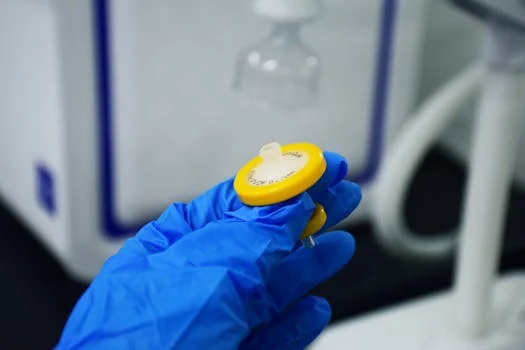
Numeric ceilings on heavy metals are tightening while reuse targets rise in the same permit cycle. China and several EU member states are pushing selected industries toward zero liquid discharge for heavy metals, and they ask plants to recover copper, nickel, and zinc. Most plants we size now check copper, nickel, and zinc recovery before they lock a zero liquid discharge flow sheet.
On new builds, real-time online metal analyzers are paired with PLC-integrated automatic chemical dosing systems. Those new builds cut reagent use 15-25% and tighten the compliance margin against the same permit number. The US EPA continues to review metal finishing effluent guidelines, so planners should size for the next permit cycle rather than assume today's BAT numbers stay fixed. That caution matters most where membrane filtration metal removal trains already sit near their flux limit.
What Belongs on a Heavy-Metal Design Checklist?
A heavy-metal design basis should name the instrument, the sample point, and the metal species before a tank is sized. The six checks below are the items that change which unit process you buy. Skip a check and the quotation prices a clarifier when the water actually needs reduction or a resin.
- Name the permit instrument, the sample point, and whether the limit is a daily maximum or a monthly average.
- List total and dissolved metals, and report hexavalent chromium separately from total chromium on the lab sheet.
- State the design flow, the peak hour, and the feed pH, because a daily average hides the spike that fails a grab sample.
- Identify chelants such as EDTA or NTA, since they keep lead and nickel dissolved at pH 9.
- Fix the sludge route, including cake solids and whether the landfill can accept a sulfide cake.
- Decide if the next permit cycle adds reuse or zero liquid discharge before you size the membrane area.
Who Should Use This Heavy-Metal Limit Page
Plant engineers, EPC contractors, and procurement managers are the readers who select or audit heavy-metal treatment for metal finishing, mining, battery, electronics, and chemical plants. Use the page when the decision is which limit applies and which unit process can hit it. Municipal-only organic loads do not need this level of metal control. Start those jobs from a municipal effluent overview rather than from a metal-finishing BAT table.
What Limits Apply to Semiconductor ZLD Reclaim?
Semiconductor fabs and PCB shops chasing zero liquid discharge with metal reclaim face tighter constraints on scaling, concentrate handling, and recovery purity than a conventional direct-discharge permit. Size reverse osmosis, nanofiltration, and ion exchange for both the discharge ceiling and the reclaim-water specification. Verify the brine disposal route before you lock capital cost on the membrane train. Most plants we size for this duty spend more time on the concentrate permit than on the product-water spec.
How Do CPCB Effluent Standards Compare?
India's CPCB framework tracks WHO drinking-water guidance for several metals and then adds sector-specific rules on top. Treat that framework as a cross-check when one equipment package must serve an Indian plant beside a US or China site. Confirm the exact industry schedule before you set the design basis, because the sector table can move nickel and cadmium. Most global packages we review are short on the Indian schedule and long on the US monthly average.
Send influent concentrations, the target discharge regime, and the flow rate when you want a sized process and a capital-cost envelope. Include the two worst metals and the sample point the permit actually names. Our process team uses those inputs when you request a heavy-metal treatment quote here. A quote without the permit table is only a budget guess.
Frequently Asked Questions
What is the permissible limit of heavy metals in wastewater?
Permissible limits of heavy metals in wastewater depend on the metal and the country, not on a single global cap. Cadmium typically spans ≤ 0.003 to ≤ 0.05 mg/L, lead spans ≤ 0.1 to ≤ 1.0 mg/L, and mercury spans ≤ 0.001 to ≤ 0.05 mg/L. Hexavalent chromium is commonly capped at ≤ 0.05 mg/L for direct discharge. Receiving-water class and industry category can shift a number by about tenfold, so confirm the local instrument before freezing the design.
What are the EPA limits for heavy metals in wastewater?
US EPA metal-finishing BAT limits under 40 CFR 433.14 are monthly averages of 0.26 mg/L total cadmium and 0.43 mg/L total lead, each with a daily maximum of 0.69 mg/L. Those values apply to an existing point source and are enforced by an NPDES permit. The eCFR showed no change to this section after 3 January 2017, viewed on 21 September 2026. The older 0.025 mg/L cadmium figure is not the 433.14 monthly average, and other industries use different CFR parts.
What is the WHO guideline for cadmium in wastewater?
The WHO guideline for cadmium is 0.003 mg/L (3 μg/L) in drinking water, and it is not itself a wastewater discharge permit. Regulators use that health value when effluent can reach a drinking-water source. A sewer discharge may allow about 0.05 mg/L cadmium under local rules, while a sensitive river may sit near 0.005 mg/L. Confirm the permit document before you treat 0.003 mg/L as the effluent limit for the plant.
How do you remove chromium from industrial wastewater?
Remove hexavalent chromium by reducing it to trivalent chromium with ferrous sulfate at pH 2-3, then raise the pH to 8-9 so the trivalent form precipitates as hydroxide. Hexavalent chromium stays soluble and will not settle in a clarifier on its own. Add ion exchange or membrane filtration when the permit calls for a sub-mg/L residual after precipitation. Hold the reduction tank on the acid side, because a drift toward neutral leaves unreduced chromium in the effluent.
Which treatment is best for mercury removal?
Low-level mercury is removed with ion exchange or activated carbon, which can reach μg/L levels after the bulk load is already gone. Higher mercury loads usually start with sulfide precipitation, followed by clarification or filtration. Hydroxide precipitation alone often misses mercury when the feed is dilute or held by a chelant such as EDTA. Send the sulfide sludge to a licensed hazardous-waste facility, and test the chelant level before you select a resin.