For nigeria nesrea effluent limits compliance 2024, the controlling question is which gazetted rule, permit condition, and receiving-water requirement applies to the facility. The source article identifies S.I. 8 of 1991, NESREA sector rules, COD 50 mg/L, and TSS 30 mg/L. A current check is still required because NESREA's official regulations page now lists Food, Beverages and Tobacco Sector Regulations 2023 alongside older sector regulations.
nigeria nesrea effluent limits compliance 2024: which rule applies?
Nigeria industrial effluent compliance requires a written NESREA permit, the applicable sector schedule, treatment before discharge, accredited laboratory evidence, and records that match the permit. General values such as COD 50 mg/L and TSS 30 mg/L remain useful screening points, but a sector-specific limit or permit condition can be more stringent.
Nigeria's industrial effluent framework has two practical layers. The foundational instrument in the article is the National Environmental Protection (Effluent Limitation) Regulations S.I. 8 of 1991, issued under the former Federal Environmental Protection Agency (FEPA). The article's general reference values are COD ≤50 mg/L and TSS ≤30 mg/L. NESREA now performs the federal enforcement role under the NESREA Act of 2007, so a plant should not treat FEPA's historical name as a reason to ignore a current inspection or permit.
NESREA's official Laws & Regulations page says its gazetted environmental regulations are in force and lists the National Environmental (Permitting and Licensing System) Regulations, S. I. No. 29, 2009. The same page lists the National Environmental (Textile, Wearing Apparel, Leather and Footwear Industry) Regulations, S. I. No. 34, 2009, the National Environmental (Chemicals, Pharmaceuticals, Soap and Detergent Manufacturing Industries) Regulations, S. I. No. 36, 2009, and Food, Beverages and Tobacco Sector Regulations 2023.
That current listing changes how the 2024 article should be read. The official gazette PDF available from NESREA is the National Environmental (Food, Beverages and Tobacco Sector) Regulations 2009, while NESREA's current web index lists a 2023 food, beverage and tobacco regulation. The 2009 schedule remains a traceable historical source for the table below; a brewery must confirm the current 2023 text and its permit conditions before treating the old brewery values as the final compliance basis.
The earlier Federal Ministry of Environment 2022 draft mentioned in the source article is not used here as a gazetted limit. The defensible workflow is to compare the current sector regulation, the facility's written permit, and the receiving-water condition, then design to the most stringent applicable requirement. A plant can retain the older S.I. 8 values as background while documenting which current instrument controls each parameter.
For a Nigeria-focused comparison with another jurisdiction, the article's existing link to comparable Saudi limits and tech is separate reading and does not replace a Nigerian permit review.
nesrea sector specific effluent regulations nigeria
NESREA sector specific effluent regulations nigeria are selected by industrial activity before equipment is sized. The current NESREA index lists sector rules for food, beverages and tobacco, textiles, chemicals and pharmaceuticals, and other industrial sectors. The official page also states that these regulations are published in the Federal Republic of Nigeria Official Gazette and are now in force.
The operational rule is simple: identify the production lines, wastewater sources, discharge point, and receiving medium first. Then map every parameter in the permit to the general table and the applicable sector schedule. The 2009 food, beverages and tobacco gazette states that national effluent standards are minimum standards and that a different standard may be required based on the receiving medium. That means a numeric table is a starting point, not permission to discharge without a permit.
Sector selection also affects monitoring. The official food and beverage gazette requires a company to apply for a permit before discharging effluent or oil into a water system, public drains, underground injection, or land. It also requires treatment to the permissible level while the plant or unit operates and prohibits dilution as a way to achieve the standard. Most plants we size for variable production run at the lower end of their hydraulic range during commissioning, so equalization and representative sampling matter as much as the nameplate flow.
- Classify each process area and its chemicals before selecting the treatment train.
- Separate sanitary, cooling, stormwater, process, and hazardous streams where the permit or risk assessment requires it.
- List the discharge point, receiving water, seasonal flow, and production upset conditions.
- Compare the general S.I. 8 1991 values with the applicable NESREA sector schedule and permit condition.
- Set internal operating targets below the legal limit to absorb sampling and load variation.
nigeria brewery effluent bod limit nesrea
The nigeria brewery effluent bod limit nesrea value retained in the source table is BOD 30 mg/L, but the 2009 official gazette and the current 2023 listing must be distinguished. The 30 mg/L value is shown below as the historical NESREA brewery reference; a brewery should verify the current 2023 schedule and permit before declaring compliance.
Brewery wastewater usually combines soluble organic load, suspended solids, cleaning chemicals, variable pH, and intermittent production peaks. The process design therefore needs flow equalization, pH control, solids separation, biological treatment, and a polishing barrier where the discharge condition demands stable low BOD and TSS. A single grab sample after a quiet shift cannot prove that the plant controls a washdown peak.
The source table retains the original comparison values. They should be read with the qualification above, especially for a facility applying for renewal or facing a new inspection. The design target should be based on the current permit and the latest laboratory method, not only on a brochure or an old spreadsheet.
Merged 2024 limits table (downloadable PDF inside)
The numeric limits from S.I. 8 1991, the NESREA 2009 sectoral regulations, and the 2022 MoE draft are consolidated below as a working reference. The 2022 draft is not treated as a gazetted standard in this rewrite. The official NESREA index now lists Food, Beverages and Tobacco Sector Regulations 2023, so the food and brewery columns require a current legal cross-check before permit submission.
Download the merged PDF table here: Nigeria Industrial Effluent Limits 2024 (Consolidated).pdf
The table below is an excerpt showing key parameters. In the full PDF, green cells indicate general S.I. 8 1991 limits, while blue cells indicate stricter NESREA 2009 sectoral limits. The downloadable PDF also includes critical notes on sampling methods and monitoring frequency mandates, which are as important as the numeric values for an audit. The official gazette requires an accredited laboratory and specifies reporting and record duties, so the table should travel with its source and sampling method.
| Parameter | Unit | General Limit (S.I. 8 1991) | Brewery Limit (NESREA) | Chemical Plant Limit (NESREA) | Textile Limit (NESREA) |
|---|---|---|---|---|---|
| pH | - | 6 - 9 | 6 - 9 | 6 - 9 | 6 - 9 |
| BOD | mg/L | - | 30 | 100 | 50 |
| COD | mg/L | 50 | - | - | 250 |
| TSS | mg/L | 30 | 30 | 100 | 100 |
| Oil & Grease | mg/L | 10 | 10 | 10 | 10 |
| Phenol | mg/L | 0.2 | - | 0.2 | 0.3 |
The full table is an indispensable tool for Environmental Health and Safety (EHS) managers, covering over 38 parameters, including heavy metals like lead (Pb ≤0.5 mg/L) and chromium (Cr ≤1.0 mg/L), as well as cyanide, sulphide, and faecal coliform counts. Keep the table version, legal source, laboratory method, sample date, and permit number together. If the current sector schedule differs, record the difference rather than silently replacing the historical value.
Technology matrix: proven treatment trains that hit each limit
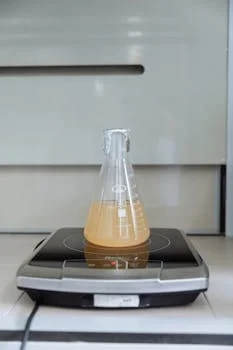
Selecting the right Best Available Technology (BAT) means matching wastewater composition, peak flow, temperature, toxicity, and discharge condition to a treatment train. The matrix below retains the source article's field-data claims from installations in Ogun and Lagos states. Those claims are equipment-design context, not a substitute for a site-specific treatability test or accredited compliance result.
For high-strength organic waste from food and beverage sectors, biological treatment is necessary. An Extended Aeration system provides a robust, stable biological process that is less sensitive to load fluctuations than conventional activated sludge. Following this with an MBR for polishing can provide consistent low BOD and TSS when the biology, membrane flux, cleaning cycle, and upstream solids control are properly managed.
| Target Parameter & Limit | Recommended Treatment Train | Expected Effluent Quality (HydropureWater Field Data) | HydropureWater Equipment |
|---|---|---|---|
| COD ≤50 mg/L | Dissolved Air Flotation (DAF) + Membrane Bioreactor (MBR) | 35 - 45 mg/L | DAF System + Integrated MBR |
| TSS ≤30 mg/L | Lamella Clarifier + 1µm Drum Filter | <10 mg/L | Clarifier + Filtration System |
| Oil & Grease ≤10 mg/L | Dissolved Air Flotation (DAF) | <5 mg/L | DAF System |
| pH 6-9 | Automatic Acid/Caustic Dosing with pH Probe Feedback | ±0.2 units of setpoint | Automatic Dosing System |
| BOD ≤30 mg/L (Brewery) | Extended Aeration Activated Sludge + MBR Polishing | 15 - 25 mg/L | Activated Sludge System + Integrated MBR |
For industries such as textiles dealing with persistent colour, additional tertiary treatment may be required. Ozonation or activated carbon filtration after biological treatment can address recalcitrant dyes and support the final COD limit of 250 mg/L. The correct choice depends on a measured colour and COD profile, contact time, ozone transfer, carbon exhaustion, sludge handling, and the permit's monitoring method.
Do not size only from average daily flow. Check the maximum hourly flow, batch discharge, equalization volume, alkalinity, nutrient balance, sludge yield, chemical storage, standby power, operator access, and laboratory turnaround. These are the conditions that decide whether a plant meets a limit during cleaning, maintenance, rainfall, or production restart.
nesrea penalty penalties for effluent non-compliance nigeria
The nesrea penalty penalties for effluent non-compliance nigeria risk includes statutory fines, permit action, remediation, reporting failures, and production interruption. The source article retains the S.I. 8 1991 figures of a fine up to ₦100,000 and an additional ₦1,000 for every day the offence continues; those figures should be checked against the current offence provision and permit before being used in a legal notice or board paper.
The official food and beverage gazette confirms that its enforcement structure includes enforcement notices, suspension of permit, offences for discharge beyond a permissible level, and a penalty part. It also applies the polluter-pays principle to cleanup, remediation, reclamation or restoration, compensation to affected parties, and damage assessment and control. The practical exposure is therefore broader than the headline fine.
NESREA's official permit page identifies Waste and Toxic Substances Permit as the category covering effluent discharge. It directs applicants to the NESPAM Portal, states that complete applications are acknowledged within 7 working days, and says permits shall be renewed annually. Those current administrative facts belong in the compliance budget even when the equipment itself is already installed.
For a mid-sized factory requiring a 50 m³/h treatment system, the source article estimates CAPEX of approximately ₦20 million for a dissolved air flotation system paired with an MBR. It contrasts that with cumulative penalties, pollutant-load surcharges, and production downtime that can exceed ₦3 million annually. The values are planning assumptions from the source article, not a quotation or a verified statutory tariff.
Beyond direct fines, non-compliance can create community complaints, repeated inspections, legal costs, emergency hauling, contaminated-sludge disposal, and lost production. A board-level comparison should show the compliance CAPEX, power and chemical OPEX, laboratory cost, sludge cost, operator coverage, replacement membranes, and the financial impact of a shutdown. The cheapest equipment is not the cheapest compliance strategy if it fails during a peak load.
3-Year Cumulative Cost Comparison
The source article's model gives a payback period of less than 18 months for the treatment equipment. That result depends on the assumed ₦20 million CAPEX, the avoided downtime, actual pollutant load, financing terms, and the plant's ability to maintain the stated effluent quality. For a detailed DAF machine cost price breakdown, see the existing ROI guide. Financing can spread CAPEX over several years, but it does not remove permit or operating duties.
nigeria industrial wastewater permit checklist nesrea

The nigeria industrial wastewater permit checklist nesrea should connect the application, operating records, laboratory evidence, treatment equipment, and discharge point. NESREA's official permit page says an effluent discharge application belongs under Waste and Toxic Substances Permit and is submitted through the NESPAM Portal. The official food and beverage gazette also requires a written permit and reporting records.
During an inspection, proving compliance goes beyond having equipment. Prepare the following three core documents and keep their dates, signatures, sample IDs, and corrective actions traceable:
- Continuous Monitoring Logbook: A daily record of key parameters such as pH, TSS, and COD from composite samples, signed by the EHS officer. Record process upsets, equipment maintenance, chemical additions, flow, weather, and bypass or overflow events. A blank logbook does not demonstrate control; a dated exception with a corrective action is stronger evidence.
- Third-Party Lab Report: A comprehensive analysis for all 38 parameters listed in your permit, conducted by a NESREA-accredited lab within the last six months. Treat the six-month file interval as an internal readiness control, not as permission to ignore the official reporting calendar. The food and beverage gazette requires an accredited laboratory and says permit holders must submit periodic reports based on sampling analysis.
- Maintenance SOP for Anti-Pollution Equipment: A formal procedure documenting calibration, servicing, inspection, cleaning, parts replacement, and alarm response for the DAF, MBR, and dosing systems. Attach signed maintenance logs, calibration certificates, chemical inventories, membrane-cleaning records, and sludge manifests where applicable.
Two additional documents can streamline an inspection: the facility's Environmental Management Plan (EMP) and the official NESREA discharge permit. Add the site layout, process flow diagram, water balance, discharge-point photograph, emergency response plan, receiving-water description, and current contact list. NESREA's official permit page says a complete application is acknowledged within 7 working days, but an acknowledgement is not the same as an issued permit.
The official gazette also requires production records, water-consumption and discharge-flow records, process-monitoring records, incident reports, waste-handling records, and other records needed to demonstrate compliance. It states that records should be retained for a minimum of five years and throughout pertinent litigation. Build the archive before the inspection notice arrives.
Before committing to a treatment train, confirm seven items: discharge destination; current permit category; controlling sector regulation; peak and average flow; complete parameter list; accredited sampling method; and sludge or hazardous-waste route. If the permit, regulation, and table disagree, escalate the discrepancy to the regulator or Nigerian environmental counsel instead of selecting the most convenient value. For a site-specific design review, use the single inquiry route request a wastewater compliance assessment.
Keep the three sibling topics separate. The phrase nesrea limit for o2 belongs to the COD and oxygen-demand guide, while epa effluent discharge limit in nigeria belongs to the broader wastewater-regulations page. The phrase who and nesrea standard for bod belongs to the standards comparison page. None of those sibling phrases changes the Nigerian permit and sector analysis here.
Frequently Asked Questions
Are Nigeria industrial effluent limits from 2024 still current?
Nigeria industrial effluent limits from 2024 are a compliance reference, not a substitute for the current permit and sector schedule. NESREA's current regulations page lists Food, Beverages and Tobacco Sector Regulations 2023 and older sector rules. Keep the historical S.I. 8 1991 values, then verify the regulation, receiving medium, and permit condition controlling the discharge today.
What is the nigeria brewery effluent bod limit nesrea?
The nigeria brewery effluent bod limit nesrea value retained in the source table is 30 mg/L. The official material fetched for this rewrite includes the 2009 food, beverage and tobacco gazette, while NESREA's current index lists a 2023 regulation. A brewery should therefore confirm the current schedule and written permit before using 30 mg/L as its final design or legal target.
Does NESREA require an industrial wastewater permit?
NESREA requires a written permit for the covered effluent discharges described in the official food and beverage gazette, and its permit page places effluent discharge under Waste and Toxic Substances Permit. Applications go through the NESPAM Portal. A complete application is acknowledged within 7 working days, while permits are renewed annually and annual fees vary by facility and operation.
What should a Nigerian plant keep for an effluent inspection?
A Nigerian plant should keep its current permit, EMP, process and water-balance records, daily monitoring log, accredited laboratory reports, incident reports, maintenance SOPs, calibration records, waste and sludge records, and corrective-action evidence. The official gazette calls for production, water-consumption, discharge-flow, process-monitoring, incident, and waste-handling records, with retention for a minimum of five years.
How are penalties handled for effluent non-compliance in Nigeria?
Penalties for effluent non-compliance in Nigeria can include a fine, continuing daily charges stated in the applicable rule, enforcement notices, permit suspension, remediation, and production disruption. The source article retains figures of ₦100,000 and ₦1,000 per continuing day, but legal teams should verify the current offence provision and permit before relying on those figures in a formal decision.