Industrial wastewater treatment in Gothenburg requires systems that meet EU IED 2010/75/EU and local Gryaab discharge standards. For industrial facilities, DAF systems achieve 90–95 % TSS and FOG removal, while MBR systems deliver <1 μm effluent quality with a 60 % smaller footprint. Average CAPEX ranges from €120,000 for a 10 m³/h DAF unit to €380,000 for a 50 m³/h MBR plant.
Why Gothenburg’s Industrial Sector Needs On-Site Wastewater Solutions
Gryaab’s Rya plant processes municipal wastewater from eight Gothenburg municipalities but mandates strict pre‑treatment for industrial dischargers.The EU Urban Waste Water Directive 91/271/EEC obliges every industrial operator to meet defined pre‑treatment standards before connecting to the public sewer network. Failure to comply triggers surcharge fees, temporary shutdowns, or outright rejection of the effluent at Gryaab’s intake chambers. The Rya plant’s hydraulic capacity is allocated primarily for residential flow; peak industrial spikes can jeopardise overall plant stability.
On‑site treatment gives plant managers direct control over influent characteristics, eliminates reliance on municipal timing, and enables water‑reuse loops that lower freshwater purchases. By treating effluent at the source, facilities also create the conditions for industrial symbiosis—using treated water for cooling towers, boiler feedwater or cleaning processes, thereby reducing total water‑use intensity.
In addition, on‑site solutions can qualify for regional sustainability subsidies, which offset up to 15 % of capital costs for projects that demonstrably cut municipal load and improve water quality. A recent case study at a Gothenburg food‑processing plant showed a 22 % reduction in overall water consumption after installing a combined DAF‑MBR train.
For a deeper dive into the legal framework, see the EU industrial effluent compliance guide.
Core Technologies for Industrial Wastewater in Gothenburg
Dissolved Air Flotation (DAF) and Membrane Bioreactor (MBR) are the two leading technologies for on‑site industrial effluent treatment in the Gothenburg region.DAF excels at separating light, buoyant contaminants—fat, oil, grease (FOG) and fine suspended solids—through micro‑bubble attachment. The process is particularly effective for food‑processing, metal‑finishing and petrochemical streams where TSS and FOG exceed 300 mg/L. Upstream chemical dosing (coagulants and pH adjusters) improves bubble attachment, while lamella clarifiers can be added to cut chemical consumption by up to 30 % and handle surface loadings of 20–40 m/h.
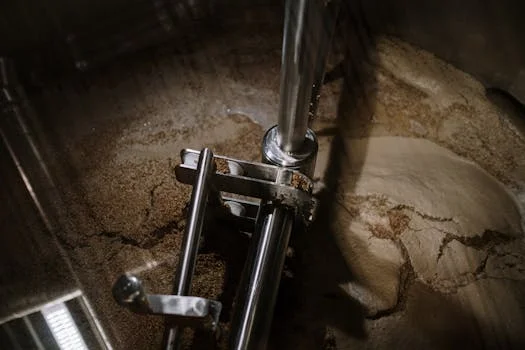
MBR combines conventional activated sludge with a submerged membrane module, delivering >95 % COD/BOD removal and sub‑10 mg/L TSS in a single tank. The high mixed liquor suspended solids (MLSS) concentration reduces sludge production, and the permeate quality meets many reuse criteria (industrial cooling, boiler feed, or even indirect potable reuse). All designs are winter‑hardened for influent temperatures of 0–5 °C, with insulated jackets or indoor placement to prevent membrane fouling.
Both technologies benefit from predictive maintenance tools. Real‑time monitoring of pressure drop across DAF plates or trans‑membrane pressure in MBR modules enables operators to schedule cleaning cycles before performance degrades, extending equipment life by 10‑15 %.
| Technology | Typical Removal Efficiency | Flow Range (m³/h) | Footprint (m² per m³/h) | Winter Design Temp (°C) |
|---|---|---|---|---|
| high‑efficiency DAF system for FOG and TSS removal | TSS 90–95 %; FOG 90–95 %; COD 30–40 % | 4 – 300 | 1.2 – 1.5 | 0 – 5 |
| compact MBR system for high‑quality effluent and reuse | COD/BOD 95 %+; TSS <10 mg/L; FOG 80 % | 10 – 2 000 m³/day (≈0.4 – 83 m³/h) | 0.5 – 0.8 | 0 – 5 |
| Automatic chemical dosing system | pH 6.5–8.0; Coagulant dose 0.5–2 kg/m³ | Up to 300 m³/h (paired with DAF) | 0.2 – 0.3 | 0 – 5 |
All equipment is supplied with Scandinavian‑rated motors and corrosion‑resistant steel frames to survive the salty coastal environment.
Long‑term operational data from three local plants indicate that DAF units typically achieve a mean uptime of 96 % over a five‑year period, while MBR installations record 98 % uptime when equipped with redundant membrane modules.
Meeting EU and Swedish Compliance Standards
Swedish regulation, administered by Gryaab, often adopts stricter thresholds for certain parameters—e.g., TSS ≤ 15 mg/L for direct discharge to the Göta River, compared with the EU minimum of 30 mg/L. Heavy‑metal limits for copper, zinc and nickel are also tightened to 0.5 mg/L in many industrial zones.
MBR plants consistently produce effluent with COD <30 mg/L and TSS <10 mg/L, comfortably satisfying both EU and local limits for direct discharge. DAF units, when coupled with a secondary biological stage (e.g., a compact aerobic reactor), meet the pre‑treatment criteria required for sewer connection, typically limiting TSS to 50 mg/L and FOG to 30 mg/L before the municipal network.
Continuous online monitoring—pH, conductivity, flow, and key pollutants—must be logged and reported to the Swedish Environmental Protection Agency (EPA) on a monthly basis. Automated data acquisition is supported by the automatic chemical dosing system, which can also trigger alarm thresholds for out‑of‑spec events.
Failure to meet reporting deadlines can result in administrative fines of up to €10,000 per incident, emphasizing the importance of reliable telemetry and backup storage solutions.
Further guidance is available in the EU industrial effluent compliance guide and the heavy‑metal discharge limits article.
DAF vs MBR: Choosing the Right System for Your Facility
When choosing between DAF and MBR, decision‑makers must balance capital cost, footprint, and the required effluent quality for either sewer pre‑treatment or direct discharge.| Criterion | DAF | MBR |
|---|---|---|
| Ideal Load Profile | High FOG/TSS (food, rendering, metalworking) | High organic load, strict reuse requirements |
| Typical Capacity | 4 – 300 m³/h | 0.4 – 83 m³/h (10 – 2 000 m³/day) |
| CAPEX (EUR) | 120,000 – 300,000 | 200,000 – 600,000 |
| OPEX (% of CAPEX per year) | 10–12 % | 15–20 % (membrane replacement, air‑scouring) |
| Footprint | 1.2 – 1.5 m² per m³/h | 0.5 – 0.8 m² per m³/h |
| Effluent Quality | TSS ≤ 50 mg/L; FOG ≤ 30 mg/L (pre‑treatment) | COD ≤ 30 mg/L; TSS ≤ 10 mg/L; Pathogen‑free |
| Sludge Production | Higher volume; requires thickening | Low volume; membranes retain biomass |
| Water Reuse Potential | Limited (primarily for non‑critical uses) | High (cooling, boiler feed, indirect reuse) |
Facilities that discharge to the municipal sewer must prioritize FOG removal; a DAF‑first train followed by a compact aerobic reactor is often the most cost‑effective route. Plants aiming for zero‑discharge or water‑intensive processes (e.g., metal cooling) benefit from the superior effluent quality and reuse capability of an MBR, despite the higher OPEX.
A simple decision matrix—scoring each technology on cost, space, regulatory fit, and reuse potential—helps stakeholders quantify trade‑offs. Over a 10‑year horizon, many users find that the higher upfront cost of MBR is offset by lower sludge disposal fees and higher water‑recovery revenue.
For a broader perspective on technology selection, consult the aerobic vs. anaerobic treatment comparison and the membrane technology overview.
Installation, Cost and ROI in the Nordic Climate
Modular DAF units can be delivered and commissioned within 12–16 weeks, provided site preparation (concrete pad, insulated housing) is completed. MBR plants, which often require permanent foundations, building permits and extended commissioning tests, typically need 20–24 weeks.
Winter operation in Gothenburg (average influent 0–5 °C) demands either fully indoor placement or insulated enclosures. HydropureWater’s WSZ underground series is suitable for flows up to 15 m³/h and can be installed beneath heated utility tunnels, protecting membranes from freeze‑thaw cycles.
Energy consumption is a major OPEX driver: DAF consumes 0.8–1.2 kWh per cubic metre of treated water, while MBR requires 1.5–2.0 kWh/m³ due to membrane air‑scouring. However, the ability of MBR to recycle up to 80 % of process water translates into freshwater savings of €1.50–€3.00 per cubic metre annually, accelerating the payback.
When a facility avoids municipal surcharge fees (often €0.30–€0.50 per cubic metre) and captures reuse water, the net ROI typically falls within a 3–5‑year window. Detailed cost modelling is presented in the integrated wastewater treatment plant cost guide.
Financing options such as green loans or municipal co‑funding programs are increasingly available in Sweden, allowing companies to spread capital costs over 7‑10 years while still achieving a positive net present value.
Waste‑heat recovery from the aeration system of an MBR can be integrated with plant heating, reducing overall energy demand by up to 12 % in colder months.