EU industrial effluent directive compliance 2026 is governed by Directive 2010/75/EU, BAT conclusions, and site permit ELVs. The framework covers pollutant ceilings for direct and indirect discharges, including COD, TSS, nitrogen, metals, AOX, and persistent substances. A proposed PFAS sum of 1 µg/L by 2027 remains a planning benchmark, not a universal EU wastewater ELV.
eu industrial effluent directive compliance 2026: what changes?
EU industrial effluent limits are permit ceilings derived from BAT-AEL ranges for covered installations. Competent authorities convert those ranges into site ELVs, with monitoring and averaging periods stated in the permit. Direct dischargers follow the permit and BREF; indirect dischargers also meet sewer acceptance conditions and protect the municipal works.
What Are Industrial Effluent Limits in the EU?
Industrial effluent limits in the EU are legally binding pollutant concentration ceilings for discharges to water or sewer under Directive 2010/75/EU. They come from BAT-associated emission levels (BAT-AELs). After Official Journal publication, member states must update permits within four years so ELVs are no less stringent than the BAT-AEL range under normal operation.
These limits apply to large installations that need integrated permits covering water, air, and land. The goal is a high level of protection for receiving waters and human health across member states. Without a common baseline, plants could relocate to regions with weaker water rules.
According to the European Commission, the revised Industrial and Livestock Rearing Emissions Directive (IED 2.0), as amended by Directive (EU) 2024/1785, entered into force on 4 August 2024. EUR-Lex also sets 1 July 2026 as the transposition deadline for member states. The update tightens how authorities set emission limit values, hardens derogation conditions, and expands coverage to activities such as battery gigafactories and certain metal extraction. For plant engineers, compliance windows for 2025–2027 upgrades are now shorter and better documented.
How the Industrial Effluent Directive Sets Enforceable Limits
The industrial effluent directive path from guidance to permit is the Seville Process run by the EIPPCB. Technical working groups compare high-performing plants, then the Commission adopts BAT conclusions. Publication in the Official Journal starts the four-year clock for national permit reviews.
BAT-AELs are EU reference ranges. Emission Limit Values (ELVs) are the numbers written into a site permit. An ELV cannot be weaker than the BAT-AEL outcome, though averaging periods may differ if the environmental result stays equivalent. Miss the post-deadline ELV and the plant risks fines, public listing on the Industrial Emissions Portal, and forced shutdown until treatment is restored.
Most plants we size for direct discharge design toward the mid-range of the BAT-AEL band, not the upper edge. That buffer absorbs process upsets without immediate breach. Indirect dischargers still need pretreatment strong enough that the municipal works can meet its own consent.
Key Directives Shaping EU Industrial Wastewater Rules
IED (2010/75/EU) remains the core rule for large industrial water emissions, but it does not stand alone. Compliance officers must map whether the site is a direct discharger or an indirect contributor to a public sewer. Direct permits usually mirror BAT-AELs; indirect limits often come from the receiving utility plus local sewer bylaws.
indirect discharger pretreatment eu municipal sewer
Indirect discharger pretreatment for an EU municipal sewer must protect the receiving works, comply with the utility consent, and prevent a trade effluent upset from moving into sludge or receiving waters. Sewer acceptance limits can be tighter than a direct-discharge BAT-AEL because the municipal plant has its own hydraulic, biological, and sludge constraints.
The revised Urban Waste Water Treatment Directive entered into force on 1 January 2025 (European Commission). It still targets municipal agglomerations, yet it drives industrial pretreatment when effluent upsets the works or blocks sludge reuse. Quaternary treatment for micropollutants is to be financed through extended producer responsibility on responsible sectors. For municipal-side detail, see Wastewater Treatment Regulations EU 2026: New UWWTD Rules & Compliance.
Directive (EU) 2024/3019 also sets staged tertiary-treatment requirements for large urban plants. For plants treating a load of 150 000 p.e. or more, the directive identifies 31 December 2033, 31 December 2036, and 31 December 2039 milestones for increasing coverage and reaching all relevant discharges. Those dates govern urban wastewater treatment plants; they do not create one universal industrial sewer limit. The industrial connection still needs a written consent and a controllable pretreatment train.
REACH continues to shape chemical phase-outs that show up as wastewater limits. The article’s working assumption remains a proposed sum limit of 1 µg/L for 29 PFAS in industrial effluent around 2027; that figure is still treated here as proposed, not as a single adopted EU wastewater ELV for all sectors. Conventional activated sludge does not destroy these compounds, so tertiary barriers belong in the CapEx plan early.
Revised IED rules also push digital permitting and public emission data via the Industrial Emissions Portal Regulation. Article 15(4) derogations now need stronger cost evidence and shorter timelines. For a related overview of Industrial Wastewater Discharge Limits Hungary, use the companion industrial standards guide when scoping multi-year upgrades.
Pollutant-Specific Effluent Limits by Sector

Sector BREFs set different priority pollutants. Surface treatment focuses on metals. Food and beverage focus on COD, BOD, nitrogen, and phosphorus. Textile plants face AOX and colour. Engineers must open the correct BREF rather than copy another sector’s table into a permit application.
surface treatment sector bat-ael zinc nickel limits
Surface treatment sector BAT-AEL zinc nickel limits are permit-specific ranges, not a universal EU number. The Joint Research Centre’s EU-BRITE page identifies the Surface Treatment of Metals and Plastics BREF as covering water-based electrolytic and chemical processes, while marking its status as “Review started” and its adopted BREF as August 2006.
For surface treatment, typical BAT-AELs for direct discharge include zinc below 2 mg/L and nickel below 0.5 mg/L, with COD often near 80 mg/L. Food plants may see COD up to 125 mg/L and TSS up to 35 mg/L where the receiving water allows that band. Textile AOX is often discussed at < 10 mg/L in older summaries, with colour checked at about 50 Pt-Co or via spectral absorbance at set wavelengths.
The BREF status matters during design review. Treat the table below as a screening matrix and verify the current sector BREF, national transposition, permit averaging period, and competent-authority ELV before procurement. A review notice does not by itself replace the site permit or create a new 2026 legal limit.
The table below consolidates high-impact parameters from current BAT practice and the proposed 2027 PFAS benchmark used in this guide.
| Industrial Sector | Key Pollutant | BAT-AEL / Limit Value | Compliance Deadline |
|---|---|---|---|
| Surface Treatment (Metals) | Nickel (Ni) | 0.05 – 0.5 mg/L | Current (IED) |
| Surface Treatment (Metals) | Zinc (Zn) | 0.1 – 2.0 mg/L | Current (IED) |
| Food, Drink & Milk | COD | 25 – 125 mg/L | Current (IED) |
| Food, Drink & Milk | Total Nitrogen | 2 – 20 mg/L | Current (IED) |
| Textile Industry | AOX | < 10 mg/L | 2026 (Updated BREF) |
| Textile Industry | Color (Absorbance) | < 7 m⁻¹ (436 nm) | 2026 (Updated BREF) |
| All Sectors (REACH) | PFAS (Sum of 29) | 1 µg/L | 2027 (Proposed) |
| Chemical Sector (WGC) | Total Organic Carbon | 10 – 33 mg/L | Current (IED) |
These figures sit at the upper end of many BAT-AEL ranges. Germany’s AbwV and Dutch regional permits often go tighter for small streams with low dilution. Designing only to the maximum leaves no margin when production peaks or when a clarifier is offline.
How BAT Conclusions Translate to Enforceable Limits
BAT conclusions become binding after Official Journal publication and national permit update. Authorities such as DREAL in France must rewrite ELVs so the installation stays inside BAT-AELs under normal conditions. The four-year transition is calendar time for engineering, procurement, and commissioning—not a soft advisory window.
BAT-AELs and ELVs are not identical documents. BAT-AELs are EU ranges from the BREF process. ELVs are site-specific numbers, sometimes daily averages instead of monthly means, provided the protection level matches. After the transition ends, repeated exceedances can trigger enforcement, public disclosure, and production limits until the treatment train is proven again.
Treatment Technologies to Meet EU Effluent Limits
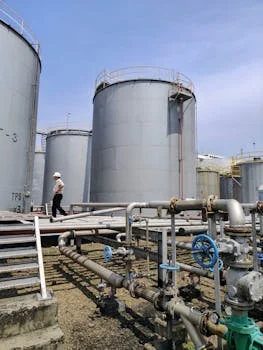
Stricter EU permits push plants from single-stage clarification to multi-barrier trains. Technology choice follows the pollutant list in the permit and the physical state of the load—floatable oil, colloidal solids, dissolved metals, or persistent organics.
For high FOG or insoluble solids in food or metalworking streams, a high-efficiency DAF system for FOG and suspended solids removal is the usual first cut. Micro-bubbles float particles for skim removal, often delivering 90–95% TSS and insoluble COD reduction before biology or membranes. Teams comparing oil-water options often review DAF vs API separator for industrial oil-water separation when emulsified oils sit under tighter IED controls.
Where COD and nitrogen ELVs are tight, biology needs a membrane barrier. An MBR system for ultra-low TSS and COD effluent couples activated sludge with ultrafiltration, raising MLSS and cutting footprint versus secondary clarifiers. A side-by-side look at MBR vs CAS for achieving lower effluent concentrations shows why many sensitive-water permits now lean MBR.
Dissolved metals, salts, and PFAS need a tertiary polish. An industrial RO system for PFAS and dissolved contaminant removal can remove over 99% of dissolved ions when pretreatment is stable. Whether to add that stage is covered in tertiary treatment for EU compliance when conductivity, chloride, or micropollutants appear in the permit.
| Technology | Target Pollutant | Removal Efficiency | EU Compliance Target |
|---|---|---|---|
| DAF (Dissolved Air Flotation) | TSS, FOG, Insoluble COD | 90% – 98% | General Pre-treatment |
| MBR (Membrane Bioreactor) | BOD, COD, Bacteria | 95% – 99% | Sensitive Water Discharge |
| Reverse Osmosis (RO) | PFAS, Heavy Metals, TDS | 99%+ | 2027 PFAS & Water Reuse |
| Advanced Oxidation (AOP) | Refractory Organics, AOX | 70% – 90% | Textile & Chemical BREFs |
How Do Treatment Works Meet Compliance Limits?
Wastewater treatment works meet compliance limits by matching unit processes to each ELV, then proving performance with a documented monitoring plan. Composite sampling, flow-proportional data, and accredited labs are the usual evidence pack for inspectors. Online sensors for turbidity, pH, and flow catch upsets between grab samples.
Selection checklist for industrial sites discharging to works or to water:
- List every BAT-AEL and local ELV in the current permit, with averaging period.
- Map each pollutant to a primary, secondary, or tertiary barrier with a measured removal range.
- Size hydraulic peaks at 1.5–2× average flow when batch dumps are routine.
- Set sludge handling capacity for the highest expected solids capture week.
- Define fail-safe recirculation or tankage when online quality trips occur.
- Align lab methods with the standards named in the permit (for example EN ISO methods for AOX).
- Budget annual membrane or media replacement before the next audit cycle.
Is UV Dose Set by Compliance Limits?
Target UV dose in wastewater is not a single EU-wide number fixed by the industrial effluent directive. Dose (mJ/cm²) is engineered from the microbial limit or log-reduction required in the permit, the UV transmittance of the filtered effluent, and validated reactor hydraulics. Where no pathogen ELV exists, UV is often optional polishing rather than a compliance driver.
In practice, plants first stabilise TSS and transmittance with clarification or MBR filtrate, then select UV intensity and lamp banks for the worst-case transmittance. Predetermined catalogue doses without site transmittance data routinely underperform in coloured textile or food effluents.
2027 PFAS Deadline: What Industry Must Do Now
The 2027 PFAS planning horizon forces sites that use fluorinated surfactants, coatings, or firefighting foams to baseline mass loads now. Biological stages alone will not meet a 1 µg/L sum target if that proposed limit lands in the permit. Plants should inventory PFAS sources, segregate high-load drains, and pilot GAC, ion exchange, or RO reject management before CapEx lock-in.
Cost drivers that dominate PFAS projects are pretreatment fouling control, concentrate disposal, and analytical frequency—not the reactor vessel itself. Most plants we audit spend more on reject handling and lab confirmation than on the first membrane skid. Start with a six-month influent/effluent data set; guessing concentrations from MSDS sheets is not enough for a 2027 design freeze.
Who This Is For / Next Step
This guide is for plant engineers, EPC contractors, and procurement managers who must convert BAT-AELs into working ELVs and equipment lists. It is less useful for households or sites outside IED/UWWTD scope. If you need a train sized to your permit table, request a process review via HydropureWater inquiry form with your sector BREF and recent effluent analyses.
Frequently Asked Questions
What is the main EU law for industrial effluent limits?
Directive 2010/75/EU (IED), updated by Directive (EU) 2024/1785, is the main EU law for large industrial effluent limits. BAT conclusions supply BAT-AELs that national permits turn into ELVs within four years of Official Journal publication. Related UWWTD and REACH rules can add pretreatment or chemical restrictions on top of the IED permit.
When did the revised IED enter into force?
According to the European Commission and EUR-Lex, IED 2.0 as amended by Directive (EU) 2024/1785 entered into force on 4 August 2024, with national transposition due by 1 July 2026. The revision tightens emission limit setting, strengthens derogation tests, and brings more activities—including battery gigafactories—into scope. Plants should treat 2025–2027 as active upgrade years, not a distant horizon.
Which treatment train fits typical EU industrial ELVs?
Most mixed industrial loads use DAF for FOG/TSS, MBR or enhanced biology for COD and nutrients, then RO or adsorption when metals, salts, or PFAS appear in the permit. Removal bands commonly cited are 90–98% for DAF TSS/FOG and 95–99% for MBR BOD/COD under stable operation. Final selection must follow the site’s BAT-AEL table and local dilution rules.
Do indirect dischargers still need onsite treatment?
Yes. Indirect dischargers must still pretreat so the municipal works can meet its consent and sludge rules. The revised UWWTD, in force from 1 January 2025, increases pressure on micropollutants and nutrient control downstream. Utility contracts often set tighter COD, FOG, and metals limits than the headline BAT-AEL for direct discharge.
Is the 1 µg/L PFAS figure already a universal ELV?
No. This article keeps 1 µg/L for a sum of 29 PFAS as a 2027 proposed planning benchmark for industrial effluent, not as a proven universal EU ELV today. Sites should still baseline PFAS loads and pilot removal because permits and REACH restrictions are tightening. Confirm the exact compound list and averaging rule with the competent authority before freezing design.