Why Japan’s Food Processing Wastewater Demands Custom Treatment Solutions
Japan’s Ministry of Land, Infrastructure, Transport and Tourism (MLIT) has mandated increasingly stringent effluent standards for industrial wastewater, with a significant focus on the food processing sector. As of 2024, plants located more than 500 meters from sewer lines are required to install Johkasou systems, enforcing strict limits of Biochemical Oxygen Demand (BOD) below 20 mg/L and Suspended Solids (SS) below 30 mg/L. This regulatory push is driven by the inherent challenges of food processing wastewater, which typically exhibits high organic loads, significant oil and grease content, and a propensity for odor generation. Data indicates that untreated food processing wastewater can average 1,000–5,000 mg/L BOD, 500–2,000 mg/L SS, and 100–500 mg/L of oil and grease. These characteristics often overwhelm conventional wastewater treatment systems, leading to non-compliance fines and operational disruptions. For instance, a dairy plant in Hokkaido recently faced substantial penalties for exceeding BOD discharge limits, while a meat processor in Osaka struggled with persistent FOG (Fats, Oils, and Grease) fouling in their existing treatment infrastructure. Generic activated sludge or Sequencing Batch Reactor (SBR) systems frequently fail to cope with the high carbohydrate content that can lead to filamentous bulking or the emulsified fats that cause severe membrane fouling, necessitating specialized treatment approaches.
Johkasou vs MBR for Food Processing: Technical Specs and Process Comparisons
Selecting the appropriate wastewater treatment technology for food processing applications in Japan hinges on a detailed understanding of two dominant systems: Johkasou and Membrane Bioreactor (MBR) technology. While Johkasou systems, particularly aerobic biofilm variants, are well-established for their robustness and compact design, MBR offers superior effluent quality suitable for water reuse. A typical Johkasou process involves biological treatment stages, such as activated sludge or biofilm reactors, followed by sedimentation. In contrast, an MBR system integrates biological treatment with advanced membrane filtration, typically using ultrafiltration (UF) or microfiltration (MF) membranes, to achieve near-drinking water quality. This distinction is crucial for meeting Japan’s strict effluent standards. MBR systems consistently achieve turbidity levels below 1 NTU, far surpassing the 5–10 NTU typically seen from Johkasou systems. Energy consumption also varies, with Johkasou systems operating efficiently between 0.3–0.8 kWh/m³, whereas MBR systems, due to the energy required for membrane aeration and pumping, consume 0.8–1.5 kWh/m³. Footprint is another significant consideration; while both are compact, MBR can offer a slightly smaller footprint, ranging from 0.3–1 m²/m³ compared to Johkasou’s 0.5–2 m²/m³, especially for higher treatment capacities. However, the primary challenge for MBR in food processing is its susceptibility to membrane fouling from FOG and high SS. Effective pre-treatment, such as employing a DAF system for FOG and TSS removal in food processing wastewater, is almost always a prerequisite for MBR reliability in these demanding applications. Johkasou systems, particularly those with robust biofilm stages, generally exhibit greater resilience to FOG fluctuations and organic shock loads, making them a more straightforward choice for less stringent reuse requirements or where extreme operational simplicity is prioritized.
| Parameter | Johkasou (Aerobic Biofilm/Activated Sludge) | MBR (Activated Sludge + Membrane Filtration) | MLIT Standard (BOD/TSS) |
|---|---|---|---|
| BOD (mg/L) | 10–20 | <5 | <20 |
| TSS (mg/L) | 10–25 | <1 | <30 |
| Turbidity (NTU) | 5–10 | <1 | N/A |
| Pathogen Removal | Moderate | High | N/A |
| Energy Consumption (kWh/m³) | 0.3–0.8 | 0.8–1.5 | N/A |
| Footprint (m²/m³) | 0.5–2 | 0.3–1 | N/A |
| FOG Resistance | Good (Biofilm) | Poor (Requires extensive pre-treatment) | N/A |
| Odor Control | Moderate (Can require add-ons) | Good (Enclosed system) | N/A |
Pre-Treatment Essentials: DAF, Screening, and Chemical Conditioning for Food Wastewater
Effective pre-treatment is non-negotiable for reliable and compliant food processing wastewater management, regardless of the chosen downstream technology. For high-FOG and high-SS effluents, Dissolved Air Flotation (DAF) systems are paramount. A properly sized DAF system for FOG and TSS removal in food processing wastewater, with capacities ranging from 4 to 300 m³/h, can achieve 92–97% TSS removal and 90–95% FOG removal, significantly reducing the load on subsequent biological treatment and preventing MBR membrane fouling or overloading Johkasou systems. Complementary to DAF, mechanical screening is essential. Rotary mechanical bar screens, such as the GX series rotary bar screen for rags and fibrous debris removal in food wastewater, are critical for removing rags, plastics, and fibrous materials common in meat and poultry processing, preventing damage to pumps and downstream equipment. Chemical conditioning plays a vital role in optimizing biological treatment. Coagulants like Polyaluminum Chloride (PAC) or ferric chloride, combined with pH adjustment using acids or bases, are necessary to destabilize colloidal particles and facilitate their removal, particularly in high-carbohydrate wastewaters from beverage or starch production. Odor control is another critical pre-treatment consideration. For plants located near residential areas or those with significant volatile organic compound (VOC) emissions from fermentation or spoilage, biological scrubbers or activated carbon filters are often implemented. A real-world example from a seafood processing plant in Shizuoka demonstrated a 70% reduction in MBR fouling after implementing a DAF pre-treatment system, showcasing the direct impact of robust pre-treatment on operational efficiency and membrane lifespan.
CAPEX and OPEX Breakdown: Johkasou vs MBR for Food Processing Plants
Procurement managers require clear financial data to justify capital expenditure and operational budgeting for wastewater treatment systems. For food processing plants in Japan, the initial capital expenditure (CAPEX) for Johkasou systems typically ranges from ¥15 million to ¥50 million for capacities of 5–50 m³/day. In contrast, MBR systems, due to the complexity of membrane modules and ancillary equipment, have a higher CAPEX, ranging from ¥30 million to ¥120 million for capacities of 10–2,000 m³/day. These figures often exclude significant civil works and installation costs, which can add 20-40% to the total project budget. Operational expenditure (OPEX) presents a more nuanced comparison. Energy consumption for Johkasou systems is generally lower, between ¥5–¥15/m³, while MBR systems can range from ¥10–¥25/m³ due to aeration and pumping demands. However, the most significant OPEX differentiator for MBR is membrane replacement, which can cost ¥2 million to ¥5 million annually, depending on membrane type and operating conditions. Labor requirements also differ; Johkasou systems often require minimal operator oversight, while MBR systems typically need 0.5 full-time equivalent (FTE) for membrane cleaning and system monitoring. A typical return on investment (ROI) calculation for a 50 m³/day system suggests Johkasou systems may achieve payback in 3–5 years, whereas MBR systems, with their higher CAPEX and potential for water reuse benefits, might take 5–8 years. Hidden costs are substantial and must be factored in: dedicated odor control systems can add ¥3 million to ¥10 million, FOG pre-treatment like DAF can range from ¥5 million to ¥20 million, and annual MLIT compliance testing can incur ¥1 million to ¥3 million.
| Cost Component | Johkasou (50 m³/day) | MBR (50 m³/day) | Notes |
|---|---|---|---|
| CAPEX (System + Installation) | ¥20M – ¥70M | ¥45M – ¥180M | Excludes extensive civil works |
| OPEX (Energy) | ¥5–¥15/m³ | ¥10–¥25/m³ | Varies with local electricity rates |
| OPEX (Membrane Replacement) | N/A | ¥2M–¥5M/year | Crucial for MBR; depends on pre-treatment |
| OPEX (Labor) | Minimal (Sludge removal) | 0.5 FTE | Operator for monitoring/cleaning |
| Odor Control System | ¥3M–¥10M (Optional add-on) | Included (Enclosed system) | Cost varies by technology |
| FOG Pre-treatment (DAF) | ¥5M–¥20M (Recommended) | ¥5M–¥20M (Essential) | Significant CAPEX for both if FOG is high |
| Annual Compliance Testing | ¥1M–¥3M | ¥1M–¥3M | MLIT mandated |
| Estimated ROI | 3–5 years | 5–8 years | Assumes no water reuse benefits for MBR |
Supplier Selection Checklist: How to Choose a Food Wastewater Treatment System in Japan
Selecting the right supplier and system for food processing wastewater treatment in Japan requires a structured approach, focusing on factors critical to the industry's unique challenges. Firstly, verify MLIT certification for any Johkasou system, ensuring compliance with national standards. For MBR suppliers, look for ISO 14001 certification and a proven track record in industrial applications. Crucially, assess the supplier's expertise in handling high-FOG wastewater; aerobic biofilm Johkasou models, such as those designed with enhanced FOG resistance, are often preferable for meat and dairy plants. If an MBR system is considered, confirm the supplier's robust pre-treatment recommendations, including DAF integration. Odor control capabilities are paramount, especially for plants situated near residential areas; ensure the proposed system includes integrated biological scrubbers or activated carbon filters. Scalability is another key consideration: Johkasou systems are typically modular and scale in 0.5–50 m³/day increments, while MBR systems offer greater flexibility for larger capacities in 10–2,000 m³/day modules. Investigate maintenance requirements thoroughly – Johkasou systems generally need quarterly sludge removal, while MBR requires monthly membrane cleaning, including chemical cleaning cycles. Finally, review warranty terms carefully; a minimum 5-year warranty for Johkasou tanks and a 2-year warranty for MBR membranes are standard expectations. Understanding the supplier's local support network and spare parts availability in Japan is also vital for long-term operational reliability.
Frequently Asked Questions
What are the MLIT effluent standards for food processing wastewater in Japan?
MLIT effluent standards for food processing wastewater in Japan, as per 2024 regulations, require BOD to be less than 20 mg/L and TSS to be less than 30 mg/L. Additionally, there should be no visible oil or grease discharge.
How do Johkasou systems handle high-FOG wastewater from meat processing?
Aerobic biofilm-based Johkasou models are designed with enhanced resilience to FOG, utilizing microbial communities that can effectively break down fats and oils. However, for very high FOG concentrations (e.g., above 500 mg/L), pre-treatment with a DAF system is strongly recommended to prevent overloading the biological stages and ensure consistent performance.
What’s the typical payback period for an MBR system in a food plant?
The payback period for an MBR system in a food plant, for a 50 m³/day capacity, is typically estimated between 5 to 8 years. This calculation is highly sensitive to energy costs, the frequency of membrane replacement (which can cost ¥2M–¥5M annually), and the potential for water reuse, which can significantly offset operational expenses.
Can Johkasou systems achieve zero-discharge compliance?
No, standard Johkasou systems cannot achieve zero-discharge compliance on their own. Their effluent typically has a turbidity of 5–10 NTU, requiring further tertiary treatment, such as reverse osmosis (RO), for water reuse. MBR systems, with their fine filtration capabilities, can achieve near-reuse quality effluent (<1 NTU) which is a significant step towards zero-discharge goals.
How often do MBR membranes need replacement in food processing applications?
MBR membranes typically need replacement every 3 to 5 years in food processing applications. This lifespan is heavily influenced by the effectiveness of pre-treatment systems; for example, a well-designed DAF system can reduce fouling rates and extend membrane life by up to 70% by removing a significant portion of FOG and SS.
Related Equipment
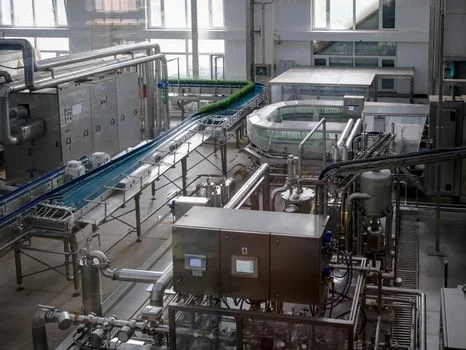
The following HydropureWater products are engineered for the wastewater challenges discussed above:
- Integrated MBR system for near-reuse-quality effluent in food processing applications — view specifications, capacity range, and technical data
Need a customized solution? Request a free quote with your specific flow rate and pollutant parameters.