Why Quito Is a Different Engineering Problem in 2026
A data center in Quito, Ecuador needs a two-stream treatment train in 2026: a sanitary wastewater plant (typically MBR or WSZ-grade package unit) sized for ~100–200 L/employee/day, and a cooling-tower blowdown (CTBD) reuse system — side-stream filtration → ultrafiltration → brackish RO at 2,850 m — to recover 60–80% of CTBD as cooling-tower makeup. Discharge to the EPMAPS interceptor must meet MAATE AM 061/2015 limits (TDS, BOD, residual chlorine) and the local sewer-use ordinance.
The capital playbook that worked in Loudoun County or Phoenix does not transfer cleanly to the Pichincha highland basin. EPMAPS finished water — a blend of surface intakes from the protected páramos and the volcaniclastic aquifer — typically runs 150–300 mg/L TDS, with silica 20–40 mg/L and alkalinity 60–120 mg/L as CaCO3 (HydropureWater field data, 2026). That profile is low in total salt but rich in the two species that drive cooling-tower scaling: reactive silica and bicarbonate. At sea level, an operator can push cycles of concentration to 6–8 with standard chemical programs; at 2,850 m the same chemistry becomes more aggressive because of the third variable the generic playbook omits — air density.
Air density at 2,850 m falls to roughly 1.0 kg/m³ versus 1.2 kg/m³ at sea level, reducing cooling-tower approach and range by an estimated 15–20%. Operators respond by running more cycles, which concentrates the same scaling ions further and pushes silica toward its 150 mg/L RO-feed ceiling faster than a U.S. or Gulf site would. The Quito seismic setting — Pichincha volcano complex, deep subduction-zone events — combined with documented grid-loss frequency drives a 2026 design norm of 24–48 hours of CTBD and sanitary equalization for any mission-critical facility (HydropureWater field data, 2026).
On the regulatory side, MAATE — created when the Ministerio del Ambiente was restructured in 2024 — now issues permits under the 2017 Código Orgánico del Ambiente (COA) and Acuerdo Ministerial 061/2015 emission/discharge tables. The permit stack a Quito EPC contractor actually files is a three-layer one: MAATE for environmental registration or Licencia Ambiental, ARCA (formerly ARCOM) for any on-site potable-quality reuse, and EPMAPS for the sewer-acceptance agreement. Comparing local guidance against parallel La Paz data-center blowdown treatment guide material is useful, but the silica, alkalinity, and ARCA reuse norms are specific to Ecuador.
The Two Wastewater Streams Inside a Quito Data Center
Sanitary wastewater and cooling-tower blowdown behave like two unrelated design problems even though they leave the same building. Sanitary is small in volume but biologically strong: 100–200 L/employee/day of office, cafeteria, and restroom flow with BOD 250–400 mg/L, TSS 200–300 mg/L, and FOG 30–80 mg/L (typical municipal ranges). It is the stream that has to meet MAATE AM 061/2015 Table 5 discharge limits before any volume is sewered.
CTBD is the opposite: large in volume, low in BOD, high in dissolved and suspended foulants. At 4–6 cycles of concentration, TDS runs 1,200–6,000 mg/L (4–8× makeup), with calcium, magnesium, silica, bicarbonate, suspended solids 10–50 mg/L, and the residual of whatever biocide and inhibitor program the cooling-water vendor is running. Genesis Water Technologies benchmarks 25–30% makeup loss to blowdown at 4 cycles — for a 100 MW Quito site expecting ~2 million L/day of makeup, that is ~500,000–700,000 L/day of CTBD to handle (per Genesis Water Technologies, 2026).
A third stream appears the moment a reuse train is installed: RO concentrate, which is 8–15% of treated CTBD volume but 30,000–60,000 mg/L TDS. It cannot be blended with sanitary and must be handled on its own permit track. All three end-of-pipe options — cooling-tower makeup reuse, discharge compliance to EPMAPS, or zero liquid discharge — flow from the answer to one question: is the design day-one reuse, day-one discharge, or a phased build-out?
Recommended Sanitary Wastewater Train for a Quito Hyperscale Site
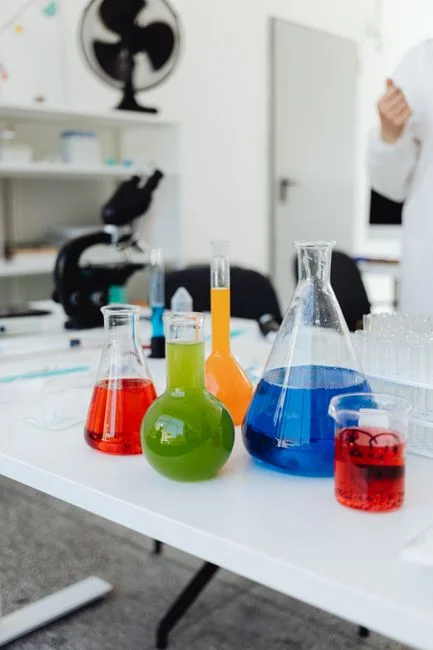
A 100 MW Quito site with ~150–250 on-site staff generates ~15–50 m³/day of sanitary wastewater, which makes a packaged MBR the right unit operation rather than a concrete-tank activated-sludge plant. Upstream of the MBR, a rotary mechanical bar screen with 3–6 mm aperture protects pumps and membranes from rags — standard buena-práctica engineering for any facility above ~50 employees. The MBR runs at hydraulic retention time 6–8 h with mixed liquor suspended solids 8,000–12,000 mg/L, producing effluent BOD <10 mg/L, TSS <5 mg/L, and NH3-N <2 mg/L, comfortably under MAATE AM 061/2015 limits of BOD 100 mg/L and TSS 130 mg/L (HydropureWater MBR datasheet, 2026).
MBR beats conventional activated sludge in the highland context for three reasons. First, footprint is ~60% smaller because the secondary clarifier disappears — a real win on constrained Quito parcels. Second, the effluent already meets reuse-grade quality for landscape irrigation around the campus, which an ESG/permit team can monetize in the Licencia Ambiental narrative. Third, the MBR effluent is stable enough that a downstream UV-C sterilizer can deliver the <2 NTU turbidity and <1 CFU/100 mL E. coli ARCA expects for non-potable reuse class B without the residual chlorine that EPMAPS increasingly flags in surface-discharge permits.
Sludge from the MBR waste-activation line goes to a plate-and-frame filter press designed for cake dryness 22–28% DS. That range satisfies the non-hazardous criteria in MAATE Acuerdo Ministerial 097 Annexes B and C for off-site disposal. The packaged train — bar screen, equalization, MBR membrane bioreactor system, UV, and sludge press — fits in a single equipment skid room and is the configuration most EPC contractors in Pichincha province are specifying for 2026 builds.
Recommended Cooling-Tower Blowdown Reuse Train for Quito
The CTBD train that matches Pichincha source-water chemistry and the 2,850 m derating runs in six steps from the cooling-tower basin to the permeate blending tank. Equalization comes first: a 24–48 h buffer tank with mechanical aeration sized at ~1.2× average daily CTBD volume homogenizes TDS swings and oxidizes any residual reducing biocide carried over from the cooling-water program. Without it, downstream RO sees shock loads that no antiscalant can fully buffer.
Step 2 is side-stream filtration. A self-cleaning multi-media filter at 10–25 micron drops suspended solids from 10–50 mg/L to <5 mg/L, which is the gate for any downstream membrane to survive. Step 3 is chemical conditioning via an automatic antiscalant and biocide dosing skid: pH adjustment plus antiscalant targeted to keep silica <150 mg/L in RO feed (i.e., below 0.9× saturation for the high-silica Pichincha profile). Step 4 is a PVDF ultrafiltration system with 0.01–0.1 micron hollow-fiber membranes, running at 10–30 psi with 90–95% recovery and effluent SDI <3 — directly protecting the RO train (HydropureWater UF datasheet, 2026).
Step 5 is the workhorse: an industrial RO system operating at conservative 65–75% recovery. Permeate TDS of 10–50 mg/L is suitable for direct return to the cooling-tower makeup line; concentrate routes to the brine-handling decision tree. Step 6 — brine handling — is where the design pivots between partial recycle to sewer, mechanical vapor compression (MVC) evaporation, or full ZLD with a crystallizer. Routine RO/UF membrane replacement is handled through a stocked spare membrane elements inventory. The full unit-operation table below is what a P&ID reviewer expects to see in the basis-of-design package.
| Step | Unit operation | Inlet spec | Outlet spec | Operating pressure | Recovery / energy |
|---|---|---|---|---|---|
| 1 | Equalization + aeration | CTBD, variable TDS | Homogenized feed, ORP raised | Atmospheric | 24–48 h HRT |
| 2 | Multi-media filter | SS 10–50 mg/L | SS <5 mg/L, turbidity <5 NTU | Gravity / 5–10 psi | 1–5% of circ. flow |
| 3 | Antiscalant + pH adjust | Silica 80–150 mg/L risk | Silica <150 mg/L, pH 6.5–7.2 | Atmospheric | 2–5 mg/L dose |
| 4 | UF (PVDF) | Turbidity up to 300 NTU | SDI <3, turbidity <0.5 NTU | 10–30 psi | 90–95% recovery |
| 5 | BWRO | Feed TDS 1,200–6,000 mg/L | Permeate 10–50 mg/L TDS | 150–400 psi | 65–75% recovery |
| 6 | Brine handling | Concentrate 30,000–60,000 mg/L | Distillate or solid cake | MVC: 15–25 kWh/kgal | 85–99% system |
Capex for a 50,000 GPD RO skid treating CTBD lands in the $250,000–$500,000 installed range; OPEX runs $1.50–$3.00/kgal including energy, chemicals, and membrane replacement (per Genesis Water Technologies, 2026). For a deeper look at RO design logic, the reverse osmosis water treatment 2026 engineering specs companion article is the right reference. If you are comparing the CTBD reuse train against the broader cooling-water envelope, the data-center cooling water treatment 2026 engineering specs piece maps how the chemical program and the recovery train integrate.
Comparing Reuse, Discharge-Compliance, and ZLD for a Quito Site
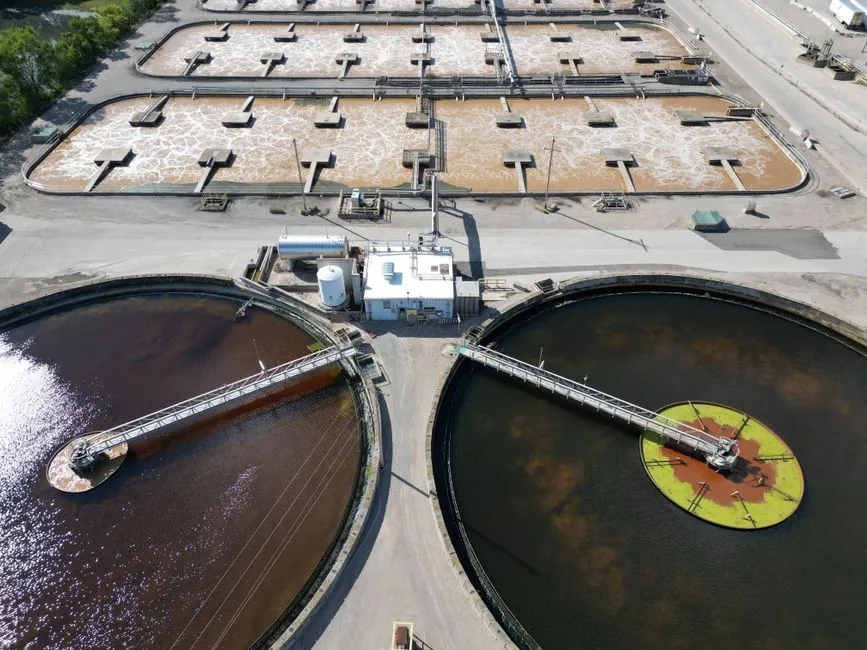
Three end-states are defensible for a greenfield Quito site, and the choice is dominated by EPMAPS tariff trajectory, MAATE discharge limits, and seismic insurance for brine storage. The matrix below is what a steering committee can compare line by line.
| Option | Process train | Capex (50,000 GPD) | OPEX | Water offset | Risk overlay for Quito |
|---|---|---|---|---|---|
| A — Discharge compliance only | Equalize + pH adjust + biocide neutralization, sewer | $200K–$400K | Discharge fees + MAATE reporting | 0% | Exposed to EPMAPS tariff escalation; permit risk if TDS cap imposed |
| B — Cooling-tower makeup reuse (recommended default) | Side-stream + UF + BWRO blending | $600K–$1.2M | $1.50–$3.00/kgal | 60–80% freshwater offset | 2–3 yr payback at current EPMAPS potable rates (per Genesis) |
| C — Partial ZLD (RO + MVC + crystallizer) | Full RO + MVC + crystallizer | $3M–$8M | $5–$15/kgal | 85–95% overall recovery | Justified only if EPMAPS imposes TDS <1,500 mg/L cap (per Genesis, 2026) |
Two Quito-specific overlays should change the default toward Option B. First, the Pichincha seismic zone increases insurance premium on large brine storage tanks; full ZLD brine inventories sit in the 30–60 m³ range, which is a non-trivial exposure. Second, transport of crystallizer solids to a licensed MAATE site outside Pichincha province adds 10–20% to OPEX versus coastal Ecuadorian data centers. The pragmatic 2026 pattern is to build Option B from day 1, with equalization tank and RO room footprint sized for a future MVC tie-in. A 100 MW Quito site expecting ~2 million L/day of makeup recovers ~1.2–1.6 million L/day of freshwater offset with that design — a number that travels well into an ESG/MAATE narrative.
Regulatory and Compliance Path Under MAATE, ARCA, and EPMAPS in 2026
Three regulators, three separate filings, and an EIA on top if the campus crosses 100 MW. The MAATE path starts with a Registro Ambiental for the data-center campus; facilities above 100 MW electrical demand move from the simplified registration to a full Licencia Ambiental supported by an Estudio de Impacto Ambiental under COA Article 438. The technical limits the design has to hit are the Acuerdo Ministerial 061/2015 Annex 1 tables: BOD ≤100 mg/L, TSS ≤130 mg/L, fecal coliforms <2,000 NMP/100 mL, pH 5–9, free chlorine 0.5–1.5 mg/L, total nitrogen 30–50 mg/L. Any sanitary or reuse stream sent to the EPMAPS interceptor has to clear those numbers.
EPMAPS requires an industrial customer to file a Declaración de Cargas (load declaration) and sign a pre-treatment agreement that caps discharge loads at the metropolitan interceptor. If the design sends any volume to on-site reuse for irrigation or toilet flushing, ARCA — the Agencia de Regulación y Control del Agua — certifies that stream against the potable-water reuse norm, anchored in NTE INEN 1108 and ARCA's own non-potable reuse resolution. The UV polishing step after the MBR is sized against the ARCA class B envelope: turbidity <2 NTU, E. coli <1 CFU/100 mL. A February 2026 TNFD case study, cited by Water Utility Report, has already become the ESG disclosure baseline that investors and project-finance insurers check first (per Water Utility Report, 2026-04).
The 2026 permit timeline that the EPC schedule has to absorb: MAATE Licencia Ambiental ~6–9 months from EIA submission; EPMAPS pre-treatment agreement ~2–3 months; ARCA reuse certification ~3–4 months. Sequenced, the critical path is ~9–12 months before discharge, which is why early engagement with all three is non-negotiable for a greenfield Quito site.
Frequently Asked Questions
What is the minimum sanitary treatment train MAATE will accept for a Quito data center?
A packaged MBR producing BOD <10 mg/L, TSS <5 mg/L, and NH3-N <2 mg/L — comfortably under AM 061/2015 limits of BOD 100 mg/L and TSS 130 mg/L — is the standard 2026 submission. UV disinfection downstream covers ARCA class B reuse if any volume is irrigated on-site.
How much of the cooling-tower blowdown can a Quito site realistically reuse?
60–80% recovery is the standard envelope for a side-stream filtration + UF + brackish RO train, per Genesis Water Technologies 2026 benchmarks. At 2,850 m the operator should expect to run 4–6 cycles of concentration rather than the 6–8 typical at sea level because the lower air density erodes tower range by an estimated 15–20%.
Which permit governs discharge to the Quito sewer in 2026?
EPMAPS issues the sewer-acceptance pre-treatment agreement against a filed Declaración de Cargas, with the technical envelope anchored in MAATE Acuerdo Ministerial 061/2015 Annex 1. ARCA separately certifies any on-site reuse stream against NTE INEN 1108 and the ARCA non-potable reuse resolution.
What is the realistic 2026 capex envelope for a 50,000 GPD CTBD reuse skid?
For a side-stream + UF + BWRO train sized to a 100 MW Quito site's blowdown stream, installed capex lands at $600K–$1.2M, with OPEX of $1.50–$3.00/kgal (per Genesis Water Technologies, 2026). Payback at current EPMAPS potable rates is typically 2–3 years.
How is waste-activated sludge from the sanitary train disposed of legally in Pichincha?
Dewater to 22–28% dry solids on a plate-and-frame filter press, then haul to a MAATE-licensed non-hazardous waste site. That cake dryness range satisfies the non-hazardous criteria in MAATE Acuerdo Ministerial 097 Annexes B and C for off-pichincha disposal.
Related Equipment
- industrial RO system — specifications, capacity range, and technical data