Center Cooling Data Equipment Risk Savings in 2026 Water Specs
Data center cooling water treatment is the engineered control of makeup and recirculating water so towers and liquid loops meet TDS, conductivity, corrosion, and microbial limits for 2026 uptime. Center cooling data equipment risk savings means pairing about 40% makeup reduction and high blowdown reuse with RO, brine concentration, or crystallization sized to heat load and source quality.
U.S. facilities use about 200 billion gallons of water each year, and cooling drives 80–90% of that demand (Genesis Water Technologies, 2025). AI and high-density racks raise heat loads by 30–50%, so water quality must tighten to protect uptime (Solenis, 2025). Markets such as Phoenix and Northern Virginia push Water Usage Effectiveness targets often below 1.2 L/kWh under EPA pressure (EPA 2024). One Arizona hyperscale site cut water use 40% and saved $1.8M per year through reuse (Saltworks).
Missed WUE targets raise OpEx, fine exposure, and ESG reporting risk. Facilities that delay blowdown recovery carry higher makeup demand and faster fouling under AI heat density. Proactive treatment keeps conductivity and corrosion rates inside the thresholds listed below.
Cooling Water Quality Requirements for Data Centers: 2026 Engineering Specs and Compliance Thresholds
TDS should stay below 1,500 mg/L to limit scaling in microchannel cooling hardware (ASHRAE 2025). Conductivity guidance is <2,500 µS/cm for conventional towers and <1,000 µS/cm for sensitive liquid loops (Solenis, 2025). Keep the Langelier Saturation Index below +2.5 to slow calcium carbonate fouling on heat-transfer surfaces (EPA 2024).
Corrosion rates must stay under 0.1 mm/year for carbon steel and under 0.05 mm/year for copper alloys (NACE SP0169-2024). Legionella should remain below 10 CFU/mL (ASHRAE 188-2025) and total bacteria below 1,000 CFU/mL (Solenis). Higher loop temperatures from AI loads raise chlorine demand and pH swing, so responsive treatment and industrial RO become necessary.
| Parameter | Traditional Cooling Towers Threshold | Liquid Cooling Loops Threshold | Impact of Exceeding Threshold | Reference |
|---|---|---|---|---|
| TDS | <1,500 mg/L | <1,500 mg/L | Scaling, reduced heat transfer, increased blowdown | ASHRAE 2025 |
| Conductivity | <2,500 µS/cm | <1,000 µS/cm | Corrosion, scaling, increased blowdown | Solenis, 2025 |
| Langelier Saturation Index (LSI) | <+2.5 | <+2.5 | Calcium carbonate scaling | EPA 2024 |
| Corrosion Rate (Carbon Steel) | <0.1 mm/year | <0.1 mm/year | Equipment degradation, leaks | NACE SP0169-2024 |
| Corrosion Rate (Copper Alloys) | <0.05 mm/year | <0.05 mm/year | Equipment degradation, leaks | NACE SP0169-2024 |
| Legionella | <10 CFU/mL | <10 CFU/mL | Health risk, biofouling | ASHRAE 188-2025 |
| Total Bacteria | <1,000 CFU/mL | <1,000 CFU/mL | Biofouling, reduced heat transfer | Solenis |
| Turbidity (Post-Pretreatment) | <5 NTU | <1 NTU | Fouling of membranes/heat exchangers | EPA 2024 |
How Does Data Center Cooling Water Treatment Work Across Process Stages?
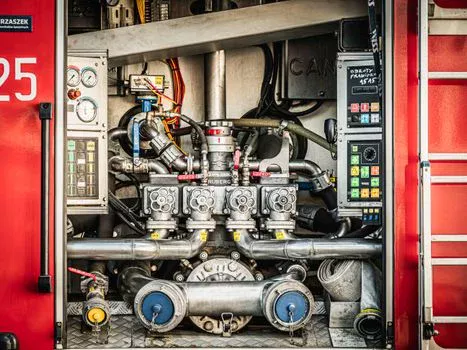
Stage 1 pretreatment uses coagulation, flocculation, sedimentation, and filtration to cut suspended solids. Target turbidity after this stage is less than 5 NTU (EPA 2024). That step protects membranes from early fouling and keeps recovery stages stable.
Stage 2 primary treatment applies reverse osmosis, nanofiltration, or membrane brine concentration to cut TDS by 90–98% (Saltworks, 2025). Stage 3 disinfection uses UV, chlorine dioxide, or ozone to control microbes without harsh residuals that attack metallurgy (Xylem, 2025). Stage 4 blowdown recovery with evaporation crystallization or ZLD can reclaim another 70–90% of concentrated blowdown water (Genesis Water Technologies).
Typical recovery sits near 75% for traditional RO, about 90% for membrane brine concentration, and about 95% for advanced evaporation crystallization. Saltworks has validated staged recovery on large data center cooling trains. For loop disinfection, HydropureWater supplies chemical-free disinfection for cooling water loops, and for dissolved-solids removal it supplies HydropureWater’s industrial RO systems for data center cooling water treatment.
| Process Stage | Primary Technologies | Key Objective | Typical Recovery Rate (for overall system) | Reference |
|---|---|---|---|---|
| Stage 1: Pretreatment | Coagulation, Flocculation, Sedimentation, Filtration | Remove suspended solids, reduce turbidity (<5 NTU) | N/A (prepares water for recovery) | EPA 2024 |
| Stage 2: Primary Treatment | Reverse Osmosis (RO), Nanofiltration (NF), Membrane Brine Concentration | Reduce TDS by 90-98%, remove dissolved contaminants | 75% (RO), 90% (MBC) | Saltworks, 2025 |
| Stage 3: Disinfection | UV, Chlorine Dioxide, Ozone | Eliminate microbial growth, prevent biofouling | N/A (maintains water quality) | Xylem, 2025 |
| Stage 4: Blowdown Recovery | Evaporation Crystallization, ZLD Systems | Recover additional water from concentrated blowdown | 95% (Evap. Cryst.) | Genesis Water Technologies |
What Are the Best Closed-Loop Cooling Water Treatment Solutions for US Data Centers?
Closed-loop and hybrid plants select hardware from source TDS, heat load, and discharge limits. RO usually recovers about 75% water at CapEx of $0.50–$1.20 per gallon per day and OpEx of $0.05–$0.15 per 1,000 gallons on low-TDS makeup (EPA 2024). Membrane brine concentration, such as Saltworks XtremeRO, reaches about 90% recovery at CapEx of $0.80–$1.50 per gallon per day and OpEx of $0.08–$0.20 per 1,000 gallons for medium-TDS streams of 1,500–5,000 mg/L (Saltworks, 2025).
Evaporation crystallization can exceed 95% recovery when ZLD is required. CapEx often runs $1.50–$3.00 per gallon per day, with OpEx of $0.20–$0.40 per 1,000 gallons on high-TDS blowdown above 5,000 mg/L (Genesis Water Technologies). Primary treatment can use HydropureWater’s industrial RO systems for data center cooling water treatment, while high-recovery polish may follow evaporation crystallization for high-recovery water treatment. Xylem microsand filtration with UV remains a chemical-light disinfection option where continuous oxidant dosing is constrained.
| Technology | Typical Water Recovery Rate | CapEx ($/gallon/day) | OpEx ($/1,000 gallons) | Ideal Use Case |
|---|---|---|---|---|
| Reverse Osmosis (RO) | 75% | $0.50–$1.20 | $0.05–$0.15 | Low-TDS (<1,500 mg/L) makeup water, initial blowdown treatment |
| Membrane Brine Concentration (e.g., XtremeRO) | 90% | $0.80–$1.50 | $0.08–$0.20 | Medium-TDS (1,500–5,000 mg/L) blowdown, higher recovery targets |
| Evaporation Crystallization | 95%+ | $1.50–$3.00 | $0.20–$0.40 | High-TDS (>5,000 mg/L) blowdown, Zero Liquid Discharge (ZLD) requirements |
How Effective Is Data Center Water Recycling for CapEx, OpEx, and ROI?

CapEx for recovery trains usually spans $0.50 to $3.00 per gallon per day of treated capacity, set by technology and target recovery (EPA 2024). OpEx typically runs $0.05 to $0.40 per 1,000 gallons for energy, chemicals, and maintenance (Saltworks, 2025). Avoided water purchase often equals $0.50 to $1.20 per 1,000 gallons saved, with local rates near $0.005/gallon in Phoenix and $0.02/gallon in Northern Virginia.
Membrane brine concentration often pays back in 2–5 years. Evaporation crystallization packages more often need 5–8 years because CapEx and OpEx sit higher (Genesis Water Technologies). EPA WaterSense rebates and ESG disclosure gains can improve the case, but cash payback still tracks local tariff and recovery rate. Where campus sewer pretreatment is also required before discharge of non-cooling streams, an Underground Package Sewage Treatment Plant (WSZ Series) can sit beside the cooling recovery skid.
| Cost/Benefit Category | Range/Typical Value | Notes |
|---|---|---|
| CapEx (per gallon/day capacity) | $0.50–$3.00 | Dependent on technology (RO vs. MBC vs. Evaporation Crystallization) |
| OpEx (per 1,000 gallons treated) | $0.05–$0.40 | Includes energy, chemicals, labor, maintenance |
| Water Savings (per 1,000 gallons saved) | $0.50–$1.20 | Varies by regional water utility rates |
| Payback Period (Membrane Brine Concentration) | 2–5 years | Typical for systems achieving 90% recovery |
| Payback Period (Evaporation Crystallization) | 5–8 years | Typical for ZLD systems or very high recovery |
| Regulatory Incentives | Variable | e.g., EPA WaterSense rebates, local tax credits |
| Sustainability Benefits | Qualitative/Indirect | Improved ESG scores, reduced regulatory risk, enhanced brand image |
When Do High-Purity Water Systems Matter for Data Center Cooling?
High-purity water systems matter once liquid cooling loops demand conductivity below 1,000 µS/cm and post-pretreatment turbidity below 1 NTU. Those limits protect microchannel and direct-to-chip hardware from fouling and corrosion under AI heat density. Traditional towers can tolerate wider conductivity, but liquid loops cannot.
Selection still starts with source assay for TDS, hardness, turbidity, and organics, including seasonal swings. Map current and projected heat load against tower, hybrid, or liquid-loop metallurgy. Set recovery goals such as 40% makeup cut, 90% blowdown reuse, or full ZLD before locking CapEx.
Compare RO, brine concentration, and crystallization on recovery, footprint, and OpEx against the assayed contaminants. For complex sources, run a 30-day membrane pilot to confirm recovery and chemical use. Modular skids ease later capacity adds; PLC-controlled chemical dosing for cooling water treatment keeps inhibitor and biocide feed matched to load swings.
How Do Advanced Filtration and Chemical Treatment Limit Corrosion and Fouling in US Cooling Loops?
Advanced filtration and chemical treatment close the gap between membrane recovery and stable metallurgy. Pretreatment that holds turbidity below 5 NTU for towers, or below 1 NTU for liquid loops, slows heat-exchanger and membrane fouling (EPA 2024). Controlled dosing then holds LSI, corrosion rates, and bacteria inside the table limits above.
Common failure modes are weak pretreatment that fouls RO early and weak microbial control in warm liquid loops. Pair filtration with measured oxidant or chlorine dioxide feed rather than fixed high doses. Campus sanitary wastewater may still need packaged biological treatment before sewer discharge. The same owner can evaluate an Underground Package Sewage Treatment Plant (WSZ Series) without mixing that stream into the cooling recycle.
Keep cooling recycle chemistry separate from sanitary flows. Document inhibitor residuals, biocide demand, and blowdown TDS after each heat-load step-up. That record supports vendor claims during the 30-day pilot window and later capacity expansions.
Who This Is For / Who Should Look Elsewhere / Next Step
This guide is for data center owners, MEP engineers, and procurement teams sizing cooling water recovery against 2026 WUE and heat-load growth. It is not a substitute for site pilot data or a chemical-only service contract on a stable low-TDS tower. If your brief centers on center cooling data equipment risk savings, gather source water assays and heat-load projections, then request a recovery and dosing design review matched to those numbers.
Frequently Asked Questions
Q: What is the primary benefit of data center cooling water treatment?
A: Makeup water use often falls 40% or more, which lowers OpEx, improves WUE, and strengthens sustainability reporting.
Q: How does AI heat load impact water treatment needs?
A: Higher heat density raises loop temperature, which speeds scaling, corrosion, and microbial growth, so primary treatment and responsive disinfection must harden.
Q: What is cooling tower blowdown recovery?
A: Blowdown recovery treats concentrated tower discharge and returns clean water to the cooling circuit, cutting fresh makeup demand.
Q: What is Zero Liquid Discharge (ZLD) for data centers?
A: ZLD recovers nearly all liquid waste streams, including blowdown, and reduces residual brine to a solid or near-solid for disposal.
Q: What is the typical ROI for a data center water recovery system?
A: Payback commonly falls in 2–5 years for membrane brine concentration and 5–8 years for evaporation crystallization, depending on local water cost.