Why La Paz Is a Special Case for Data Center Water
La Paz and El Alto sit between 3,640 m and 4,150 m above sea level, with ambient atmospheric pressure around 0.65 atm and an annual mean wet-bulb temperature of roughly 5–10 °C. Those three numbers re-write every sea-level assumption in a standard data-center water design basis. Evaporative cooling runs efficiently at this wet-bulb — a fact the industry is actively chasing in arid U.S. sites — but the consequence is that the blowdown stream concentrates faster per litre evaporated because saturation indices (Langelier, Ryznar, silica) climb quickly when cycles of concentration (COC) push past 4–5. A 100 MW facility built on this profile can demand up to 2 million L/day of makeup water, so even a 5–20 MW hyperscale in La Paz becomes a non-trivial industrial water user (S5: IDE Water, 2026).
On the supply side, Lake Titicaca levels have been variable, the Viacha and Cochabamba aquifers stress during the May–August dry season, and La Paz's two main wastewater plants — Achachicala and Puchukollo — are operating at or near hydraulic capacity. There is no large-scale reclaimed-water pipeline serving hyperscalers in 2026, so any "water-positive" claim has to be backed by on-site treatment and storage, not by an off-take agreement with a utility.
Regulatorily, the project must clear Bolivia's Ley 1333 del Medio Ambiente and the Reglamento Ambiental Industrial (RAI) under D.S. 24176, with discharge limits set by the Ministerio de Medio Ambiente y Agua. The combination of seasonal freshwater stress, full POTWs, and a strict permitting frame means that treating blowdown as a recoverable asset — not a disposal problem — is the only design philosophy that holds up to both an environmental authority review and a sustainability committee audit.
What Cooling-Tower Blowdown Actually Contains
At 4 cycles of concentration, cooling-tower blowdown is typically 25–30% of makeup water volume (S2: Genesis Water Technologies, 2026). For a 5 MW La Paz site on roughly 1,500 m³/day of makeup, that translates to 375–450 m³/day of blowdown to manage. The chemistry, not the volume, is what determines the train.
Blowdown TDS runs 1,200–6,000 mg/L — 4–8× the makeup value depending on COC and source water. Suspended solids sit in the 10–50 mg/L range, and the dissolved load is dominated by scaling minerals (Ca²⁺, Mg²⁺, silica, bicarbonate alkalinity) plus whatever treatment chemicals are being fed to the loop: biocides, scale inhibitors, corrosion inhibitors, dispersants. Legacy chromate and high-phosphate programs create particular headaches because both chemistries poison the membrane and discharge envelopes a La Paz environmental auditor will look for (S2).
Altiplano groundwater is frequently high in silica and bicarbonate, which accelerates CaCO₃ and amorphous silica scaling well before the blowdown reaches sea-level saturation assumptions. That single point is why blowdown TDS alone is not a sufficient design parameter; the ionic balance — and especially the silica-to-hardness ratio — drives antiscalant selection, recovery ceiling, and whether the concentrate has to be sent to a thermal stage.
| Parameter | Makeup (La Paz typical) | Cooling-tower blowdown at 4 COC | Design implication |
|---|---|---|---|
| TDS | 200–500 mg/L | 1,200–6,000 mg/L | Sets RO feed osmotic pressure and recovery ceiling |
| Suspended solids | 5–15 mg/L | 10–50 mg/L | Drives side-stream filter and UF sizing |
| Calcium hardness | 60–150 mg/L as CaCO₃ | 240–1,200 mg/L as CaCO₃ | Determines antiscalant dose and acid feed |
| Silica (SiO₂) | 15–40 mg/L | 60–320 mg/L | Limits RO recovery to 65–75% without hot-lime or NF pretreatment |
| Bicarbonate alkalinity | 80–200 mg/L as CaCO₃ | 320–1,600 mg/L as CaCO₃ | Controls Langelier Saturation Index in concentrate |
| Biocide / inhibitor residuals | Trace | 4–8× makeup | Requires non-phosphate, membrane-compatible chemistry |
The Physics at 3,640 m: What Changes for RO and MVC
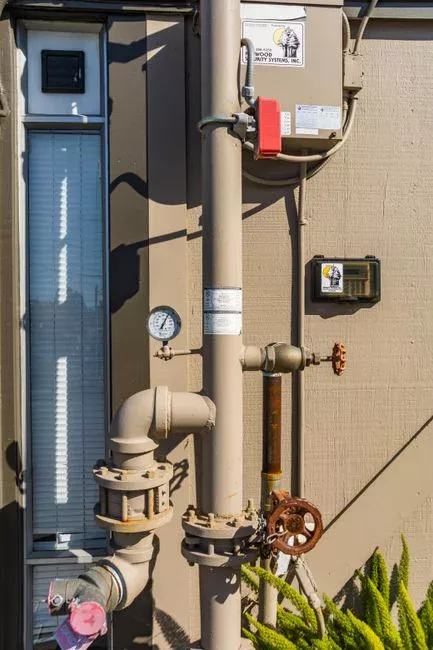
Vendor RO pump curves are sea-level curves. At 0.65 atm ambient, the net driving pressure available from a given pump discharge is roughly proportional to feed-side absolute pressure, which means real flux per psi drops and the same pump produces less permeate than its nameplate. The standard 150–400 psi RO operating band quoted in design guides assumes 1.0 atm on the suction side (S2); at La Paz, expect to derate published specific flux by 15–30% or specify a booster to compensate.
MVC is similarly affected. The 15–25 kWh/1,000 gal figure cited for mechanical vapor compression is a sea-level number (S2). At altitude, evaporation occurs at a lower temperature (good for thermal efficiency) but air-handling density drops, the compressor has to move a larger volumetric flow for the same mass transfer, and the net specific energy rises. Treat vendor guarantees as 10–25% optimistic at 3,640 m and plan on-site pilot data before sizing a crystallizer.
On the cooling side, the low wet-bulb lets the tower run a tighter approach and push COC higher before scaling forces blowdown — but only if side-stream filtration holds suspended solids low enough to prevent fouling as the saturation index climbs. The Altiplano gives you a free efficiency gain that sea-level sites pay capex for; spend it on the right pretreatment rather than on the membrane stage.
| Parameter | Sea-level (1.0 atm, ~25 °C wb) | La Paz / El Alto (~0.65 atm, ~5–10 °C wb) | Design action |
|---|---|---|---|
| Atmospheric pressure | 101.3 kPa | ~65 kPa | Derate RO specific flux 15–30% |
| RO net driving pressure (fixed pump) | Baseline | −15 to −30% | Specify booster or accept lower flux |
| MVC specific energy | 15–25 kWh/1,000 gal | +10 to +25% | Pilot on-site; size for upper band |
| Cooling-tower approach (4–5 COC) | 5–7 °C | 3–5 °C | Push COC higher if SS controlled |
| Blowdown scaling rate | Baseline | Faster per litre evaporated | Side-stream filter to <15 µm SS |
Recommended Treatment Train for a La Paz Hyperscale Site
The defensible train for a 5–20 MW La Paz site is a four-stage membrane chain with optional thermal polishing and on-site disinfection. Each stage is sized to do one job well so the next stage is not punished for the previous one's shortfall.
Stage 1 — Side-stream filtration. A self-cleaning 10–25 µm screen filter treats 1–5% of circulation flow continuously. CAPEX lands at $50,000–$200,000 for typical data-center flow rates (S2), and the job is to drop suspended solids to a level downstream membranes can accept. Without this, the UF membranes foul in weeks instead of months. An automatic chemical dosing system upstream of the filter keeps coagulant feed steady for sites with high-colloidal Altiplano water.
Stage 2 — Ultrafiltration on the blowdown slipstream. A HydropureWater UF system at 0.01–0.1 µm pore size delivers 90–95% recovery with no chemical coagulant, removes bacteria, biofilm fragments and colloidal silica, and protects the RO from biofouling — the dominant failure mode in Altiplano groundwater. Backwash with permeate keeps membranes productive; chemical cleans every 1–3 months depending on feed.
Stage 3 — Reverse osmosis. An industrial RO system at a conservative 50–70% local recovery (lower than the 75–80% sea-level norm because silica and CaCO₃ scaling accelerate at altitude) produces permeate at 10–50 mg/L TDS, suitable for direct return to the cooling-tower basin. Antiscalant must be selected for silica tolerance, and recovery should be confirmed by a 1–3 month on-site pilot before procurement locks in. RO and UF membrane elements should be sourced as a single lot so cleaning chemistry is consistent across stages.
Stage 4 (optional) — Mechanical vapor compression. MVC on the RO concentrate at 95–98% recovery. CAPEX $1–3M for 10–30 kGPD systems; OPEX $5–15/kgal including energy and maintenance (S2). Reserve this stage for sites where the environmental authority refuses concentrate discharge or where freshwater is curtailed seasonally — not as a default.
Disinfection on the reuse stream. A UV sterilizer on the RO permeate line controls Legionella and biofilm fragments without producing disinfection by-products, and an on-site chlorine dioxide generator handles biological fouling in the reused loop where biofilm control is the priority.
| Stage | Function | Recovery / output | CAPEX band | Key spec |
|---|---|---|---|---|
| Side-stream filter | SS reduction | 1–5% of circ flow | $50k–$200k | 10–25 µm self-cleaning |
| UF | Colloids, bacteria, biofouling control | 90–95% | $150k–$400k | 0.01–0.1 µm PVDF |
| RO (brackish) | TDS, hardness, silica removal | 50–70% local | $250k–$500k (50 kGPD) | 150–400 psi, sea-level derated |
| MVC (optional) | Concentrate volume reduction | 95–98% | $1–3M (10–30 kGPD) | 15–25 kWh/kgal +altitude uplift |
| UV / ClO₂ | Disinfection of reuse stream | n/a | $30k–$120k | 40 mJ/cm² UV dose or 0.1–0.5 ppm ClO₂ |
CAPEX and OPEX Bands for 5 MW, 10 MW and 20 MW La Paz Sites
These bands assume a base train of side-stream filtration + UF + RO at 50–70% local recovery, with MVC added only for the ZLD case at 20 MW. They are screening-grade, not EPC tender numbers — adjust for Bolivian import duties, Altura customs handling, and the seismic / wind derating that El Alto buildings require.
For a 5 MW site on roughly 500–1,500 m³/day of makeup (125–450 m³/day of blowdown), the partial-reuse train lands at $0.4–0.9M CAPEX and $1.50–3.00/kgal OPEX (S2). Modular UF and RO skids let the operator phase capacity in 1–2 MW increments as the load fills, which matters when the data hall is built out over 18–24 months. A 10 MW site doubles the train to roughly $0.8–1.6M CAPEX, with OPEX in the same per-kgal band because fixed costs dilute across more volume.
A 20 MW site is where ZLD becomes a real option. Full ZLD (RO + MVC + crystallizer) is $3–8M CAPEX with OPEX of $5–15/kgal (S2). That only pencils out if concentrate discharge is refused by the Ministerio de Medio Ambiente y Agua and freshwater is curtailed during the dry season. Otherwise, partial reuse at 60–85% overall recovery is the higher-value option and frees capital for IT load.
| Site size | Makeup (m³/day) | Blowdown (m³/day) | Train scope | CAPEX band | OPEX band |
|---|---|---|---|---|---|
| 5 MW | 500–1,500 | 125–450 | Side-stream + UF + RO (50–70%) | $0.4–0.9M | $1.50–3.00/kgal |
| 10 MW | 1,000–3,000 | 250–900 | Side-stream + UF + RO, phased skids | $0.8–1.6M | $1.50–3.00/kgal |
| 20 MW (reuse) | 2,000–6,000 | 500–1,800 | UF + RO at 60–85% overall | $1.5–3.5M | $2.00–4.00/kgal |
| 20 MW (ZLD) | 2,000–6,000 | 500–1,800 | RO + MVC + crystallizer | $3–8M | $5–15/kgal |
Choosing Between Discharge Compliance, Reuse and Zero Liquid Discharge
The decision framework is driven by three La Paz-specific risk axes: dry-season freshwater availability, capacity at Achachicala or Puchukollo POTW, and the discharge limits the environmental authority attaches to the Ficha Ambiental.
Discharge compliance only is viable only when the site has a permitted industrial sewer connection with headroom and discharge TDS stays below 1,500 mg/L at the point of discharge (S2). In La Paz, that combination is increasingly rare for hyperscalers, and discharge fees in the $5–15/kgal band (S2) erode the savings within a year. It is a stopgap, not a strategy.
Cooling-tower makeup reuse at 60–85% recovery is the 2026 default for La Paz. It cuts freshwater demand and discharge volume at the same time, and it is the configuration Ley 1333 and RAI expect when an industrial operator asks for a multi-year discharge permit. The CAPEX/OPEX bands above are sized for this case.
Zero liquid discharge is reserved for sites near sensitive Altiplano wetlands, near the recharge zone of the Viacha aquifer, or where the environmental authority explicitly refuses concentrate disposal. Capture the $3–8M CAPEX and $5–15/kgal OPEX honestly in front of the sustainability committee and tie it to a brine-hauling cost comparison before committing (S2).
| Strategy | Recovery | Best La Paz fit | CAPEX signal | OPEX signal |
|---|---|---|---|---|
| Discharge compliance | 0% (one-pass) | Only if sewer has capacity & TDS <1,500 mg/L | Lowest | $5–15/kgal discharge fee |
| Cooling-tower makeup reuse | 60–85% | Default 2026 configuration | $0.4–3.5M | $1.50–4.00/kgal |
| Zero liquid discharge | 95–99% | Discharge refused, freshwater rationed | $3–8M | $5–15/kgal |
Implementation Checklist for a 2026 La Paz Project
- Pilot on-site before sizing. Run a 1–3 month UF + RO pilot on actual La Paz blowdown to capture altitude-corrected flux, scaling indices (LSI, S&DSI), and biocide carry-through. Sea-level vendor curves will not be enough at 3,640 m.
- Permit early under RAI. File the Ficha Ambiental and Programa de Manejo Ambiental before locking the train. Discharge limits and any zero-discharge conditions drive equipment selection; retrofits are expensive and slow the environmental review.
- Integrate cooling-water chemistry with the recovery train. Specify non-phosphate, low-toxicity scale and biocide programs from day one. Legacy chromate/phosphate chemistries will block RAI discharge compliance and foul membranes fast. Pair the chemistry with an automatic chemical dosing system so dose tracks COC and load.
- Size dry-season storage. Plan on-site treated-water storage for at least 7–14 days of cooling-tower makeup to ride out the May–August aquifer stress and any POTW hydraulic event at Achachicala or Puchukollo.
- Standardize on a single membrane supplier. Source RO and UF membrane elements as a single lot so cleaning chemistry, replacement intervals, and warranty support are consistent across both stages.
Frequently Asked Questions
What wastewater and cooling blowdown treatment does a data center in La Paz, Bolivia need?
A La Paz data center typically needs a side-stream filter (10–25 µm) followed by ultrafiltration and brackish-water reverse osmosis at 50–70% local recovery, with permeate returned to the cooling tower and concentrate either discharged under Ley 1333 / RAI permits or sent to MVC if zero liquid discharge is required. Operating at 4 cycles of concentration, blowdown is 25–30% of makeup water with TDS of 1,200–6,000 mg/L (S2), so the train must be sized to the Altiplano's high-silica, high-bicarbonate water profile rather than to a sea-level reference design.
How much does zero liquid discharge cost for a hyperscale data center in Bolivia?
For a 5–20 MW La Paz site, full ZLD (RO + MVC + crystallizer) lands at $3–8M CAPEX with OPEX of $5–15/kgal, and reaches 95–99% overall water recovery (S2). MVC energy use is 15–25 kWh/1,000 gal at sea level, so at El Alto's 3,640 m elevation plan for a 10–25% energy uplift and a 1–3 month on-site pilot before committing to a thermal stage.
What are the discharge fees and regulatory limits for cooling-tower blowdown in La Paz?
Direct discharge fees in water-stressed regions now run $5–15 per thousand gallons, and jurisdictions increasingly cap discharge TDS at 1,500 mg/L (S2). In La Paz, industrial discharge is regulated under Ley 1333 del Medio Ambiente and the Reglamento Ambiental Industrial (D.S. 24176) through the Ministerio de Medio Ambiente y Agua, and both Achachicala and Puchukollo POTWs are at or near hydraulic capacity — which is why partial reuse at 60–85% recovery is the more defensible 2026 default.
How does altitude change RO and MVC design for an El Alto data center?
At ~0.65 atm ambient pressure, RO specific flux drops 15–30% relative to sea-level vendor curves, and MVC specific energy rises 10–25% because of lower air density at the compressor inlet. The standard 150–400 psi RO operating band (S2) and 15–25 kWh/1,000 gal MVC figure are sea-level references; derate both for a 3,640–4,150 m site and confirm with an on-site pilot before procurement.
Related Equipment
- industrial RO system — specifications, capacity range, and technical data