Why Equinix's Campus Footprint Puts Cooling Water Back on the Engineering Table
Equinix's hyperscale campus expansion does not automatically trigger full zero liquid discharge, but it does push most sites past the threshold where high-recovery reverse osmosis (90–95% recovery) becomes the lowest-capex reuse path for cooling tower blowdown. Full ZLD — sending only 5–10% of feed to evaporators — is justified only when site TDS exceeds 5,000 mg/L, the local watershed is in drought contingency, or a state permit mandates zero discharge (per ITIF July 2026 and WCP Online January 2026).
The scale of the 2026 buildout puts the ZLD question on the table. Per ITIF (July 2026), hyperscalers are deploying hundreds of new gigawatts of data center capacity in the United States, and the indirect water footprint of that electricity is roughly 12× the direct cooling-water use according to Lawrence Berkeley National Lab. A single 100 MW Equinix campus running evaporative cooling loses 3–5% of its circulating flow as consumptive water — the ITIF Table 1 figure — which translates to tens of millions of gallons of blowdown per year once cycles of concentration push dissolved solids past the tower's chemistry ceiling.
Reporting thresholds are also tightening. State disclosure drafts circulated by ITIF/MultiState in 2026 target any facility drawing more than 5 MW or consuming more than 50 million gallons annually, and they want Water Usage Effectiveness (WUE) plus indirect-water accounting broken out at the facility level. Equinix campuses land in that envelope by default. That collapses the engineering question to three measurable inputs: blowdown volume, blowdown TDS, and the stringency of the state permit on the receiving watershed. The matrix that follows uses those three variables.
What 'Triggers ZLD' Actually Means in 2026 Engineering Practice
ZLD is a system outcome in which no liquid waste leaves the site boundary and only solid residues are removed for off-site disposal. WCP Online (January 2026) describes the working stack as a combination of mechanical, membrane, and selective thermal stages, with minimum liquid discharge (MLD) sitting in the middle as the volumetric shrink step.
MLD sets the size of the thermal polish. By combining softening, high-recovery RO, and brine-concentration steps, MLD can shrink the residual brine stream by 60–90% before the final evaporative or crystallization step, which reduces evaporator footprint, capex, and steam demand. In a membrane-thermal hybrid ZLD, only 5–10% of total feed is typically routed to evaporators or crystallizers — the rest is recovered as reusable permeate and concentrated recycle (WCP Online, January 2026).
The technology is field-proven. A 2026 SSRN industrial validation study confirmed that compaction-resistant polysulfone support layers for high-pressure RO can survive one year of continuous ZLD service in a wastewater duty without the flux loss that historically killed high-recovery designs. For an engineer specifying equipment for a 20-year campus life — the ITIF-cited physical lifetime of a data center structure — that one-year field datum confirms the membranes will outlast two or three recovery-target upgrades.
Why High-Recovery RO Is the Default First Move for Equinix-Scale Cooling Blowdown
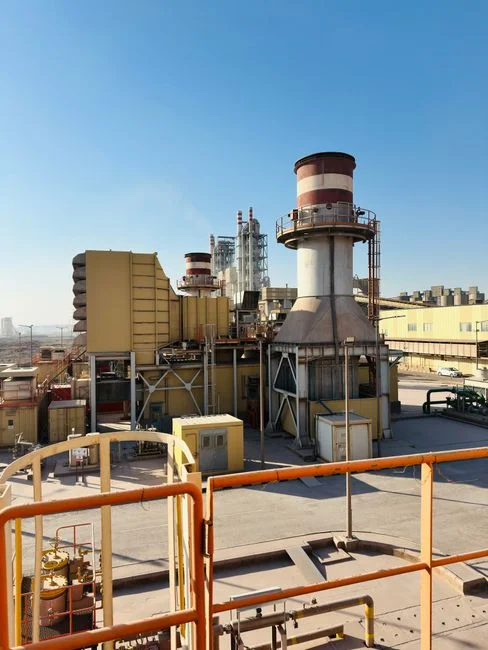
For most Equinix campuses, the right first move is an industrial RO system pushed hard into the 90–95% recovery envelope. Conventional RO recovers only 50–80% of feedwater and leaves 20–50% as concentrated brine rich in scaling salts, which is the gap that two 2026-era mechanisms close (WCP Online, January 2026).
The first mechanism is a fluidized-bed crystallization reactor. Instead of letting scale-forming ions precipitate on the membrane surface, the reactor nucleates them onto seed particles in a separate vessel. Scale-forming species are purged from the recirculation loop, which lets the RO operate closer to saturation limits — recoveries exceeding 90% are routinely quoted in vendor and academic literature for this configuration (WCP Online, January 2026).
The second mechanism is cyclic or pulsed-flow RO. Steady-state operation favors the buildup of fouling layers and biofilm; cyclic systems periodically vary hydraulic and osmotic pressure and alternate between production and high-shear flushing. Field and lab studies show equal or higher recovery at lower energy, with longer membrane life compared with conventional RO (WCP Online, January 2026). A Chilean power plant documented more than 93% recovery from cooling tower blowdown using a fluidized-bed reactor plus cyclic RO, with only a minimal thermal polishing step (WCP Online, January 2026).
The energy case is decisive at hyperscaler scale. ITIF (July 2026) puts the electricity overhead of high-recovery RO at less than 0.1% of a facility's annual electricity output — orders of magnitude below the thermal energy a brine evaporator or mechanical vapor compressor would draw. On a campus with 100+ MW of IT load, that energy ratio keeps HRRO ahead of ZLD on a total-cost-of-ownership basis.
The Site Decision Matrix: When HRRO Is Enough vs. When ZLD Becomes Mandatory
The decision collapses into a parameter table, where site-specific numbers dictate the technology choice. Thresholds are drawn from WCP Online (January 2026) and ITIF (July 2026).
| Site Parameter | HRRO-Sufficient Threshold | ZLD-Trigger Threshold |
|---|---|---|
| Feed/blowdown TDS | < 3,000 mg/L — 90–95% recovery produces reuse-quality permeate with no thermal polish | > 5,000 mg/L — even 90% recovery leaves a brine stream above most discharge TDS caps |
| Blowdown fraction of circulating flow | < 1% of recirculation — manageable with a single-stage HRRO train | > 2% of recirculation at high cycles — requires brine concentration + thermal polish |
| State water-stress / drought contingency | No active drought declaration; watershed permits allow consumptive reuse | Active drought contingency (e.g., Arizona, parts of Virginia, Texas) — administrative machinery can compel zero discharge |
| Hyperscaler ESG / water-positive pledge | Net-zero water scope or no public commitment | Net-positive water pledge — ZLD becomes a PR requirement, not just a regulatory one |
| Discharge permit stringency | NPDES-style permit with conventional TDS limits and reuse credit | Zero-discharge permit, anti-degradation review, or formal industrial water-allocation review (ITIF cites Missouri SB 16, 2026) |
| Campus phasing | Early-phase build; watershed regulators still using first-come-first-served approvals | Later phase; clustering effect forces watershed-level review (ITIF, July 2026) |
The 90–95% recovery ceiling is the practical limit for RO alone; pushing past it requires a thermal polish, which is when a project crosses into ZLD territory (WCP Online, January 2026). The state row often overrides engineering economics — Arizona's drought contingency plan, for example, has administrative machinery that can impact large industrial water users, and because watershed regulators are moving away from first-come-first-served approvals, later Equinix phases face tighter review than earlier ones (ITIF, July 2026).
Pretreatment Train Equinix-Scale Sites Need Before Either RO or ZLD
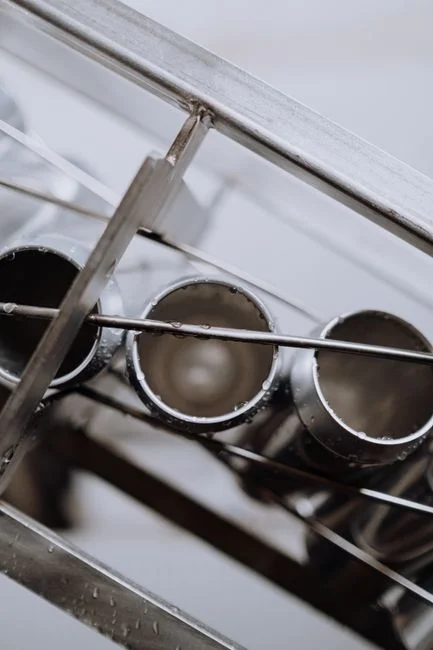
Either technology choice fails if the upstream train is wrong. Cooling tower makeup needs softening plus a multi-media pretreatment filter to bring the Silt Density Index down to RO-membrane-safe levels — typically SDI < 3 on a 15-minute test — before the high-pressure pump sees the water. Skipping this step turns a 90%-recovery design into a 70%-recovery reality within months.
Chemical conditioning is the second non-negotiable. PLC-controlled antiscalant and biocide dosing protects the high-recovery membranes from calcium carbonate, silica, and biofilm fouling. At 90%+ recovery the scaling indices are more aggressive than at 75% recovery, so the dosing skid must be sized for the worst-case feed, not the average. pH adjustment is usually required to keep the Langelier Saturation Index in the negative range across the entire reject loop.
Solids handling sits upstream of the RO feed. A lamella clarifier for makeup water pre-clarification handles TSS spikes after tower basin side-stream filtration and captures clarifier underflow before it reaches a dewatering press. Finally, blowdown equalization in a 24-hour buffer tank is essential — raw cooling blowdown TDS swings by 30–50% over a diurnal cycle, and a stable feed lets the high-recovery train hold its design setpoint without operator intervention. Engineers scoping this train will find the pretreatment logic laid out in our RO system design for high-hardness feedwater guide and in the Manchester data center blowdown treatment guide.
Policy Horizon: How the 2026 State Water-Push Changes the Equinix Calculation
ITIF (July 2026) is explicit: the regulatory environment for data center water consumption will grow more demanding. The right answer for an Equinix campus in 2026 may not be the right answer in 2030, and the equipment specification must allow for that trajectory.
Two design implications follow. First, disclosure regimes will require WUE and indirect-water accounting at the facility level, so the treatment train should be designed with metering on every reuse and discharge stream. Second, data center structures have a 20-year physical lifetime (ITIF, July 2026), which means RO and downstream brine-polishing equipment should be specified for upgradeable recovery and modular capacity rather than locked at today's recovery setpoint. The mechanical, membrane, and thermal stages should be sized so a second HRRO pass or a small mechanical vapor compressor can be added later without re-plumbing the building.
The third implication is procedural. State energy offices, public utility commissions, and water authorities are being pushed toward joint review protocols for large-load applications (ITIF, July 2026). A single-agency permit conversation no longer covers the risk surface. Engineers should expect the water permit, the electrical interconnection, and any industrial water-allocation review to be evaluated together — which puts a premium on a treatment-train design that holds up under multi-agency scrutiny. Site-specific context for a U.S. Pacific Northwest example is in our Seattle data center cooling-blowdown engineering guide.
Frequently Asked Questions
Does every Equinix campus expansion require ZLD?
No. HRRO at 90–95% recovery handles most sites unless feed TDS exceeds approximately 5,000 mg/L, a drought-contingency state mandate applies, or the campus is marketed under a net-positive water pledge that makes ZLD a PR requirement (WCP Online, January 2026; ITIF, July 2026).
What is the maximum realistic recovery for cooling-tower-blowdown RO in 2026?
90–95% with fluidized-bed crystallization and cyclic-flow operation; above 95% requires a thermal polish step and the project crosses into membrane-thermal hybrid ZLD territory (WCP Online, January 2026).
How much extra electricity does high-recovery RO use?
Less than 0.1% of a facility's annual electricity output, per ITIF (July 2026) — orders of magnitude below the thermal energy a brine evaporator would draw.
Are hyperscalers required to disclose water use in 2026?
Not federally, but state-level disclosure thresholds are dropping to facilities drawing more than 5 MW or consuming more than 50 million gallons per year, with WUE and indirect-water accounting at the facility level (MultiState/ITIF, 2026).