Why Beverage Wastewater Is a Distinct Engineering Challenge in Qatar
Beverage wastewater from bottling, dairy, and juice plants in Qatar combines five streams that behave very differently from generic industrial effluent: bottle-washer alkaline rinse, clean-in-place (CIP) return, syrup and product rejects, fermentation washwater, and boiler blowdown. When blended, these streams typically land at BOD 800–4,000 mg/L, COD 1,500–6,000 mg/L, TSS 200–1,500 mg/L, FOG 100–800 mg/L, pH swinging between 3 and 11, and dissolved sugar loads of 0.5–3% (HydropureWater field data, 2026). A single 100 m³/day carbonated soft-drink line can dump 80–120 kg of sucrose into the drain during a product changeover — enough to choke an unaerated equalization tank inside four hours.
Qatar's climate reshapes the design envelope. Ambient temperatures of 40–50°C in the May–September window accelerate biological kinetics (mesophilic IC reactors run near their 37°C optimum without heaters) but they also strip FOG into the air space, drive sulfide generation in covered sumps, and reduce oxygen transfer in open basins by roughly 15–20% versus temperate climates (per ASCE/EPA oxygen-transfer corrections). Equalization tanks in Qatari plants must therefore be covered, vented to a bio-scrubber or carbon filter, and sized at 8–12 hours of hydraulic retention to dampen the CIP pH swings that arrive in 20–30 minute slugs.
The regional vendor landscape is dominated by Gulf-based EPC and equipment houses certified to ISO 9001:2015 and structured around single-source process design, supply, installation, commissioning, and O&M contracts (per Qatar Water, Top 4 SERP). For a buyer in Doha, Lusail, or Mesaieed Industrial City, the practical question is not "do we need treatment" — it is whether the train will hit the MME permit envelope, recover enough water to justify CAPEX, and survive a 50°C summer without biological upset.
The regulatory driver is now structural. Qatar National Vision 2030 and the MME's water reuse roadmap push industrial facilities toward treated sewage effluent (TSE) substitution and, in water-stressed sites, zero-liquid-discharge (ZLD) configurations. For a beverage plant discharging 200–800 m³/day, reuse is no longer a CSR talking point — it is a permit-renewal requirement in many industrial-park zones.
Qatar EPA and MME Discharge Limits You Must Hit in 2026
The 2026 compliance envelope used across Qatari industrial parks targets BOD ≤30 mg/L, COD ≤150 mg/L, TSS ≤50 mg/L, FOG ≤10 mg/L, total nitrogen ≤20 mg/L, and pH 6–9 for sewer discharge; reuse for landscape irrigation tightens to BOD ≤10 mg/L, turbidity ≤5 NTU, and faecal coliform ≤200 CFU/100 mL. These limits drive every equipment selection downstream: a DAF alone will not deliver BOD ≤30, which is why the MBR/RO train is the default in new builds.
Two regulatory bands matter, and they are not interchangeable. Sewer discharge to MME outfalls (historically Pumping Station 13 and 30 catchments) accepts the limits above with periodic composite sampling. Onsite reuse for irrigation, cooling-tower makeup, or CIP final rinse — the path most Qatari beverage plants are now choosing — falls under the TSE quality band and demands an RO or UV-disinfection polish. Tender documents should align terminology with EN 1085:2007 wastewater vocabulary to avoid handover disputes with the engineer-of-record (per EN 1085:2007, Top 3 SERP).
| Parameter | Sewer discharge (MME outfall) | TSE reuse (irrigation / CIP) | Analytical method |
|---|---|---|---|
| BOD₅ | ≤ 30 mg/L | ≤ 10 mg/L | 5-day BOD, 20°C |
| COD | ≤ 150 mg/L | ≤ 50 mg/L | Dichromate, closed reflux |
| TSS | ≤ 50 mg/L | ≤ 5 mg/L | APHA 2540 D |
| FOG | ≤ 10 mg/L | ≤ 2 mg/L | n-Hexane partition |
| Total nitrogen | ≤ 20 mg/L | ≤ 15 mg/L | Persulfate digestion |
| Faecal coliform | — | ≤ 200 CFU/100 mL | MF, m-FC broth |
| Turbidity | — | ≤ 5 NTU | Nephelometric |
| pH | 6.0–9.0 | 6.5–8.5 | Glass electrode |
Facilities discharging within the Lusail, Al Bayt Stadium precinct, or the Pearl catchment face additional metals screening because cooling-tower blowdown blends into the same trunk. Iron, copper, and zinc limits typically drop by 30–50% in those zones; the design must therefore retain an RO reject handling plan rather than discharge concentrate to a POTW.
The Four-Stage Process Train for Beverage Plants in Qatar
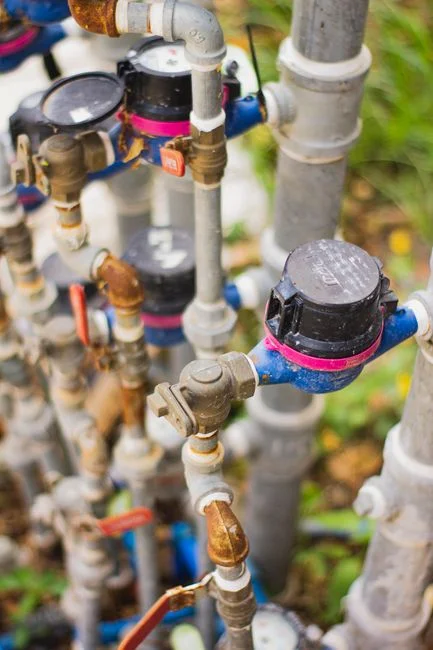
A robust treatment train for Qatari beverage plants runs in four stages: rotary screening and grit removal, DAF equalization, anaerobic IC followed by aerobic MBR, and RO polishing for CIP and boiler-feed reuse. Each stage targets a specific parameter band, and the removal efficiencies below are realistic benchmarks, not brochure numbers.
Stage 1 protects the rest of the plant. A rotary bar screen with 5–10 mm openings, followed by a grit classifier with paddle-type washer, removes fruit pulp, broken glass, cap fragments, and label fines that would otherwise blind DAF nozzles and shred MBR membranes. A typical 200 m³/day line needs 2–4 m³ of screenings disposal per week, hauled to Mesaieed landfill.
Stage 2 is the dissolved air flotation system operating as both clarifier and surge buffer. At an A/S (air-to-solids) ratio of 0.005–0.01 and hydraulic retention of 20–30 minutes, DAF achieves 85–95% TSS removal and 90–98% FOG removal on dairy and juice streams, with float sludge at 3–5% dry solids ready for dewatering on a plate and frame filter press (per DAF product data, HydropureWater 2026). The clarified stream then flows to a covered equalization tank sized at 8–12 hours retention to absorb CIP pH spikes and temperature swings.
Stage 3 is the biological core. An Internal Circulation (IC) anaerobic reactor handles the high BOD load at 8–15 kg COD/m³·day, 35–37°C, with hydraulic retention of 4–8 hours and a biogas yield of 0.35–0.45 m³/kg COD — enough methane to fire a 50–150 kW CHP unit and offset 10–18% of plant power. The IC effluent, still at COD 400–900 mg/L, then feeds an MBR membrane bioreactor system running at 8,000–12,000 mg/L MLSS (4–8× a conventional plant), delivering COD <50 mg/L and TSS <5 mg/L on a footprint roughly 60% smaller than CAS at the same loading (per MBR product specs).
Stage 4 closes the loop. An industrial RO system at 65–75% recovery polishes MBR permeate to <50 µS/cm conductivity, suitable for CIP final rinse and low-pressure boiler feed. A silt density index (SDI) below 3 is mandatory upstream, so a 5 µm cartridge filter and anti-scalant dosing skid (often an automatic chemical dosing skid) must precede the high-pressure pump. RO concentrate at 25–35% of feed flow goes to the sludge thickener; in a ZLD configuration it is sent to a brine evaporator or crystallizer.
| Stage | Equipment | Key parameter | Removal / output |
|---|---|---|---|
| 1. Screening | Rotary bar screen + grit classifier | 5–10 mm openings | Removes pulp, glass, labels |
| 2. DAF equalization | DAF + covered EQ tank | A/S 0.005–0.01, HRT 20–30 min | TSS 85–95%, FOG 90–98% |
| 3a. Anaerobic | IC reactor | OLR 8–15 kg COD/m³·d, 35–37°C | COD removal 75–85%, biogas 0.35–0.45 m³/kg COD |
| 3b. Aerobic | MBR | MLSS 8,000–12,000 mg/L | Effluent COD <50, TSS <5 mg/L |
| 4. Polishing | RO + dosing skid | Recovery 65–75%, SDI <3 | Permeate <50 µS/cm for CIP/boiler |
Across the train, total COD removal reaches 98–99%, and BOD₅ typically falls below 5 mg/L — well inside both the sewer envelope and the TSE reuse band.
MBR vs SBR vs Conventional Activated Sludge for Beverage Duty
For beverage duty in Qatar, MBR wins on footprint, effluent quality, and FOG tolerance; SBR wins on CAPEX and seasonal flexibility; CAS wins on simplicity and O&M familiarity — and loses on everything else. The choice is driven by whether the buyer needs TSE-grade reuse water or only sewer compliance.
MBR's strength is its absolute effluent quality. Operating at 8,000–12,000 mg/L MLSS — versus 2,000–3,500 mg/L for CAS — it absorbs organic and FOG slugs that would crash a clarifier. Membrane cassettes on a 200 m³/day plant occupy roughly 25–35 m² of floor area, compared to 90–120 m² for a CAS train of equivalent capacity. The tradeoff is membrane replacement every 5–7 years, which adds USD 0.04–0.08 per m³ to lifecycle cost (HydropureWater 2026).
SBR (sequencing batch reactor) suits seasonal beverage producers — Ramadan juice campaigns, peak summer soft-drink runs — because the batch cycles can be paused, extended, or shortened. CAPEX is lower at USD 180–280 per m³/day installed, but a 4–6 hour cycle time caps throughput, and a 200 m³/day plant needs at least two basins in parallel to ride out a CIP surge. Effluent TSS lands at 10–20 mg/L without a polishing step, which meets sewer limits but not TSE reuse without an RO follow-on.
CAS remains the lowest-CAPEX option and the most familiar to Qatari plant operators, but it rarely hits BOD ≤30 mg/L without tertiary polishing; it struggles with FOG slugs that float the clarifier, and it needs 2–3× the footprint of an MBR. For a new build in 2026, CAS is the option to choose only when the buyer is willing to attach a sand filter or cloth media filter downstream and accept the OPEX penalty.
| Criterion | MBR | SBR | CAS |
|---|---|---|---|
| Footprint (200 m³/day) | 25–35 m² | 60–80 m² | 90–120 m² |
| Effluent COD | <50 mg/L | 60–90 mg/L | 80–120 mg/L |
| Effluent TSS | <5 mg/L | 10–20 mg/L | 15–30 mg/L |
| FOG tolerance | High (8,000–12,000 MLSS) | Moderate | Low |
| CAPEX (USD/m³/day) | 450–700 | 180–280 | 120–200 |
| Membrane replacement | Every 5–7 years | None | None |
| Reuse-ready? | Yes, direct to RO | Polishing required | Polishing required |
For deeper specification trade-offs, the data-driven MBR module comparison walks through cassette geometry, aeration intensity, and clean-in-place chemical load.
CAPEX, OPEX, and ROI for a 100–500 m³/day Beverage Plant in 2026
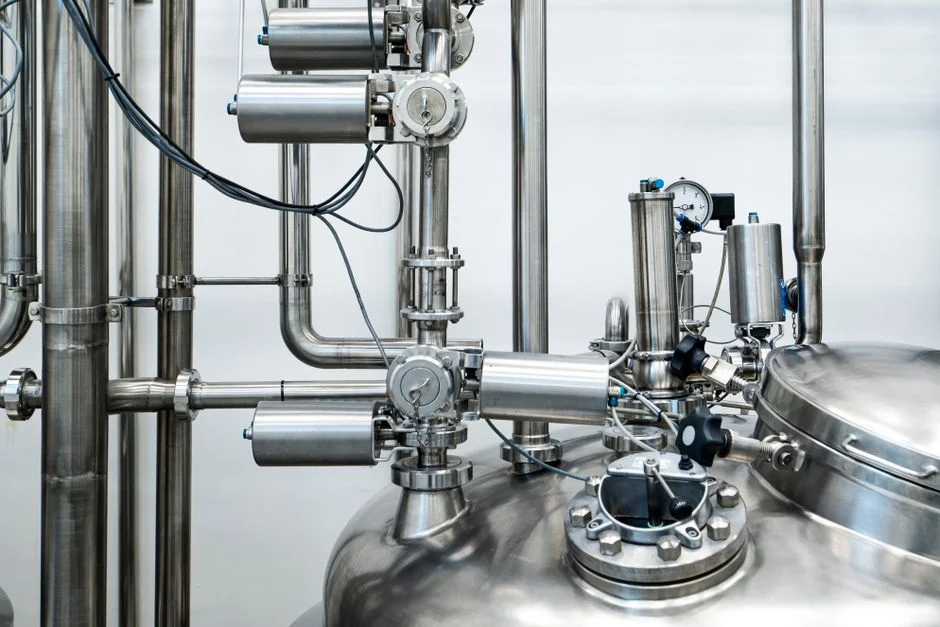
Qatar 2026 turnkey CAPEX for a beverage wastewater plant with DAF + IC + MBR + RO, FRP/SS316L skids, civil works, and commissioning lands at USD 280,000–450,000 for 100 m³/day, USD 700,000–1,100,000 for 300 m³/day, and USD 1,200,000–1,800,000 for 500 m³/day (HydropureWater 2026 market reference). The wide bands reflect civil-work variability, RO train size, and whether the IC reactor is sized for the full 5-day BOD peak or only the daily average.
OPEX sits at USD 0.18–0.45 per m³ treated, dominated by energy at 0.45–0.75 kWh/m³ for the MBR and RO trains, anti-scalant and CIP chemicals, membrane replacement amortized over 5–7 years, and sludge hauling to Mesaieed at roughly QAR 80–120 per wet ton for cake above 22% dryness. Labor is comparatively low in Qatar because the SCADA-driven train runs with 1–2 operators per shift.
ROI is driven by water reuse. RO permeate displacing municipal potable at QAR 9–12 per m³ (Ashghal 2026 industrial tariff band) recovers CAPEX in 3.5–5.5 years for a 300 m³/day plant running at 80% utilization. Biogas from the IC reactor, valorized through a 50–150 kW CHP unit, offsets an additional 10–18% of plant power, shortening payback by another 4–7 months. For plants that cannot secure a municipal-water tariff discount, the math is tighter and a ZLD evaporator may not pencil out at current energy prices.
| Plant size | CAPEX (USD) | OPEX (USD/m³) | Payback (years) |
|---|---|---|---|
| 100 m³/day | 280,000–450,000 | 0.20–0.45 | 4.0–5.5 |
| 300 m³/day | 700,000–1,100,000 | 0.18–0.40 | 3.5–5.0 |
| 500 m³/day | 1,200,000–1,800,000 | 0.18–0.35 | 3.5–5.0 |
For buyers in the juice segment specifically, the fruit juice wastewater treatment plant price reference gives a process-and-cost breakdown aligned to high-sugar, low-FOG influent. Dairy and winery streams are heavier on FOG and benefit from the winery wastewater treatment system design notes, which share 70–80% of the equipment train with a dairy plant.
Selecting a Qatar-Ready Equipment Supplier
A shortlist of Qatari-ready suppliers can be filtered to four questions: ISO 9001:2015 certification and documented Gulf-region references; documented FAT and SAT procedures with bilingual Arabic/English O&M manuals accepted by the MME; material compatibility — SS316L or food-grade FRP for all wetted parts to handle 40–50°C ambient plus TDS-laden coastal supply; and a regional spares hub in Jeddah, Dubai, or Doha to keep 8–12 week China-direct shipping from derailing a campaign season. The credibility markers that matter most — single-source EPC scope, in-house process engineering, and 24/7 service — are the same ones Qatari operators already use to evaluate local water-treatment contractors (per Qatar Water, Top 4 SERP).
Demand FAT in front of an engineer-of-record, SAT on a slip-stream of real effluent (not clean water), and a remote-monitoring gateway that pushes SCADA tags to the buyer's existing dashboard. Confirm the dosing skid — typically an automatic chemical dosing skid sized for CIP, antiscalant, and pH correction — is included in the supply scope, and that the sludge line terminates at a plate and frame filter press with a documented cake-solids target above 22%. For projects that import technology from adjacent beverage categories, the coffee processing wastewater treatment cost guide provides a useful comparator on high-strength, high-temperature influent, while the UAE phosphorus discharge limits reference helps benchmark nutrient-removal expectations if the plant is considering discharge to a shared industrial-park sewer.
Frequently Asked Questions
What are the Qatar EPA / MME discharge limits for beverage wastewater in 2026? The standard envelope is BOD ≤30 mg/L, COD ≤150 mg/L, TSS ≤50 mg/L, FOG ≤10 mg/L, total nitrogen ≤20 mg/L, and pH 6–9 for sewer discharge. Onsite reuse for irrigation or CIP tightens to BOD ≤10 mg/L, turbidity ≤5 NTU, and faecal coliform ≤200 CFU/100 mL.
Which biological treatment is best for a bottling or dairy plant — MBR, SBR, or CAS? MBR delivers the best effluent quality and the smallest footprint, and is the only option that feeds RO directly. SBR is the lowest-CAPEX choice for seasonal producers. CAS is familiar but rarely meets reuse standards without tertiary polishing.
Is water reuse economically viable at 200 m³/day? Yes. At municipal potable tariffs of QAR 9–12 per m³, RO permeate from a 200–500 m³/day plant recovers CAPEX in 3.5–5.5 years and offsets 30–45% of municipal demand for CIP and boiler feed.
What is the typical CAPEX range for a 300 m³/day beverage wastewater plant in Qatar? Turnkey CAPEX in 2026 sits between USD 700,000 and USD 1,100,000 for a DAF + IC + MBR + RO train, including civil works and commissioning.
How do I verify a supplier is qualified for the Qatari market? Require ISO 9001:2015, a list of Gulf-region references, FAT/SAT procedures, bilingual O&M manuals, SS316L or FRP wetted parts, and a regional spares hub. These criteria match the single-source EPC delivery model used by established GCC water-treatment contractors.