Where a Decanter Centrifuge Fits in Beverage Wastewater Treatment
A decanter centrifuge for beverage wastewater can remove process solids continuously when the plant needs a clarified liquid stream, a dewatered sludge cake, or a separated process fraction. The feed enters a horizontal cylindrical bowl; centrifugal force moves denser solids toward the bowl wall, and a screw conveyor transports them toward the conical discharge. The clarified liquid leaves through a separate outlet. In beverage plants, candidate streams include fruit and vegetable solids, yeast and other process biomass, cleaning residues, and packaging fragments that have entered the wastewater system. The correct application is not determined by the product name alone. It depends on the feed characteristics, the required output, downstream reuse or disposal options, and the risk of contamination or equipment damage.
Use the equipment in one of three ways. For wastewater solids removal, the objective is a dischargeable or otherwise manageable cake. For sludge thickening and dewatering, the objective is to reduce the water content of biological or process sludge before treatment or disposal. For process-solids recovery, the priority may be recovering fruit solids, yeast, oils, or other material rather than simply producing a waste cake.
The selection sequence is straightforward: characterize the stream, identify the required products, screen out unsuitable characteristics, define the separation duty, choose the configuration, and pilot-test the complete feed. A decanter should not be selected for dilute wastewater merely because the equipment is capable of separating solids; hydraulic loading, particle characteristics, and required liquid quality must match the duty. Where solids recovery is the objective, an industrial DAF system for beverage wastewater pretreatment may also need evaluation before the centrifuge.
A recovered liquid fraction is not automatically suitable for reuse or discharge. Its acceptance criteria depend on the destination and must be confirmed with representative testing. The same rule applies to recovered solids: their value depends on purity, contamination history, destination, and handling requirements.
One-Phase or Three-Phase Decanter for Beverage Wastewater
One-phase decanter operation separates one liquid phase from one solid phase, producing clarified liquid and dewatered solids through separate discharge routes. Three-phase operation separates two liquid fractions and one solid fraction. Three-phase equipment is justified only when both liquid fractions have defined reuse, treatment, or commercial destinations; otherwise, added complexity and contamination risk may not create a corresponding process benefit.
Alfa Laval states that its decanter platform supports three-phase separation. Internal baffles direct each phase into its designated flow path, reducing the risk of cross-contamination between separated fractions. Alfa Laval also describes the clarified phase, or multiple phases in three-phase service, as leaving through the dam plates or PowerTubes at the opposite end of the bowl. This is a manufacturer-described configuration, not a guarantee that a beverage application will achieve the required phase purity.
| Application | Configuration | Required feed information | Output decision |
|---|---|---|---|
| Beverage-wastewater solids removal | One phase | Flow profile, suspended solids, particle distribution, oil and grease where relevant, pH, temperature, COD and BOD | Define required centrate quality, solids capture and cake destination |
| Thickening or sludge dewatering | One phase | Sludge solids concentration, sludge properties, conditioning requirements, operating hours and required dry-solids content | Define whether the cake is to be treated, composted, spread or disposed of |
| Process-solids recovery | One or three phase, depending on the streams | Representative solids fraction, particle characteristics, purity requirements and contamination controls | Define whether the recovered solid has a product, feed, or waste destination |
| Liquid-product recovery | Three phase where two liquid fractions must be separated | Both liquid-phase compositions, phase stability, oil and water characteristics, and destination-specific quality limits | Confirm reuse, treatment, or commercial acceptance for each liquid stream |
For a fruit-pulp or yeast-recovery trial, the feed analysis must include the solids fraction, because a composite wastewater sample can conceal the concentration and particle characteristics that determine separation performance. The pilot should also establish whether the recovered liquid is a process stream, a wash water stream, or a wastewater fraction. A nominal three-phase outlet does not establish that any fraction meets reuse or discharge requirements.
Feed Characterization and Pretreatment Requirements
A meaningful decanter selection requires a representative feed analysis and a defined flow profile. For beverage wastewater, request total and suspended solids, suspended-solids distribution, settleable solids, particle characteristics, oil and grease where relevant, pH, temperature, COD, and BOD. Add maximum and average flow, diurnal loading changes, operating hours, and the expected production and cleaning cycle. A finished-product sample, a composite effluent sample, or a generic sludge analysis is not an adequate substitute for a representative feed and solids fraction.
First determine whether the stream is dilute wastewater, high-solids sludge, or a concentrated fruit or yeast slurry. These duties impose different hydraulic and solids-loading conditions, so a general equipment capacity cannot be transferred between them. If the objective is solids recovery, include solids concentration and purity in the design basis; if it is wastewater dewatering, include sludge conditioning and cake destination.
Conditioning is not automatically required. ANDRITZ states that polymer type and dosage affect dewatering and thickening performance, while its decanter can still achieve a high solid/liquid separation rate in many applications without slurry pre-conditioning. Therefore, specify chemical dosing only after representative testing establishes a need. The plant should also evaluate whether screening is required to remove packaging debris, grit, fibrous material, and oversized particles before the bowl. A rotary mechanical bar screen for protective solids removal and an automatic chemical dosing system for controlled conditioning should be evaluated as separate process decisions, not assumed accessories.
| Information request | Why it affects the design | Buyer action |
|---|---|---|
| Representative composite and solids-fraction analyses | Concentration and particle characteristics determine whether the feed is suitable for the selected separation duty | Obtain samples across production, washdown, product changeover and cleaning conditions |
| Flow and solids-loading profile | Maximum instantaneous loading determines hydraulic and mechanical demand | Provide average, peak, minimum and future-expansion conditions |
| Oil, grease, pH and temperature | These affect phase behavior, materials, cleaning and chemical compatibility | Confirm whether streams can be combined before testing |
| Packaging debris, grit and fibrous material | Oversized or abrasive material can damage the feed zone and bowl | Define screening, exclusion and inspection requirements |
| Cleaning chemistry and contact history | Detergent, caustic and acidic streams can affect material selection and cleaning procedures | Provide concentrations, exposure duration and changeover sequence |
Material selection must reflect the actual cleaning and process exposure. Alfa Laval states that it uses stainless steel for parts contacting the separation process and abrasion-resistant materials in wear-prone areas. That construction information should be checked against the plant’s chemistry, temperature, and sanitary requirements rather than accepted as a generic specification.
How to Size and Specify the Centrifuge
The RFQ should define the design basis before it asks for a model. Mandatory inputs include maximum and average feed flow, hydraulic loading, solids loading, feed temperature, particle and sludge characteristics, solids-capture target, cake dryness or moisture target, centrate quality, operating hours, cleaning requirements and future expansion. A supplier should state the guaranteed feed range, selected bowl geometry, drive arrangement, solids-discharge method, materials, instrumentation and operating envelope. A model name alone does not establish that the machine is appropriate for the beverage duty.
Bowl speed, screw speed, differential speed and pond depth are the principal operating variables a buyer should control. Alfa Laval describes automatic differential-speed adjustment using a variable-frequency drive and torque control: the system monitors conveyor torque and changes screw speed as solids loading changes, helping protect against overload while maintaining discharge consistency. Pond depth changes the liquid volume within the bowl, affecting separation, cleanability and start-up behavior. These controls should be specified as functions with defined instrumentation, not as unexplained features.
ANDRITZ publishes a broad decanter portfolio range of 0.1 to 500 m³/h, but states that capacity depends on the application and operating conditions. This is portfolio information, not a beverage-process sizing recommendation. The 2024 Elsevier study modeled decanters at 15–20-25 m³/h under different differential conditions, which illustrates why energy and performance work should use an explicit operating profile rather than a single nominal flow. The 2024 study was an energy-analysis model, not a guarantee for a beverage plant.
| RFQ item | Minimum supplier response | Acceptance basis |
|---|---|---|
| Design basis | Stated feed range, hydraulic and solids loading, stream composition and operating hours | Buyer-approved basis used for sizing |
| Separation performance | Solids capture, recovered-solids moisture or dryness, and clarified-liquid quality | Representative-feed test with agreed analytical methods |
| Controls | Bowl speed, differential speed, torque monitoring, feed rate, pond depth and discharge-consistency control | Function demonstrated during steady operation and load changes |
| Energy | Power at the agreed operating points, auxiliary loads and measurement boundary | Measured during the pilot or commissioning campaign |
| Materials and wear | Contact materials, wear-zone identification, replaceable parts and inspection access | Approved against feed chemistry and abrasive risk |
| Scope | Foundation, utilities, controls, installation, training, documentation and commissioning | Explicit exclusions and commercial responsibility |
Numerical guarantees should be set only after the design basis is agreed. Specify representative-feed testing, sample locations, steady-state criteria, analytical methods, energy measurement, and deviation handling. If a result is outside the agreed range, the acceptance method should state whether retesting, adjustment, or a documented deviation is permitted.
Controls, Maintenance and Continuous Operation
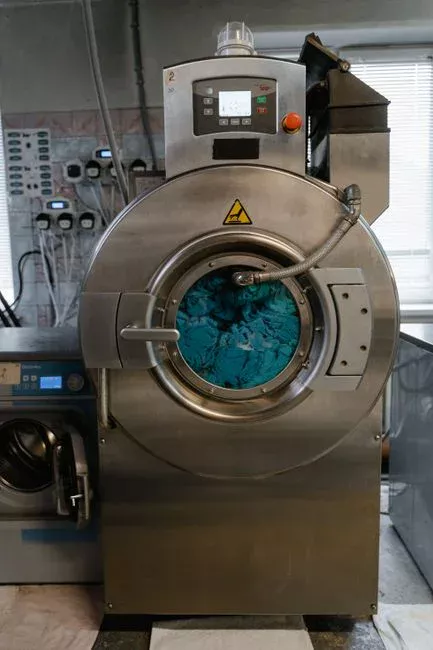
Continuous beverage operation requires automatic control of differential speed, torque, feed rate, pond depth and discharge consistency because production changes and clean-in-place cycles can alter the solids load. The control strategy should specify the alarm, slowdown, hold and shutdown responses, as well as the conditions that require operator intervention. Alfa Laval describes a VFD and torque-control combination that adjusts screw differential speed as loading changes, while ANDRITZ identifies adjustable bowl and scroll speeds, adjustable pond depth and automatic control as features of its decanter platform.
Wear management belongs in the operating plan, not only in the purchase specification. Alfa Laval identifies the feed zone, solids-discharge zone, bowl and scroll as wear-prone areas and describes abrasion-resistant materials and replaceable wear-protection solutions. ANDRITZ likewise identifies wear-resistant materials and its TurboWISETM feed-chamber liners as replaceable on site. The buyer should ask which wear parts are consumable, which are application-specific, and how their condition will be inspected.
The maintenance schedule should cover bearings, drive, lubrication, liners, wear parts, feed-zone condition, vibration monitoring, cleaning and inspection access. The supplier should provide a written response plan for overload, excessive vibration, high torque, unusual centrate quality and feed-composition changes. Because a beverage plant may have product changeovers and chemical-cleaning exposure, the plan should also address shutdowns, standstill corrosion, chemical exposure, restart conditions and the distinction between product-contact cleaning and maintenance cleaning.
These controls reduce operating risk only if the plant has a defined response to abnormal conditions. Ask what data is recorded, which trends indicate deterioration, and who is authorized to change settings. A VFD or torque alarm is not a substitute for an operating procedure.
Energy Use and Total-Cost Evaluation
Energy comparison must use the same feed, operating profile and measurement boundary. The 2024 Elsevier paper specifically evaluated a decanter model equipped with braking-energy recovery to identify operating conditions for energy consumption and product quality. It found that bowl and screw drives are commonly operated with VFDs and that the back drive can recover braking energy. That study supports asking for an operating-profile model, but it does not establish a universal energy figure for a beverage application.
ANDRITZ reports several feature-specific energy claims. Its High Hydraulic Pressure design can reduce energy consumption by up to 15% by reducing the clarified-liquid discharge radius and recovering fluid kinetic energy. TurboJet weir plates can reduce total power consumption by up to 30% as a standalone feature. The direct-drive system is reported to reduce total power consumption by another 5%. These are ANDRITZ vendor-reported figures for particular features, not guaranteed savings at a beverage plant. They should be presented in a quotation with the test conditions, baseline, equipment configuration and auxiliary loads identified.
| Cost or benefit item | Information to request | Decision treatment |
|---|---|---|
| Electrical energy | Measured or modeled power at agreed flow, solids loading and control settings | Compare the same measurement boundary and operating points |
| Recovered water or product value | Recovery rate, quality, destination, market and handling requirements | Do not assign monetary value until the buyer defines the product and destination |
| Chemical conditioning | Polymer type, dosage, chemical cost and effect on performance | Include only where pilot results show a need |
| Wear and maintenance | Wear-part replacement, inspection frequency, labor and spare-part lead time | Include in total operating cost |
| Disposal or reuse | Residue quantity, moisture, transport and treatment requirements | Price the final destination, not only the machine output |
Ask each supplier to state power at the agreed design flow and solids loading, drive efficiency, auxiliary loads, maintenance assumptions and the energy-measurement boundary. A recovered-material benefit can change project economics, but no monetary value should be assumed until the product, market, recovery rate and treatment or handling cost are defined. Vendor energy claims should remain labeled as feature-specific claims rather than site guarantees.
Pilot Testing, Commissioning and Performance Acceptance
A beverage wastewater pilot test should cover the expected feed range, start-up, steady operation, varying solids loading and recovery after cleaning or production changes. The test must use representative feed; a clean water run or a short sample of unusually dilute wastewater cannot establish performance for the plant’s actual duty.
Build the test around mass balance, solids-capture performance, recovered-solids moisture or dryness, clarified-liquid quality, energy consumption, equipment stability and wear observations. The written method should define sampling locations, sample timing, analytical methods, calculation boundaries, steady-state criteria and the treatment of out-of-range results. This is particularly important for recovered liquid fractions, because a phase collected at the outlet may still contain suspended solids, oil, color, taste compounds, cleaning residues, or other constituents relevant to its destination.
Verify the actual control response. Record feed rate, bowl speed, scroll differential, pond depth, torque response, discharge consistency and any braking-energy recovery function. Then change solids loading within the agreed envelope and document how quickly the machine returns to a stable condition. A test that proves only one steady operating point is incomplete for a beverage plant with production and cleaning cycles.
| Stage | Required deliverable | Acceptance focus |
|---|---|---|
| Pilot design | Feed characterization, operating envelope, sampling plan and calculation method | Representative feed and agreed destination-specific criteria |
| Pilot operation | Steady and varying-load records, energy measurements and wear observations | Solids capture, cake condition, centrate quality and control response |
| Commissioning | Installed-machine test, calibration records and operator training | Repeatability under site conditions and correct control response |
| Acceptance | Signed results, deviations, corrective actions and as-built documentation | Agreed criteria, measured methods and responsibility for unresolved deviations |
Commissioning should include supplier training, spare-parts identification, maintenance intervals, electrical and control documentation, and a site-specific risk review for product-contact and chemical-cleaning exposure. A solids-balance method for screw-press wastewater dewatering or a process-solids wastewater dewatering design may help frame a comparative solids balance, but the decanter acceptance method must remain specific to the selected beverage feed and products.
Frequently Asked Questions
How much does a decanter centrifuge for beverage wastewater cost?
The supplied research does not provide a defensible equipment price for this application. A quotation requires the feed flow and solids-loading profile, representative feed analysis, one- or three-phase duty, construction and materials, controls, wear protection, testing, installation scope and site utilities. Request the quote with the design basis and exclusions identified. Do not compare a machine-only price with an installed operating-cost estimate from another supplier.
How do I choose a supplier for a food and beverage wastewater centrifuge?
Check application-specific testing, sanitary material information, controls architecture, wear support, service access, documentation and acceptance-test capability. Alfa Laval states that it uses stainless steel for parts contacting the separation process and abrasion-resistant materials in wear-prone areas; ANDRITZ describes wear-resistant materials and application-specific settings. Those claims should be tested against the plant’s actual chemistry, product-contact requirements and cleaning regime, rather than accepted as a complete supplier qualification.
What feed data do I need to size a beverage wastewater decanter?
Provide average and maximum flow, hydraulic and solids loading, diurnal variation, operating hours, temperature, pH, COD, BOD, total and suspended solids, particle characteristics, settleable solids, oil and grease where relevant, and a representative solids fraction. Also define the required solids capture, cake dryness, centrate quality and destination of each output stream. Without these inputs, the supplier cannot establish a defensible design basis.
Can a decanter centrifuge recover fruit solids or yeast for reuse?
Yes, a beverage wastewater pilot test may evaluate fruit solids or yeast recovery, and three-phase separation may be relevant where two liquid fractions must also be separated. A recovered fraction is not automatically reusable. Representative testing must confirm purity, contamination, moisture or other quality attributes against the specific reuse, treatment or commercial destination. A three-phase outlet is not evidence of product acceptance.
How do I reduce the risk of poor performance at my plant?
Require a representative pilot test before final selection, define acceptance criteria in writing, and review the controls response under changing solids loading. Include wear-part identification, maintenance intervals, cleaning procedures, alarm and shutdown logic, and a contingency operating plan for abnormal feed. If the results do not meet the agreed criteria, the contract should state how adjustment, retesting, or a documented deviation will be handled.
Related Equipment
- plate and frame sludge dewatering alternative — specifications, capacity range, and technical data