What a Decanter Centrifuge Does in Dairy Wastewater Treatment
A decanter centrifuge for dairy wastewater is a continuous solid-liquid separator used to dewater biosolids before disposal or further treatment. Denser particles migrate toward the rotating bowl wall, a screw conveys them toward the discharge end, and separated liquid overflows for collection. Selection depends on feed solids, flow variability, required cake dryness, abrasion, cleaning, and disposal targets. A Hollandia Dairy case reported reducing 25,000 lb/day of biosolids to 1,200 lb/day of dry solids, but the result included an extruder and dryer—not the centrifuge alone.
Within a dairy treatment train, the centrifuge normally receives biological sludge or collected solids after upstream equalization and biological treatment. It may follow a DAF system for industrial wastewater pretreatment where fat, oil, and floatables removal is required before concentration and dewatering. The clarified liquid returns to the relevant treatment or reuse stream, while dewatered cake leaves for final treatment, disposal, or an additional solids-conditioning step.
Alfa Laval states that centrifugal force in its decanters can be up to 4,000 times greater than gravitational force, describing the operating principle rather than a site-specific performance guarantee. During separation, denser particles move outward toward the bowl wall, while the less-dense liquid forms an inner layer. The screw rotates at a different speed from the bowl and transports solids along the conical beach to discharge (Alfa Laval, “Decanter centrifuge for solid-liquid separation”).
The equipment does not replace biological treatment, equalization, DAF, or required disinfection. It performs solid-liquid separation and thickening. A three-phase arrangement can also separate multiple liquid phases, but a dairy project should define whether the objective is simply clarified liquid and cake or a recoverable liquid phase. If cake pressing is the required final step, compare that duty with a plate and frame filter press for sludge dewatering rather than assuming additional cake conditioning is unnecessary.
Dairy Biosolids Present Variable Separation Duties
Dairy biosolids require site testing because production schedules, product changeovers, cleaning cycles, and biological treatment can change the separation duty without producing a stable, catalog-sized feed.
Request representative data covering feed flow, suspended-solids concentration, solids capture, particle characteristics, fat and oil, fibrous material, temperature, pH, and variability across production and cleaning cycles. These inputs affect the solids loading presented to the bowl, expected clarified-liquid quality, cake structure, torque demand, and cleanout requirements. A chemical dosing system may be relevant to upstream conditioning, but the required dose and chemistry must be established from the actual feed rather than assumed.
No dairy feed-flow, concentration, or cake-dryness range appears in the supplied research. A model therefore should not be selected from a generic flow chart. Obtain representative samples and trial the proposed feed at expected operating conditions. Fat and solids can affect the solids stream, while fibrous material can complicate cake discharge. Abrasion and sanitary risks must be checked against wetted materials, wear protection, drainage, cleanability, and the food-processing environment.
| Pilot-test input or output | What the buyer should obtain | Decision use |
|---|---|---|
| Feed characterization | Representative flow, solids concentration, particle, fat, fiber, temperature, and pH data across operating states | Establishes the actual design duty and identifies conditioning needs |
| Separated liquid | Suspended-solids result and relevant water-quality observations | Checks whether the clarified stream is fit for its intended route |
| Cake | Agreed dry-matter or moisture measure and discharge behavior | Tests whether further conditioning or disposal handling is required |
| Machinery response | Torque behavior, operating stability, energy consumption, and behavior under variable feed | Challenges the proposed control and sizing basis |
Use the pilot to establish whether the selected configuration maintains stable discharge, acceptable clarified-liquid quality, and predictable torque over the expected feed variation. A successful test should cover normal and stressed duties rather than demonstrate only a single laboratory sample.
How Centrifugal Separation and Automatic Controls Work
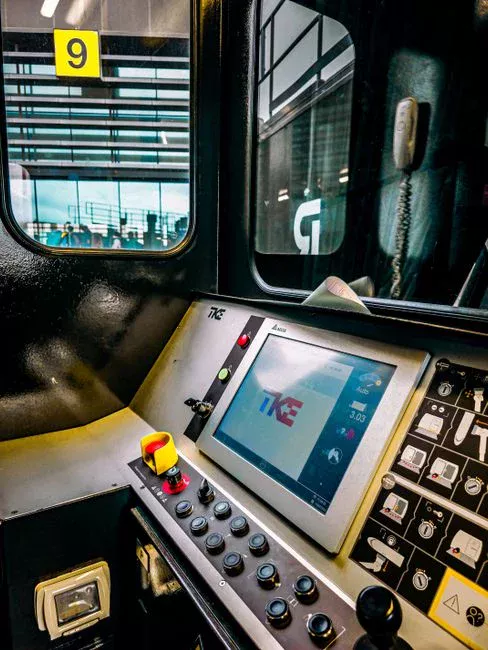
Pond depth and differential-speed control directly affect separation behavior, and the 2024 academic study modeled braking recovery in VFD-driven decanter systems rather than establishing universal dairy savings.
Feed enters the rotating bowl and separates into an inner liquid layer and an outer solids layer. The screw conveyor moves solids from the bowl into the beach, where further liquid removal occurs. Solids are discharged at the cone end. Clarified liquid—or multiple phases in a three-phase design—is collected through dam plates or adjustable outlets. Internal baffles direct each stream into its designated collection path (Alfa Laval, “Decanter centrifuge for solid-liquid separation”).
Pond depth is the liquid depth within the bowl. Adjusting it changes the volume available for clarification, separation conditions, cleanability, and start-up requirements. Alfa Laval describes pond-depth adjustment as a way to establish process-specific conditions for separation, cleanability, and easier start-up.
Differential speed is the difference between bowl and screw rotational speeds. A variable-frequency drive can change the screw differential as solids loading changes. Alfa Laval’s torque-control concept monitors conveyor torque, raises or lowers differential speed to prevent overload, maintains consistent cake dryness, and reduces wear and energy use at lighter loads.
The 2024 study in Energy Conversion and Management X modeled decanters at 15, 20, and 25 m³/h under various differential settings. Those are research-model capacities, not dairy equipment-selection limits. The same study reports that modern bowl and back-drive screw systems are often VFD-driven and that the back-drive can recover energy during braking.
| Control element | Function | Procurement evidence to request |
|---|---|---|
| Pond-depth adjustment | Sets liquid depth in the rotating bowl | Adjustment method, operating limits, and effect on cleanability and start-up |
| Differential-speed control | Changes the speed difference between bowl and screw | VFD arrangement, control response, and operating strategy for changing feed |
| Torque control | Adjusts differential speed to protect the conveyor from overload | Control logic, alarm strategy, data logging, and expected cake consistency |
| Braking-energy recovery | Recovers energy when the back-drive decelerates | Applicability to the proposed duty, measurement method, and any guaranteed value |
Specify how controls interact. A supplier should explain whether pond depth is fixed, manually adjusted, or automatically controlled; how torque changes trigger speed changes; and which operating data are retained for troubleshooting.
How to Size a Decanter Centrifuge for a Dairy Plant
A defensible decanter selection uses peak duty, peak solids loading, and the required cake and clarified-liquid outcomes—not average feed flow alone.
- Establish maximum and average feed flow, then identify the solids conditions occurring at peak and minimum load.
- Define the required clarified-liquid quality, solids-recovery target, and cake moisture or dry-solids target separately.
- Build a duty case for normal production, peak production, start-up, shutdown, and cleaning conditions.
- Check feed-pump capacity, downstream cake handling, discharge system, utilities, and controls against the full selected duty.
- Evaluate bowl and conveyor configuration, torque margin, VFD control, pond-depth adjustment, wear protection, and upstream conditioning against test data.
- Require the supplier to state the design feed basis, expected outputs, installed power, and every engineering assumption.
Hollandia Dairy’s procurement provides a useful process precedent. According to Alfa Laval’s company account, the dairy investigated dewatering methods, observed operating Alfa Laval decanters at municipal plants, and ran a sample test before selecting an ALDEC 20. That evidence supports testing candidate equipment against the plant’s feed; it does not establish that the same model or result applies to another dairy.
| Sizing document | Required content | Buyer check |
|---|---|---|
| Design feed basis | Flow, solids concentration, variability, particle and feed properties | Does it represent peak and difficult operating states? |
| Separation targets | Clarified-liquid result, recovered solids, and cake dry matter or moisture | Are acceptance limits measurable and defined? |
| Machine and drive | Bowl, conveyor, torque capacity, VFD scope, and pond-depth arrangement | Is there documented margin for the tested duty? |
| Installed scope | Power, pumping, controls, instrumentation, piping, foundations, guarding, and service | Are responsibilities and exclusions explicit? |
A request for a model recommendation without the design feed basis, expected separation results, installed power, and assumptions is not an adequate technical offer. Require the supplier to identify how the selected configuration handles the plant’s variable feed and peak solids duty.
Dairy Case Evidence: Hollandia Biosolids Reduction
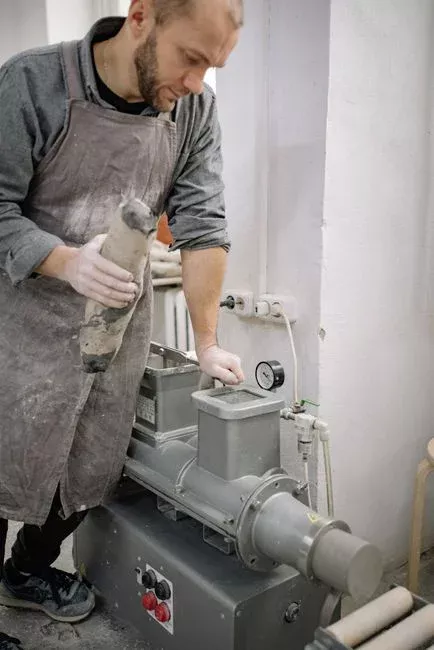
Hollandia Dairy’s published result demonstrates a combined biosolids-reduction system, but the source does not isolate the ALDEC 20 centrifuge’s standalone cake output.
In early 2018, the southern California dairy was investigating how to avoid hauling approximately 25,000 lb/day of biosolids to a specialized handling facility, according to Alfa Laval’s company case study, “Reducing biosolids disposal costs with a decanter centrifuge.” The plant researched dewatering methods and visited municipal wastewater facilities where Alfa Laval decanters were operating.
The published selection rationale was the expectation of drier cake than other technologies and rapid adjustment through variable-speed drives as process conditions changed. After consulting Alfa Laval and running a sample test, Hollandia selected the proposed ALDEC 20. The test and site observations are the defensible procurement lessons; the claimed outcome still belongs to the specific application.
According to Alfa Laval, combining the ALDEC 20 with an extruder and dryer installed by Hollandia reduced the cited 25,000 lb/day of biosolids to 1,200 lb/day of dry solids. The source does not establish what cake dry solids the centrifuge produced by itself, how much reduction came from the extruder, and how much came from the dryer. It would therefore be incorrect to attribute the full reduction to the decanter.
The skid boundary also matters. Alfa Laval states that the customer supplied flow piping, power, and a concrete pad, while pumps, control panels, and associated equipment were included in the package. This prevents a misleading comparison against a quotation that includes only the centrifuge.
Service scope was part of the package described in the case. Field technicians supported start-up, remote monitoring and troubleshooting were available through the connectivity service, and plant personnel collaborated on preventive-maintenance planning. For a new dairy procurement, request equivalent documentation for commissioning, monitoring, and wear-part support rather than treating those items as optional additions.
Compare Decanter Centrifuge, Screw Press, and Filter Press
Continuous decanters and filter presses should be compared by duty and operating model because the supplied research contains no common trial establishing comparative cost, energy, or cake dryness.
A decanter offers continuous solid-liquid separation with automated adjustment of pond depth and differential speed. A screw press is another continuous option, and the plant’s screw press wastewater design methodology provides a useful design framework for feed characterization, capacity, and operating assessment.
The available plate and frame filter press for sludge dewatering supports manual, hydraulic, or fully automatic PLC operation, with filtration areas specified from 1 m² to 500 m². These are equipment specifications, not a comparison of whole-system economics against a decanter.
| Decision factor | Decanter centrifuge | Plate-and-frame filter press |
|---|---|---|
| Operating pattern | Continuous solid-liquid separation | Batch filtration and cake release |
| Control response | Pond-depth adjustment, VFD differential speed, and torque control | Manual, hydraulic, or fully automatic PLC operation |
| Best-fit question | Does continuous duty and variable-feed control justify the equipment and maintenance scope? | Does the required filtration area and cycle time fit the plant’s labor and cake-handling model? |
| Evidence still required | Site pilot results, utilities, civil work, and modeled or measured operating cost | Cycle time, labor, cloth life, cake handling, and total installed scope |
Use application conditions rather than an unsupported ranking. A continuous decanter may fit a plant requiring continuous throughput, torque-based response to solids variation, and automated monitoring. A filter press may fit lower-throughput or batch-oriented service if its area, cycle time, labor requirements, and cake handling meet the duty. The final decision should identify the recommended technology, pilot criteria, utilities, civil requirements, control scope, maintenance strategy, and rejected alternatives.
Build the Business Case and Plan Commissioning
The business case should convert measured operating performance into transport avoidance and disposal-cost evidence while keeping the Hollandia result separate from the centrifuge-only case.
Build the financial model around current hauling and disposal expenditure, the proposed change in cake moisture, clarified-water quality, energy, maintenance, and downtime. Obtain current site data for each term; the supplied research does not support a universal saving or comparative cost claim. Hollandia’s 25,000 lb/day-to-1,200 lb/day result is a reference scenario, not a guaranteed rate of return, because it came from one plant and included an extruder and dryer.
Define the delivered scope before comparing bids. Include feed and discharge pumping, electrical service, controls, instrumentation, piping, concrete foundations, safety guarding, cleaning interfaces, operator training, and local support. Distinguish equipment supply from installation, commissioning, monitoring, and preventive maintenance.
Set acceptance tests around start-up, steady-state operation, peak-load response, cake discharge, clarified-liquid collection, alarms, trend data, and operator competency. A performance guarantee should identify the feed conditions and measurement methods used to demonstrate each target.
For the energy plan, ask how the supplier applies VFD operation, differential-speed optimization, and braking-energy recovery. The 2024 study supports their relevance to decanter energy planning, but it does not establish a guaranteed saving for this dairy. Installation metering and baseline consumption should provide the site-specific evidence.
| Procurement package | Document or acceptance item | Owner |
|---|---|---|
| Process basis | Design feed, output targets, pilot report, and assumptions | Supplier and plant engineer |
| Equipment scope | Skid boundary, pumps, piping, controls, instrumentation, guarding, and cleaning interfaces | Supplier and procurement |
| Site scope | Power, foundations, access, drainage, and interfaces | Plant |
| Commissioning | Start-up, steady-state, peak-load, discharge, alarms, trend data, and training | Both parties |
| Maintenance and support | Wear parts, inspections, cleanout, lubrication where applicable, spares, and service plan | Both parties |
Make the acceptance record permanent. A handover package should contain as-built documentation, operating settings, test results, spare-parts recommendations, service responsibilities, and the baseline against which future energy and performance data will be compared.
Frequently Asked Questions
What does a decanter centrifuge for dairy wastewater cost?
The supplied research provides no universal price. Request a site-specific quotation based on maximum and average feed flow, solids concentration and variability, recovery and cake targets, bowl and drive configuration, skid scope, controls, foundations, installation, commissioning, and service. Ask for capital cost and expected operating inputs as separate line items so transport, disposal, energy, labor, and wear-part exposure remain visible.
How do I select a decanter supplier for a dairy biosolids project?
Require a documented sizing basis, relevant dairy or biosolids evidence, pilot-test availability, control and monitoring scope, wear-management plan, and commissioning support. Check whether the supplier can separate verified machine results from downstream cake-conditioning results. The Hollandia case is a useful diligence prompt because its reported reduction required an extruder and dryer; it is not a substitute for testing the proposed feed.
What site data are needed before a centrifuge model can be selected?
The minimum information is feed flow, solids concentration, variability, target cake dryness, and solids-recovery target. Add particle characteristics, fat and fiber, temperature, pH, peak-load behavior, upstream conditioning, and discharge constraints. Representative samples and site trial data are needed because average flow alone does not define the separation duty.
Can variable-frequency drives and braking recovery reduce energy use?
VFD-driven bowl and screw systems, differential-speed optimization, and braking-energy recovery can improve energy performance, but the saving must be demonstrated for the site. The 2024 academic study modeled these principles in decanter systems; it did not establish a dairy-specific saving. Require proposed operating settings, metering boundaries, and acceptance measurements tied to the plant’s actual feed and production schedule.