Municipal sewage treatment plant compliance in Australia rests on NWQMS guidelines plus a State EPA licence (POEO Act 1997, EP Act 2017, EP Act 1994). Plants span 1 ML/d package works to 300+ ML/d utility trains, with CAPEX from A$1.8M to A$220M+.
What Defines Municipal Sewage Treatment Plant Compliance in Australia?
A municipal works is defined by what it receives and who holds the licence: domestic sewage plus permitted trade waste under a council-operated sewerage scheme, licensed to the water utility or council by the State EPA. Four trains dominate 2026 designs — MBR, SBR, A2O and MBBR.
The licence holder makes the distinction. A municipal plant accepts domestic sewage plus permitted trade waste from a council-operated sewerage scheme under a water utility customer charter. An industrial on-site STP sits under the same State EPA framework but is licensed to the discharger, not the council.
A brewery running its own bioreactor is not a municipal plant, even at 5 ML/d of effluent. A council plant that receives that brewery's pre-treated discharge is. Size does not decide the licence path; the receiving sewer and the licence holder do.
Three federal and state instruments set the operating envelope for every design decision that follows:
- NWQMS (National Water Quality Management Strategy) — administered by the Department of Climate Change, Energy, the Environment and Water (DCCEEW), providing the national effluent quality guidelines that state regulators reference in licence conditions.
- State EPA licence triggers — the NSW Protection of the Environment Operations Act 1997 (POEO Act) lists sewage treatment as a scheduled activity in Schedule 1. Practice and prior council briefs cite an Environment Protection Licence above 2,500 EP, or 5,000 EP for some non-scheduled settings. Victoria operates under the Environment Protection Act 2017 with development licences from EPA Victoria. Queensland uses the Environmental Protection Act 1994 and ERA 63 — Sewage Treatment, with thresholds of 100 EP for inland discharges and 1,500 EP for ocean outfalls commonly cited in municipal briefs.
- AS/NZS 3500.2:2021 governs plumbing and sanitary drainage up to the treatment plant boundary, while WSA 113 governs structural and hydraulic design of the STP itself. Engineers should also reference the PLC control for wastewater treatment plant engineering guide when sizing the ICA scope.
Broader municipal wastewater treatment plant requirements sit in the companion regulations guide, which unpacks each state Act clause by clause.
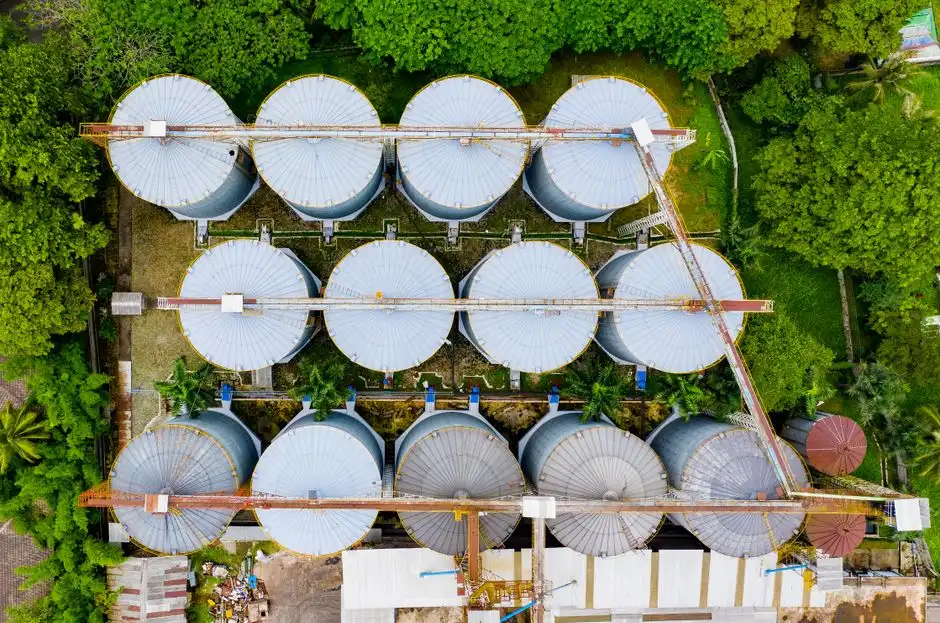
Tankage is now an Australian specification default. Glass-fused-to-steel tanks, with enamel fused to the steel substrate at 850–940°C, deliver a 30+ year service life and are routinely used for equalisation, digesters and clarified-water storage. Plate thicknesses from 3 mm to 12 mm and capacities from 20 m³ to 18,000 m³ are standard procurement line items on Australian STP tenders, and we quote them under the mp-spdz line code. Most plants we size for regional councils pick mid-range tank modules first, then expand laterally rather than oversizing on day one.
Australian Influent Characteristics and Loadings
Australian municipal sewage is stronger than the OECD average, with BOD at 250–400 mg/L, because per-capita water use sits around 200 L/person/day against 250–300 L/person/day in Europe. Engineers should design against these typical influent bands, not international textbook values:
- BOD 250–400 mg/L
- TSS 250–450 mg/L
- NH₃-N 25–45 mg/L
- TN 40–60 mg/L
- TP 6–10 mg/L
Per-capita loadings follow Australian Bureau of Statistics and WSAA Sewerage Code benchmarks: 200 L/person/day, 55 g BOD/person/day and 10 g N/person/day. The 2025 ABS Regional Population update gives a useful growth factor for greenfield design. Most Australian coastal LGAs are running at 1.5–2.2% CAGR, against the 1.0–1.4% national average.
Seasonal variation matters as much as the annual mean. Coastal councils with summer tourism (Coffs Harbour, Surf Coast, Cairns) see BOD peaking 30–50% above winter average in December–February, and ammonia follows the same curve. Remote mining communities see diurnal peaks of 2–3× the daily average at shift change (06:00 and 18:00). Those peaks kill SBR cycle times if the design flow is set on a 24-hour mean.
The dominant impact category for any municipal plant is eutrophication potential (per the 2002 Springer LCA work that is still the most-cited reference for European-style plants). In Australian conditions that translates directly to TN/TP licence limits — typically 10–15 mg/L TN and 0.5–2 mg/L TP for inland discharges to nutrient-sensitive catchments such as the Swan River, Adelaide Hills reservoirs and the Murray–Darling Basin.
| Parameter | Typical Australian Influent | Coastal Council Summer Peak | Remote Mining-Flow Diurnal Peak |
|---|---|---|---|
| BOD (mg/L) | 250–400 | 350–550 | 400–700 |
| TSS (mg/L) | 250–450 | 350–600 | 400–800 |
| NH₃-N (mg/L) | 25–45 | 35–60 | 40–70 |
| TN (mg/L) | 40–60 | 50–75 | 55–85 |
| TP (mg/L) | 6–10 | 8–13 | 9–15 |
| Flow variation (peak/avg) | 1.5–2.0× | 2.0–3.0× | 2.0–3.0× (diurnal) |
Process Selection: MBR vs SBR vs A2O vs MBBR for Australian Conditions
Process selection in Australia comes down to four constraints: footprint, reuse target, nutrient limit and remoteness. The four mainstream options in 2026 each map to a different corner of that decision matrix. Match the constraint that binds your site first, then price the rest.
MBR (Membrane Bioreactor): Submerged PVDF flat-sheet modules at <1 µm pore size deliver effluent BOD <5 mg/L, TSS <1 mg/L and NH₃-N <1 mg/L with a downstream post-denitrification stage. MBR runs at MLSS 8,000–12,000 mg/L, roughly 60% smaller in footprint than conventional activated sludge at the same load, with energy at 0.6–1.0 kWh/m³. A membrane bioreactor wastewater treatment system is the right answer when you need Class A recycled water on a tight footprint, or when the discharge point sits inside a nutrient-sensitive catchment. A packaged WSZ underground unit is the Australian default for 1–10 m³/d residential and remote applications.
SBR (Sequencing Batch Reactor): This time-managed single-tank process is proven across Australia at the 1–50 ML/d scale by Yarra Valley Water and SA Water. SBR is robust against variable loads and easier to operate without full-time specialist staff — important for regional councils that share operators across three or four small plants. A sequencing batch reactor Australia project typically delivers TN 8–15 mg/L and TP 2–4 mg/L without a dedicated biofilm stage.
A2O (Anaerobic/Anoxic/Oxic): The mainstream biological phosphorus-removal train at major plants such as Sydney Water's Bondi and Quakers Hill. A2O is CAPEX-heavy (concrete tanks, internal recycles, chemical polishing) but OPEX-light, with low chemical dose and energy intensity at 0.25–0.40 kWh/m³. For nutrient-sensitive catchments like the Swan River or Adelaide Hills reservoirs, A2O is the regulator-accepted default.
MBBR (Moving Bed Biofilm Reactor): Biofilm carriers at 30–50% fill in an aerated tank make MBBR the retrofit option when the existing aeration basin cannot be expanded. Water Corporation WA and Urban Utilities QLD have used MBBR to add nitrification capacity to aging CAS plants without building new tanks. The trade-off is energy at 0.4–0.7 kWh/m³ and a smaller carrier-replacement cost line — see the MBBR maintenance cost in 2026 OPEX breakdown for spare-parts budgeting.
Decision logic for a 2026 tender: MBR for reuse or footprint-constrained metro; SBR for variable-load communities under 50 ML/d; A2O for nutrient-sensitive catchments above 50 ML/d; MBBR for capacity upgrades where the existing tankage stays. PVDF flat sheet membrane modules in the DF series are now the spec default for new MBR builds, with chemical-clean intervals of 3–6 months and a designed service life of 8–10 years.
| Process | Footprint vs CAS | Effluent BOD (mg/L) | Effluent TN (mg/L) | Energy (kWh/m³) | Best Fit |
|---|---|---|---|---|---|
| MBR | ~40% | <5 | 3–8 (with post-denite) | 0.6–1.0 | Reuse, tight footprint |
| SBR | ~70% | <10 | 8–15 | 0.3–0.5 | Variable load <50 ML/d |
| A2O | ~1.00x | <10 | 5–10 | 0.25–0.40 | Nutrient-sensitive >50 ML/d |
| MBBR | ~60% | <15 | 5–12 (with post-denite) | 0.4–0.7 | Retrofit capacity boost |
Headworks, Pre-Treatment and Tertiary Systems
Headworks, pre-treatment and tertiary steps are where most Australian STPs lose performance — and where most procurement budget gets reallocated at the 60% design review. Biological capacity is only part of the train. Treat these packages as licence-critical scope, not accessories.
Rotary mechanical bar screens with 6 mm apertures (and 3 mm for membrane protection on MBR plants) are the WSA 113 default. GX series rotary mechanical bar screens are widely specified across Australian tenders because they handle coarse screenings up to 800 m³/h with a single shaft. For MBR plants, the 3 mm screen is non-negotiable: hair and fibre ragging is the single biggest cause of membrane-cleaning downtime.
Trade-waste screening for high-FOG discharges (food processors, abattoirs discharging to municipal sewer) is handled by dissolved air flotation. Dissolved air flotation systems in skid capacities of 4–300 m³/h are common at the trade-waste receiving point of a municipal plant, removing 60–90% of FOG and 50–80% of TSS before the sewer junction.
Tertiary filtration (cloth media or sand filters post-MBR) is mandatory for Class A recycled water in Victoria and NSW where the reuse target is urban irrigation or industrial cooling. Disinfection is normally chlorine dioxide or UV. Chlorine dioxide generators are the standard Australian choice for sites where chlorination by-products (THMs) are licence-restricted. UV is preferred for Queensland Recycled Water Guidelines sites discharging to recreational waters, with a typical dose of 30–40 mJ/cm².
2026 CAPEX and OPEX Benchmarks in Australian Dollars
Council boards and funding bodies (NSW Safe & Secure Water Program, Building Queensland, Murray–Darling Basin Reconnecting Rivers) want numbers in AUD, not USD or RMB. The benchmarks below are derived from awarded tenders in NSW, VIC and QLD over the past 18 months. For a state-level cut of the same numbers, see Wastewater Treatment Plant Cost in New South Wales Australia and the Wastewater Treatment Plant Cost in Western Australia 2026 breakdown.
Buyers comparing full-plant envelopes should also read the sibling page on municipal wastewater treatment plant cost, which separates industrial and municipal budgets across every process train.
- 1 ML/d MBR package plant: CAPEX A$1.8–3.5M, OPEX A$0.35–0.55/m³. Electricity is 50–60% of OPEX, dominated by membrane aeration and permeate pumps.
- 20 ML/d SBR: CAPEX A$12–25M, OPEX A$0.28–0.42/m³.
- 100+ ML/d A2O nutrient-removal upgrade: CAPEX A$80–220M, OPEX A$0.22–0.35/m³ — the spread reflects whether the upgrade includes new digesters, UV and a Building Queensland-grade contingency.
- Sludge dewatering: centrifuge or plate & frame filter press adds A$0.8–4.5M depending on capacity, with 75–80% dry solids achievable. A plate-and-frame filter press is the spec default for plants with a biosolids-to-landfill pathway, while centrifuges are preferred for liquid cake haulage.
Tankage is a meaningful line item. Glass-fused-to-steel digester and equalisation tanks of up to 18,000 m³ are routine specifications, with an A$1.2–2.5M allowance for major tankage on a 50 ML/d upgrade. Chemical dosing systems (polymer, coagulant, methanol for post-denitrification) typically add another 5–8% to CAPEX. A skid-mounted automatic chemical dosing system is the standard procurement line for nutrient-removal sites.
| Plant Scale & Process | CAPEX (A$) | OPEX (A$/m³) | Sludge Dewatering Add-On | Dominant OPEX Driver |
|---|---|---|---|---|
| 1 ML/d MBR | 1.8–3.5M | 0.35–0.55 | A$0.4–0.8M | Electricity (50–60%) |
| 20 ML/d SBR | 12–25M | 0.28–0.42 | A$2.5–4.0M | Labour, electricity |
| 100+ ML/d A2O | 80–220M | 0.22–0.35 | A$8–15M | Chemicals, electricity |
| MBBR retrofit | Project-specific (typically 30–50% of CAS equivalent) | 0.30–0.45 | Minimal (uses existing) | Carrier replacement, electricity |
2026 Procurement and Compliance Checklist for Australian Councils
Five steps carry a 2026 project from concept to commissioning without a licence breach, scope blowout or unfunded OPEX line. Following them in order is what keeps municipal sewage treatment plant compliance in Australia on schedule across three EPA jurisdictions.
- Confirm design population equivalent (PE) per WSAA Sewerage Code with a 25-year growth horizon. Use the 2025 ABS Regional Population release, not the 2021 census, and apply a 1.5–2.2% CAGR for coastal LGAs.
- Engage State EPA pre-lodgement (NSW POEO Act 1997, VIC EP Act 2017, QLD EP Act 1994) — typically 6–12 months before construction tender. Pre-lodgement minutes are part of the licence application and shorten approval timelines by 3–6 months.
- Reference WSAA product specs and WSA 113 for structural and MEICA standards, and specify WSAA appraisal certificates for all major equipment. The MBR for enzyme manufacturing wastewater engineering guide is a useful cross-reference for membrane train design even though it is industrial in focus.
- Build in 10% CAPEX contingency and 2% OPEX indexation per annum for NEM electricity forward-curve escalation. AEMO's 2025 Integrated System Plan flags continued wholesale price pressure through 2027–2028, so indexation must reflect that.
- Commission with an AS/NZS ISO/IEC 17025-accredited laboratory for 12-month compliance monitoring per State EPA licence. Sample frequency, preservation and analytical methods must align with the licence schedule, not the lab's default SOP.
| Step | Action | Reference | Typical Lead Time |
|---|---|---|---|
| 1 | PE & 25-year growth horizon | WSAA Sewerage Code | 1–2 months |
| 2 | State EPA pre-lodgement | POEO Act 1997 / EP Act 2017 / EP Act 1994 | 6–12 months pre-tender |
| 3 | Equipment & standards spec | WSA 113, WSAA appraisal | 2–4 months |
| 4 | CAPEX contingency & OPEX indexation | AEMO 2025 ISP, NEM forward curve | Built into business case |
| 5 | Compliance monitoring | AS/NZS ISO/IEC 17025 | 12 months post-commissioning |
Selection checklist before tender lock: (1) PE and peak/average flow ratio locked; (2) inland vs ocean discharge licence path confirmed; (3) reuse class stated if any; (4) footprint and power availability measured; (5) sludge pathway priced; (6) operator skill model agreed; (7) 10% CAPEX contingency plus 2%/yr OPEX indexation in the business case.
Who This Is For and Next Step
Council asset managers, EPC process engineers and procurement officers sizing or upgrading municipal works under Australian State EPA licences are the readers this guide targets. Look elsewhere if you need a pure industrial trade-waste plant licensed to a private discharger, or a household-only onsite system outside municipal sewerage. For a scoped process and CAPEX envelope against your PE, discharge point and reuse target, request a municipal STP engineering quote with flow, influent and licence limits attached.
Frequently Asked Questions
What NSW EPA licence threshold applies to sewage treatment works?
An Environment Protection Licence under the NSW POEO Act 1997 is required for sewage treatment works above 2,500 EP, or 5,000 EP for some non-scheduled settings. Below those thresholds, councils may operate under a council-level controlled activity approval. Always confirm the current Schedule 1 wording and any site-specific EPA advice before lodging, because licence class drives monitoring cost and reporting cadence.
Does AS/NZS 3500.2:2021 cover the treatment plant itself?
No — AS/NZS 3500.2:2021 governs plumbing and sanitary drainage up to the treatment plant boundary only. Inside the boundary, WSA 113 governs structural and hydraulic design of the STP, while MEICA packages follow WSAA product appraisals. Mixing the two standards in a tender scope is a common cause of boundary disputes between civil and process packages.
How long do glass-fused-to-steel tanks last on an Australian STP?
Glass-fused-to-steel tanks with enamel fused at 850–940°C carry a designed service life of 30+ years and are now the Australian default for equalisation, digesters and clarified-water storage up to 18,000 m³. Plate thickness from 3 mm to 12 mm is selected against hydrostatic load and corrosion allowance, not aesthetics. Most plants we size for regional councils run at the lower end of that capacity band and add modules later.
What is the typical 2026 CAPEX for a 1 ML/d MBR package plant in Australia?
A 1 ML/d MBR package plant typically costs A$1.8–3.5M CAPEX with OPEX of A$0.35–0.55/m³, where electricity at 50–60% of OPEX is the dominant cost driver. The spread reflects membrane brand, covered vs open tankage, and whether sludge dewatering is in the same contract. Budget a separate A$0.4–0.8M line if dewatering is added at this scale.
Which process fits a nutrient-sensitive catchment above 50 ML/d?
A2O is the regulator-accepted default for nutrient-sensitive catchments above 50 ML/d, targeting effluent TN about 5–10 mg/L at 0.25–0.40 kWh/m³. MBR is preferred when Class A reuse or a tight metro footprint dominates the decision. SBR remains the practical choice for variable-load communities under 50 ML/d where specialist staffing is shared across several small plants.
What threshold triggers ERA 63 in Queensland?
ERA 63 — Sewage Treatment under the Environmental Protection Act 1994 is commonly cited in municipal briefs at 100 EP for inland discharges and 1,500 EP for ocean outfalls. Works at or above the threshold need an environmental authority before operation. Confirm the current ERA descriptor wording with the Queensland regulator before lodging, because the applicable threshold drives both monitoring conditions and reporting cadence.
Related Equipment
- MBR membrane bioreactor wastewater treatment system — specifications, capacity range, and technical data
- DF series PVDF flat sheet membrane modules — specifications, capacity range, and technical data