Municipal sewage treatment plants in New Jersey: capacity and compliance snapshot
New Jersey operates over 300 municipal sewage treatment plants treating about 1.4 billion gallons daily. Capacities span 0.1 MGD package plants to PVSC at 330 MGD design average. About 40% of plants are older than 30 years. NJPDES secondary treatment still requires 85% TSS removal and 80% BOD reduction, while PFAS and nutrients drive many retrofits.
The state’s plant network is dense and heavily regulated. The New Jersey Department of Environmental Protection (NJDEP) 2024 inventory lists 312 active municipal wastewater facilities, up from 298 in 2020. Much of that growth comes from small plants that replace failing septic systems. For sub-1 MGD sites, engineers often start with published cost benchmarks for small NJ plants (<1 MGD) and then adjust for NJ labor and disposal rates. The state’s 1.4 billion gallons per day is about 4% of the roughly 34 billion gallons treated daily in the United States.
| Plant Name | Location (County) | Permitted Capacity (MGD) | Primary Treatment Method |
|---|---|---|---|
| Passaic Valley Sewerage Commission | Essex | 330.0 | Conventional Activated Sludge |
| Middlesex County Utilities Authority | Middlesex | 147.0 | Pure Oxygen Activated Sludge |
| Bergen County Utilities Authority | Bergen | 109.0 | Conventional Activated Sludge |
| Ocean County UA - Central | Ocean | 32.0 | Activated Sludge / Ocean Outfall |
| Camden County MUA | Camden | 80.0 | Pure Oxygen Activated Sludge |
| Rahway Valley Sewerage Authority | Union | 40.0 | Activated Sludge |
| Linden Roselle Sewerage Authority | Union | 17.0 | Activated Sludge |
| Somerset Raritan Valley SA | Somerset | 21.0 | Extended Aeration |
| Stony Brook Regional Sewerage Authority | Mercer | 13.0 | Activated Sludge |
| Joint Meeting of Essex & Union | Union | 85.0 | Activated Sludge |
PVSC remains New Jersey’s largest plant. According to PVSC’s current plant description, the Newark Bay facility uses pure-oxygen activated sludge. Design average capacity is 330 MGD, annual average flow about 226 MGD, and wet-weather capacity 400 MGD. Design effluent targets are CBOD5 of 25 mg/L and TSS of 30 mg/L. About 15% of state plants exceed 50 years of service, so inflow and infiltration and aging aeration trains dominate many capital plans. North Jersey plants often face CSO long-term control plan milestones. Coastal and southern plants more often face aggressive nitrogen limits to protect estuaries. Numeric PFAS values of 14 ppt PFOA and 13 ppt PFOS still shape upgrade scopes. Binding limits may sit in drinking-water, groundwater, or site-specific NJPDES text—not one statewide municipal effluent rule.
NJDEP vs. EPA standards: what New Jersey plants must achieve
NJPDES is the controlling permit framework for New Jersey dischargers and often goes beyond federal minimums because of population density and industrial history. For secondary municipal treatment, NJDEP still requires at least 85% TSS removal and 80% BOD reduction. Those percentages track federal secondary treatment policy, while NJ fecal coliform kill targets near 90% push plants toward more reliable disinfection options for NJ’s fecal coliform limits.
| Regulatory Parameter | NJDEP (2025) | EPA Federal (2024) | NYDEC (Neighboring) |
|---|---|---|---|
| TSS Removal (%) | 85% | 85% | 85% |
| BOD5 Reduction (%) | 80% - 85% | 85% | 85% |
| PFOA Limit (ppt) | 14 | 4 | 10 |
| PFOS Limit (ppt) | 13 | 4 | 10 |
| Total Nitrogen (Inland) | < 5 mg/L | N/A (State dependent) | < 10 mg/L |
Nutrient permits remain a major retrofit driver. Coastal plants discharging to the Atlantic or Barnegat Bay often see Total Nitrogen limits below 3 mg/L, tighter than the Chesapeake Bay’s 4 mg/L benchmark. Meeting those levels usually needs biological nutrient removal or compact MBR systems for NJ’s high-efficiency effluent standards.
Sludge rules are shifting in parallel. NJDEP has effectively phased out Class B biosolids land application because of metals and PFAS concerns. Plants such as Upper Wallkill have moved toward thermal drying or landfill disposal. That change makes high-solids sludge dewatering solutions for NJ’s landfill disposal bans a routine CapEx item when hauling fees rise with wet cake. CSO work adds another layer: Jersey City’s $1.2 billion tunnel program is one example of North Jersey projects that need high-capacity screening and rapid primary treatment during storms.
Treatment process comparison: MBR vs. conventional activated sludge vs. DAF for NJ plants
Process selection for New Jersey municipal plants is driven by footprint, effluent clarity, and energy cost. Membrane bioreactors (MBR) typically need about 60% less land than conventional activated sludge (CAS). Large regional plants still favor CAS or pure-oxygen variants, but MBR effluent often reaches TSS below 1 mg/L and BOD below 5 mg/L when discharge limits tighten.
| Performance Metric | MBR (Membrane Bioreactor) | CAS (Activated Sludge) | DAF (Dissolved Air Flotation) |
|---|---|---|---|
| Footprint Requirement | Minimal (0.4x) | Large (1.0x) | Moderate (0.7x) |
| Effluent TSS (mg/L) | < 1.0 | 10 – 30 | 20 – 50 |
| Energy Use (kWh/m³) | 0.8 – 1.2 | 0.3 – 0.6 | 0.2 – 0.4 |
| Sludge Yield (kg/kg BOD) | 0.2 – 0.3 | 0.4 – 0.6 | N/A (Primarily Primary) |
| Capital Cost (CapEx) | High | Moderate | Low to Moderate |
Energy price matters in New Jersey, where industrial power often averages about $0.18/kWh versus a U.S. average near $0.13/kWh. MBR membrane scouring at 0.8–1.2 kWh/m³ is higher than CAS at 0.3–0.6 kWh/m³, yet MBR can remove secondary clarifiers and some tertiary filters. For high-solids primary or industrial pretreatment, DAF systems for NJ’s industrial pre-treatment requirements typically use only 0.2–0.4 kWh/m³ and cut load to the biology.
Upper Wallkill’s 2010 expansion used a 265,000 GPD MBR upgrade to serve Vernon Town Center growth inside the existing fence line while meeting NJPDES limits. Rahway Valley Sewerage Authority, by contrast, still relies on a large CAS plant serving 11 communities. Engineers comparing sludge yield and chemical demand can use a detailed MBR vs. CAS comparison for NJ plants before locking the process train.
How should plants design and procure aeration equipment?
Aeration equipment for municipal wastewater plants should be sized on peak diurnal oxygen demand, not average day flow alone. Most plants we size for New Jersey run fine-bubble diffuser grids at the lower end of the alpha-factor range when I&I dilutes MLSS and raises airflow. Spec sheets must state SOTE at clear-water test conditions, then derate for process water, diffuser age, and tank geometry.
Procurement packages should separate blowers, diffusers, DO control, and spare parts lead times. Ask for turndown data at 40–100% airflow, measured noise at the blower pad, and VFD compatibility with the utility’s SCADA tags. High-efficiency blowers and VFD-controlled pumps often qualify for NJ Clean Energy Program rebates, which can offset a meaningful share of CapEx when energy rates sit near $0.18/kWh. For compact satellite plants under about 0.1–0.5 MGD, an Underground Package Sewage Treatment Plant (WSZ Series) can bundle aeration, clarification, and disinfection in one footprint when land is scarce.
- Confirm oxygen demand at peak hour and wet-weather conditions, not only average day.
- Require factory SOTE curves plus site derating assumptions in writing.
- Specify blower turndown, redundancy (N+1), and local spare inventory in the Tri-State area.
- Integrate DO/ammonium control loops with existing SCADA before award.
- Score energy rebate eligibility and membrane or diffuser replacement lead time in the bid form.
Equipment selection and cost ranges for New Jersey municipal plants
Procurement managers in New Jersey balance CapEx against rising labor and landfill costs. MBR systems typically cost about $3 to $5 per GPD of capacity, while CAS systems often fall between $1.5 and $3 per GPD. When PFAS polishing and sludge volume reduction are included, many MBR projects show payback in about 5 to 7 years under local rate and fine-risk assumptions.
| Plant Capacity | MBR System Cost (Est.) | CAS System Cost (Est.) | DAF System Cost (Est.) |
|---|---|---|---|
| 0.1 MGD | $450,000 – $700,000 | $250,000 – $400,000 | $150,000 – $250,000 |
| 1.0 MGD | $3.2M – $5.0M | $1.8M – $3.0M | $0.9M – $1.8M |
| 10.0 MGD | $28M – $45M | $15M – $28M | $8M – $15M |
O&M cost tracks chemical use for phosphorus removal and membrane cleaning. MBR O&M often lands near $0.50 to $0.80 per 1,000 gallons, while CAS is closer to $0.30 to $0.50. NJDEP PFAS grant programs can bridge filtration upgrades when a permit or industrial user agreement forces treatment. Vendor screening for municipal facilities should stay practical:
- Does the supplier provide NJDEP-certified installation references?
- Is the equipment compatible with existing SCADA systems used by NJ utilities?
- Are the dewatering components, such as sludge dewatering solutions for NJ’s landfill disposal bans, capable of achieving >25% cake solids to minimize hauling costs?
- What is the lead time for replacement membranes or DAF components in the Tri-State area?
A simple ROI screen is (Annual O&M Savings + Avoided Non-Compliance Fines) / Total Capital Cost * 100. In current NJ bidding, avoided fines and landfill fees often move the ranking more than nameplate efficiency.
What do disinfection upgrades typically cost?
Disinfection upgrade cost for piping, tanks, structures, and equipment depends on contact time, peak wet-weather flow, and residual limits—not a single statewide unit price. Chlorine-based systems usually spend more on chemical storage, containment, and dechlorination structures. UV systems shift cost into power, channel hydraulics, and lamp replacement inventory.
For a planning screen, separate civil/tank work from equipment skids, then stress-test peak CSO-influenced flows. Plants comparing oxidant versus UV performance and operating cost can start with a side-by-side disinfection options for NJ’s fecal coliform limits before writing the bid package.
Compliance checklist: preparing your NJ plant for NJPDES permit renewal
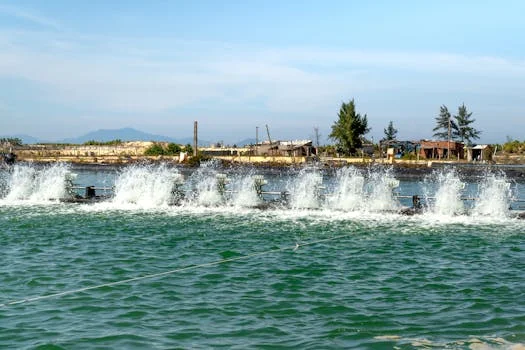
NJPDES renewal work should start at least 180 days before the current permit expires. Submittals now carry more emerging-contaminant and residuals detail than older cycles.
- Monitoring Data: Assemble 12 months of influent and effluent data for TSS, BOD5, pH, and fecal coliform. NJDEP requires 24-hour composite sampling for most parameters to ensure representative data.
- PFAS Testing: Initiate quarterly sampling for PFOA, PFOS, and five other specific perfluorinated compounds. All testing must be performed by NJDEP-certified laboratories using EPA Method 533 or 537.1.
- Sludge Management Report: Document current disposal methods and provide an annual analysis of heavy metal concentrations. Note that Class B land application is no longer a viable long-term strategy in NJ.
- CSO Compliance: For applicable North Jersey plants, verify that the Nine Minimum Controls (NMC) are fully documented and that the Long Term Control Plan (LTCP) milestones are being met.
- Public Participation: Schedule the required 30-day public comment period and prepare technical justifications for any requested variance in nutrient limits.
- Equipment readiness: Confirm spare aeration and disinfection parts can arrive inside the Tri-State lead times stated in O&M manuals.
- Residuals path: Lock landfill or thermal contracts before cake solids drop below the haul-cost break-even point.
Who this is for / Next step
This guide is for municipal engineers, EPC firms, and procurement managers sizing or retrofitting New Jersey plants under NJPDES nutrient, CSO, and PFAS pressure. Buyers chasing only residential septic replacements without a municipal permit path should look at local board-of-health package options instead. If you need help matching MBR, DAF, aeration, or dewatering packages to a New Jersey permit limit set, send the flow sheet and effluent targets through our request-quote form for a process and equipment review.
Frequently Asked Questions
How much does a 1 MGD municipal sewage treatment plant cost in New Jersey?
A 1 MGD MBR plant in New Jersey typically costs about $3 million to $5 million. A conventional activated sludge plant of the same capacity usually ranges from $1.5 million to $3 million. Primary cost drivers include PFAS polishing scope, sludge disposal path, and local construction labor. Soft costs for SCADA, electrical, and NJPDES sampling infrastructure often sit outside the process equipment line item.
What are New Jersey’s PFAS numeric limits of 14 ppt and 13 ppt?
The 14 ppt PFOA and 13 ppt PFOS figures match New Jersey’s published drinking-water MCL and groundwater quality values and still drive many upgrade scopes. They are not a single statewide municipal wastewater effluent rule for every NJPDES permit. Some industrial or site-specific NJPDES permits use matching ppt limits, so plants should read the active permit table rather than assume a blanket effluent MCL.
How many municipal sewage treatment plants are in New Jersey?
As of the 2024 NJDEP inventory cited in this guide, 312 municipal sewage treatment plants operate in the state. They range from borough-scale package plants to regional authorities serving multiple counties. Capacity and age vary widely, so equipment strategy should start from the permitted MGD and discharge waterbody, not from a statewide average.
What is the largest municipal sewage treatment plant in New Jersey?
The Passaic Valley Sewerage Commission plant in Newark is the largest, with a design average capacity of 330 MGD. PVSC reports annual average flow near 226 MGD and wet-weather treatment capacity of 400 MGD. The facility uses pure-oxygen activated sludge and serves on the order of 1.4–1.5 million people across dozens of municipalities.
How do I find my local sewer service area in NJ?
Use NJDEP’s Sewer Service Area Maps through the NJ-GeoWeb portal. Enter the property block and lot or street address to see which regional authority or municipal plant owns the discharge path. Confirm available connection capacity with that authority before assuming a new lateral or redevelopment flow can be accepted.