Municipal Wastewater Treatment Requirements Australia
Municipal wastewater treatment requirements Australia come from state EPA permits and council approvals layered on NWQMS national guidance. Secondary effluent typically means BOD below 20 mg/L and TSS below 30 mg/L, with tighter nutrient caps in sensitive catchments such as the Great Barrier Reef.
Municipal wastewater treatment plant requirements in Australia combine national water-quality baselines with state EPA permits and local council approvals. Operators must meet defined BOD, TSS, nutrient, and pathogen limits, then prove the plant design and monitoring plan fit the receiving environment. Non-compliance can trigger large corporate penalties, including fines up to $1.6 million under the NSW EPA Act 1997 as earlier guidance cited.
The National Water Quality Management Strategy (NWQMS) sets the federal scientific baseline. ARMCANZ and ANZECC developed it to guide BOD, TSS, nutrient, and pathogen effluent parameters. The NWQMS is policy guidance, not a statute. State Environmental Protection Authorities turn it into enforceable rules.
EPA Victoria applies the Environment Protection Act 2017 to industrial and domestic discharges. The NSW Environment Protection Authority administers the Protection of the Environment Operations (POEO) Act 1997. Western Australia relies on the WA Department of Health for onsite approvals under the Health (Treatment of Sewage and Disposal of Effluent and Liquid Waste) Regulations 1974.
A plant can meet ANZECC guideline values and still fail a state permit. Regional limits for nitrogen-sensitive catchments or soil absorption rates often decide the outcome. Mapping this hierarchy early prevents illegal discharge and permit rejection. Most plants we size for a new council asset start with the receiving water, not the equipment brochure.
Key Australian Standards for Wastewater Treatment
Compliant design starts with the published technical standards. Engineers still use AS/NZS 1546.1:2008 as standard for sewage treatment plants on domestic hydraulic loads up to 5 kL/day. It requires at least secondary treatment. Sensitive sites often need advanced secondary or tertiary polishing as well.
AS/NZS 1547:2021 covers site assessment, soil permeability testing, and Land Application Area sizing. Mismatched discharge rates and soil capacity remain a common cause of council rejection. AS/NZS 1546.3:2017 adds AWTS test protocols, while AS/NZS 3500 governs plumbing connections to municipal networks. According to EPA Victoria (updated 9 May 2025), an A20 file still needs a certificate of conformity with AS/NZS 1547:2012.
| Standard Reference | Application Scope | Primary Technical Requirement |
|---|---|---|
| AS/NZS 1546.1:2008 | Onsite domestic treatment units | Structural integrity, water-tightness, and secondary effluent quality (BOD <20 mg/L). |
| AS/NZS 1547:2021 | On-site wastewater management | Design of irrigation and land disposal systems based on soil type and nutrient loading. |
| AS/NZS 1546.3:2017 | Secondary treatment systems | Specific testing protocols for Aerated Wastewater Treatment Systems (AWTS). |
| AS/NZS 3500 | Plumbing and drainage | Installation standards for pipework and connection to municipal infrastructure. |
Most jurisdictions set secondary treatment as the minimum: BOD <20 mg/L and TSS <30 mg/L. Near the Great Barrier Reef catchment or high-tableland NSW zones, nutrient removal plus UV disinfection is often mandatory. Fecal coliform limits can fall to <10 MPN/100mL in those catchments. Most plants we size for those catchments are specified to the sensitive column, not the land-irrigation cap.

EPA Victoria Wastewater Discharge Permit Guide
EPA Victoria requires an A20 permit before anyone constructs, installs, or alters an onsite wastewater management system whose design or actual flow is not more than 5,000 litres on any day. That cap includes all beds, sewers, drains, pipes, fittings, appliances, and the land used in connection with the treatment system. The local council issues the A20 permit and enforces Part 5.7 of the Environment Protection Regulations 2021. According to EPA Victoria (updated 9 May 2025), A20 is a prescribed permission activity under Schedule 1 of those regulations.
Mini-case: a Victorian onsite unit up to 5,000 L/day still needs an A20 permit, EPA Victoria approved-list status, and a supporting Land Capability Assessment before installation. Without that package, council refusal is the expected outcome. The application must also include a valid certificate of conformity showing the system conforms with AS/NZS 1547:2012 On-site domestic wastewater management, from the manufacturer.
Industrial sites also face the General Environmental Duty to minimise harm from pollution or waste. A design or actual flow above 5,000 litres per day leaves the A20 path entirely. According to EPA Victoria (updated 9 May 2025), that larger sewage system needs an A03 sewage treatment development licence and an operating licence. Most plants we size for a township count wet-weather flow before the tank is ordered.
Engineers often follow a structured wastewater discharge permit application steps and compliance roadmap so drawings and site data match state criteria.
NSW POEO Act Wastewater Treatment Plant Standards
The Protection of the Environment Operations Act 1997 is the key environment protection legislation administered by the NSW EPA for wastewater treatment plant standards. Water pollution is an offence under section 120, with a defence where an environment protection licence or the regulations regulated the pollution and the attached conditions were not contravened. Hold that licence, or stay inside the regulation, or the discharge is unlawful.
Earlier guidance cited fines up to $1.6 million under the NSW EPA Act 1997. Under the NSW EPA's 2024 penalty reform, the maximum Tier 1 penalties for the most serious offences doubled to $10 million for a corporation and $2 million and/or seven years imprisonment for an individual, applied to wilful or reckless conduct. Tier 2 offences, which cover most water pollution matters, carry lower maximum penalties. Most plants we size for NSW check the licence conditions before the commissioning date, not after.
In New South Wales, many projects need a Development Application under Section 68 of the Local Government Act 1993. Larger industrial sites may also need an Environment Protection Licence from the NSW EPA. Coastal nitrogen limits tightened under 2025 enforcement trends aimed at eutrophication control.
Trade-waste and sewer rules sit beside environmental discharge rules. Facilities comparing plant design options against industrial waste water discharge requirements should separate sewer surcharge limits from land-application caps. Sydney operators can also cross-check local practice in this Sydney industrial wastewater treatment compliance guide. These wastewater treatment plant regulations sit beside any trade-waste agreement, and neither replaces the other.
Western Australia Sewage Treatment Regulations 2026
Western Australia still regulates onsite sewage under the Health (Treatment of Sewage and Disposal of Effluent and Liquid Waste) Regulations 1974. According to the WA Department of Health (page last reviewed 8 May 2026), those regulations remain the compliance reference, with the Health (Temporary Sanitary Conveniences) Regulations 1997 kept for temporary facilities. The same page lists a code of practice for the design, manufacture, installation, and operation of aerobic treatment units, a code for product approval of onsite wastewater systems, and a code for greywater reuse.
The WA Department of Health approves alternative systems, while councils handle standard septic and secondary applications. Typical timelines run 6 to 12 weeks, depending on groundwater depth, surface-water setbacks, slope stability, and multi-agency referrals. The same page lists guidance on site and soil evaluation for onsite sewage management, certification for installation of wastewater treatment systems, and a guidance note for independent third-party engineering verification where the apparatus needs it.
What Do Package Plants Need for Western Australia Compliance?
Package plants for Western Australia must clear health approval, council consent, and the AS/NZS 1546.1 performance envelope. Units sized up to 5 kL/day need secondary effluent quality, water-tight tanks, and a land application design that matches AS/NZS 1547 soil data. Remote or buried installs often favour compact A/O trains with disinfection in one envelope. Most plants we size for remote sites stay at or below 5 kL/day.
For decentralised sites, a fully automated underground sewage treatment system compliant with AS/NZS 1546.1 can deliver BOD <20 mg/L, TSS <30 mg/L, and TN <15 mg/L in a buried footprint. That profile matches common secondary municipal wastewater treatment plant requirements for small community and remote municipal assets. Teams benchmarking offshore specs sometimes also review Auckland industrial wastewater treatment engineering specs for comparable Oceania design checks.
Effluent Quality Standards and Monitoring Requirements
Effluent quality standards for Australian municipal plants focus on BOD5, TSS, ammonia, total nitrogen, total phosphorus, E. coli, and pH. Sewer discharge through authorities such as Sydney Water or Yarra Valley Water may allow BOD <400 mg/L. Those utilities then levy trade-waste fees on pollutant mass, so pre-treatment is almost always required. Most plants we size for a sewer connection are pushed by the mass fee, not by the BOD ceiling alone.
Land application and environmental discharge are stricter. Sensitive catchments often cap nutrient loading at 170 kg N/ha/year to protect groundwater. Small domestic systems may need only quarterly or annual certified sampling. Industrial plants discharging >500 kL/day often need continuous online pH, turbidity, and flow monitoring.
| Parameter | Sewer Discharge (Typical) | Land Irrigation (Standard) | Sensitive Discharge (2025 Trend) |
|---|---|---|---|
| BOD5 (mg/L) | <300 - 600 | <20 | <10 |
| TSS (mg/L) | <300 - 600 | <30 | <10 |
| Total Nitrogen (mg/L) | N/A | <25 - 50 | <10 (NSW Specific) |
| E. coli (MPN/100mL) | N/A | <1,000 | <10 |
| pH Range | 6.0 - 10.0 | 6.5 - 8.5 | 6.5 - 8.5 |
Search strings such as sewage discharge fell percent 2026 cleaner water success do not set a limit in these state instruments. Design to the table row for the receiving environment instead of a national percentage. A catchment-specific permit number, checked against the current licence register, is the only figure that binds the outfall.
International rules still shape local practice. Engineers often compare how U.S. EPA regulations compare to Australian standards when setting continuous monitoring and digital reporting. The EU Urban Wastewater Treatment Directive updates for 2025 also push Australian recycled-water programs toward tighter micro-pollutant and pharmaceutical residue limits.
Treatment Technologies That Meet Australian Standards
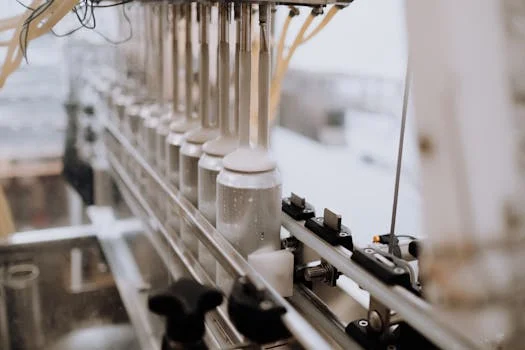
Treatment technology for an Australian municipal plant must match the discharge point. For high-sensitivity zones or reuse duties, Membrane Bioreactors remain the performance reference. A high-efficiency MBR system delivering near-reuse-quality effluent can reach <1 NTU turbidity and >99% pathogen removal, exceeding AS/NZS 1546.1 and many state reuse guidelines.
Food and manufacturing plants with high FOG loads rely on Dissolved Air Flotation. Mini-case: DAF removal of 92–97% FOG and TSS is often enough to meet sewer pre-treatment limits and avoid heavy trade-waste surcharges. MBR trains that reach <1 NTU turbidity and >99% pathogen removal likewise clear reuse-oriented municipal limits that secondary-only plants miss. Most plants we size for a food site put DAF ahead of biology when the sewer cap is FOG, not nutrients.
| Technology Type | Regulatory Compliance Target | Performance Capability |
|---|---|---|
| MBR (Membrane Bioreactor) | Class A+ Recycled Water | BOD <5 mg/L, TSS <2 mg/L, Turbidity <1 NTU. |
| DAF (Dissolved Air Flotation) | Industrial Pre-treatment | FOG removal >95%, TSS removal >90%. |
| WSZ Series (Integrated A/O) | AS/NZS 1546.1 Secondary | BOD <20 mg/L, TSS <30 mg/L, TN <15 mg/L. |
| ClO2 Generators | Pathogen Control | Chemical-free residual disinfection (EPA/WHO compliant). |
Disinfection closes the compliance chain. Many 2025 designs move from chlorine to ClO2 generators or high-intensity UV. Those options provide residual control with fewer disinfection by-products, which Australian sewage standards now scrutinise more closely.
Who This Is For / Who Should Look Elsewhere / Next Step
Municipal engineers, council officers, and plant managers use this page to document municipal wastewater treatment plant requirements against AS/NZS standards and state permits. It is also useful for designers sizing package plants for Western Australian health and council approvals. Pure industrial sewer-only projects with no municipal or land-application duty should start with discharge-standard pages instead.
Confirm these six points before lodging:
- Flow at or below 5,000 L/day for the Victorian A20 onsite path, or above 5,000 litres per day where an A03 licence applies.
- AS/NZS 1546.1 secondary quality, plus an AS/NZS 1547 land application matched to soil data.
- Receiving column in the effluent table: sewer, land irrigation, or sensitive discharge.
- NSW regulator: an environment protection licence for larger sites, with section 120 covered before discharge.
- WA path: the 1974 sewage regulations, council or Department of Health, and a site-and-soil evaluation.
- Monitoring: certified grab samples on a small domestic system, or continuous pH, turbidity, and flow when discharge is >500 kL/day.
If your brief covers abattoir blood waste, overseas factory emission rules, or Saudi compliance programs, use a sector-specific brief rather than this Australia municipal overview. Next step: assemble the LCA or soil report, map the receiving environment, and select a treatment train that can prove the numeric limits in the tables above. Send the drawing set and effluent targets for a permit-limit review before you lodge.
Frequently Asked Questions
What is the Australian Standard for onsite wastewater treatment?
AS/NZS 1546.1:2008 is the primary standard for onsite domestic wastewater treatment plants handling up to 5,000 liters per day. It sets design, performance, and testing requirements, with a benchmark of BOD <20 mg/L. AS/NZS 1546.3:2017 adds AWTS test protocols. AS/NZS 1547 sizes the land application area from soil and nutrient load. Most plants we size for one dwelling stay inside the 5 kL/day cap.
What is the A20 permit in Victoria?
The A20 permit is the council approval to construct, install, or alter an onsite system at or below 5,000 litres on any day. According to EPA Victoria (updated 9 May 2025), apply before works and include a certificate of conformity with AS/NZS 1547:2012. A unit up to 5,000 L/day still needs that permit and a Land Capability Assessment. Above 5,000 litres per day, the path is an A03 development licence and an operating licence.
What is the maximum NSW penalty for water pollution?
Earlier guidance cited fines up to $1.6 million under the NSW EPA Act 1997. The NSW EPA's 2024 penalty reform doubled the maximum Tier 1 penalties to $10 million for a corporation and $2 million and up to seven years imprisonment for an individual, for wilful or reckless serious offences. Section 120 makes water pollution an offence unless a licence or the regulations authorise the discharge and their conditions are met.
Which sewage regulations apply in Western Australia in 2026?
The 1974 Health sewage regulations still apply in Western Australia. According to the WA Department of Health (page last reviewed 8 May 2026), that instrument remains the compliance reference. Package units up to 5 kL/day need secondary effluent and an AS/NZS 1547 land design. Councils handle standard septic systems, and the Department approves alternatives. Typical timelines run 6 to 12 weeks when groundwater or slope adds referrals.