Municipal Sewage Treatment Plants in Poland: 2025 Data Snapshot
Municipal sewage treatment plants in Poland total 1,642 units and treat 37.2 million p.e. (7.44 million m³/day). About 96% use biological processes, and 1,577 plants include nitrogen and phosphorus removal. Coverage is high, yet 8.4% of municipalities still rely on decentralized systems. EU UWWTD compliance remains uneven below 10,000 p.e., so treat these 2025 figures as the national planning baseline.
Of the 1,642 active plants, 1,577 provide secondary treatment with N/P removal. Only 35 use basic biological treatment, and 30 provide primary treatment only. Population equivalent follows 1 p.e. = 60 g BOD₅/day under Polish and EU practice. Eastern regions such as Podkarpackie and Lubelskie still depend more on septic tanks and small domestic plants for about 3.1 million p.e.
Sewage sludge remains a binding design constraint. In 2022, Polish municipal plants generated about 560,000 tons of dry matter sludge. Disposal is shifting from landfill toward incineration and controlled agricultural use as EU heavy-metal and pathogen rules tighten. Most plants we size for medium towns therefore target 95–98% sludge volume reduction with advanced sludge dewatering solutions for Polish plants.
| Parameter | National Value (2025 Est.) | Technical Specification |
|---|---|---|
| Total Treatment Plants | 1,642 | 96% Biological w/ NP Removal |
| Daily Wastewater Volume | 7.44 million m³ | 37.2 million p.e. |
| Centralized Treatment Coverage | 91.6% | Urban areas > 98% |
| Sludge Production | ~560,000 Mg DM/year | Incineration, Agriculture, Landfill |
| Decentralized Systems | 8.4% of municipalities | Septic tanks and <50 p.e. plants |
EU UWWTD Compliance for Polish Municipal Plants: Technical Requirements
Urban Waste Water Treatment Directive (UWWTD) compliance drives most capital programs for municipal sewage treatment plants in Poland. Article 4 requires secondary biological treatment for urban areas above 2,000 p.e. Agglomerations above 10,000 p.e. that discharge to sensitive waters—covering 99.7% of Poland via the Baltic catchment—must also remove nitrogen and phosphorus.
Discharge limits are tracked through the WISE (Water Information System for Europe) database. Plants from 2,000 to 9,999 p.e. take 12 effluent samples per year; plants above 100,000 p.e. take 24. Systemic nutrient-removal failures have drawn fines up to PLN 500,000 in recent enforcement cases. Many operators therefore add ClO₂ disinfection for EU-compliant effluent to meet microbiological limits without forming harmful trihalomethanes (THMs).
| Parameter | Standard Limit (UWWTD) | Polish Sensitive Area Limit (>10k p.e.) |
|---|---|---|
| BOD₅ | < 25 mg/L O₂ | < 15 mg/L O₂ (often lower locally) |
| COD | < 125 mg/L O₂ | < 125 mg/L O₂ |
| Total Suspended Solids (TSS) | < 35 mg/L | < 35 mg/L |
| Total Nitrogen (N) | < 15 mg/L (10k-100k p.e.) | < 10 mg/L (>100k p.e.) |
| Total Phosphorus (P) | < 2 mg/L (10k-100k p.e.) | < 1 mg/L (>100k p.e.) |
Treatment Process Design: Biological, Sludge, and Disinfection Specifications
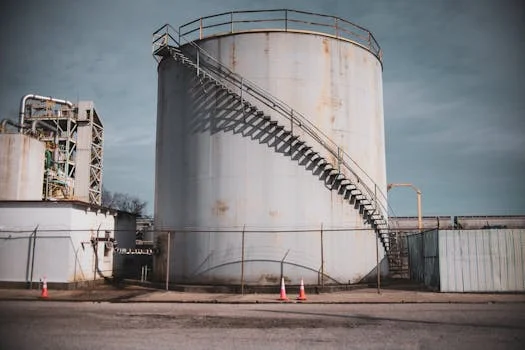
Polish municipal design commonly centers on the A²/O (Anaerobic/Anoxic/Oxic) process for simultaneous nitrification, denitrification, and biological phosphorus removal. Where land is scarce or reuse quality is required, MBR systems for Polish municipal plants are specified more often. Conventional activated sludge typically runs at SRT 10–20 days and MLSS 3,000–5,000 mg/L; MBR trains usually hold MLSS at 8,000–12,000 mg/L under the same temperature band used for aeration sizing.
Sludge trains start with gravity thickening or DAF pre-treatment for Polish municipal wastewater to raise solids before digestion. Plants above 50,000 p.e. usually add anaerobic digestion for biogas. Final dewatering with plate-and-frame presses or centrifuges targets 20–30% cake solids. Liquid chlorine is giving way to ClO₂ because residual control is more stable across typical Polish effluent pH ranges; UV remains an alternative where chemical storage is restricted. For tertiary selection, engineers often compare ClO₂ vs. UV for Polish disinfection compliance before locking the contact tank design.
| Process Stage | Technology Options | Efficiency / Design Parameter |
|---|---|---|
| Biological Removal | A²/O, SBR, MBR | BOD₅: 90-95%; N: 70-85%; P: 80-90% |
| Hydraulic Retention (HRT) | Secondary Clarifiers | 8–12 hours (Conventional) |
| Disinfection | ClO₂, UV, Ozone | ClO₂ Dose: 1-3 mg/L; Contact: 30 min |
| Sludge Dewatering | Filter Press, Centrifuge | Cake Solids: 20–35% |
| Pre-treatment | Mechanical Screens, DAF | FOG Removal: >90% (via DAF) |
Equipment Selection Framework: MBR vs. DAF vs. Conventional for Polish Plants
Procurement teams should compare 20-year OPEX against CAPEX before freezing the process train. Conventional activated sludge remains the baseline where land is available. Tourist basins such as the Masurian Lake District often shift to MBR when bathing-water quality or seasonal peaks dominate. Before award, engineers should compare MBR and SBR for Polish municipal plants against the local hydrograph and wet-weather factors.
Energy use separates the options clearly. MBR cuts footprint by about 60% but typically draws 0.8–1.2 kWh/m³, versus 0.3–0.5 kWh/m³ for conventional aeration trains sized at similar effluent BOD. High FOG loads still justify DAF ahead of biology: removing grease early cuts aeration demand and lowers filamentous bulking risk in colder eastern winters.
| Selection Criteria | Conventional Activated Sludge | MBR (Membrane Bioreactor) | DAF (Pre-treatment) |
|---|---|---|---|
| Footprint Requirement | High (100%) | Low (40%) | Very Low |
| Effluent Quality (TSS) | 10–20 mg/L | < 1 mg/L | N/A (Pre-treatment) |
| Energy Use (kWh/m³) | 0.3 – 0.5 | 0.8 – 1.2 | 0.1 – 0.3 |
| CAPEX (€/p.e.) | €500 – €1,000 | €1,200 – €1,800 | €200 – €400 |
| Maintenance Focus | Clarifier scrapers | Membrane CIP / Replacement | Chemical dosing / Skimmers |
Selection checklist for Polish municipal upgrades
- Confirm agglomeration size against UWWTD N/P thresholds (>10,000 p.e. in Baltic sensitive waters).
- Match land availability to footprint: conventional, SBR, or MBR.
- Quantify FOG and peak wet-weather factors before omitting DAF.
- Set sludge end-use early: agriculture, incineration, or further drying.
- Compare ClO₂ dose 1–3 mg/L (30 min contact) versus UV lamp power and transmittance.
- Budget membrane CIP and replacement for any MBR train above 0.8 kWh/m³.
- For villages still off-network, evaluate modular package plants before long collector mains.
Cost Benchmarks for Polish Municipal Plants (2025)
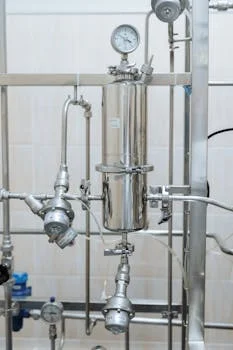
Polish municipal CAPEX still tracks regional labor rates and EU grant share. A typical split is civil works 45%, mechanical and electrical equipment 35%, and engineering plus contingencies 20%. Plants under 10,000 p.e. usually land between €800 and €1,500 per p.e. Metro upgrades in Warsaw or Kraków can exceed €2,000 per p.e. once sludge incineration is included.
Funding mix is shifting but not abandoning grants. The EU Cohesion Fund can still cover up to 85% of eligible costs, while PPP structures appear on larger O&M packages. The Mława 30-year contract remains a useful local reference for performance-based payments. Cross-check Polish bids against global cost benchmarks for municipal plants when lenders ask for international peer ranges.
| Plant Capacity (p.e.) | Estimated CAPEX (€/p.e.) | Avg. OPEX (€/m³ treated) | Primary Funding Source |
|---|---|---|---|
| Small (<10,000) | €800 – €1,500 | €0.30 – €0.45 | EU Cohesion / NFEP |
| Medium (10k – 50k) | €1,000 – €1,800 | €0.25 – €0.35 | Municipal Bonds / EU |
| Large (>50,000) | €1,200 – €2,500 | €0.15 – €0.25 | PPP / EU Cohesion Fund |
Regional Capacity Gaps and Emerging Technologies in Poland
Eastern “Poland B” provinces still show the largest network gaps, with 8.4% of the population lacking centralized sewer access. Modular biological package plants shorten delivery there when collector economics fail. In those catchments, an Underground Package Sewage Treatment Plant (WSZ Series) is often compared against clustered septic upgrades for settlements below a few thousand p.e.
Baltic sensitive zones push phosphorus below standard UWWTD values, with HELCOM guidance often targeting <0.5 mg/L P. Plants above 20,000 p.e. now treat SCADA-based predictive maintenance as normal scope. Reuse projects also increase demand for ClO₂ disinfection for EU-compliant effluent under EU Water Reuse Regulation (2020/741). Gdańsk pilots of advanced oxidation for pharmaceuticals signal future micropollutant rules beyond today’s UWWTD list.
Where villages cannot wait for long trunk sewers, buyers again shortlist the Underground Package Sewage Treatment Plant (WSZ Series) against containerized SBR units. Most plants we size for rural communes run at the lower end of the €800–€1,500/p.e. band when civil works stay shallow and sludge is hauled to a regional digester. Spec sheets should still document wet-weather peaking before package sizing.
Compliance Checklist for Polish Municipal Plants
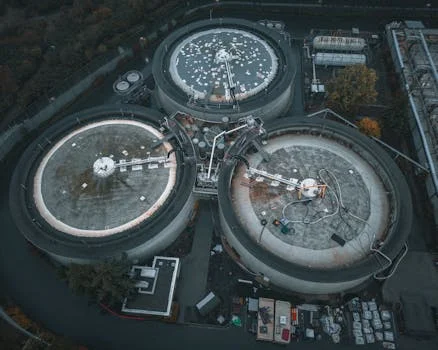
Long-term compliance rests on Polish Water Law plus EU directives, not on a single permit clause. Use the matrix below as a project control sheet from concept design through the first operating year for plants seeking stable UWWTD reporting.
| Project Phase | Critical Action Item | Regulatory Reference |
|---|---|---|
| Design | Verify N/P removal specs for Baltic sensitive areas | UWWTD Article 5 / Polish Water Law |
| Procurement | Ensure all equipment carries CE marking and ISO certs | EU Machinery Directive |
| Construction | Validate concrete permeability and tank integrity | PN-EN 1992-3 (Eurocode 2) |
| Operations | Establish daily influent/effluent sampling protocols | WISE reporting requirements |
| Sludge | Test for heavy metals and pathogens before land use | EU Fertilising Products Regulation |
| Maintenance | Annual calibration of flow meters and O₂ sensors | National Environmental Inspection (GIOŚ) |
Who This Is For / Next Step
This guide is for plant engineers, EPC process leads, and municipal procurement teams specifying upgrades or greenfield works in Poland. Look elsewhere if you need only household septic sizing or industrial pretreatment with no municipal discharge permit. To match equipment to p.e., sludge route, and disinfection limits, request a technical quote with your influent data before freezing the tender package.
Frequently Asked Questions
What is the definition of 1 p.e. in Polish regulations?
One population equivalent (p.e.) equals an organic biodegradable load of 60 g BOD₅ per day under Polish and EU practice. Designers use that factor to convert measured BOD mass load into plant capacity when census data understate industrial or tourist contributions. For Polish agglomeration reporting, keep the same 60 g BOD₅/day basis so WISE submissions stay consistent with UWWTD Article 2 definitions.
Which areas in Poland are considered sensitive for wastewater discharge?
Almost all of Poland is treated as a sensitive area because nearly the entire territory drains to the Baltic Sea. That status triggers mandatory nitrogen and phosphorus removal for agglomerations above 10,000 p.e. Local permits may set still tighter phosphorus limits near lakes and coastal bathing waters, so always read the voivodeship water permit before locking chemical dosing or A²/O tank volumes.
Is MBR technology cost-effective for Polish municipalities?
MBR is cost-effective when land is scarce, reuse is planned, or TSS must stay below about 1 mg/L. CAPEX is typically 20–30% higher than conventional activated sludge at the same p.e., while energy often rises to 0.8–1.2 kWh/m³. Tourist regions and tight lake discharges usually recover the premium through smaller civil works and fewer tertiary polishing steps.
What are the primary sludge disposal methods used in Poland?
Large cities prefer thermal treatment (incineration), while many medium plants still use agricultural application when heavy metals and pathogens meet limits. Landfilling is generally blocked when sludge calorific value exceeds 6 MJ/kg dry matter. Designers should therefore size dewatering for 20–35% cake solids and confirm the regional outlet before selecting presses versus centrifuges.
How should small Polish communes close sewer coverage gaps?
Communes still outside centralized networks should compare modular package plants against long collector mains on a 20-year OPEX basis. Settlements below a few thousand p.e. often start with underground integrated biological units, then connect later if density rises. Keep N/P removal ready if the discharge point sits in a Baltic-sensitive catchment above the UWWTD size thresholds.