In Los Angeles, wastewater treatment plant costs vary widely with scale and technology. Municipal projects such as the $740M Hyperion Water Reclamation Plant upgrade (ENR 2024) anchor the high end, while industrial package plants for 1,000–50,000 GPD typically run $1M–$5M all-in. This article breaks down LA-specific cost drivers, compares treatment technologies, and gives a working ROI framework for industrial facilities.
Why Los Angeles Wastewater Treatment Costs Are Unique: Compliance, Fees, and Local Factors
Industrial wastewater treatment plant cost in Los Angeles typically runs $1M–$5M for 1,000–50,000 GPD package systems, above many US regions. Stacked LASAN Quality Surcharge Fees, LACSD surcharges, Title 22 reuse limits, and LADWP power near $0.22/kWh drive both capital and O&M higher for industrial sites.
The Los Angeles Sanitation (LASAN) Quality Surcharge Fee (QSF) is calculated from contaminant load and flow, and is roughly equivalent to the residential service charge (per LASAN PDF, 2024 rates). The Los Angeles County Sanitation Districts (LACSD) apply parallel surcharges that match the residential/commercial service-charge rate. California Title 22 reuse standards raise capital cost by requiring tertiary effluent at less than 2 NTU turbidity and a median total coliform concentration not exceeding 2.2 MPN/100 mL. That standard pushes plants toward membrane filtration or UV disinfection. Electricity at LADWP averages $0.22/kWh (2025 rate) and water costs about $1.80/1,000 gallons, both feeding operating expense. In one cited case, a Vernon food processing plant cut its LASAN surcharges by 40% annually after installing an onsite dissolved air flotation (DAF) system for FOG and suspended solids reduction.
| LA-Specific Cost Driver / Factor | Impact on Wastewater Treatment Costs | Reference / Detail |
|---|---|---|
| LASAN Quality Surcharge Fee (QSF) | Adds to operational costs for 'additional' treatment based on contaminant load. | Equivalent to residential service charges (per LASAN PDF, 2024 rates). |
| California Title 22 Reuse Standards | Increases capital costs for tertiary treatment (e.g., MBR, UV). | Requires <2 NTU turbidity, <2.2 MPN/100mL total coliform. |
| LA County Sanitation Districts (LACSD) Surcharges | Industrial facilities pay fees equivalent to residential service charges. | Covers treatment of high-strength industrial wastewater. |
| Electricity Costs (LADWP) | Higher operational costs for energy-intensive treatment systems. | ~$0.22/kWh (2025 LADWP rate). |
| Water Costs | Impacts water reuse economics and make-up water for treatment. | ~$1.80/1,000 gallons. |
Wastewater Treatment Plant Costs in Los Angeles: Municipal vs. Industrial Breakdown
The Hyperion upgrade is approved at $740M (ENR 2024), with over $400M secured from federal and state sources including EPA funding. It covers primary screening, secondary biological treatment, and tertiary treatment for water reuse. Smaller municipal plants serving 50,000–500,000 GPD communities typically run $1.5M–$5M ($3–$10 per gallon of capacity) with a 20-year design life (per industry references). Industrial package plants for 1,000–50,000 GPD land in the $1M–$5M all-in range, covering equipment, lift stations, effluent disposal, and site improvements. Modular systems carry a 15–20% premium over custom builds but deploy about 30% faster, which helps when a temporary discharge permit is on the clock. Hidden line items add up; budget $50K–$200K for transformer upgrades, $20K–$100K for permitting, and $10K–$50K for operator training, all of which shape the total small wastewater treatment plant cost California projects carry.
| Project Scale / Type | Capacity Range (GPD) | Typical Cost Range (Total) | Key Inclusions / Notes |
|---|---|---|---|
| Large Municipal Plants | >500,000 GPD | $740M (Hyperion example) | Primary, secondary, tertiary treatment; often includes significant state/federal funding. |
| Small Municipal Plants | 50,000–500,000 GPD | $1.5M–$5M ($3–$10/gallon capacity) | 20-year lifespan; basic treatment stages. |
| Industrial Package Plants | 1,000–50,000 GPD | $1M–$5M | All-in: treatment, lift station, effluent disposal, site improvements. |
| Modular Systems (Industrial) | Varies | 15–20% premium over custom | 30% faster deployment; suitable for temporary permits. |
| Hidden Costs (Industrial) | N/A | $80K–$350K+ | Transformer upgrades, permitting fees, operator training. |
Treatment Technology Cost Comparison: MBR vs. DAF vs. Conventional Systems for LA Facilities
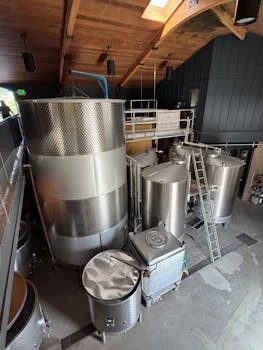
Conventional activated sludge costs $0.50–$1.50 per gallon of capacity for LA industrial plants. It achieves 90–95% BOD removal and needs 2,000–5,000 sq ft for a 10,000 GPD system. The headline price is lower, but power draw at LADWP's $0.22/kWh cuts both ways. Membrane Bioreactor (MBR) systems at $2–$4 per gallon push BOD removal above 99% and shrink the footprint by up to 60%. They still pull 2–3 times the energy of a conventional basin because of membrane aeration and permeate pumping. For plants we size in LA County, that energy delta is the single biggest swing factor on O&M. DAF units priced at $0.80–$2.00 per gallon as pretreatment pull greater than 95% TSS. They are the workhorse for LA's food, rendering, and metalworking flows that get hit hardest by LASAN FOG fees. Coagulants and flocculants run $0.10–$0.30 per gallon of treated wastewater at LA chemical supplier pricing. MBR membrane replacement and cleaning runs $0.20–$0.50 per gallon per year. DAF diffusers run $0.05–$0.15 per gallon per year. LA's higher wastewater treatment operator salary LA figures (covered later) move the labor line as well.
For more details on MBR technology, explore our MBR system for LA facilities needing Title 22 reuse-quality effluent. To understand DAF applications, see our high-efficiency DAF system for LA's high-FOG industrial wastewater.
| Technology | Capital Cost ($/gallon capacity) | BOD Removal Efficiency | Footprint (relative) | Energy Use (relative) | Typical Applications | Key LA-Specific Impact |
|---|---|---|---|---|---|---|
| Conventional Activated Sludge | $0.50–$1.50 | 90–95% | Large (100%) | Moderate (1x) | General industrial, municipal secondary treatment | Lower initial cost, higher land requirement, LA energy rates impact O&M. |
| MBR Systems | $2–$4 | >99% | Small (40%) | High (2-3x) | High-quality effluent, water reuse (Title 22), space-constrained sites | Higher capital, meets Title 22, LA energy rates significantly impact O&M. |
| DAF Systems | $0.80–$2.00 (pretreatment) | N/A (TSS/FOG removal >95%) | Medium (60%) | Moderate (1.5x) | Food processing, metal finishing, high FOG/TSS industries | Reduces LA's high FOG discharge fees, effective industrial pretreatment Los Angeles. |
How to Calculate Your Wastewater Treatment ROI in Los Angeles: A Step-by-Step Framework
For LA facility managers, ROI is the test that justifies the capital line. A LA metal finishing plant hit a 3.2-year payback with a DAF system, which is the kind of number boards actually approve. The four steps below work for most pretreatment and full-treatment projects we see in the county.
- Step 1: Estimate Current Surcharge Costs. Pull your last 12 months of LASAN QSF and LACSD surcharge invoices. Use the LASAN QSF calculator methodology (BOD, TSS, FOG, heavy metals, flow) to set a baseline annual expense.
- Step 2: Model Onsite Treatment Costs (Capital + Operational). Use the technology table above to size CapEx for a high-efficiency DAF system for LA's high-FOG industrial wastewater or MBR package, including engineering, permitting, installation, and commissioning. Then add O&M at LA-specific rates: $0.22/kWh (LADWP), $0.10–$0.30/gallon for coagulants/flocculants, plus the operator salary band shown later.
- Step 3: Factor in Compliance Savings. Assign a dollar value to avoided LASAN/LACSD fines for FOG, pH excursions, and heavy metals. Treat improved audit posture as a soft benefit; do not double-count.
- Step 4: Calculate Payback Period. Use the formula:
Payback Period (Years) = (Total Capital Cost) / (Annual Surcharge Savings + Annual Compliance Savings - Annual O&M Costs)
Worked example from the article data: $300,000 CapEx, $100,000 annual surcharge savings, $15,000 added O&M gives roughly 3.5 years payback. The metal finishing case at the same CapEx achieved 3.2 years, which lines up with the calculation.
For a broader cost benchmark, see our analysis of how Amsterdam's wastewater costs compare to LA's. For an LA-specific project scoping exercise, Request a free quote tailored to your facility's flow and discharge profile.
| ROI Calculation Step | Description | LA-Specific Data Point/Source |
|---|---|---|
| 1. Current Surcharge Costs | Annual expenditure on LASAN QSF and LACSD surcharges. | LASAN QSF calculator, LACSD revenue program. |
| 2. Capital Cost (CapEx) | Equipment, engineering, installation, permitting. | $1M–$5M for industrial plants, technology-specific costs. |
| 3. Operational & Maintenance (O&M) Costs | Electricity, chemicals, labor, maintenance. | $0.22/kWh (LADWP), $0.10–$0.30/gallon chemical, $75K–$110K/year operator salary. |
| 4. Compliance Savings | Avoided fines, reduced regulatory burden. | Fines for FOG, heavy metals, pH excursions. |
| 5. Payback Period Calculation | (CapEx) / (Annual Savings - Annual O&M) | Example: LA metal finishing plant achieved 3.2-year payback. |
Navigating LA's Wastewater Permitting and Compliance: What You Need to Know Before Building
A LASAN Industrial Wastewater Discharge Permit runs $5,000–$50,000 in application fees and 6–12 months to approval. Most rejections we see trace back to incomplete engineering plans, poor discharge characterization, or missing Best Available Technology (BAT) justification. LACSD pretreatment standards hold pH between 6 and 9, TSS below 250 mg/L, and BOD below 200 mg/L. Missing any of these triggers surcharges and fines, which is why robust industrial pretreatment Los Angeles design pays for itself. For reuse, Title 22's less than 2 NTU turbidity and median total coliform not exceeding 2.2 MPN/100 mL push most sites toward MBR or tertiary filtration plus UV. Sewer lateral upgrades add $10,000–$30,000 in many cases; check the LA County sewer lateral map before committing to a discharge point. Annual inspection, sampling, and reporting run $2,000–$10,000. LASAN audits are routine, and the records you keep in year one set the tone for year five. For small LA sites with limited flow, an underground package sewage treatment plant for small LA facilities from the WSZ series can simplify both permitting footprint and installation.
Frequently Asked Questions
How much does it cost to set up a sewage treatment plant in Los Angeles?
For industrial facilities, expect $1M–$5M for 1,000–50,000 GPD systems, all-in including permitting, equipment, and site work. Municipal plants typically cost $3–$10 per gallon of capacity. MBR systems offer a 60% smaller footprint and higher effluent quality, but can add 30–50% to capital cost versus conventional activated sludge.
How much does a wastewater treatment operator make in California?
A wastewater treatment operator in LA County typically earns $75,000–$110,000 per year (2025 Bureau of Labor Statistics data). Certified operators with higher-grade credentials can earn 20% more. For onsite industrial systems, part-time or contract operators often bill $30–$50 per hour, depending on experience and system complexity.
Do wastewater treatment plants make money?
Municipal wastewater treatment plants are primarily cost centers, funded by service charges and taxes. Industrial facilities can still see a 2–5 year ROI by cutting LA County wastewater treatment fees and surcharges. One cited food processor in Los Angeles saved about $450K per year in LASAN surcharges after a $1.2M onsite DAF pretreatment investment, for roughly 2.7 years payback.
What are the cheapest wastewater treatment options for small businesses in LA?
For small industrial flows, underground package sewage treatment plants for small LA facilities (e.g., WSZ series) can start from $50K for 1,000 GPD. Total project cost rises once permitting, installation, and ancillary equipment are included. For flows typically under 5,000 GPD, hauling wastewater offsite may look cheaper at first, given LA permitting and operating costs. Compare LASAN's fee schedule against local hauling rates before you decide.
How do I reduce my LA wastewater surcharges?
The most effective way to reduce LA wastewater surcharges is by implementing onsite pretreatment. This often involves installing a high-efficiency DAF system to remove FOG and TSS, or chemical precipitation for heavy metals. Keeping pH inside discharge limits (pH 6–9) is also critical. Cutting water use lowers discharged volume. A LA metal finishing plant cut surcharges by 60% after investing $300K in a DAF system and automated pH adjustment.