Kuwait’s MBR wastewater treatment systems deliver 92–97% COD removal and <1 μm effluent filtration, meeting PAEW’s 2025 discharge limits for industrial and municipal reuse. With 20% lower energy costs than conventional activated sludge (per Xylem’s Kuwait pilot) and a 60% smaller footprint, MBR systems are ideal for Kuwait’s high-salinity, space-constrained projects. This guide provides Kuwait-specific compliance standards, cost benchmarks (KWD 500–1,200/m³/day), and a 5-year ROI model to evaluate suppliers.
Why Kuwait’s Wastewater Treatment Challenges Demand MBR Systems
Kuwait faces significant hurdles in wastewater management, with an estimated 40% of industrial effluent currently failing to meet the Public Authority for Environmental Affairs (PAEW) 2025 TSS/COD limits. This non-compliance often stems from the inherent limitations of conventional treatment systems operating under the country's unique environmental stresses. High ambient temperatures, frequently exceeding 45°C in summer, and elevated influent salinity (ranging from 35,000–45,000 mg/L TDS in Gulf seawater-impacted streams) can reduce the efficiency of biological processes in conventional activated sludge systems by up to 30%, leading to inconsistent effluent quality and increased operational costs.
Space constraints are another critical factor, particularly for expanding existing facilities or developing new projects within urban centers like Kuwait City. MBR systems offer a compelling advantage with their 60% smaller footprint compared to conventional designs, as evidenced by data from leading manufacturers such as Atlas Copco. This compact design is vital for projects like the planned expansions at the Sulaibiya wastewater treatment plant, where land availability is at a premium.
Energy consumption is a major operational expense in Kuwait, where industrial electricity tariffs are approximately KWD 0.015/kWh. MBR technology, with its demonstrated 20% energy savings over conventional activated sludge (per Xylem’s Kuwait pilot data), offers a substantial reduction in OPEX, making it an economically attractive solution. the increasing demand for water reuse in Kuwait, driven by water scarcity, necessitates treatment technologies capable of producing high-quality effluent. MBR systems consistently deliver effluent that meets PAEW’s stringent Class A reuse standards, suitable for unrestricted irrigation and industrial cooling, contributing significantly to Kuwait’s water security goals. Innovations like KISR’s patented solar-powered wastewater treatment systems further underscore Kuwait's commitment to sustainable and energy-efficient water management solutions.
How MBR Systems Work: Process Flow and Kuwait-Specific Adaptations
Membrane Bioreactor (MBR) systems integrate conventional activated sludge biological treatment with a membrane filtration step, typically using submerged polyvinylidene fluoride (PVDF) membranes with pore sizes between 0.1 and 0.4 μm. The core process involves raw wastewater undergoing preliminary screening and grit removal, then entering an aeration tank where microorganisms break down organic pollutants. Unlike conventional systems, the mixed liquor then flows directly to the membrane tank, eliminating the need for a secondary clarifier. Continuous aeration, often supplied by high-efficiency blowers (e.g., those from Atlas Copco), serves a dual purpose: providing oxygen for biological activity and scouring the membrane surfaces to mitigate fouling.
For Kuwait-specific applications, several adaptations enhance MBR system performance and longevity. Given the high salinity of some industrial influents, anti-scaling coatings are often applied to membranes, or specialized salt-tolerant membrane chemistries are employed to prevent mineral precipitation. Elevated ambient temperatures can impact biological activity; thus, heat exchangers may be integrated to maintain optimal bioreactor temperatures. The abundant solar energy in Kuwait makes Kuwait-ready MBR systems with PVDF membranes and solar integration options, such as those leveraging KISR’s patented solar-powered aeration concepts, an increasingly viable and sustainable choice.
Membrane fouling, exacerbated by Kuwait’s typically high organic loads (often 800–1,200 mg/L COD), requires robust prevention strategies. This often translates to 2–3 times more frequent chemical cleaning cycles compared to systems in milder climates, necessitating PLC-controlled dosing for MBR fouling prevention in Kuwait’s harsh conditions. Despite these challenges, MBR systems consistently produce high-quality effluent, typically achieving <10 mg/L TSS, <30 mg/L BOD, and over 99.9% pathogen removal, surpassing most discharge and reuse standards. The simplified process flow from influent through screening, bioreactor, membrane filtration, and disinfection to final effluent is robust, often incorporating enhanced pre-treatment stages specifically for sand and silt removal common in Kuwaiti environments.
| MBR Process Component | Standard Function | Kuwait-Specific Adaptation/Consideration |
|---|---|---|
| Pre-treatment (Screening, Grit) | Removes large solids, abrasives | Enhanced stages for sand/silt prevalent in Gulf region |
| Bioreactor (Activated Sludge) | Biological organic removal | Temperature control via heat exchangers for optimal 30-35°C range in 45°C+ ambient |
| Membrane Module | Physical barrier for solids/pathogens | PVDF membranes with anti-scaling coatings or salt-tolerant chemistries |
| Aeration System | Oxygen supply, membrane scouring | High-efficiency blowers; potential for solar-powered aeration (KISR patent) |
| Chemical Cleaning | Restores membrane flux | 2-3x more frequent cleaning required due to high organic loads (800-1,200 mg/L COD) |
| Effluent Quality | High-quality permeate | Consistently achieves <10 mg/L TSS, <30 mg/L BOD, 99.9% pathogen removal |
MBR vs. Conventional Activated Sludge: Kuwait-Specific Comparison
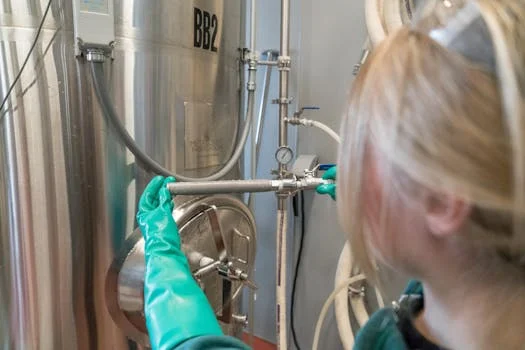
Evaluating wastewater treatment technologies in Kuwait requires a direct, data-driven comparison, especially between Membrane Bioreactor (MBR) systems and conventional activated sludge (CAS) plants. MBR technology consistently outperforms CAS in effluent quality, providing <1 μm filtration compared to CAS systems that typically achieve 20–30 μm. This superior filtration quality is critical for meeting stringent reuse standards for applications such as unrestricted irrigation and industrial cooling, where even trace particulates can cause issues.
Space efficiency is another significant advantage for MBR systems in Kuwait’s urban and industrial settings. MBRs require approximately 60% less footprint than conventional activated sludge plants, a figure supported by data from manufacturers like Atlas Copco. This compact design reduces land acquisition costs and simplifies integration into existing infrastructure, making it ideal for high-density areas or expansions of facilities like the Sulaibiya plant.
Operational costs, particularly energy consumption, are a major concern given Kuwait’s industrial electricity tariffs of KWD 0.015/kWh. MBR systems demonstrate approximately 20% lower energy costs compared to conventional activated sludge, according to Xylem’s Kuwait pilot data, primarily due to reduced aeration demands and the elimination of secondary clarification. MBR systems produce up to 30% less sludge, which translates to significant savings in disposal costs, whether through landfill fees or incineration, both of which represent considerable expenses in Kuwait. MBR systems also exhibit greater operational flexibility and tolerance for variable influent loads, which is advantageous for industrial facilities experiencing seasonal or irregular production cycles common in Kuwait. While MBR systems have higher membrane replacement costs, typically KWD 50–80/m² every 5–7 years for high-efficiency PVDF flat sheet membranes for Kuwait’s high-salinity wastewater, their fully automated operation often leads to labor savings, potentially reducing staffing requirements by 50% compared to labor-intensive conventional plants. This automation can offset some of the higher OPEX components by minimizing manual intervention and associated labor costs, which are substantial in Kuwait. For further insights into sludge dewatering options, engineers might explore sludge dewatering options for MBR systems in Kuwait.
| Feature | MBR System (Kuwait-Specific) | Conventional Activated Sludge (Kuwait-Specific) |
|---|---|---|
| Effluent Quality (TSS) | <1 mg/L (sub-micron filtration) | 5-15 mg/L (post-clarification) |
| Effluent Quality (BOD) | <5 mg/L | 10-20 mg/L |
| Footprint Requirement | 60% smaller (e.g., 0.5 m²/m³/day) | Larger (e.g., 1.2 m²/m³/day) |
| Energy Consumption | 20% lower (e.g., 0.3-0.5 kWh/m³) | Higher (e.g., 0.4-0.7 kWh/m³), higher aeration demands |
| Sludge Production | 30% less (e.g., 0.3-0.5 kg TSS/kg BOD removed) | Higher (e.g., 0.5-0.7 kg TSS/kg BOD removed) |
| Tolerance to Load Fluctuations | High (stable effluent quality) | Moderate (susceptible to upsets) |
| Maintenance Complexity | Membrane cleaning/replacement (KWD 50-80/m² every 5-7 years) | Clarifier maintenance, less specialized |
| Capital Cost | Higher upfront (KWD 500-1,200/m³/day) | Lower upfront |
| Operating Cost (OPEX) | Lower long-term due to energy/sludge savings, automation | Higher long-term due to energy/labor/disposal |
Kuwait’s MBR Compliance Standards and Effluent Quality Benchmarks
Designing and operating MBR systems in Kuwait requires strict adherence to the Public Authority for Environmental Affairs (PAEW) regulations to avoid substantial fines and permit revocations. PAEW’s 2025 discharge limits for treated wastewater are particularly stringent, mandating Total Suspended Solids (TSS) of <10 mg/L, Biochemical Oxygen Demand (BOD) of <10 mg/L, Chemical Oxygen Demand (COD) of <50 mg/L, and Fecal Coliform counts of <100 CFU/100mL. MBR technology is uniquely positioned to meet these demanding thresholds consistently, ensuring environmental compliance and allowing for safe discharge or reuse.
Beyond discharge, Kuwait’s water scarcity drives a strong emphasis on wastewater reuse. PAEW defines specific reuse standards: Class A effluent for unrestricted irrigation (e.g., public parks, agriculture) and Class B for industrial cooling, which typically requires lower pathogen removal but still demands high clarity and low organic content. MBR effluent, with its sub-micron filtration and high pathogen removal rates, readily achieves Class A standards, supporting the country's strategic water initiatives.
Industrial sectors in Kuwait face additional, sector-specific limits. For the vital oil and gas industry, Total Petroleum Hydrocarbons (TPH) must be <5 mg/L. Food processing plants must adhere to Fat, Oil, and Grease (FOG) limits of <10 mg/L, while the nascent pharmaceutical sector faces emerging regulations for Active Pharmaceutical Ingredients (APIs) often requiring concentrations below 1 μg/L. These challenges necessitate robust MBR pre-treatment and specialized membrane configurations. Monitoring requirements are stringent, involving continuous online sensors for parameters like TSS and BOD, complemented by quarterly independent laboratory testing. Non-compliance carries severe penalties, including fines ranging from KWD 10,000–50,000 and the potential for operational permit revocation, underscoring the critical need for reliable and compliant treatment solutions.
| Parameter | PAEW 2025 Discharge Limit (Industrial/Municipal) | PAEW Class A Reuse Limit (Unrestricted Irrigation) | MBR Typical Effluent Quality |
|---|---|---|---|
| Total Suspended Solids (TSS) | <10 mg/L | <5 mg/L | <1 mg/L |
| Biochemical Oxygen Demand (BOD₅) | <10 mg/L | <5 mg/L | <3 mg/L |
| Chemical Oxygen Demand (COD) | <50 mg/L | <30 mg/L | <20 mg/L |
| Fecal Coliform | <100 CFU/100mL | <2.2 CFU/100mL | <1 CFU/100mL (99.9% removal) |
| Turbidity | N/A | <2 NTU | <0.5 NTU |
| Total Petroleum Hydrocarbons (TPH) | <5 mg/L (Oil/Gas Sector) | N/A | <1 mg/L (with appropriate pre-treatment) |
| Fat, Oil, & Grease (FOG) | <10 mg/L (Food Processing) | N/A | <2 mg/L (with appropriate pre-treatment) |
MBR System Costs in Kuwait: CAPEX, OPEX, and 5-Year ROI Model
Evaluating the financial viability of MBR systems in Kuwait requires a detailed understanding of both Capital Expenditure (CAPEX) and Operational Expenditure (OPEX), culminating in a comprehensive Return on Investment (ROI) model. Initial CAPEX for an MBR system in Kuwait typically ranges from KWD 500–1,200/m³/day, influenced by factors such as the specific membrane type (e.g., PVDF flat sheet vs. hollow fiber), the level of automation desired, and the complexity of pre-treatment required for Kuwait’s challenging influent conditions. This upfront investment is often higher than conventional systems, but the long-term savings frequently justify it.
OPEX is a critical consideration, with energy accounting for approximately 40% of total operational costs. MBR’s demonstrated 20% energy savings (Xylem data) significantly reduce this component. Membrane replacement constitutes about 20% of OPEX, with high-efficiency PVDF flat sheet membranes for Kuwait’s high-salinity wastewater typically needing replacement every 5–7 years at a cost of KWD 50–80/m². Chemicals for cleaning and conditioning represent 15% of OPEX, while routine maintenance is another 15%. Labor costs, though only 10% of OPEX, are where MBR systems offer substantial savings; their fully automated operation can reduce staffing requirements by up to 50% compared to conventional systems, yielding significant reductions in Kuwait’s relatively high labor expenses.
A 5-year ROI model for a hypothetical 1,000 m³/day industrial wastewater treatment plant in Kuwait illustrates MBR’s financial benefits. Assuming a CAPEX of KWD 1,200/m³/day for MBR (total KWD 1.2M) and KWD 900/m³/day for a conventional system (total KWD 900K), the conventional system has a lower initial cost. However, MBR systems accrue annual savings of approximately KWD 300,000 from reduced energy consumption, lower sludge disposal costs, and decreased labor. Over five years, these operational savings total KWD 1.5M. When factored against the initial CAPEX, the MBR system demonstrates a compelling ROI, effectively paying for its higher upfront cost within the operational lifespan and delivering net savings. For instance, a conventional system might incur KWD 400,000/year in OPEX (total KWD 2M over 5 years), while an MBR system, despite higher membrane costs, could operate at KWD 100,000/year less (total KWD 1.5M over 5 years). The total 5-year cost for MBR (KWD 1.2M CAPEX + KWD 1.5M OPEX = KWD 2.7M) compares favorably to the conventional system (KWD 0.9M CAPEX + KWD 2M OPEX = KWD 2.9M), showcasing MBR’s long-term economic advantages. For a broader understanding of MBR system performance and costs in other regions with similar challenges, consider how MBR systems perform in other high-salinity regions like Portugal.
| Cost Category | MBR System (Typical for Kuwait, KWD/m³/day) | Conventional Activated Sludge (Typical for Kuwait, KWD/m³/day) |
|---|---|---|
| CAPEX (Initial Investment) | 500 - 1,200 | 300 - 900 |
| OPEX Breakdown (Annual % of Total OPEX) | ||
| Energy Consumption | 40% (0.3-0.5 kWh/m³) | 55% (0.4-0.7 kWh/m³) |
| Membrane Replacement | 20% (KWD 50-80/m² every 5-7 years) | N/A |
| Chemicals (Fouling, Disinfection) | 15% | 10% |
| Labor & Automation | 10% (50% less staff) | 15% (higher staff needs) |
| Maintenance & Parts | 15% | 10% |
| Sample 5-Year ROI (1,000 m³/day plant) | ||
| Total 5-Year CAPEX | KWD 1,200,000 | KWD 900,000 |
| Total 5-Year OPEX | KWD 1,500,000 | KWD 2,000,000 |
| Total 5-Year Cost | KWD 2,700,000 | KWD 2,900,000 |
| Annual Savings vs. Conventional | KWD 300,000 | N/A |
Top 5 MBR Suppliers for Kuwait Projects: Engineering Specs and Decision Framework
Selecting the right MBR supplier for a Kuwaiti project is a critical decision that impacts long-term operational efficiency and compliance. Leading providers in the region offer robust solutions tailored to the local environment. Key selection criteria include the membrane warranty, which should ideally be 5–10 years, demonstrating supplier confidence in product longevity. A strong local service network is paramount for rapid response to operational issues, critical for maintaining compliance and minimizing downtime. Suppliers must also demonstrate a proven track record of compliance with PAEW standards and offer energy-efficient designs that address Kuwait’s high electricity costs.
For instance, Xylem's projects in Kuwait have demonstrated significant energy savings, with one pilot achieving a 20% reduction in energy consumption for an MBR system. This highlights the importance of evaluating real-world performance data. When assessing suppliers, be wary of red flags such as the absence of a dedicated local service team, unproven membrane lifespan claims without verifiable references, or a lack of Kuwait-specific project references. Prospective clients should demand detailed technical specifications, including membrane flux rates under high-salinity and high-temperature conditions, and comprehensive operational support plans for Kuwait-ready MBR systems with PVDF membranes and solar integration options.
An effective Request for Proposal (RFP) checklist should include questions like: "What is your membrane’s certified fouling rate in 45°C, 40,000 mg/L TDS influent?", "Can you provide specific energy consumption data from a Kuwaiti installation?", "What is your local response time for emergency service?", and "How do you ensure compliance with PAEW’s Class A reuse standards?" These questions help differentiate providers and ensure the chosen system is optimized for Kuwait’s unique challenges. HydropureWater offers advanced high-efficiency PVDF flat sheet membranes for Kuwait’s high-salinity wastewater, backed by comprehensive engineering support.
| Supplier | Key Strengths for Kuwait | Typical Membrane Warranty | Local Support Presence | Key Engineering Specs to Verify |
|---|---|---|---|---|
| HydropureWater | Integrated MBR solutions, strong focus on industrial applications, adaptable membrane technology for high salinity. | 5-7 Years | Regional partners, project-based support | Fouling resistance (g/m²/day), specific energy consumption (kWh/m³), effluent quality guarantees for PAEW. |
| Xylem | Proven energy savings (20% in Kuwait pilot), extensive global experience, strong local presence. | 5-10 Years | Dedicated Kuwait office, service teams | Membrane pore size, flux rates, chemical cleaning frequency recommendations. |
| GE Water (now SUEZ Water Technologies & Solutions) | Robust membrane technology, comprehensive treatment portfolios, large-scale project experience. | 5-7 Years | Regional offices, local distributors | Membrane material, durability under high temperature, pre-treatment integration. |
| Suez | Broad range of water treatment solutions, membrane manufacturing, experience in arid regions. | 5-7 Years | Regional presence, project execution teams | System automation level, sludge reduction rates, operational flexibility for variable loads. |
| Toray | Leading membrane manufacturer, emphasis on membrane lifespan and performance. | 5-10 Years | Distributor network | Membrane element configuration, anti-scaling properties, long-term performance data. |
Frequently Asked Questions
Does Kuwait have a sewage system?
Yes, Kuwait operates an extensive municipal sewage system that collects wastewater from residential, commercial, and industrial sources, directing it to centralized treatment plants like the Sulaibiya Wastewater Treatment Plant. This infrastructure is continually being upgraded to meet growing demand and stricter environmental standards.
Which is better MBBR or MBR?
The choice between Moving Bed Biofilm Reactor (MBBR) and MBR depends on project-specific goals. MBR systems consistently produce higher-quality effluent suitable for direct reuse due to their membrane filtration step, achieving sub-micron clarity and excellent pathogen removal. MBBR systems are generally less expensive in CAPEX and OPEX, offer robust biological treatment, and are more tolerant to shock loads, but require subsequent clarification and filtration stages to match MBR effluent quality.
What are the disadvantages of MBR?
While highly effective, MBR systems have several disadvantages, including higher initial capital costs compared to conventional systems, and higher operational costs associated with membrane replacement (every 5-7 years) and chemical cleaning to prevent fouling. MBRs also require specialized technical expertise for operation and maintenance, and membrane integrity monitoring is crucial to prevent effluent quality issues.