Plate vs Belt Filter Press: 2025 Engineering Comparison with Data, Costs & Decision Framework
Plate and belt filter presses are the two dominant sludge dewatering technologies, but they differ sharply in performance and cost. Plate filter presses achieve 30-40% cake solids (vs 18-25% for belt presses) and recover 95-98% of solids, but require batch operation and higher capital investment. Belt presses offer continuous operation and lower upfront costs, but their annual operational expenses can be 6.5x higher due to polymer consumption and maintenance. The optimal choice depends on sludge type, throughput needs, and budget constraints—this guide provides the data to decide.
How Plate and Belt Filter Presses Work: Process Mechanics Explained
The fundamental difference between plate filter press and belt filter press lies in the application of pressure. A plate filter press operates on a batch basis, utilizing a series of recessed plates covered with filter cloth. A hydraulic system closes the plates with forces often exceeding 200 bar to ensure a leak-proof seal. Sludge is pumped into the chambers, where static pressure—typically ranging from 5 to 15 bar (HydropureWater field data, 2025)—forces filtrate through the cloth while solids accumulate in the chamber. A typical cycle lasts 2 to 4 hours, producing a cake thickness of 25-35 mm. Once the cycle is complete, the plates open, and the dry cake is discharged via gravity or mechanical scrapers.
In contrast, a belt filter press is a continuous process designed for high-volume throughput. The sludge first enters a gravity drainage zone where free water is removed, often assisted by automated polymer dosing systems for sludge conditioning. The thickened sludge then passes between two tensioned porous belts that move over a series of rollers. This dynamic squeezing process begins in a low-pressure zone and moves to high-pressure zones where rollers of decreasing diameter increase the shear force. Belt speeds typically range from 0.5 to 5 m/min, and the process relies heavily on chemical flocculation to maintain belt permeability.
Mechanical differences dictate the sludge suitability. The high static pressure of a plate press makes it ideal for fine, compressible sludges found in chemical manufacturing or municipal waste activated sludge (WAS). The dynamic, lower-pressure squeezing of a belt press (2-8 bar) is better suited for fibrous or coarse materials, such as those found in paper mills or food processing plants, where the material resists compaction and allows for faster water release.Performance Comparison: Cake Solids, Throughput, and Efficiency

Engineers evaluating these technologies must prioritize the final disposal method. According to EPA 2024 benchmarks, the moisture content of the resulting cake is the single largest factor in determining long-term disposal costs. Plate presses consistently outperform belt presses in cake dryness, achieving 30-40% solids for municipal sludge and up to 50% for specific industrial slurries. This significantly reduces the weight and volume of waste destined for landfills or incineration.
Solids recovery efficiency is another critical metric. Plate presses capture 95-98% of suspended solids, resulting in a very clear filtrate that requires minimal post-treatment. Belt presses, however, often see solids recovery rates between 85% and 92% due to "wash-through" at the belt edges or through the mesh during the high-pressure stage. This lower recovery rate increases the solids loading on the headworks of the wastewater treatment plant.
| Performance Metric | Plate Filter Press | Belt Filter Press |
|---|---|---|
| Cake Solids % (Municipal) | 30% - 40% | 18% - 25% |
| Cake Solids % (Industrial) | 35% - 50% | 20% - 30% |
| Solids Recovery Rate | 95% - 98% | 85% - 92% |
| Polymer Consumption | 0.1% - 0.3% (dry solids) | 0.2% - 0.5% (dry solids) |
| Energy Use (Specific) | 0.2 - 0.5 kWh/m³ | 0.1 - 0.3 kWh/m³ |
| Throughput (Specific) | 5 - 20 kg/m²/h (batch) | 100 - 500 kg/h/m (continuous) |
While belt presses offer higher instantaneous throughput, the plate press's ability to handle higher solids concentrations often offsets its batch nature. Energy consumption in plate presses is primarily driven by the high-pressure feed pumps, whereas belt presses consume energy through continuous motor operation for belt movement and high-volume wash water pumps required for belt cleaning.
Cost Analysis: Capital, Operational, and Lifecycle Expenses
Procurement teams must consider several factors beyond the initial purchase price.Procurement teams must look beyond the initial purchase price to understand the total cost of ownership (TCO). A HydropureWater’s plate and frame filter press for industrial sludge dewatering typically carries a higher capital cost, ranging from $50,000 for small units to over $500,000 for large-scale modular installations. Installation costs add another 15-20% to the equipment price. Belt presses are generally 20-30% cheaper upfront, with prices for a 2-meter wide unit ranging from $120,000 to $250,000.
However, the operational cost (OPEX) tells a different story. Industrial benchmarks indicate that a belt press can cost 6.5x more to operate annually than a plate press. This is largely due to polymer consumption; belt presses require significantly more chemical conditioning to prevent sludge from squeezing out the sides of the belts. For a facility processing 20 tons of dry solids per day, the savings in polymer and disposal costs using a plate press can exceed $100,000 annually. Over a 10-year lifecycle, the TCO for a plate press system often lands around $1.2M, compared to $1.8M for a belt press, despite the belt press's lower starting price.
| Cost Component (10-Year Estimate) | Plate Filter Press | Belt Filter Press |
|---|---|---|
| Initial Equipment Cost | $250,000 | $180,000 |
| Annual Polymer Cost | $15,000 | $45,000 |
| Annual Maintenance (Parts/Labor) | $8,000 | $22,000 |
| Annual Disposal Savings | $60,000 (Base) | $0 (Reference) |
| 10-Year TCO (approx.) | $1,200,000 | $1,800,000 |
Hidden costs such as downtime also favor the plate press in specific scenarios. While a plate press requires 1-2 hours of monthly downtime for cloth inspection, a belt press requires 4-8 hours per month for belt tracking adjustments and roller bearing lubrication. Frequent belt replacements—every 2 to 5 years—represent a significant recurring expense that plate presses avoid, as filter plates can last 10 years or more with proper care.
Maintenance and Operational Requirements: What Your Team Needs to Know
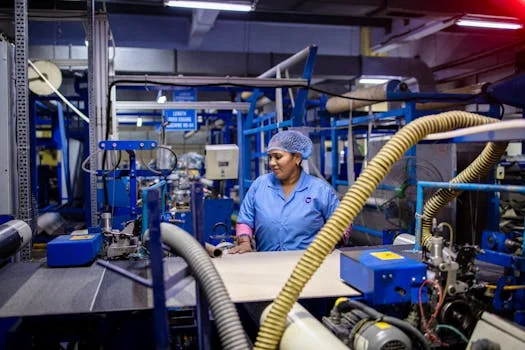
The operational complexity of dewatering equipment directly impacts labor costs and system reliability. Plate filter presses require basic to intermediate operator skills. The primary tasks involve monitoring the hydraulic closure system and ensuring plates are aligned during the discharge cycle. Daily maintenance is limited to visual inspections of hydraulic fluid levels and checking for leaks. On a weekly basis, operators should perform a high-pressure wash of the filter cloths to prevent blinding, which can be automated in higher-end models.
Belt filter presses demand a higher level of technical expertise. Operators must constantly monitor belt tracking—the alignment of the belt on the rollers—as even slight mistracking can lead to catastrophic belt failure. Daily tasks include calibrating the polymer dosing system, as changes in sludge consistency will immediately affect dewatering performance. Weekly maintenance involves lubricating dozens of roller bearings and inspecting the belt tensioning system. Failure modes for belt presses are often more sudden, such as belt tears caused by debris or tracking failures, whereas plate press issues like plate misalignment are typically easier to detect and correct before damage occurs.
Common failure modes and troubleshooting:
- Plate Press: If cake is too wet, check for cloth blinding or insufficient feed pump pressure. If the hydraulic system fails to hold pressure, check the seals on the main cylinder.
- Belt Press: If sludge is "squeezing out" the sides, reduce the feed rate or increase polymer dosage. If the belt is wandering, inspect the tracking sensors and pneumatic cylinders for proper operation.
Use Case Matching: Which Technology Fits Your Sludge Type and Application
Selecting the right technology requires evaluating specific application needs.Selecting the right technology requires a comprehensive comparison of sludge dewatering technologies against specific application needs. For municipal wastewater, the choice often hinges on the sludge's age and composition. Waste Activated Sludge (WAS) is notoriously difficult to dewater; a plate press is almost always the better choice here to achieve disposal-ready cake solids. For primary sludge, which dewaters easily, the high throughput of a belt press may be more advantageous.
In industrial sectors, regulatory compliance often dictates the technology. Under the EU Landfill Directive 1999/31/EC and similar North American regulations, sludge must meet specific "paint filter test" requirements or minimum solids percentages before landfilling. Plate presses are the standard for chemical, pharmaceutical, and metal finishing sludges because they handle fine particles and produce the driest possible cake. Belt presses excel in the food and beverage industry, where fibrous waste from fruit processing or paper mill sludge can be processed continuously at high volumes.
| Application | Recommended Tech | Primary Reason |
|---|---|---|
| Municipal WAS | Plate Press | High solids capture and cake dryness. |
| Paper & Pulp | Belt Press | Handles large volumes of fibrous material. |
| Chemical/Mining | Plate Press | Static pressure handles fine, dense particles. |
| Food Processing | Belt Press | Continuous flow matches production cycles. |
| Small Footprint Plant | Belt Press | Vertical roller configurations save floor space. |
A real-world case study involves a municipal plant in Jiangsu, China, which recently transitioned from a belt press to a HydropureWater plate press for their WAS stream. By switching, they increased cake solids from 21% to 36%. This 15% improvement led to a 20% reduction in total disposal costs and a 30% reduction in polymer consumption, resulting in a project ROI of just 18 months.
Decision Framework: How to Choose Between Plate and Belt Filter Presses
- Define Sludge Characteristics: Conduct lab tests for Capillary Suction Time (CST) and Specific Resistance to Filtration (SRF). If the SRF is