Why Senegal’s Industries Need DAF for Wastewater Compliance
DAF systems in Senegal remove 92–97% TSS and 85–90% FOG when coagulation, flocculation, and air-to-solids ratio are controlled. Micro-bubbles of 30–50 μm attach to flocs formed after PAC or ferric dosing, then float oils and solids for skimming. Plants use the process for food processing, textiles, and petrochemicals that fail gravity settling alone.
Senegal’s industrial discharge rules are set in Norme Sénégalaise NS 05-061 (Direction de l’Environnement et des Établissements Classés). For natural discharge, NS 05-061 fixes TSS (MEST) at 50 mg/L. BOD5 is 80 mg/L when the authorized daily BOD load is ≤30 kg/d, and 40 mg/L above that. COD is 200 mg/L when the authorized daily COD load is ≤100 kg/d, and 100 mg/L above that. Total hydrocarbons are capped at 15 mg/L when the daily mass exceeds 150 g/d. In the Annex comparison table for receiving waters, TSS is 40 mg/L in standard milieux and 30 mg/L in specially protected waters, with COD 200 mg/L and 90 mg/L respectively. Earlier marketing summaries often cited ≤30 mg/L TSS, ≤10 mg/L FOG, and ≤150 mg/L COD as “2025” targets. Those figures are tighter than the published NS 05-061 baselines. Treat them as site-permit goals, not the national default.
Food plants generate FOG and protein solids; textile mills discharge dyes and fibers; petrochemical sites carry oil emulsions. Missed limits trigger DEEC inspections, permit risk, and pollution redevance under the polluter-pays principle. One fish plant in Dakar cut TSS from 450 mg/L to 25 mg/L with DAF, staying under both the 50 mg/L NS baseline and a tighter internal reuse target. Most plants we size for West African FOG loads run hydraulic loading at the lower end of the 2–8 m/h TSS band until jar tests confirm stable float.
How DAF Systems in Senegal Work: Micro-Bubble Design
Dissolved Air Flotation systems dissolve air into a recycle stream at 4–6 bar, then release that water into the flotation tank so 30–50 μm bubbles form and attach to chemically conditioned solids. Coagulants such as polyaluminium chloride (PAC) or ferric chloride neutralize particle charge; polymers such as polyacrylamide bridge micro-flocs into buoyant aggregates. The air-to-solids ratio is held between 0.02 and 0.06 so float sludge thickens without sinking. Skimmers remove the float; clarified water exits over a weir.
Typical removal under industrial jar-test conditions is 92–97% TSS, 85–90% FOG, and 60–80% COD when influent FOG is free or lightly emulsified and PAC is dosed in the 50–200 mg/L range. Emulsified oils need stronger coagulation before flotation. Hydraulic loading for industrial duty usually sits between 2 and 10 m/h, with the exact set-point set by pollutant type and float stability.
Most plants we size for coastal food and fish processors keep recycle rates near 20–30% of feed until float dryness and effluent TSS both stabilize. Saturator pressure below 4 bar often starves bubble formation; above 6 bar wastes compressor energy without better attachment. Operators should log float solids concentration daily during the first month, because under-dosed polymer shows up as wet, unstable float long before COD drifts.
| Pollutant Type | Typical Hydraulic Loading Rate (m/h) | Primary Removal Mechanism |
|---|---|---|
| Suspended Solids (TSS) | 2–8 | Micro-bubble attachment and flotation |
| Fats, Oils, and Grease (FOG) | 4–10 | Surface adhesion and flotation |
| Emulsified Oils | 3–7 | Coagulation/Flocculation followed by flotation |
| Lightweight Solids | 2–5 | Enhanced buoyancy with micro-bubbles |
Polymer dose is always confirmed by jar testing on site wastewater, not by brochure curves. For equipment scope and skid options, see the Dissolved Air Flotation (DAF) System product page used for industrial packages in the 4–300 m³/h band.
DAF vs Alternatives: Engineering Comparison for Senegal’s Industries
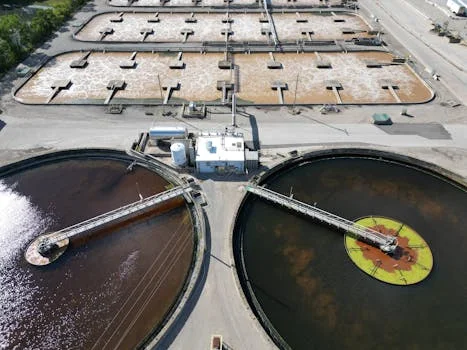
DAF systems outperform gravity settlers when FOG dominates, because surface skimming removes floatable oils that lamella packs miss. Lamella clarifiers suit high-TSS, low-FOG textile streams and need less energy, but FOG removal often stalls at 50–70%.
| Technology | TSS Removal Efficiency (%) | FOG Removal Efficiency (%) | Footprint (m²/100 m³/h) | Energy Consumption (kWh/m³) | O&M Costs (€/m³) |
|---|---|---|---|---|---|
| DAF | 92–97 | 85–90 | 10–20 | 0.1–0.3 | 0.05–0.15 |
| Lamella Clarifier | 70–90 | 50–70 | 15–25 | 0.05–0.15 | 0.03–0.10 |
| MBR | >98 | >95 | 5–10 | 0.5–1.2 | 0.20–0.40 |
| Dispersed Air Flotation | 75–85 | 70–80 | 12–22 | 0.15–0.35 | 0.07–0.18 |
Choose DAF when FOG exceeds roughly 100–200 mg/L after screening, or when a compact float cell must hit NS 05-061 TSS and hydrocarbon caps before biological treatment. Choose lamella when solids settle well and oil is minor. Choose MBR only when reuse quality justifies the energy bill. Side-by-side decision data appear in DAF vs lamella clarifiers, MBR, and other alternatives; reuse trains are covered under MBR wastewater treatment systems.
DAF System Costs in Senegal: Capital and O&M Breakdown
Capital cost for a DAF package in Senegal typically runs €50,000–€500,000 FOB China or EU for 4–300 m³/h capacity. Installation—civil works, piping, electrics—adds 15–25% of equipment cost. O&M usually lands at €0.05–0.15 per m³ treated, covering compressed air, pumps, coagulants, polymer, labor, and sludge haulage. A 50 m³/h food-plant unit often pays back in 2.5–4 years when avoided fines and reuse savings are counted. Financing paths can include Fonds de Développement Industriel grants, World Bank-linked facilities, and supplier credit.
Landed cost for DAF systems in Senegal also reflects freight to Dakar, inland haulage, and commissioning days for PLC and chemical make-up training. Budget at least one week of supervised start-up when operators are new to flotation. Chemical inventory for the first quarter—PAC plus polymer—should sit in the CapEx contingency, not only in O&M forecasts.
| Cost Component | Estimated Range | Notes |
|---|---|---|
| Capital Costs (Equipment) | €50,000 – €500,000 | For 4–300 m³/h capacity, FOB China/EU |
| Installation Costs | 15–25% of Capital Cost | Includes civil, mechanical, electrical work |
| O&M Costs (per m³) | €0.05 – €0.15 | Energy, chemicals, labor, sludge disposal |
| Average Payback Period (Food Processing, 50 m³/h) | 2.5 – 4 years | Based on avoided fines and water reuse savings |
Import duties for non-ECOWAS suppliers often add 10–20% on CIF value, so landed cost must sit in the bid comparison, not only FOB. Application-specific ROI math for edible-oil and protein plants is outlined in the food processing wastewater treatment guide.
Compliance Checklist: Meeting Senegal’s NS 05-061 Limits with DAF
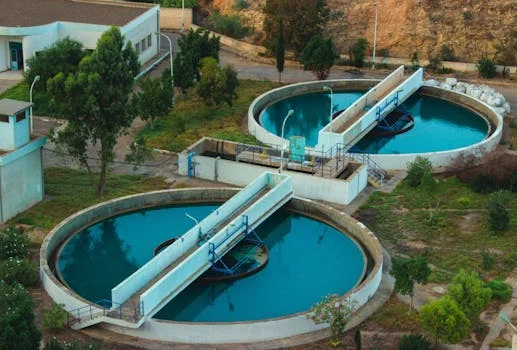
Compliance with Senegal’s industrial discharge rules starts upstream of the DAF cell. Pre-treatment should hold pH at 6.5–8.5, screen solids larger than 5 mm, and equalize flow for 4–8 hours so peak FOG and TSS do not wash out flotation. Inside the DAF, keep hydraulic loading ≤8 m/h for TSS-heavy feeds, air-to-solids at 0.02–0.06, and PAC typically at 50–200 mg/L after jar confirmation. Post-treatment may add chlorine or UV disinfection, final pH trim, and sludge dewatering on a filter presses or centrifuge to cut haulage volume.
Selection checklist for Senegal industrial sites:
- Confirm permit limits versus NS 05-061 baselines (TSS 50 mg/L natural discharge; 40/30 mg/L in Annex receiving-water table; COD 200/100 mg/L by daily load; hydrocarbons 15 mg/L above 150 g/d).
- Measure influent TSS, FOG, COD, and emulsified-oil fraction at peak and average shifts.
- Size equalization for 4–8 h retention before flotation.
- Lock coagulant and polymer doses with on-site jar tests, not catalog defaults.
- Set hydraulic loading inside the 2–10 m/h industrial band for the dominant pollutant.
- Plan daily TSS/FOG/COD checks plus quarterly third-party audits and annual permit renewal.
- Budget sludge cake disposal and spare saturator/skimmer parts with local lead time.
City-level layout notes for coastal plants appear in industrial wastewater treatment in Dakar. Keep sample taps before and after the DAF so operators can prove TSS and FOG removal during DEEC inspections without guessing from a single downstream meter.
Supplier Decision Framework for Senegal Projects
Supplier selection for a Senegal DAF project should weight technical fit, West African references, after-sales reach, and landed cost—not FOB price alone. Capacity must cover 4–300 m³/h as needed; stainless steel suits corrosive or food-grade duty, while coated carbon steel can serve milder streams. PLC automation reduces operator load on multi-shift plants; manual panels fit simpler batch sites. Skid-mounted units cut civil work; site-built tanks fit very large flows.
| Criterion | Key Considerations | Importance for Senegal |
|---|---|---|
| Technical Capabilities | Capacity, materials, automation, skid-mounted vs. site-built | High: Must meet specific effluent targets and site constraints. |
| Supplier Experience | Senegalese market experience, local references, ISO 9001 | Critical: Demonstrates understanding of local conditions and regulatory nuances. |
| After-Sales Support | Local service network, spare parts availability, warranty (2-5 years), training | Essential: Minimizes downtime and ensures long-term operational efficiency. |
| Cost & Financing | FOB/CIF pricing, payment terms, import duties, financing options | High: Budgetary constraints and access to finance are key procurement factors. |
| Compliance Expertise | Understanding of Senegal's 2025 discharge limits, pre-treatment requirements | Critical: Ensures the system meets all regulatory obligations. |
Payment terms often require 30–50% down. Red flags include no Senegal or West Africa references, missing ISO 9001 paperwork, vague NS 05-061 compliance narratives, or no spare-parts plan. A Dakar textile mill case showed that integrated pre-treatment, flotation, and dewatering plus on-call support mattered more than a slightly lower FOB quote. When comparing packages, request the same hydraulic loading, air-to-solids, and chemical dose basis used for the DAF systems for industrial wastewater treatment in Senegal sizing tables.
Float sludge dryness and effluent TSS at those three points reveal whether the saturator and skimmer are oversized or barely adequate. Warranties of 2–5 years should name the saturator pump, scraper drive, and PLC as covered items, not only the tank shell.
Who This Is For / Next Step
This guide is for plant engineers, EPC contractors, and procurement managers sizing FOG- or TSS-heavy pretreatment in Senegal food, textile, and petrochemical facilities. Teams that already meet NS 05-061 with settling alone, or that need reuse-grade water without a biological polish, should look at lamella or MBR paths instead. To match capacity, materials, and compliance scope to your influent data, request a DAF sizing quote with flow, TSS, FOG, and COD figures.
Frequently Asked Questions
What TSS and FOG removal can DAF deliver in Senegal plants?
DAF typically achieves 92–97% TSS and 85–90% FOG removal when PAC or ferric coagulation, polymer flocculation, and an air-to-solids ratio of 0.02–0.06 are controlled. Those rates help plants meet NS 05-061 TSS baselines of 50 mg/L for natural discharge and the tighter 40/30 mg/L Annex receiving-water values. Emulsified oils need stronger chemical conditioning before flotation.
How does DAF treat food-processing FOG loads?
DAF floats FOG and protein solids that settle poorly after screening. Coagulants neutralize charge; polymers build buoyant flocs; 30–50 μm bubbles lift them for skimming. Food plants treating about 50 m³/h often see payback in 2.5–4 years when avoided fines and reuse savings are included. Equalization of 4–8 hours keeps peak kitchen or process dumps from flooding the float cell.
What energy use should buyers expect versus MBR or lamella?
DAF energy usually sits at 0.1–0.3 kWh/m³ for industrial packages. Lamella clarifiers often use 0.05–0.15 kWh/m³ but remove less FOG. MBR systems commonly draw 0.5–1.2 kWh/m³ while producing reuse-grade water. For Senegal FOG-heavy pretreatment before biology, DAF balances removal and power better than MBR.
Can textile mills in Senegal use DAF on dye wastewater?
Textile mills can use DAF for suspended fibers, coagulated dye solids, and residual oils when jar tests confirm floatability. High salinity or true dissolved color may need separate oxidation or adsorption after flotation. Hydraulic loading in the 2–8 m/h TSS band is a practical starting point until pilot data are available.
What drives DAF operating cost per cubic meter?
O&M typically ranges €0.05–0.15 per m³ and is driven by air compression, recycle pumping, coagulant and polymer use, labor, and sludge disposal. PAC doses of 50–200 mg/L and polymer set by jar tests dominate chemical cost. Dewatering float sludge before haulage usually cuts the disposal line item more than trimming blower power.
Related Equipment
- post-DAF disinfection for Senegal’s industrial wastewater standards — view specifications, capacity range, and technical data
Need a customized solution? Request a free quote with your specific flow rate and pollutant parameters.