MBR Wastewater Treatment Systems in Sweden: 2025 Engineering Guide with Costs, Compliance & ROI Data
Sweden’s MBR wastewater treatment systems deliver near-reuse-quality effluent (<1 μm filtration) with 60% smaller footprints than conventional activated sludge, but at 20–30% higher CAPEX. The Henriksdal WWTP upgrade (2025 completion) uses GE’s MBR membranes to treat 535,000 m³/day, achieving 95% COD removal and compliance with Sweden’s stringent nitrogen/phosphorus limits. This guide provides 2025 engineering specs, cost benchmarks (SEK 8,000–15,000/m³/day), and ROI data for municipal and industrial projects.Why Sweden’s Wastewater Sector is Adopting MBR Systems
Sweden’s wastewater sector is increasingly adopting Membrane Bioreactor (MBR) systems due to stringent environmental regulations, growing water scarcity concerns, and the need for compact, high-performance treatment solutions. By 2025, Sweden aims for 90% nitrogen removal and 95% phosphorus removal in municipal wastewater, alongside emerging limits for micropollutants, as outlined by Svenskt Vatten (2021). These ambitious targets necessitate advanced treatment technologies capable of delivering superior effluent quality beyond what conventional activated sludge (CAS) systems can consistently achieve. A prime example of this transition is the ongoing Henriksdal WWTP upgrade in Stockholm, set for completion in 2025. This significant project will expand Henriksdal’s capacity to treat 535,000 m³/day by 2040, incorporating MBR technology to handle increased flows from the closure of the Bromma WWTP and new tunnel conveyance systems (Stockholm Vatten data). This large-scale municipal investment underscores MBR’s proven capability to meet future demands. a full-scale MBR + Granular Activated Carbon (GAC) study in Scania, Sweden, demonstrated the system’s efficacy over one year of operation, achieving significant pathogen removal and organic pollutant reduction, paving the way for advanced water reuse applications (SciDirect 2023). MBR systems also exhibit remarkable resilience to cold temperatures, a critical advantage for Swedish winters. Process adaptations such as insulated tanks and careful membrane material selection ensure stable biological activity and membrane performance even in sub-zero conditions, minimizing seasonal fluctuations in treatment efficiency that can plague conventional systems. This makes the MBR wastewater treatment system in Sweden a robust choice for year-round operation.MBR System Engineering Specs for Swedish Conditions
| Parameter | MBR System (Typical for Sweden) | Conventional Activated Sludge (CAS) |
|---|---|---|
| Effluent Quality (TSS) | <1 mg/L | <10 mg/L (with tertiary filtration) |
| Effluent Quality (BOD₅) | <5 mg/L | <10 mg/L |
| Effluent Quality (Total N) | <10 mg/L | 10-20 mg/L |
| Footprint Reduction | 60% smaller than CAS + clarifier | Reference (larger) |
| Energy Consumption | 0.6–1.2 kWh/m³ | 0.3–0.5 kWh/m³ |
| Membrane Flux (PVDF) | 15–25 LMH | N/A |
| Sludge Production | 0.2–0.4 kg TSS/kg BOD removed | 0.5–0.7 kg TSS/kg BOD removed |
| Membrane Lifespan | 5–8 years (PVDF/PTFE) | N/A |
MBR vs. Conventional Systems: Cost and Performance Comparison for Sweden
Evaluating MBR against conventional wastewater treatment systems like Activated Sludge (CAS) with clarifiers or Dissolved Air Flotation (DAF) requires a comprehensive analysis of both Capital Expenditure (CAPEX) and Operational Expenditure (OPEX), particularly within the Swedish market context. For a typical MBR wastewater treatment system in Sweden, CAPEX ranges from SEK 8,000–15,000 per cubic meter per day (m³/day) of capacity, significantly higher than the SEK 5,000–10,000/m³/day for a CAS system with clarifiers. A substantial portion of MBR CAPEX includes membrane replacement costs, which average SEK 1,500–2,500/m² every 5–8 years, depending on membrane type and operational conditions. OPEX for MBR systems in Sweden typically falls between SEK 0.8–1.5/m³, primarily due to higher energy consumption for aeration and membrane scouring, as well as chemical cleaning. In contrast, CAS systems usually incur OPEX of SEK 0.5–1.0/m³. However, MBR systems offer superior performance metrics. They consistently achieve >99% TSS removal, >95% COD/BOD removal, and reliably meet Sweden’s stringent nitrogen (<10 mg/L) and phosphorus (<0.3 mg/L) compliance limits, alongside significant pathogen reduction. This makes MBR systems ideal for situations requiring high-quality effluent or water reuse.| Feature | MBR System | Conventional Activated Sludge (CAS) + Clarifier | Dissolved Air Flotation (DAF) |
|---|---|---|---|
| CAPEX (SEK/m³/day) | 8,000–15,000 | 5,000–10,000 | 3,000–7,000 (primary/tertiary) |
| OPEX (SEK/m³) | 0.8–1.5 | 0.5–1.0 | 0.3–0.7 |
| TSS Removal | >99% (<1 mg/L) | 85–95% (after clarifier) | 80–95% (depending on influent) |
| COD/BOD Removal | >95% | 85–90% | 30–70% (primary), >90% (tertiary) |
| Nitrogen Compliance | <10 mg/L (excellent) | Variable (requires denitrification) | Minimal |
| Phosphorus Compliance | <0.3 mg/L (excellent) | Requires chemical addition | Requires chemical addition |
| Pathogen Reduction | >4-log (significant) | <1-log (minimal) | Minimal |
| Footprint | Compact (60% less than CAS) | Large | Compact (for specific applications) |
| Typical Use Case | Limited space, water reuse, stringent effluent, micropollutant removal | Large flows, lower cost priority, less stringent effluent | High FOG/solids removal, primary treatment, industrial pre-treatment |
Sweden’s Regulatory Landscape for MBR Systems and Water Reuse
Case Study: Henriksdal WWTP’s MBR Upgrade – Lessons for Swedish Projects
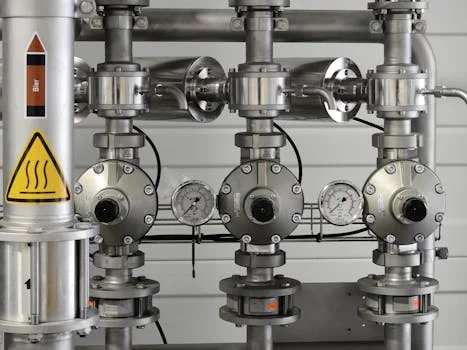
The Henriksdal WWTP MBR upgrade, one of Europe's largest ongoing wastewater projects, demonstrates the practical application and benefits of advanced MBR technology in a demanding urban environment. With a project scope designed to handle 535,000 m³/day of wastewater by 2040, the facility is integrating GE’s MBR membranes to achieve unprecedented effluent quality (data from Stockholm Vatten). The upgrade, slated for completion in 2025, represents a significant investment in future-proofing Stockholm’s wastewater infrastructure. Operating an MBR system in Sweden presents unique challenges, particularly cold-weather operation and membrane fouling. Henriksdal has addressed these by implementing robust insulation for bioreactor tanks, optimizing aeration strategies to maintain biological activity, and selecting durable membrane materials. Energy optimization is another critical aspect, with ongoing efforts to recover energy from biogas production and optimize aeration control to reduce the MBR system’s overall power consumption. Initial results from the upgraded sections and pilot studies indicate exceptional performance, with the MBR achieving 95% COD removal, 99% TSS removal, and consistent compliance with Sweden’s stringent nitrogen and phosphorus limits. This marks a substantial improvement over the pre-upgrade conventional activated sludge system, which required more extensive tertiary treatment to meet similar standards. The total budget for the Henriksdal upgrade is approximately SEK 1.5 billion, with the MBR-specific CAPEX estimated at SEK 12,000/m³/day. This cost breakdown includes significant investments in membranes, extensive civil works for the new bioreactor tanks, and advanced automation systems. Key lessons learned from the Henriksdal project emphasize the importance of rigorous membrane cleaning protocols, comprehensive operator training to manage the advanced technology, and robust redundancy planning to ensure continuous operation, even during maintenance or unexpected events. These actionable takeaways are invaluable for other Swedish projects considering MBR implementation.How to Select an MBR System for Your Swedish Project: A Decision Framework
- Step 1: Define Project Requirements. Clearly outline your project's specific needs, including average and peak flow rates, target effluent quality (e.g., nitrogen, phosphorus, BOD, TSS, micropollutants), available footprint, and overall budget constraints. Consider future expansion plans and potential water reuse objectives.
- Step 2: Evaluate Membrane Suppliers. Research and compare different membrane suppliers and technologies. Consider the advantages of PVDF vs. PTFE membranes in terms of fouling resistance, chemical compatibility, and lifespan for Swedish influent characteristics. Assess warranty terms, local technical support availability, and the supplier's track record in cold climates.
- Step 3: Request Pilot Testing. For critical projects, request pilot testing of the proposed MBR technology using your actual wastewater influent. This step is crucial for empirically determining fouling rates, specific energy consumption, and cold-weather performance under real-world conditions. Pilot data provides invaluable insights that cannot be gleaned from manufacturer specifications alone.
- Step 4: Compare CAPEX/OPEX. Obtain detailed quotes from multiple suppliers, breaking down capital expenditures (membranes, civil works, mechanical, electrical, automation) and operational expenditures (energy, chemicals, labor, membrane replacement). Use a standardized template for supplier quotes to facilitate an apples-to-apples comparison.
- Step 5: Negotiate Contracts. Focus on key contractual terms, including membrane replacement guarantees, performance guarantees (effluent quality, energy consumption), and operator training programs. Ensure the contract addresses long-term support and spare parts availability.
| Decision Criteria | Considerations for Swedish Projects | Impact |
|---|---|---|
| Effluent Quality Goals | <10 mg/L N, <0.3 mg/L P, emerging micropollutants | Determines membrane type, system design complexity |
| Available Footprint | Urban areas, existing WWTP upgrades (e.g., Henriksdal) | Favors MBR's compact design; dictates tank configurations |
| Cold Climate Resilience | Sub-zero temperatures, ice formation, biological kinetics | Requires robust insulation, heating, specific membrane materials (PTFE) |
| Energy Costs (OPEX) | High electricity prices in Sweden | Optimized aeration, energy recovery, efficient blowers are critical |
| Water Reuse Potential | Industrial process water, irrigation, indirect potable reuse | Influences required effluent quality, additional post-treatment (e.g., GAC) |
| Long-Term Maintenance | Membrane cleaning, replacement, operator expertise | Consider ease of maintenance, local supplier support, training needs |
Frequently Asked Questions
What is the largest MBR wastewater treatment plant in Sweden?
The largest MBR wastewater treatment plant in Sweden is the Henriksdal WWTP in Stockholm, which is undergoing an upgrade to a capacity of 535,000 m³/day with MBR technology.
How much does an MBR system cost in Sweden?
The Capital Expenditure (CAPEX) for an MBR system in Sweden typically ranges from SEK 8,000–15,000/m³/day of capacity, while Operational Expenditure (OPEX) is generally SEK 0.8–1.5/m³ of treated wastewater.
What is the difference between MBR and clarifier?
An MBR system replaces the conventional secondary clarifier and tertiary filtration, offering a 60% smaller footprint, producing near-reuse-quality effluent (<1 μm filtration), and providing superior pathogen removal. However, MBR typically has a higher CAPEX compared to a conventional activated sludge system with a clarifier, which requires a larger footprint and often additional tertiary treatment for water reuse applications.
Does Sweden allow water reuse from MBR systems?
While Sweden currently lacks specific national legislation on organic pollutants for water reuse, there are emerging guidelines and pilot projects exploring its application for irrigation and industrial reuse, such as those initiated by Stockholm Vatten.
What are the energy requirements for MBR in Sweden?
MBR systems in Sweden typically have energy requirements ranging from 0.6–1.2 kWh/m³ of treated wastewater, which is higher than the 0.3–0.5 kWh/m³ generally observed for conventional activated sludge systems.
Related Equipment
- HydropureWater’s integrated MBR system for Swedish projects — view specifications, capacity range, and technical data
- PVDF flat sheet membranes for cold-weather MBR applications — view specifications, capacity range, and technical data
Need a customized solution? Request a free quote with your specific flow rate and pollutant parameters.