Wastewater Treatment Plant Cost in Western Australia 2025: Engineering Breakdown, Budget Data & ROI Calculator
A wastewater treatment plant cost in Western Australia runs from $80,000 for a compact 10 m³/day MBR package to $400M+ for a large municipal upgrade. Capacity, process and DWER effluent class move that budget more than equipment brand. Most plants we size for Pilbara sites also carry a 15–25% logistics premium over Perth.
Key drivers are daily capacity in m³/day, the process (MBR, DAF or extended aeration) and Department of Water and Environmental Regulation Class A effluent standards. The bands below cover industrial, commercial and municipal duties. They are planning ranges, not a vendor quote.
Why Wastewater Treatment Plant Costs Vary in Western Australia: 5 Key Drivers
The cost per cubic meter of treated water drops by 30–40% as capacity increases, which is the economy-of-scale effect and the strongest of the five drivers. A small-scale system treating 10 m³/day may require an investment of approximately $5,000 per m³. A 1,000 m³/day facility typically benchmarks at $1,200 per m³ (per 2024 Water Corporation benchmarks). Most plants we size at the 10 m³/day end sit on that higher unit rate.
Membrane Bioreactor (MBR) systems often cost 2–3 times more than traditional extended aeration setups. The same MBR train offers a 60% reduction in physical footprint. That saving matters on a tight urban or industrial lot. On a wide Pilbara pad, the footprint cut rarely pays the membrane premium by itself.
Compliance tiers set by the Department of Water and Environmental Regulation (DWER) also impose varying cost burdens. Producing Class A effluent for high-exposure reuse (such as public irrigation) necessitates tertiary treatment phases, including advanced filtration and UV disinfection, adding $200–$500 per m³ to the CAPEX. Class C effluent intended for basic sewer discharge only requires primary and secondary treatment, costing an additional $50–$150 per m³. Most reuse jobs we budget cross the Class A adder only after the end use is fixed.
Site conditions in remote regions like the Pilbara or Goldfields can inflate costs by 15–25%. The uplift comes from specialized logistics, fly-in-fly-out (FIFO) labor rates, and extreme weather engineering (source: WA Department of Mines, Industry Regulation and Safety). DAF systems consume between 0.5 and 1.2 kWh/m³, while MBR systems range from 0.8 to 1.5 kWh/m³ based on 2024 EPA data. Power is an OPEX line, not a reason to ignore the CAPEX band.
| Cost Driver | Impact on CAPEX | Engineering Consideration |
|---|---|---|
| Capacity (10 vs 1,000 m³/day) | -60% to -70% per m³ | Equipment sizing and modularity |
| Technology (MBR vs EA) | +100% to +200% | Footprint vs. effluent quality |
| Compliance (Class A vs Class C) | +$200 to +$500 per m³ | Tertiary filtration and disinfection |
| Location (Perth vs Pilbara) | +15% to +25% | Logistics, labor, and climate hardening |
| Energy Intensity | Variable OPEX | 0.3 to 1.5 kWh/m³ requirement |
Wastewater Treatment Plant Cost Breakdown by Type: Municipal, Industrial, and Commercial
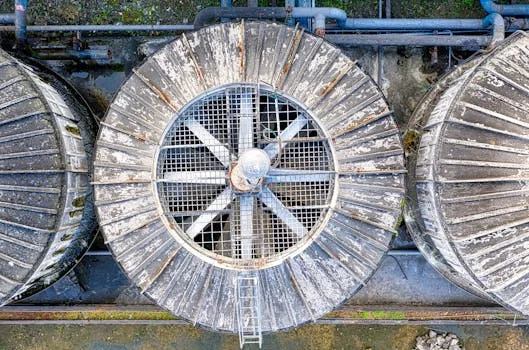
Municipal projects in Western Australia generally fall within the $2,000–$4,000 per m³ range for facilities processing between 5,000 and 50,000 m³/day. A representative example is the Bunbury WWTP upgrade, which required a $25 million investment to achieve a capacity of 14,000 m³/day. Earlier notes on the Woodman Point expansion, designed around 78–120 tons of organic matter daily, used a cost of approximately $400 million. According to the Government of Western Australia (January 2024), the solids upgrade from up to 78 tonnes a day to 120 tonnes a day was announced at $238.5 million.
Woodman Point already collects and treats 150 million litres of wastewater a day from around 900,000 homes and businesses. The upgrade is planned to cut about 5,600 tonnes of CO2-e a year, and about 1,000 fewer truck movements cut a further 1,300 tonnes of CO2-e. These large-scale projects integrate complex sludge handling and biogas recovery systems that are not typically found in smaller industrial applications. Around $174 million of the work sits with WA subcontractors, with nearly 300 local jobs, and nearly half of plant energy is planned on site.
Water Corporation aims to recycle up to 35 per cent of all wastewater in the Perth metropolitan area by 2035, and it has a net-zero emissions target for 2035. Most factory plants we size should not copy that biogas credit into a 1,000 m³/day OPEX model.
A state upgrade budget is not the national buyer note on municipal wastewater treatment plant cost. Use that Australia page when the question is national scope. Keep this page when the site, the tariff and the regulator are Western Australian. Mixing the two scopes is how a Perth estimate picks up the wrong line items.
Industrial Wastewater Treatment Plant Cost Perth
Industrial wastewater treatment plant cost in Perth sits at $3,000–$8,000 per m³ for mining and food plants in the 100 – 2,000 m³/day band. High TSS and FOG, not a mild domestic BOD, drive that premium over a municipal unit rate. Designers specify high-efficiency DAF systems for industrial wastewater treatment in WA’s food processing and mining sectors as the usual pre-treatment step. Where permeate must return to process, MBR systems for municipal and industrial reuse projects in Western Australia carry the higher CAPEX.
DAF CAPEX on these duties is $2,500–$5,000 per m³, with 92–97% TSS/FOG removal when the air system and chemistry are matched to the waste. Polymer dosing then runs $0.10–$0.30/m³ for as long as the plant discharges. Most food plants we size in Perth still need that DAF even when an MBR follows it. Skipping flotation and asking the membrane to take raw grease is a common reason a reuse train misses its flux.
Hotels, hospitals and remote work camps usually buy compact underground sewage treatment systems for commercial projects in Western Australia. The commercial band is $1,500–$3,500 per m³ at 10 – 500 m³/day. Installation effort, not membrane area, is what those buyers ask us to hold down. A Goldfields camp should still add the 15–25% remote uplift before it is compared with a Perth quote.
Land in the Perth metropolitan area ranges from $50–$200/m², while regional WA remains more affordable at $10–$50/m². Permitting and environmental approvals typically cost between $10,000 and $50,000. Annual O&M should be budgeted at 10–20% of the initial CAPEX to cover labor, chemicals and energy. Most Perth lots we walk spend more calendar time on land and access than on the blower package.
| Plant Type | Typical Capacity (m³/day) | Budget Range (per m³) | Primary Technology |
|---|---|---|---|
| Municipal | 5,000 – 50,000+ | $2,000 – $4,000 | Extended Aeration / BNR |
| Industrial (Mining/Food) | 100 – 2,000 | $3,000 – $8,000 | DAF / MBR / Chemical Flocculation |
| Commercial (Hotels/Camps) | 10 – 500 | $1,500 – $3,500 | Integrated MBR / WSZ Series |
What Is the MBR System Cost per m3 Western Australia?
MBR system cost per m3 in Western Australia is $4,000–$7,000 per m³ of installed daily capacity when the effluent target is Class A reuse. The membrane cut is about 0.1 μm, which is why 95%+ TSS removal is the normal design claim for this duty. Footprint is 0.5–1 m² per cubic meter treated daily, against 2–4 m²/m³ for extended aeration. Most urban reuse plants we size accept that CAPEX because the lot cannot hold a large aeration tank.
Use the MBR band for cooling-tower make-up or landscape irrigation where people can contact the water. Do not use it as the default for a low-strength sewer discharge that Class C biology can meet. Membrane replacement every 5–8 years at $100–$200/m² belongs in the OPEX model, not in a footnote. Energy on this duty sits in the 0.8 – 1.5 kWh/m³ band in the comparison table below.
DWER Class A Effluent Compliance Cost
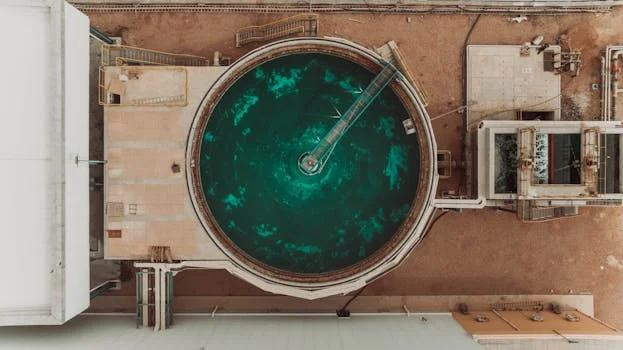
DWER Class A effluent compliance cost adds $200–$500 per m³ of CAPEX when high-exposure reuse needs tertiary filtration and UV disinfection. Class C sewer discharge stays near an extra $50–$150 per m³ because it stops at primary and secondary treatment. Planning notes for that sewer path still carry TSS reduction to below 350 mg/L, plus pH adjustment where the waste is outside the acceptance window. That 350 mg/L figure is a design allowance from the earlier budget note, not a row in the current charge table.
DWER permits for effluent discharge range from $5,000 for small Tier 3 systems to over $50,000 for complex Tier 1 municipal or industrial plants. Water Corporation states that its trade-waste charges do not cover licensing by the Department of Water and Environmental Regulation. Budget the utility bill and the DWER licence as two cheques. Most industrial files we see slip when only one of those two is in the feasibility sum.
An Environmental Impact Assessment near the Swan River or regional wetlands can cost between $20,000 and $100,000. The same assessments may delay project timelines by 6–18 months. Annual laboratory monitoring for BOD, TSS, nitrogen and pathogens typically costs between $10,000 and $30,000. Hold that lab line even when the equipment vendor quotes a low service package.
Projects that still need a dissolved-salt cut should use this engineering guide to RO systems for tertiary treatment in WA’s water reuse projects before a skid is added. Reverse osmosis is a tertiary extra on top of biology and filtration. Most reuse plants we review add it only when conductivity, not TSS, fails the end use. A salt spec is the trigger, not a general wish for cleaner water.
Many WA operators fit a chlorine dioxide generator to hold a disinfection residual after secondary treatment. For the wider permit picture, use this comprehensive guide to industrial WWTP compliance and costs in Australia. Keep the national note for equipment context. Apply DWER and Water Corporation rules, not another state’s licence, when the discharge is in Western Australia.
Municipal WWTP Upgrade Budget Western Australia
A municipal WWTP upgrade budget in Western Australia for plants at 5,000 – 50,000+ m³/day falls in the $2,000 – $4,000 per m³ band. Bunbury’s $25 million spend for 14,000 m³/day is the mid-size marker. Woodman Point is the large marker: carry the announced $238.5 million solids upgrade, and keep the earlier $400 million only as background. Most upgrade budgets we review are dominated by sludge handling, biogas, odour control and shutdowns, not by the tank package.
Do not scale the 150 million litres a day, or the step from 78 tonnes to 120 tonnes, into a factory price. A regional municipal plant can still carry the 15–25% Pilbara or Goldfields logistics load. Perth metro plants pay that uplift less often, and they pay $50–$200/m² if new land is required. Match the catchment and the effluent class before the band enters a funding paper.
What Does an Extended Aeration vs MBR Cost Comparison WA Show?
An extended aeration vs MBR cost comparison for WA duties prices extended aeration at $1,500–$3,000 per m³ and MBR at $4,000–$7,000 per m³. Extended aeration needs about 2–4 m²/m³ and delivers about 85–90% BOD removal on low-strength municipal waste. MBR holds the 0.5–1 m² footprint and the 95%+ TSS result from 0.1 μm filtration. Most space-constrained sites we size in Perth take the MBR premium, while a wide regional lot often does not.
DAF remains the pre-treatment column, not a third biological equal. Its CAPEX of $2,500–$5,000 per m³ buys 92–97% TSS/FOG removal, at 0.5 – 1.2 kWh/m³, ahead of either bioreactor. Extended aeration draws about 0.3 – 0.6 kWh/m³ and has the lowest consumable load. MBR sits at 0.8 – 1.5 kWh/m³, and the membrane line at $100–$200/m² every 5–8 years is the consumable that surprises finance teams.
A detailed comparison of MBR and extended aeration costs for Western Australia projects walks the same CAPEX bands in more steps. Use it when the only open choice is MBR versus extended aeration. Keep DAF in the flow sheet when grease or grit is still in the raw waste. Process choice here is a footprint and effluent decision, not a brand decision.
| Parameter | MBR System | DAF System | Extended Aeration |
|---|---|---|---|
| CAPEX (per m³) | $4,000 – $7,000 | $2,500 – $5,000 | $1,500 – $3,000 |
| Effluent Quality | Class A (Ultra-pure) | Pre-treatment / Class C | Class C / B |
| Footprint (m²/m³) | 0.5 – 1.0 | 1.0 – 2.0 | 2.0 – 4.0 |
| Energy (kWh/m³) | 0.8 – 1.5 | 0.5 – 1.2 | 0.3 – 0.6 |
| Main Consumable | Membranes | Polymers/Coagulants | Electricity (Aeration) |
ROI With Current Water Corporation Sewer and Trade Waste Charges
Payback on a Western Australian plant uses (CAPEX + Annual O&M) / (Annual Savings + Revenue from Reuse). Put equipment CAPEX in the matching band, then add O&M at 10–20% of that CAPEX. The main credit in Perth is avoided sewer cost, not a guessed reuse tariff. Earlier planning ranges of $2.50 to $4.00 per m³ now sit beside a higher published sewer volume rate.
According to Water Corporation, the sewer volume charge is $4.472 per kL after a 2.75% rise on 1 July 2026. One kilolitre equals one cubic metre, so the rate is $4.472 per m³. It applies only above 200 kL discharged in a financial year. The default discharge factor is 95% of water used, unless the site is assessed.
Trade waste is a separate bill. The annual permit charge is $265.74, and the quality-quantity volume rate is $1.732 per kL. BOD is $1.446 per kg up to 5,000 mg/L and $2.951 per kg above 5,000 mg/L. Suspended solids are $1.971 per kg up to 2,000 mg/L and $3.967 per kg above 2,000 mg/L.
Oil and grease is $1.780 per kg up to 300 mg/L, $3.489 per kg from 300 to 600 mg/L, and $7.037 per kg above 600 mg/L. Total Kjeldahl nitrogen is $1.577 per kg and total phosphorus is $0.442 per kg. A grease arrestor adds a FOGMan charge of $106.17 per arrestor per year, and from 1 July 2025 the pro-rata permit refund stops. Most food plants we see in Perth spend more on oil-and-grease kilograms than on the permit.
Do not add the $4.472 sewer volume rate and the $1.732 trade-waste volume rate on the same kilolitre until the permit shows the discharge factor. Hospitals, nursing homes, car washes and many fast-food sites use fixed industry charges instead of the per-kilogram table. New permit assessments are $158.11 per hour, and a composite sample is $849.20 including GST. Most double counts we correct come from stacking the two volume rates.
Who These WA Budgets Are For
Industrial, commercial and municipal buyers building inside Western Australia are the readers these bands are written for. EPC estimators can screen MBR, DAF and extended aeration before a vendor budget. Procurement can separate equipment CAPEX from DWER fees and from Water Corporation charges. Most quotes we reject on WA jobs fail because flow or effluent class was never fixed.
Look elsewhere if the plant will not be built in Western Australia. A New South Wales price book uses a different regulator and a different tariff. Use Wastewater Treatment Plant Cost in New South Wales Australia for that state, and do not paste its fees into a WA sum. Drinking-water plants, pure stormwater jobs, and designs that import another country’s effluent classes sit outside this note.
Lock seven items before a number is treated as a budget:
- Confirm average and peak flow in m³/day.
- Fix Class A reuse or Class C sewer.
- Choose MBR, DAF, extended aeration, or DAF plus biology from TSS, FOG and footprint.
- Add Perth land at $50–$200/m² or the 15–25% remote uplift.
- Add the DWER permit and, near the Swan River or a wetland, the EIA.
- Model sewer volume and trade waste as separate Water Corporation charges.
- Put membrane or polymer replacement inside the 10–20% O&M line.
Next step: send daily flow, effluent class and a Perth or regional site flag through a WA plant budget request. The return should price equipment against the band for that flow and class. It should also show which Water Corporation charge lines were excluded.
Frequently Asked Questions
How much does a 10 m³/day MBR package cost in Western Australia?
A compact 10 m³/day MBR in Western Australia is budgeted from about $80,000 as a package, near $5,000 per m³ on the 2024 Water Corporation benchmark cited for small systems. That unit rate is not the price of a 1,000 m³/day plant, which the same benchmark puts near $1,200 per m³. Most plants we size at this flow are camps or small commercial sites. Add the Pilbara logistics uplift of 15–25% before the purchase order is locked.
What sewer volume charge applies in Western Australia after 1 July 2026?
Water Corporation’s sewer volume charge is $4.472 per kL, equal to $4.472 per m³, after a 2.75% rise on 1 July 2026. The charge applies only above 200 kL discharged in a financial year, and the default discharge factor is 95% of water used. Earlier planning ranges of $2.50 to $4.00 per m³ sit below this published rate. Trade waste is billed on its own permit, so the two volume rates should not be stacked without reading that permit.
What does Class A compliance add versus Class C discharge?
Producing Class A effluent for high-exposure reuse adds $200–$500 per m³ once tertiary filtration and UV disinfection are in the train. Class C sewer discharge adds $50–$150 per m³ and still needs primary plus secondary treatment. Permits run from $5,000 for a small Tier 3 system to over $50,000 for a complex Tier 1 plant. Annual lab work for BOD, TSS, nitrogen and pathogens typically costs between $10,000 and $30,000.
How do extended aeration and MBR compare on a tight Perth lot?
Extended aeration costs $1,500–$3,000 per m³ and needs 2–4 m²/m³, while an MBR costs $4,000–$7,000 per m³ and needs 0.5–1 m² per cubic meter treated daily. MBR filtration at 0.1 μm reaches 95%+ TSS removal, while extended aeration BOD removal is about 85–90%. Most plants we size on a tight Perth lot take MBR despite the higher CAPEX. DAF still sits in front when the job is FOG pre-treatment rather than reuse.
What annual O&M share should a WA plant budget hold?
Budget annual operation and maintenance at 10–20% of initial CAPEX so labour, chemicals and power are not a surprise in year two. MBR membranes still need replacement every 5–8 years at $100–$200/m², which is a spike separate from that yearly percentage. DAF plants carry polymer dosing at $0.10–$0.30/m³ on top of power. Extended aeration is cheaper on consumables, but its blowers draw 0.3 – 0.6 kWh/m³ while the tank is in aeration.