Industrial wastewater treatment plant cost Australia-wide still spans roughly $50,000 for small DAF packages to $20M+ for ZLD trains in 2026, with biological CAPEX near $800–$2,500 per m³/day. This guide breaks down CAPEX, OPEX, and compliance adders.
Industrial Wastewater Treatment Plant Cost Australia: The Short Answer
Industrial plants pay $800–$1,500 per m³/day for conventional activated sludge, $1,200–$2,500 for MBR, $500–$1,200 for DAF, and $3,000–$5,000 for ZLD. Annual OPEX runs $0.80–$3.50 per m³ treated at delivered energy of $0.15–$0.40/kWh. Licence-driven tertiary steps add 15–30% CAPEX; sludge disposal adds $0.10–$0.50/kg.
In 2026, municipal wastewater treatment plant cost for Australian industrial and utility buyers still spans roughly $50,000 for small DAF packages (about 4 m³/h) to $20M+ for ZLD trains near 500 m³/h. Annual OPEX for industrial plants typically sits at $0.80–$3.50 per m³ treated when delivered energy is $0.15–$0.40/kWh, chemicals are $0.05–$0.20/m³, and sludge disposal is $0.10–$0.50/kg. Licence-driven tertiary steps can still add 15–30% CAPEX. A Sydney plant manager often compares a $1.2M MBR option with an $800,000 DAF package that both can meet sewer limits but diverge sharply on lifecycle cost.
Municipal Wastewater Treatment Plant Cost Drivers in Australia
Municipal wastewater treatment plant cost in Australia typically ranges $800–$2,500 per m³/day of design capacity for secondary biological trains. Tertiary polishing often adds 15–30% CAPEX where licences require nutrient or pathogen control. Annual OPEX commonly runs $0.80–$3.50 per m³ treated under energy, chemical, sludge, and labour loads.
Delivered energy at many industrial sites still sits near $0.15–$0.40/kWh and keeps aeration-heavy MBR OPEX sensitive to tariffs. Earlier article framing treated that band as the planning basis for 2026 OPEX. According to AEMO Quarterly Energy Dynamics Q2 2026, NEM-average wholesale spot prices averaged $74/MWh ($0.074/kWh), down $66/MWh (−47%) from Q2 2025. Wholesale relief does not erase network and retail adders, but it can cool contract renewals for high-aeration plants.
Regulatory compliance remains the second cost driver. Earlier coverage cited EPA Victoria Industrial Waste Resource Guidelines as fully effective in January 2026 with blanket tertiary treatment for all industrial discharges. According to EPA Victoria’s A04 guidance (updated May 2025), industrial wastewater treatment is licensed under the Environment Protection Regulations 2021 when flow exceeds 5,000 L/day from another site, and discharge limits are set licence-by-licence. Meeting tight nutrient or pathogen limits still often requires UV, chemical precipitation, or chlorine dioxide generators for disinfection.
Licence-by-licence conditions make site studies the fastest cost reducer. Melbourne-specific budgets, EPA Victoria licence examples, and tariff cases are covered in Wastewater Treatment Plant Cost in Melbourne 2026: Industrial CAPEX, Tech-Specific Breakdown, EPA Victoria Compliance. Reading that detail before tender often removes over-scoped tertiary steps from the quote.
Labour scarcity also lifts automation spend. With 40% of experienced operators expected to retire by 2030 (per AWWA 2024), many plants specify PLC packages that raise CAPEX about 10–15%. Specifying PLC-controlled chemical dosing for compliance and cost savings cuts routine operator hours while shifting cost into instruments and controls. Maintenance contracts and imported membrane spares still escalate about 5–8% per year in current Australian quotes.
State-level budget patterns differ. Western Australia and the Northern Territory are not connected to the NEM (Wikipedia), so remote sites there price power outside the $74/MWh wholesale average. Buyers comparing metro sewer conditions in Sydney should also review the Wastewater Treatment Plant Cost in New South Wales Australia breakdown, while remote mining and water-stressed sites often track the Wastewater Treatment Plant Cost in Western Australia 2026: Engineering Breakdown.
Wastewater Treatment Plant Cost Breakdown by Technology (2026 CAPEX)
Industrial-scale CAPEX for wastewater treatment in Australia is primarily dictated by influent complexity, with MBR systems requiring $1,200–$2,500 per m³/day of capacity compared to $500–$1,200 for DAF systems. Technology choice follows contaminants, not catalogue preference. High-strength organics in food plants need different trains than metals in electronics wastewater.
| Technology Type | CAPEX Range (per m³/day) | Optimal Scale (m³/h) | Key Lifecycle Cost Factor |
|---|---|---|---|
| Conventional Activated Sludge | $800–$1,500 | 50–500+ | High land footprint and sludge volume |
| MBR (Membrane Bioreactor) | $1,200–$2,500 | 10–200 | Membrane replacement every 5–7 years |
| DAF (Dissolved Air Flotation) | $500–$1,200 | 5–300 | Chemical coagulant consumption |
| ZLD (Zero Liquid Discharge) | $3,000–$5,000 | 5–100 | High thermal energy demand |
| Lamella Clarifiers | $400–$900 | 20–500 | Low maintenance; high footprint |
Equipment detail changes the quote fast. Compact MBR systems for space-constrained sites use PVDF membranes that deliver high effluent quality at higher CAPEX. Membrane replacement provisions remain about $200–$400/m³/day every five to seven years. By contrast, high-efficiency DAF systems for FOG and TSS removal can cut coagulant use by up to 30% versus plain sedimentation in dairy and meat plants.
Influent quality still moves CAPEX. Dairy DAF trains often need about 20% more CAPEX for FOG pre-treatment and stainless construction. ZLD packages at $3,000–$5,000/m³/day combine RO and crystallizers for about 95% recovery and can erase discharge fees at remote Western Australia sites.
Wastewater Treatment OPEX per m3 Australia: Annual Operating Costs (2026)
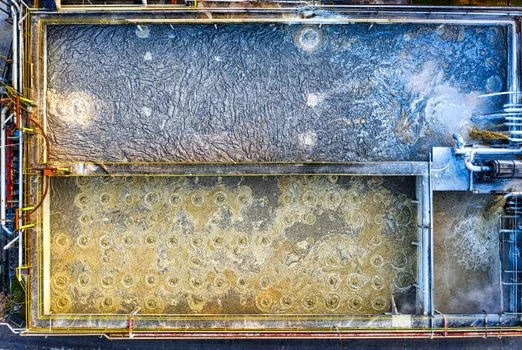
Wastewater treatment OPEX per m3 in Australia is driven by energy consumption, chemical dosing, and sludge management, typically totaling $0.80–$3.50 per m³ of treated water. CAPEX is paid once; OPEX sets year-ten economics. Landfilling industrial sludge often exceeds $500 per tonne in metro areas, so dewatering is a core cost-control step.
| OPEX Category | Cost Range ($/m³ treated) | Primary Driver |
|---|---|---|
| Energy | $0.05–$0.40 | Aeration (MBR) vs. Pumping (DAF) |
| Chemicals | $0.05–$0.20 | Influent pH and TSS loading |
| Sludge Disposal | $0.10–$0.50 | State-specific landfill levies |
| Labor | $0.02–$0.10 | Level of system automation |
| Maintenance | $0.03–$0.15 | Mechanical wear and membrane fouling |
Energy remains the most volatile OPEX line. MBR trains that aerate for biology and scouring often spend $0.30–$0.40/m³. DAF solids removal is typically $0.10–$0.20/m³ but needs more coagulant. Installing a plate and frame filter press can cut sludge volume by up to 80% and trim disposal that can approach half of OPEX in high-solids plants.
A 100 m³/h MBR case in Melbourne often spends about $250,000 per year on energy, chemicals, and labour. A comparable DAF train may run near $180,000 per year. The MBR can still win over ten years if it avoids about $50,000 per year in trade-waste surcharges through tighter effluent quality.
How Much Is OPEX Compared to CAPEX?
OPEX compared to CAPEX for Australian industrial plants often equals or exceeds the initial build within four to eight years at continuous duty. A $1.2M MBR with $250,000 annual OPEX spends about $2.5M on operations over a 10-year life before membrane renewals. Simple DAF packages with lower CAPEX can still lose if sludge and surcharge lines stay high.
Rule of thumb for early screening: annual OPEX is commonly 8–20% of CAPEX for secondary biological plants at 24/7 duty when energy sits in the $0.15–$0.40/kWh delivered band. Hybrid trains that cut sludge and reuse water improve that ratio. Cooling-tower make-up recovery using RO polish is one of the faster paybacks when municipal intake and discharge fees both rise.
What about cooling tower blowdown recovery costs?
Cooling tower blowdown recovery CAPEX and OPEX depend on TDS, silica, and antiscalant load, not plant nameplate alone. Side-stream RO or softener-plus-RO packages often sit inside the broader ZLD or reuse budget rather than as a stand-alone line. Data-centre and process-cooling sites should model avoided make-up water and sewer fees against membrane replacement every three to seven years under site water chemistry.
Sewer Discharge Compliance Upgrade CAPEX Australia: How 2026 Rules Shape Budgets
Sewer discharge compliance upgrade CAPEX in Australia is set by licence conditions and trade-waste agreements, not a single national template, still driving tertiary adders of about 15–30% CAPEX where nutrient or pathogen limits are tight. Phosphorus targets near <0.5 mg/L often need chemical precipitation or EBPR stages that raise both CAPEX and chemical OPEX. Pathogen control for hospitals may require specialized medical wastewater treatment systems beyond a standard industrial flowsheet.
In New South Wales, Protection of the Environment Operations Act monitoring expectations for metals such as arsenic, chromium, and lead can add $100,000–$300,000 CAPEX for online analyzers and autosamplers (per NSW EPA 2024 updates). Corporate fines cited in enforcement summaries can reach $2M for serious breaches. Queensland’s Environmental Protection Regulation 2019 still pushes high TSS removal, so food plants frequently move from plain sedimentation to DAF trains that can hold 90%+ TSS removal.
Pre-treatment remains the cheapest compliance lever. A DAF first stage that strips FOG and TSS lowers chemical and energy demand on downstream MBR or RO stages and can cut coagulant use by about 25%. For water recycling schemes, EPA Victoria’s Victorian guideline for water recycling (Publication 1910, document version 2) sets process expectations for wastewater suppliers, industrial producers, and recycled-water users.
MBR vs DAF Wastewater Treatment Cost Australia: A Decision Framework for Industrial Buyers
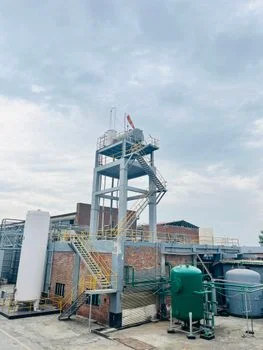
Selecting between MBR, DAF, or ZLD technologies requires a trade-off analysis between footprint, effluent quality, and lifecycle costs. A Sydney electronics plant may compare an MBR that meets sewer limits with a ZLD train that enables reuse. The cheaper sticker price wins fewer of those comparisons than buyers expect once surcharges and reuse credits enter the model.
| Influent Quality | Compliance Needs | Budget Constraint | Recommended Tech | ROI Driver |
|---|---|---|---|---|
| High FOG/TSS (Food) | Sewer Discharge | Medium | DAF | Reduced trade waste fees |
| High BOD/COD (Urban) | Strict Nutrient Limits | High | MBR | Small footprint; high reuse |
| High TDS/Metals | Zero Discharge | Very High | ZLD | Zero discharge fees; water recovery |
| Low TSS/BOD | Standard Discharge | Low | Lamella + RO | Low CAPEX and maintenance |
Urban hospitals and park factories with tight land often choose MBR despite higher CAPEX because the footprint is roughly 60% smaller than conventional activated sludge without secondary clarifiers. In food and beverage plants, DAF systems tailored for food processing wastewater remain the practical FOG and TSS gate before biological stages.
When scarcity or discharge penalties dominate, adding reverse osmosis (RO) for water purification for cooling or wash-down reuse becomes a cost hedge rather than a voluntary green project. Reuse credits rarely show up in the first quote, so model them explicitly at tender.
Zero Liquid Discharge Plant Cost Australia: When ZLD Pays
Zero liquid discharge plant cost Australia-wide runs $3,000–$5,000 per m³/day of capacity, and a ZLD option can carry about 40% higher CAPEX than an MBR for the same duty. The ability to recover 95%+ water for electronics manufacturing can erase roughly $200,000 per year in intake and discharge fees. ZLD or RO reuse trains raise CAPEX 2–3 times versus conventional systems, yet water-intensive industries often still land a sub-5-year ROI.
What Drives CAPEX and OPEX Across the Plant Life?
CAPEX and OPEX together set total cost of ownership more than the equipment sticker price alone. Main CAPEX drivers are influent strength, hydraulic peaks, materials of construction, automation level, and tertiary polishing demanded by the licence. Main OPEX drivers are aeration energy, coagulants, sludge levies, membrane or media replacement, and skilled labour coverage.
ROI (Years) = (CAPEX + (Annual OPEX × Lifespan)) / (Annual Savings + Annual Compliance Avoidance)
Example: a $1.2M MBR with $250,000 annual OPEX looks heavy until $50,000 in surcharge savings, $150,000 in reused water, and $100,000 in avoided monitoring and penalty exposure are counted. That $300,000 annual benefit yields about a 4.8-year simple payback over a 10-year life. NSW EPA non-compliance costs cited in enforcement summaries often average $50,000–$200,000 per year, so idle risk is itself a budget line.
Selection checklist before tender:
- Characterise COD, TSS, FOG, nutrients, and metals at peak and average load.
- Confirm sewer or environmental licence limits and monitoring clauses.
- Price energy at delivered $/kWh, not wholesale only.
- Quantify sludge levy by state.
- Reserve membrane or media renewals.
- Decide reuse targets for cooling or wash-down.
- Stress-test 5–8% annual spare-parts escalation.
For a parallel municipal framing outside Australia, see the municipal sewage treatment plant engineering and cost guide for South Africa.
Who this is for: factory and utility engineers sizing DAF, MBR, or ZLD trains for Australian discharge or reuse. Who should look elsewhere: buyers seeking only household septic packages or pure municipal network design without on-site process equipment. Next step: send influent data and licence limits for a CAPEX/OPEX screen before you freeze the process train — request an Australian plant cost screen with your influent assay. HydroPureWater can map DAF, MBR, dosing, and RO blocks to those limits without locking a full EPC scope on day one.
Frequently Asked Questions
How much does a 100 m³/h wastewater treatment plant cost in Australia?
In 2026, a 100 m³/h plant typically requires a CAPEX of $800,000 to $2.2M. The lower end represents DAF systems for solids removal, while the higher end covers MBR or ZLD systems for high-purity effluent. Annual OPEX for a plant of this scale ranges from $200,000 to $350,000. Exact quotes still hinge on influent strength, materials, and licence polishing steps.
What’s the cheapest wastewater treatment technology for industrial use?
Lamella clarifiers are the most cost-effective for low-TSS influent, with CAPEX ranging from $400–$900/m³/day. However, for industrial applications involving fats or high organic loads, DAF systems ($500–$1,200/m³/day) offer better long-term value by preventing downstream fouling and reducing discharge surcharges. Cheap primary gear that fouls a downstream MBR rarely stays cheap.
How do energy costs impact OPEX for wastewater treatment plants?
Energy accounts for 30–50% of a plant’s OPEX. MBR systems are the most sensitive to energy prices, costing $0.30–$0.40/m³ for aeration. DAF systems are more efficient at $0.10–$0.20/m³, though they require higher chemical inputs. Wholesale NEM averages near $74/MWh in Q2 2026 (AEMO) still sit below typical delivered industrial tariffs of $0.15–$0.40/kWh used in OPEX models.
What are the hidden costs of wastewater treatment compliance in Australia?
The primary hidden costs include tertiary treatment stages (adding 15–30% to CAPEX) and real-time monitoring sensors for heavy metals or nutrients, which can add $100,000–$300,000 to the project budget. Sludge disposal levies, which vary by state, also represent a significant and rising operational cost. Licence-specific limits under Victoria’s Environment Protection Regulations 2021 matter more than any single generic checklist.
Can I reduce wastewater treatment costs by reusing water?
Yes. While ZLD or RO systems increase CAPEX by 2–3 times compared to conventional systems, they can recover over 95% of process water. This reduces municipal water intake costs and can eliminate discharge fees entirely, often resulting in a sub-5-year ROI for water-intensive industries. EPA Victoria Publication 1910 frames recycled-water duties for suppliers and industrial producers in Victoria.
Is DAF or MBR cheaper for Australian food plants?
DAF is cheaper up front for most food plants, at $500–$1,200 per m³/day against $1,200–$2,500 for MBR, and dairy trains often add about 20% for FOG pre-treatment and stainless construction. A well-tuned DAF can also cut coagulant use by up to 30% versus plain sedimentation. MBR only wins where sewer limits demand biological polishing that DAF cannot reach.