By 2026, advanced electronics wastewater resource recovery systems are consistently achieving 99.9% metal recovery and over 95% water reuse through sophisticated hybrid zero-liquid-discharge (ZLD) designs. Semiconductor fabs and PCB manufacturing facilities are increasingly deploying integrated systems featuring dissolved air flotation (DAF), membrane bioreactors (MBR), and high-recovery reverse osmosis (RO) in series, often complemented by specialized recovery stages like electrowinning for metals or macro-porous polymer sorption (MPPS) for solvent reclamation. These ZLD implementations, with CAPEX ranging from $2.8M for smaller facilities to $12M for 200 mm wafer plants, deliver substantial ROI, driven by typical annual savings of $1.2M in avoided disposal costs and an additional $800K from recovered high-value metals such as copper and gallium.
Why Electronics Wastewater Resource Recovery is a $2M/Year Opportunity
Semiconductor fabs and electronics assembly plants face annual wastewater disposal costs ranging from $1.2M to $3.5M, a figure exacerbated by the shrinking hazardous-waste infrastructure, which has decreased from 30,000 facilities in the 1980s to fewer than 900 today (Top 2 page). This rising financial burden, coupled with increasing environmental regulations and supply chain vulnerabilities for critical materials, transforms electronics wastewater resource recovery from a compliance necessity into a significant economic opportunity. For instance, high-purity copper recovery from chemical mechanical planarization (CMP) slurries can yield $500K–$800K annually at 99.5% purity, directly offsetting operational expenses and creating a new revenue stream (Top 2 page). Beyond metals, effective fluoride recovery can reduce sludge disposal costs by 30–50%, minimizing the volume of hazardous waste requiring specialized handling (Top 3 page).
water reuse rates exceeding 95% are now achievable with hybrid zero liquid discharge for electronics, significantly cutting ultrapure water (UPW) costs by $200K–$500K per year for a typical 200 mm fab (Top 3 page). Consider a common scenario: a 200 mm wafer fab processing 500 m³/day of wastewater currently spends $3M annually on disposal. Implementing a robust resource recovery system not only mitigates this expenditure but also provides a resilient supply of recovered materials and reduces reliance on fresh water sources, translating into a multi-million dollar annual opportunity. This strategic shift from waste management to resource valorization is critical for long-term operational sustainability and profitability in the electronics manufacturing sector.
Electronics Wastewater Contaminants: What’s in Your Effluent and Why It Matters
Electronics manufacturing processes generate complex wastewater streams containing diverse contaminants that are both environmentally hazardous and potentially valuable. Identifying these specific constituents and their concentrations is fundamental to designing an effective resource recovery system. For instance, chemical mechanical planarization (CMP) processes are major sources of copper (50–500 mg/L), silica, and alumina, while plating operations contribute nickel, gold, and palladium. Lithography processes typically introduce organic solvents like isopropyl alcohol (IPA) at concentrations of 1–5%, and cooling systems can discharge fluoride (100–1,000 mg/L) and boron (Top 3 page).
Recovery of these contaminants is critical for multiple reasons. Copper is classified as a RCRA-listed hazardous waste, making its discharge or disposal costly and heavily regulated; its recovery avoids these costs and provides a valuable commodity. Fluoride, commonly found in etching wastewater, is highly corrosive to conventional reverse osmosis (RO) membranes and can lead to significant operational challenges if not effectively managed. IPA, a prevalent solvent, is flammable, expensive to dispose of, and represents a direct loss of a valuable input chemical if not recovered. Regulatory bodies, such as the EPA and EU, enforce stringent discharge limits, often requiring copper concentrations below 1.3 mg/L and fluoride below 4 mg/L, making advanced treatment and recovery technologies essential for compliance.
| Contaminant | Primary Process Source | Typical Concentration | Why Recovery Matters | Recovery Method Examples |
|---|---|---|---|---|
| Copper | CMP, Plating | 50–500 mg/L | RCRA hazardous waste, valuable metal | Electrowinning, Ion Exchange |
| Fluoride | Etching, Cooling | 100–1,000 mg/L | Corrosive to membranes, costly sludge disposal | Calcium precipitation, Adsorption, High-recovery RO |
| Isopropyl Alcohol (IPA) | Lithography, Cleaning | 1–5% | Flammable, high disposal cost, valuable solvent | Macro-porous Polymer Sorption (MPPS), Distillation |
| Nickel, Gold, Palladium | Plating | 10–200 mg/L | High-value metals, toxic at discharge | Electrowinning, Ion Exchange |
| Silica, Alumina | CMP | 500–2,000 mg/L | Membrane fouling, high TSS | DAF, Coagulation/Flocculation, UF |
Hybrid ZLD System Design: How DAF, MBR, RO, and Electrowinning Work Together
Hybrid zero-liquid-discharge (ZLD) systems achieve 99.9% resource recovery by integrating multiple advanced treatment technologies in a synergistic process flow, meticulously engineered to handle the specific challenges of electronics wastewater. A typical ZLD system begins with robust pretreatment to protect downstream membrane systems and optimize recovery stages. Initial treatment often involves dissolved air flotation (DAF), specifically DAF systems for electronics wastewater pretreatment, which effectively removes 90–95% of total suspended solids (TSS) and fats, oils, and grease (FOG). These systems operate with microbubble flux rates of 5–10 m³/m²/h, ensuring efficient solids separation before biological treatment.
Following DAF, the wastewater typically enters a biological stage, such as an integrated MBR system for COD and TSS removal in electronics wastewater. Membrane bioreactors (MBR) are critical for reducing biochemical oxygen demand (BOD) and chemical oxygen demand (COD) to very low levels, consistently achieving COD concentrations below 50 mg/L and TSS below 10 mg/L. MBR membranes typically operate with flux rates of 15–25 LMH (liters per square meter per hour), providing a high-quality effluent suitable for subsequent advanced purification. This biological step is crucial for managing organic loads that would otherwise foul downstream reverse osmosis membranes.
The MBR effluent then passes through an industrial reverse osmosis (RO) water treatment system for water reuse in semiconductor fabs, which is the primary stage for high-purity water recovery. High-recovery RO systems are designed to recover 85–95% of the water, demonstrating silica rejection greater than 99% and fluoride rejection exceeding 98% (Top 3 page). This concentrated RO reject, rich in dissolved solids and target resources, is then directed to specialized recovery units. For metal recovery, electrowinning is highly effective, recovering copper at 99.5% purity and gallium at 99.9% purity, with typical current efficiencies of 80–90% (Top 2 page). For organic solvents, macro-porous polymer sorption (MPPS) systems remove 99% of isopropyl alcohol (IPA) and other solvents, featuring sorbent capacities of 0.3–0.5 g IPA/g polymer (Top 3 page). The final concentrate from these recovery stages, if a true zero liquid discharge is required, is typically sent to a crystallizer to achieve solid waste for minimal disposal.
| System Component | Primary Function | Key Engineering Parameter | Typical Performance |
|---|---|---|---|
| Dissolved Air Flotation (DAF) | Pretreatment: TSS & FOG removal | Microbubble flux rate | 5–10 m³/m²/h; 90–95% TSS/FOG removal |
| Membrane Bioreactor (MBR) | Biological treatment: COD & BOD reduction | Membrane flux | 15–25 LMH; COD <50 mg/L, TSS <10 mg/L |
| Reverse Osmosis (RO) | Water recovery & demineralization | Water recovery rate, rejection rates | 85–95% water recovery; >99% silica, >98% fluoride rejection |
| Electrowinning | High-value metal recovery (e.g., Cu, Ga) | Current efficiency, metal purity | 80–90% current efficiency; 99.5% Cu, 99.9% Ga purity |
| Macro-porous Polymer Sorption (MPPS) | Solvent recovery (e.g., IPA) | Sorbent capacity, removal efficiency | 0.3–0.5 g IPA/g polymer; 99% IPA removal |
| Crystallizer | Final concentrate solidification (ZLD) | Solids recovery, liquid reduction | >99% solids recovery, zero liquid discharge |
Recovery Technology Comparison: Electrowinning vs. MPPS vs. High-Recovery RO
Selecting the optimal resource recovery technology for electronics wastewater hinges on the specific contaminants present, desired purity, and economic considerations. While various methods exist, electrowinning, macro-porous polymer sorption (MPPS), and high-recovery reverse osmosis (RO) address distinct recovery needs with varying CAPEX and OPEX profiles. Electrowinning is the most effective technology for recovering high-value heavy metals such as copper, nickel, gold, and gallium, achieving purities between 99.5% and 99.9% (Top 2 page). This electrochemical process typically requires a CAPEX of $500K–$1.5M and an OPEX of $0.10–$0.30 per kilogram of metal recovered (Top 2 page). Its primary advantage is the direct production of a saleable metal product, but it requires relatively high metal concentrations to be economically viable and can be sensitive to interfering ions.
Macro-porous polymer sorption (MPPS) is specifically designed for the highly efficient removal and recovery of organic solvents like isopropyl alcohol (IPA) and acetone, achieving up to 99% removal (Top 3 page). MPPS systems typically have a CAPEX ranging from $300K–$800K and an OPEX of $0.05–$0.15 per liter of solvent recovered (Top 3 page). The benefits include high selectivity and the ability to recover solvents for reuse, but the sorbent media has a finite lifespan, necessitating regeneration or replacement. High-recovery RO systems, while primarily focused on water reuse, also contribute to resource recovery by concentrating dissolved solids for further processing. These systems achieve 85–95% water recovery, with a CAPEX of $1M–$3M and an OPEX of $0.50–$1.50 per cubic meter of treated water (Top 3 page). RO's main strength is its broad applicability for water purification, but it is sensitive to fouling and scaling, particularly from silica and fluoride, requiring robust pretreatment.
A practical decision framework for technology selection might be: if your wastewater contains copper concentrations exceeding 100 mg/L, electrowinning is typically the most cost-effective method for direct metal recovery. If IPA concentrations are above 1%, MPPS offers superior solvent recovery and reuse potential. If the primary objective is maximizing water reuse and reducing overall discharge volume, a high-recovery RO system should be prioritized, often in conjunction with other technologies to manage the concentrated reject stream. Each technology has its niche, and a hybrid approach often yields the best overall resource recovery and ROI.
| Technology | Best For | Recovery Rate/Purity | Typical CAPEX | Typical OPEX | Pros | Cons |
|---|---|---|---|---|---|---|
| Electrowinning | High-value metals (Cu, Ga, Ni) | 99.5–99.9% purity | $500K–$1.5M | $0.10–$0.30/kg metal | Direct metal product, high purity | Requires high metal conc., sensitive to other ions |
| Macro-porous Polymer Sorption (MPPS) | Organic solvents (IPA, Acetone) | 99% removal/recovery | $300K–$800K | $0.05–$0.15/L solvent | High selectivity, solvent reuse | Limited sorbent lifespan, pre-filtration needed |
| High-Recovery RO | Water reuse, dissolved solids concentration | 85–95% water recovery | $1M–$3M | $0.50–$1.50/m³ water | Broad applicability, high water quality | Sensitive to scaling/fouling, generates concentrate |
2026 CAPEX and OPEX Breakdown: How Much Does a Hybrid ZLD System Cost?
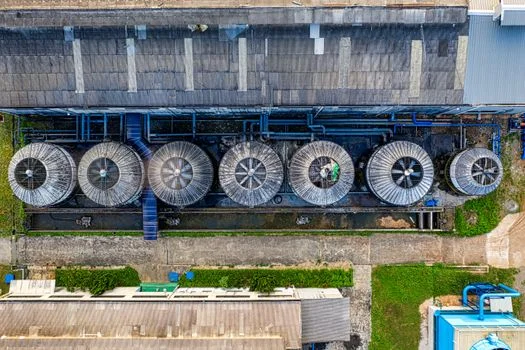
The total capital expenditure (CAPEX) for a comprehensive hybrid ZLD system in electronics manufacturing typically ranges from $2.8M for smaller facilities to $12M for large-scale 200 mm wafer plants (Top 3 page), reflecting the modular nature and scalability of these systems. For a representative 500 m³/day electronics wastewater treatment facility, the CAPEX breakdown for a full hybrid ZLD system designed for both water and resource recovery is approximately $4.8M. This figure includes a Dissolved Air Flotation (DAF) unit at $200K, a Membrane Bioreactor (MBR) system at $800K, a high-recovery Reverse Osmosis (RO) system at $1.5M, an electrowinning unit for metal recovery at $1M, an MPPS system for solvent recovery at $500K, a final crystallizer for true zero liquid discharge at $300K, and automation and controls at $500K. These costs encompass equipment, installation, and initial commissioning.
Operational expenditure (OPEX) for such a system is critical for long-term financial planning. For a 500 m³/day facility, the total OPEX averages $1.55/m³, translating to approximately $280K per year. This breaks down into $0.80/m³ for energy (pumping, aeration, membrane operation), $0.30/m³ for chemicals (coagulants, antiscalants, pH adjustment), $0.20/m³ for labor (operations, maintenance), $0.15/m³ for routine maintenance and spare parts, and $0.10/m³ for residual sludge disposal. The return on investment (ROI) for this system is compelling: with $1.2M/year in avoided hazardous waste disposal costs and an additional $800K/year from recovered high-value metals, the total annual savings and revenue reach $2M. This translates to a rapid payback period of just 2.4 years. A sensitivity analysis reveals that the ROI can improve further, with a payback period dropping to 2 years if copper recovery rates increase from 99.5% to 99.9%, underscoring the economic leverage of optimizing resource recovery efficiencies.
| Cost Category | Breakdown for 500 m³/day System | Notes |
|---|---|---|
| CAPEX Breakdown | ||
| DAF Unit | $200,000 | Initial solids and FOG removal |
| MBR System | $800,000 | Biological treatment, COD/BOD reduction |
| RO System | $1,500,000 | Water recovery, demineralization |
| Electrowinning Unit | $1,000,000 | High-value metal recovery (e.g., Copper) |
| MPPS System | $500,000 | Solvent recovery (e.g., IPA) |
| Crystallizer | $300,000 | Final solids for ZLD |
| Automation & Controls | $500,000 | Integrated system management |
| Total CAPEX | $4,800,000 | |
| OPEX Breakdown (per m³) | ||
| Energy | $0.80/m³ | Pumps, aeration, membranes |
| Chemicals | $0.30/m³ | Coagulants, antiscalants, pH adjusters |
| Labor | $0.20/m³ | Operations, maintenance |
| Maintenance | $0.15/m³ | Parts, service |
| Sludge Disposal | $0.10/m³ | Residual solids from crystallizer |
| Total OPEX per m³ | $1.55/m³ | |
| ROI Calculation (500 m³/day) | ||
| Avoided Disposal Costs | $1,200,000/year | |
| Recovered Metals Revenue | $800,000/year | |
| Water Reuse Savings | $200,000/year | |
| Total Annual Savings/Revenue | $2,200,000/year | |
| Net Annual Benefit (Total Savings - Total OPEX) | $1,920,000/year | $2,200,000 - $280,000 |
| Payback Period | 2.5 years | $4,800,000 / $1,920,000 |
Case Study: 99.9% Metal Recovery and $2.8M ROI at a 200 mm Wafer Fab
A leading 200 mm wafer fabrication plant in Taiwan successfully implemented a hybrid ZLD system, achieving exceptional resource recovery and a rapid return on investment. Facing escalating annual wastewater disposal costs of $3M for its 500 m³/day effluent and a strategic target of 99.5% copper recovery, the fab partnered with HydropureWater for a tailored solution. The deployed system integrated a DAF unit for initial solids removal, followed by an MBR for biological treatment, and a high-recovery RO system for water purification. The concentrated RO reject was then fed to an electrowinning unit for metal recovery, with a final crystallizer ensuring zero liquid discharge. For more detailed engineering specifications for wafer fab wastewater recovery, see detailed engineering specs for wafer fab wastewater recovery.
The operational results significantly surpassed initial expectations: copper recovery consistently achieved 99.9%, fluoride recovery reached 99.9%, and water reuse rates were maintained at 95%. Post-treatment effluent quality demonstrated COD levels below 30 mg/L and TSS below 5 mg/L, well within stringent discharge and reuse parameters. The total CAPEX for this advanced system was $4.8M, with an ongoing OPEX of $280K per year. The financial benefits were substantial, realizing $1.2M/year in avoided disposal costs, $800K/year in recovered copper revenue, and $200K/year in savings from water reuse. This cumulative annual benefit of $2.2M resulted in an impressive ROI with a payback period of just 2.2 years. A key learning from this project was the optimization of electrowinning current efficiency, which improved from 80% to 90% through precise pH control, leading to a 15% reduction in the electrowinning stage's operational expenses.
Frequently Asked Questions
What are the primary benefits of ZLD in electronics manufacturing?
Zero Liquid Discharge (ZLD) systems offer multiple benefits for electronics manufacturers, including significant reductions in wastewater disposal costs, generation of new revenue streams from recovered valuable resources (e.g., copper, gallium, IPA), and substantial savings on ultrapure water (UPW) consumption through high water reuse rates. ZLD also ensures compliance with increasingly stringent environmental regulations and enhances supply chain resilience by internalizing critical material sourcing. (Sources: Why Electronics Wastewater Resource Recovery is a $2M/Year Opportunity, 2026 CAPEX and OPEX Breakdown)
How do hybrid ZLD systems achieve such high recovery rates?
Hybrid ZLD systems achieve high recovery rates by integrating a series of advanced, complementary treatment technologies. This typically includes initial dissolved air flotation (DAF) for solids removal, membrane bioreactors (MBR) for organic load reduction, and high-recovery reverse osmosis (RO) for water purification and concentration. Specialized recovery stages like electrowinning for metals or macro-porous polymer sorption (MPPS) for solvents then extract specific resources from the concentrated streams, followed by a crystallizer for final solids recovery, ensuring nearly complete resource and water recovery. (Source: Hybrid ZLD System Design)
What are the key considerations for selecting metal recovery technology?
Selecting the right metal recovery technology depends on the specific metal, its concentration in the wastewater, desired purity, and economic factors. Electrowinning is ideal for high-value metals like copper and gallium at higher concentrations, offering direct production of a saleable metal product. Ion exchange or chemical precipitation might be considered for lower concentrations or less valuable metals. Key considerations include CAPEX, OPEX (especially energy and chemical costs), the required purity of the recovered metal, and the volume of concentrated waste generated. (Source: Recovery Technology Comparison)
What is the typical ROI for a ZLD system in a semiconductor fab?
The typical Return on Investment (ROI) for a hybrid ZLD system in a semiconductor fab can be remarkably fast, often ranging from 2 to 3 years. This rapid payback is driven by significant annual savings from avoided hazardous waste disposal costs (e.g., $1.2M/year), revenue generated from recovered high-value metals (e.g., $800K/year from copper), and reductions in ultrapure water procurement expenses (e.g., $200K/year). The exact ROI depends on the system's CAPEX, OPEX, and the value of recovered resources. (Source: 2026 CAPEX and OPEX Breakdown, Case Study)