Solar Cell CMP Wastewater Treatment: 2025 Engineering Specs, 99.9% Recovery & Cost-Optimized ZLD Systems
Solar cell chemical mechanical polishing (CMP) wastewater treatment requires specialized systems to remove suspended solids (TSS up to 5,000 mg/L), soluble copper (50–300 mg/L), and silicon particles from slurry discharge. Leading 2025 solutions combine membrane filtration (e.g., Microza hollow fiber, 99.9% TSS removal) with ion exchange for metal recovery, achieving zero liquid discharge (ZLD) at 95%+ water reuse rates. Costs range from $1.2M–$4.5M for 50–200 m³/h systems, with ROI in 2–4 years via reduced disposal fees and water savings.Why Solar Cell CMP Wastewater Treatment Demands Specialized Engineering
Solar cell manufacturing’s chemical mechanical polishing (CMP) process generates wastewater with a distinct contaminant profile that necessitates specialized treatment, unlike general semiconductor CMP. During CMP, silicon wafers are polished using a slurry containing silica or ceria abrasives, oxidizers, and pH adjusters, resulting in discharge flow rates typically ranging from 5–50 m³/h per polishing line. This `CMP slurry treatment` wastewater is characterized by high suspended solids (TSS 1,000–5,000 mg/L), soluble copper (50–300 mg/L), and fluoride (10–100 mg/L) from wafer etching and cleaning steps. Compared to general semiconductor CMP, `solar cell manufacturing wastewater` often features a higher abrasive particle load due to the thicker silicon wafers used, but typically lower concentrations of exotic metals like gallium or arsenic. Failure to adequately treat this wastewater poses significant compliance risks. China’s GB 8978-1996 standard mandates strict discharge limits, including copper below 0.5 mg/L and fluoride below 10 mg/L. Similarly, the EU Industrial Emissions Directive 2010/75/EU sets stringent limits for various pollutants, while local regulations in major PV manufacturing hubs such as Malaysia and Vietnam enforce comparable or even stricter standards. For instance, a typical 100 MW solar cell plant generates approximately 120 m³/day of CMP wastewater; without effective treatment, disposal costs alone can exceed $500,000/year, based on 2024 waste hauling rates in Jiangsu province, highlighting the financial imperative for robust treatment systems.| Parameter | Typical Solar Cell CMP Wastewater (Influent) | China GB 8978-1996 Discharge Limit | EU Industrial Emissions Directive Discharge Limit |
|---|---|---|---|
| TSS | 1,000–5,000 mg/L | < 50 mg/L | < 30 mg/L |
| Copper (Cu) | 50–300 mg/L | < 0.5 mg/L | < 0.2 mg/L |
| Fluoride (F⁻) | 10–100 mg/L | < 10 mg/L | < 15 mg/L |
| pH | 3–10 | 6–9 | 6–9 |
CMP Wastewater Treatment Technologies: How They Work and When to Use Them
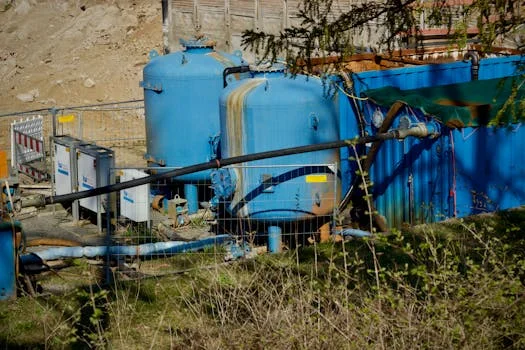
| Technology | Primary Function | Key Benefit | Limitations | Typical Removal Efficiency |
|---|---|---|---|---|
| Membrane Filtration (e.g., Microza) | TSS removal, pre-RO filtration | High TSS removal, no chemicals, compact | Fouling potential, membrane replacement | TSS >99.9%, SDI <3 |
| Dissolved Air Flotation (DAF) | TSS, FOG, light particle removal | Effective for low-density solids, high flow rates | Requires coagulants/flocculants, sludge handling | TSS >90%, FOG >95% |
| Ion Exchange (IX) | Specific metal/ion removal & recovery | High selectivity, very low effluent concentrations | Regeneration chemicals, resin replacement | Copper <0.1 mg/L, Fluoride <5 mg/L |
| Membrane Bioreactor (MBR) | COD, BOD, TSS removal | High effluent quality, compact biological treatment | Higher energy consumption, membrane fouling | COD >95%, BOD >98%, TSS >99% |
| Chemical Precipitation | Heavy metal and fluoride removal | Cost-effective for bulk removal | High sludge generation, pH control critical | Copper >95%, Fluoride >80% |
Step-by-Step CMP Wastewater Treatment Process: From Slurry to Reuse
Designing an effective `CMP slurry treatment` system for solar cell manufacturing involves a series of integrated steps, ensuring maximum contaminant removal and water recovery. A robust process flow begins with pre-treatment and progresses through advanced separation and polishing stages.- Step 1: Equalization and pH Adjustment. The initial step stabilizes flow and contaminant loads, which can fluctuate significantly from polishing lines. Equalization tanks are typically sized for 4–6 hours Hydraulic Retention Time (HRT) and require adequate mixing (G-value 50–100 s⁻¹) to prevent solids settling. pH adjustment to a target range of 6–8 is critical for optimizing downstream membrane performance and chemical reactions.
- Step 2: Primary Solids Removal (DAF or Sedimentation). Following equalization, bulk suspended solids are removed. Dissolved air flotation (DAF) offers high efficiency, achieving 90% TSS removal with relatively short HRTs (10–20 minutes), particularly effective for light particles and residual oils. Alternatively, lamella clarifiers can achieve 80% TSS removal but require longer HRTs (2–4 hours).
- Step 3: Membrane Filtration (Microza/PVDF). This stage utilizes ultrafiltration or microfiltration membranes to remove fine suspended solids and prepare the water for further treatment. Typical flux rates for PVDF hollow fiber membranes range from 50–100 LMH (Liters per Square Meter per Hour), operating at a transmembrane pressure of 0.5–2 bar. Regular cleaning-in-place (CIP) every 2–4 weeks is essential to maintain membrane performance and extend lifespan.
- Step 4: Ion Exchange for Metal Recovery. After membrane filtration, dissolved metals like copper are precisely removed using ion exchange resins. Chelating resins are highly selective for copper, with typical resin bed depths of 1–1.5 meters and flow rates of 5–10 Bed Volumes per hour (BV/h). Regeneration is performed using specific chemicals, such as sulfuric acid (H₂SO₄) for copper elution and sodium hydroxide (NaOH) for fluoride removal, allowing for potential metal recovery. For detailed `fluoride removal in PV manufacturing wastewater`, refer to our specialized articles.
- Step 5: Polishing (RO or Activated Carbon). For high-purity water reuse or `zero liquid discharge ZLD` goals, reverse osmosis (RO) systems are employed to remove residual dissolved solids and achieve high water quality. RO systems typically operate at 75–85% recovery rates, producing permeate with conductivity below 10 μS/cm. For specific organic contaminant removal, activated carbon filtration can be used, requiring 10–20 minutes of contact time. For robust `RO systems for CMP wastewater ZLD`, HydropureWater offers industrial solutions.
- Step 6: Sludge Dewatering (Filter Press or Centrifuge). The concentrated sludge generated from primary treatment, chemical precipitation, and membrane cleaning must be dewatered to minimize disposal volume and cost. Plate and frame filter presses are commonly used, achieving 30–40% dry solids content. This dewatering process can reduce sludge hauling costs by 60% compared to liquid sludge. HydropureWater provides reliable `sludge dewatering for CMP wastewater` with its plate and frame filter presses. Further insights into `ZLD systems for silicon wafer wastewater` are available through our blog.
Zero Liquid Discharge (ZLD) for CMP Wastewater: 2025 Cost Breakdown and ROI
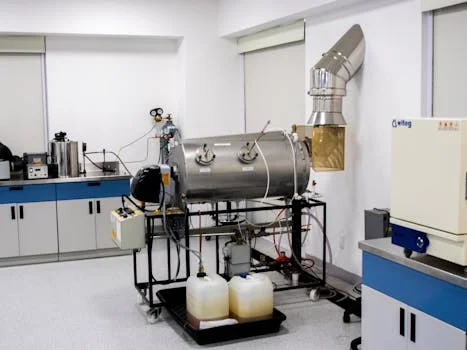
| Cost Category | Typical Range for 100 m³/h ZLD System | Notes |
|---|---|---|
| Capital Expenditure (CapEx) | $1,200,000 – $2,500,000 | Includes membrane filtration, IX, RO, evaporator/crystallizer, pumps, tanks, controls. |
| Membrane Filtration (UF/MF) | $200,000 – $400,000 | PVDF hollow fiber, skid-mounted. |
| Ion Exchange (IX) | $150,000 – $300,000 | Chelating and anion resins, regeneration system. |
| Reverse Osmosis (RO) | $300,000 – $600,000 | Multi-stage RO, cleaning system. |
| Evaporator/Crystallizer | $500,000 – $1,000,000 | Depending on capacity and energy efficiency. |
| Operating Expenditure (OPEX) | $0.80 – $1.50 per m³ treated | Varies by region and energy tariffs. |
| Energy Consumption | $0.30 – $0.60/m³ | Pumps, blowers, evaporators. |
| Chemicals | $0.20 – $0.40/m³ | Coagulants, pH adjusters, membrane cleaning, IX regeneration. |
| Membrane Replacement | $0.15 – $0.30/m³ | Amortized cost over membrane lifespan. |
| Labor & Maintenance | $0.15 – $0.20/m³ | Operator salaries, routine maintenance. |
How to Select the Right CMP Wastewater Treatment System for Your Plant
Selecting the appropriate `solar cell chemical mechanical polishing wastewater treatment` system is a critical engineering decision that hinges on several key factors specific to each manufacturing plant. A systematic decision framework helps in shortlisting technologies and optimizing the final system design.| Decision Factor | Considerations | Recommended Technologies |
|---|---|---|
| 1. Contaminant Profile | Is TSS exceptionally high (>3,000 mg/L)? Are metal concentrations (e.g., copper >100 mg/L) significant? What are fluoride levels? | High TSS: Prioritize DAF + membrane filtration. High metals: Add ion exchange or chemical precipitation. |
| 2. Water Reuse Goals | What percentage of treated water needs to be recovered? Is it for cooling towers, process water, or ultrapure water production? | 70% recovery: RO + IX. 95%+ recovery: ZLD with evaporator/crystallizer. |
| 3. Footprint Constraints | Is plant space limited? Are there existing structures that dictate system layout? | MBR systems reduce footprint by 60% compared to conventional activated sludge + clarifier systems. Compact skid-mounted units. |
| 4. Budget & ROI | What is the available CapEx? How quickly is ROI expected from water and disposal savings? | Lower CapEx: DAF + membrane filtration ($800K–$1.5M). Higher CapEx, faster ROI in high-cost regions: ZLD ($2M–$4.5M). |
| 5. Local Regulations | What are the specific discharge limits for copper, fluoride, and TSS in your region (e.g., China’s GB 8978-1996, EU Industrial Emissions Directive)? | Ensure system design meets or exceeds local limits (e.g., China requires copper <0.5 mg/L, EU limits fluoride to <10 mg/L). Include compliance costs in ROI calculations. |
Frequently Asked Questions
Q: What is the typical composition of solar cell CMP wastewater?
A: Solar cell CMP wastewater typically contains TSS ranging from 1,000–5,000 mg/L, soluble copper between 50–300 mg/L, and fluoride levels from 10–100 mg/L, with pH varying from 3–10 depending on the specific slurry chemistry.
Q: How much does a CMP wastewater treatment system cost?
A: The capital cost for `solar cell chemical mechanical polishing wastewater treatment` systems ranges from $500K–$2.5M for 50–200 m³/h capacities, depending on the chosen technology (e.g., DAF + membrane filtration vs. full `zero liquid discharge ZLD`). Operational expenditure (OPEX) typically falls between $0.50–$2.00/m³ of treated water.
Q: Can CMP wastewater be reused in the manufacturing process?
A: Yes, `semiconductor wastewater recycling` is achievable with advanced treatment. ZLD systems can achieve 95%+ water recovery. The high-quality permeate from reverse osmosis can be reused for cooling tower make-up, utility water, or further polished for ultrapure water production within the manufacturing process.
Q: What are the compliance limits for CMP wastewater discharge?
A: Key compliance limits include China’s GB 8978-1996, which mandates copper <0.5 mg/L and fluoride <10 mg/L. The EU Industrial Emissions Directive sets limits such as copper <0.2 mg/L and fluoride <15 mg/L, with local regulations often imposing additional or stricter parameters.
Q: How often do membranes need to be replaced in CMP wastewater treatment?
A: With proper operation and regular cleaning-in-place (CIP) every 2–4 weeks, PVDF hollow fiber membranes used in ultrafiltration or microfiltration typically last 3–5 years. Reverse osmosis (RO) membranes generally have a lifespan of 2–3 years.
Related Equipment
- MBR systems for CMP wastewater — view specifications, capacity range, and technical data
- DAF systems for TSS removal in CMP wastewater — view specifications, capacity range, and technical data
- RO systems for CMP wastewater ZLD — view specifications, capacity range, and technical data
- sludge dewatering for CMP wastewater — view specifications, capacity range, and technical data
Need a customized solution? Request a free quote with your specific flow rate and pollutant parameters.