Why Nickel Wastewater is a Critical Challenge for Solar Cell Manufacturers
Solar cell manufacturing generates wastewater with nickel concentrations of 50–500 mg/L, with significant spikes up to 1,200 mg/L during bath dumping. These levels drastically exceed China’s GB 21900-2008 standard of 0.5 mg/L for direct discharge and the EU’s stringent 0.1 mg/L requirement for surface water. Nickel contamination in photovoltaic (PV) production primarily comes from texturing baths using HNO₃/HF mixtures, electroless nickel plating for back contacts, and edge isolation steps. Failing to adequately treat this nickel-bearing effluent poses substantial compliance risks, including fines in China ranging from $15,000 to $50,000. The EU's Industrial Emissions Directive mandates production shutdowns for non-compliance, while California’s Title 22 regulations impose severe restrictions on water reuse. Nickel is a significant environmental hazard, toxic to aquatic life at 0.02 mg/L (EPA Criterion Continuous Concentration), with documented instances of bioaccumulation in fish tissues. Therefore, effective nickel management is an environmental imperative for sustainable solar manufacturing.
Solar-Powered Electrocoagulation: Engineering Process for 99.9% Nickel Removal
Solar-powered electrocoagulation (EC) offers an efficient and cost-effective solution for removing nickel from solar cell manufacturing wastewater, achieving up to 99.9% removal. The process involves using direct current, preferably generated from solar photovoltaic arrays, to dissolve sacrificial electrodes, typically aluminum. As aluminum dissolves, it forms trivalent aluminum ions (Al³⁺) which, in the presence of water, hydrolyze to form aluminum hydroxide flocs (Al(OH)₃). These flocs act as coagulants, adsorbing and precipitating dissolved nickel ions (Ni²⁺) from the wastewater.
The key chemical reactions are: Al → Al³⁺ + 3e⁻ Al³⁺ + 3H₂O → Al(OH)₃ + 3H⁺ The Al(OH)₃ flocs then entrap Ni²⁺ ions, forming larger, settleable particles that can be easily removed through sedimentation or filtration.
Optimal operational parameters are critical for maximizing nickel removal efficiency. A current density range of 10–30 A/m² is generally recommended. The pH of the wastewater should be maintained between 6.5 and 8.0 to ensure efficient floc formation and nickel precipitation. Electrode spacing typically ranges from 10–20 mm, influencing the electrical resistance and energy consumption of the system. For solar-powered EC, peak efficiency is achieved under solar irradiation intensities of approximately 750 ± 30 W/m². Field data from HydropureWater indicates that under these conditions, aluminum electrodes outperform graphite and titanium in nickel removal within a 40-minute treatment cycle.
| Electrode Material | Nickel Removal Efficiency (40 min) | Notes |
|---|---|---|
| Aluminum | 99.9% | Sacrificial, cost-effective, excellent floc formation. |
| Graphite | 85% | Inert, requires chemical coagulant addition. |
| Titanium (coated) | 78% | Inert, high initial cost, potential for coating degradation. |
The electrocoagulation process generates sludge containing precipitated nickel and aluminum hydroxide. The volume of this sludge typically ranges from 0.5 to 1.2 L per kilogram of nickel removed, with a moisture content of 70–85%. Disposal options for this sludge include conventional landfilling or metal recovery processes. For systems requiring precise chemical addition, a PLC-controlled automatic chemical dosing system is essential for maintaining optimal pH and coagulant levels.
Hybrid ZLD Systems for Solar Cell Nickel Wastewater: Design Specs & Water Reuse
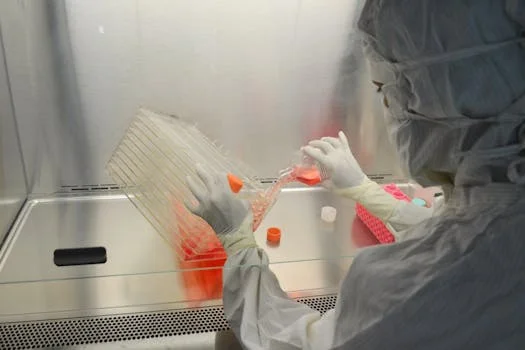
Implementing a Zero Liquid Discharge (ZLD) system for solar cell manufacturing wastewater requires a multi-stage approach. This approach integrates electrocoagulation with advanced membrane technologies to achieve high water recovery rates and meet stringent reuse criteria. A typical ZLD system design begins with pretreatment to remove suspended solids and adjust pH. This is often followed by the solar-powered electrocoagulation stage for primary nickel removal. Subsequent ultrafiltration (UF) using 0.02 μm PVDF membranes effectively polishes the water, removing any remaining fine particles and colloids. The UF permeate then proceeds to a reverse osmosis (RO) stage, capable of achieving up to 95% water recovery by rejecting dissolved salts and residual contaminants. For true ZLD, the concentrated brine from the RO unit is directed to a brine crystallizer, where the remaining water is evaporated, leaving behind solid waste for disposal or potential resource recovery. Submerged PVDF membrane filtration is also a viable option for polishing after EC.
The ultimate goal for water quality targets is to achieve nickel concentrations below 0.1 mg/L, Chemical Oxygen Demand (COD) below 50 mg/L, and turbidity below 1 NTU, making the water suitable for reuse in critical PV production lines such as texturing baths or cooling towers. The physical footprint of such systems varies with capacity; a 50–200 m³/h system typically occupies 150–300 m². A conceptual layout might include an electrocoagulation tank measuring 3m x 2m x 1.5m and an RO skid of 2m x 1.5m. A successful implementation in Taiwan for a 100 m³/h facility demonstrated remarkable results: 99.8% nickel removal (from 320 mg/L down to 0.08 mg/L) and 90% overall water reuse, with COD reduced from 1,200 mg/L to 45 mg/L. These advanced industrial reverse osmosis (RO) water treatment systems are crucial for maximizing water reclamation.
Cost Breakdown: Solar-Powered ZLD vs. Chemical Precipitation for Nickel Removal
Evaluating the financial viability of nickel wastewater treatment necessitates a detailed comparison of capital expenditure (CapEx) and operational expenditure (Opex) across different technologies. For solar cell manufacturing wastewater treatment aiming for ZLD and high nickel removal, solar-powered ZLD systems represent a significant upfront investment but offer long-term savings. The CapEx for a 50–200 m³/h solar-powered ZLD system typically ranges from $1.2 million to $4.5 million. This is higher than conventional chemical precipitation systems, which might range from $800,000 to $3 million for similar capacities, or ion exchange systems ($1 million to $3.5 million). However, Opex paints a different picture. Solar-powered ZLD systems generally incur Opex of $0.80–$1.50 per cubic meter, primarily driven by maintenance and minimal chemical consumption, whereas chemical precipitation can range from $1.20–$2.00/m³, and ion exchange from $1.50–$2.50/m³, due to higher chemical and energy demands. The cost of solar integration, including photovoltaic panels, battery storage, and DC microgrid setup, can add between $800,000 to $2.4 million to the CapEx for a system of this scale.
| Technology | CapEx (50–200 m³/h) | Opex ($/m³) | Key Opex Components |
|---|---|---|---|
| Solar-Powered ZLD | $1.2M – $4.5M | $0.80 – $1.50 | Maintenance, minimal chemicals, sludge disposal. |
| Chemical Precipitation | $0.8M – $3M | $1.20 – $2.00 | Chemicals (coagulants, pH adjusters), energy, sludge disposal. |
| Ion Exchange | $1M – $3.5M | $1.50 – $2.50 | Regenerant chemicals, energy, resin replacement, sludge disposal. |
The return on investment (ROI) for solar-powered ZLD is driven by several factors: significant savings from water reuse, estimated at $0.50–$1.20 per cubic meter; potential revenue from nickel recovery, valued at $2–$5 per kilogram; and the avoidance of substantial compliance fines, which can range from $15,000 to $50,000 per violation.
Compliance Standards for Nickel Discharge: China GB, EU, EPA, and Local Limits
Navigating environmental regulations is paramount for solar cell manufacturers. China’s primary standard for industrial wastewater discharge, GB 21900-2008, limits nickel to 0.5 mg/L for direct discharge and 1.0 mg/L for indirect discharge into municipal sewers. Provincial regulations often impose stricter limits; for example, Jiangsu province requires 0.2 mg/L and Zhejiang province mandates 0.1 mg/L. The EU’s Industrial Emissions Directive 2010/75/EU limits nickel in surface water discharge to 0.1 mg/L and in sewer discharge to 0.5 mg/L. Germany’s TA Luft regulations require as low as 0.05 mg/L for sensitive areas.
In the United States, the EPA’s 40 CFR Part 421 sets a limit of 1.0 mg/L for the metal finishing category. California’s Title 22 establishes a stricter standard of 0.1 mg/L for water reuse. Local Publicly Owned Treatment Works (POTWs) may impose their own limits, such as Silicon Valley Clean Water’s 0.5 mg/L for nickel. Taiwan’s Environmental Protection Administration (EPA) mandates a 0.5 mg/L limit for general discharge and a more stringent 0.1 mg/L for water reuse.
| Region/Standard | Nickel Discharge Limit (mg/L) | Application |
|---|---|---|
| China (GB 21900-2008) | 0.5 (Direct) / 1.0 (Indirect) | General Industrial Discharge |
| China (Jiangsu) | 0.2 | Provincial Stricter Limit |
| China (Zhejiang) | 0.1 | Provincial Stricter Limit |
| EU (IED) | 0.1 (Surface Water) / 0.5 (Sewer) | Industrial Emissions |
| Germany (TA Luft) | 0.05 | Sensitive Areas |
| USA (EPA 40 CFR 421) | 1.0 | Metal Finishing |
| USA (California Title 22) | 0.1 | Water Reuse |
| USA (Silicon Valley Clean Water) | 0.5 | Local POTW Limit |
| Taiwan EPA | 0.5 (Discharge) / 0.1 (Reuse) | General Discharge & Reuse |
Frequently Asked Questions
Q: What is the primary source of nickel contamination in solar cell manufacturing wastewater?
A: Nickel contamination primarily originates from electroless nickel plating for back contacts, texturing baths containing HNO₃/HF mixtures, and edge isolation processes, with concentrations frequently exceeding 50 mg/L.
Q: How does solar-powered electrocoagulation achieve high nickel removal efficiency?
A: Solar-powered EC uses dissolved aluminum electrodes to form Al(OH)₃ flocs that adsorb and precipitate Ni²⁺ ions. Under optimal solar irradiation (750 W/m²), aluminum electrodes can achieve over 99.9% nickel removal in approximately 40 minutes.
Q: What are the typical water quality targets for reuse in PV production lines?
A: For reuse in processes like texturing or cooling towers, wastewater should have nickel levels below