Package wastewater treatment plants are factory-built systems that treat about 10,000 to 2,000,000 gallons per day (GPD; ~38–7,570 m³/d) of municipal or industrial wastewater. California buyers still face Title 22 recycled-water limits often cited as ≤10 mg/L BOD, ≤10 mg/L TSS, and ≤2 NTU turbidity for unrestricted reuse pathways, plus NPDES or WDRs for discharge. Typical capital costs remain $150,000 for a 10,000 GPD unit to about $2.5M for a 1,000,000 GPD plant, with installation often 15–25% of capital because modules arrive prefabricated.
What California Buyers Need to Know in 2026
Package plants in California typically serve 10,000–2,000,000 GPD and cost about $150,000–$2.5M before seismic and power extras. Title 22 reuse designs target tertiary effluent with filtration plus disinfection. Prefabrication cuts field labor versus cast-in-place concrete. Process choice among MBR, SBR, MBBR, or A/O follows influent strength and reuse goals.
According to ASCE’s 2025 California Infrastructure Report Card, about 900 publicly owned collection and treatment systems serve the state and treat roughly four billion gallons per day. Many collection pipes and manholes average 50–60 years of age, and statewide wastewater needs exceed $65 billion (~$1,657 per person). That backlog, not brochure claims, is why compact modular trains keep winning upgrade bids on constrained sites.
Earlier industry notes often cited roughly 40% of facilities older than 30 years; ASCE’s 2025 review instead stresses conveyance age of 50–60 years and advanced-treatment needs near $10 billion. Urban land at $100–$300/sq ft still favors footprints 50–70% smaller than conventional concrete plants. Most plants we size for California industrial parks run toward the lower end of the footprint band when MBR or containerized skids are allowed.
A Central Valley food processor in the source notes cut planned permitting from about 18 months to about 6 months. It replaced a concrete concept with a prefabricated MBR train aimed at agricultural reuse quality. Faster civil work does not erase Regional Board review, but it does shrink the construction window that usually drives soft-cost burn.
Package Wastewater Treatment Plants: Specs for California Projects
Engineering managers comparing package wastewater treatment plants for California sites need flow, removal, energy, and reuse numbers under stated conditions. Standard modules cover 10,000–2,000,000 GPD, with custom builds reported up to about 5 MGD for large industrial campuses (AUC Group data cited in prior project notes). Typical removal bands remain 90–98% BOD, 90–97% TSS, and 85–95% ammonia under secondary-treatment benchmarks historically referenced to EPA secondary performance ranges.
Footprint usually falls between 0.5 and 5 acres, versus about 2–10 acres for site-built concrete plants of similar duty. Energy for MBR packages commonly lands at 0.5–1.2 kWh/m³, above conventional activated sludge at 0.3–0.8 kWh/m³, because membranes add filtration load. Aeration still takes roughly 60% of plant power, so VFDs on blowers are standard on bids we review.
Anoxic/aerobic (A/O) suits municipal sewage near BOD 150–300 mg/L and TSS 100–250 mg/L when moderate nitrogen control is enough. MBR trains fit Title 22 reuse targets on stronger municipal or industrial feeds (BOD 200–500 mg/L, TSS 150–400 mg/L) because membrane filtrate holds turbidity. For California Title 22-oriented municipal and industrial duty, see the MBR Integrated Wastewater Treatment System. SBR handles swing loads (BOD 100–400 mg/L, TSS 80–350 mg/L). MBBR absorbs high organic industrial loads (BOD 300–1000 mg/L, TSS 200–800 mg/L) when tank volume is scarce. Where burial depth or street frontage limits aboveground tanks, the Underground Package Sewage Treatment Plant (WSZ Series) is the compact buried option many site plans request.
| Parameter | Typical Range for Package Plants (California) | Notes for CA Compliance |
|---|---|---|
| Flow Rate | 10,000 – 2,000,000 GPD | Customizable up to 5 MGD for industrial needs. |
| BOD Removal Efficiency | 90 – 98% | Essential for meeting Title 22 (≤10 mg/L). |
| TSS Removal Efficiency | 90 – 97% | Critical for Title 22 (≤10 mg/L) and filtration. |
| Ammonia Removal Efficiency | 85 – 95% | Required for nitrogen-sensitive receiving waters. |
| Footprint | 0.5 – 5 acres | 50-70% smaller than conventional concrete plants. |
| Energy Consumption (MBR) | 0.5 – 1.2 kWh/m³ | Aeration is ~60% of total; VFDs recommended. |
| Turbidity (MBR) | ≤2 NTU | Mandatory for Title 22 unrestricted reuse. |
California Compliance Checklist: Title 22, NPDES, and Local Ordinances for Package Plants
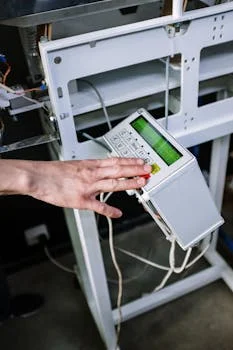
Title 22 recycled-water rules remain the reuse gate for many California package projects. Project specs still target ≤10 mg/L BOD, ≤10 mg/L TSS, and ≤2 NTU turbidity for unrestricted reuse classes commonly paired with filtration plus disinfection. Disinfection routes stay chlorine, UV, or ozone, with daily BOD/TSS monitoring often expected once plants exceed about 100,000 GPD.
According to Cal. Code Regs. Tit. 22, § 60301.230 (Cornell LII text), disinfected tertiary recycled water needs a chlorine CT of at least 450 mg·min/L. Modal contact time must be ≥90 minutes at peak dry-weather design flow, or an approved 5-log MS2/poliovirus demonstration with filtration. The same section sets total coliform medians at ≤2.2 MPN/100 mL over seven days. Counts must stay ≤23 MPN/100 mL in more than one sample in any 30-day period, and no sample may exceed 240 MPN/100 mL.
NPDES timelines for industrial dischargers still run about 6–12 months in practice, and categorical pretreatment under 40 CFR Part 403 applies before sewer or surface discharge. Local add-ons matter. Prior project notes list 12 of 58 counties, including Los Angeles, San Diego, and Orange, asking for extra pathogen checks. Sensitive waters may require fecal coliform ≤200 MPN/100 mL. Food processors and wineries often face FOG ≤250 mg/L; metal finishers may see hexavalent chromium ≤1 mg/L. Those loads usually need DAF systems for industrial pretreatment in California’s food processing and metal finishing sectors ahead of the biological package.
Cost Breakdown: Package Plants in California (2025 Benchmarks)
Capital costs for 10,000–50,000 GPD packages typically sit at $150,000–$250,000. Mid-range 100,000–500,000 GPD trains usually fall between $500,000–$1.2M. Larger 500,000–2,000,000 GPD plants land near $1.5M–$2.5M (2025 RSMeans figures adjusted for California labor and materials). Installation for packages is commonly 15–25% of capital, versus 30–40% for conventional concrete, because steel tanks and skids leave the factory assembled.
O&M often runs $0.20–$0.50 per 1,000 gallons treated. MBR sits at the high end mainly because membranes are replaced about every 5–7 years under typical industrial duty. Lifecycle notes in the source material still show about 20–30% lower 20-year TCO versus concrete when permitting and modular expansion are counted. Seismic Zone 4 detailing can add 10–15%, South Coast AQMD generator rules add air-permit cost, and union labor shortages can add another 5–10% on field work.
| System Capacity (GPD) | Capital Cost Range (2025 CA) | Installation Cost (% of Capital) | O&M Cost (per 1,000 gallons) |
|---|---|---|---|
| 10,000 – 50,000 | $150,000 – $250,000 | 15 – 20% | $0.35 – $0.50 |
| 100,000 – 500,000 | $500,000 – $1,200,000 | 18 – 22% | $0.25 – $0.40 |
| 500,000 – 2,000,000 | $1,500,000 – $2,500,000 | 20 – 25% | $0.20 – $0.35 |
What drives package treatment plant upgrade costs?
Upgrade cost drivers for package treatment plants are process class, Title 22 polishing, seismic detailing, and electrical service. Moving from lagoon polishing to MBR with UV or chlorine raises capital and O&M together. Membranes and disinfection power enter the bill. California soft costs also include Regional Board fees, turbidity meters, and temporary bypass pumping.
How much does upgrading a package sewage plant cost?
Upgrading a package sewage plant in California often costs a large share of a new package capital band when biology, membranes, and disinfection are all replaced. A 100,000 GPD replacement package is still quoted near $500,000–$750,000 including installation and permitting, with MBR at the upper end. Partial filtration or UV add-ons cost less, but only if existing aeration tanks already meet hydraulic and solids residence-time targets.
Supplier Comparison for California Package Plant Buyers
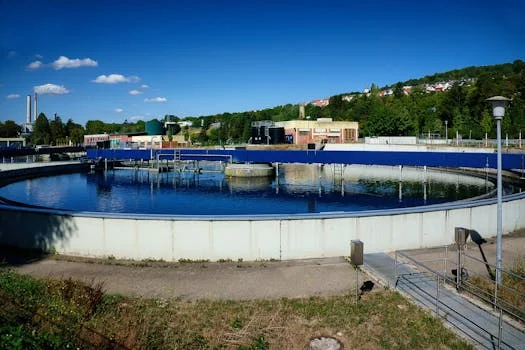
Supplier shortlists should weight flow range, process family, Title 22 support, lead time, and California service coverage. Compact MBR vendors fit reuse sites under about 500,000 GPD. Conventional activated-sludge package builders with long California install histories fit larger municipal flows. MBBR specialists handle high-COD industrial pretreatment. Containerized MBR skids suit temporary or fast-track camps. Hybrid MBR/DAF packages cover oily food and metal-finishing wastes that need solids capture before membranes.
Match size and influent before brand. Small reuse jobs lean MBR; swing industrial loads lean SBR; high-strength organics lean MBBR. Buried or street-tight parcels often specify an Underground Package Sewage Treatment Plant (WSZ Series) instead of aboveground steel. Keep DAF pretreatment on the FOG path when sewer ordinances cap grease ahead of the biological train.
| Manufacturer | Primary Process Technology | Flow Rate Range (GPD) | CA Compliance Support | Unique Value Proposition |
|---|---|---|---|---|
| Cloacina | MBR (Membrane Bioreactor) | 5,000 – 500,000 | Title 22 Certified Effluent | Compact MBR systems with proven CA reuse applications. |
| AUC Group | Activated Sludge, SBR | 100,000 – 2,000,000 | 50+ California Installations | Long history of robust, conventional systems in CA. |
| Alfa Laval | MBBR (Moving Bed Biofilm Reactor) | 50,000 – 1,000,000+ | Industrial Pretreatment Expertise | High-efficiency MBBR for demanding industrial loads. |
| Fluence | NIROBOX (Containerized MBR) | 2,500 – 250,000 | Rapid Deployment, Modular | "Plug & Play" containerized solutions for fast setup. |
| HydropureWater | MBR/DAF Hybrid, SBR | 10,000 – 2,000,000 | Turnkey Compliance Packages | Integrated solutions for complex industrial/municipal needs. |
Procurement Checklist: 10 Steps to Buying a Package Plant in California
A fixed buying sequence reduces permit rework and change orders on California package jobs.
- Step 1: Define Influent Characteristics Run at least 30-day composite sampling for BOD, TSS, FOG, pH, and temperature. Plan for 90-day datasets when NPDES staff ask for seasonal coverage.
- Step 2: Select Process Technology Choose A/O, MBR, SBR, or MBBR from effluent limits, load swings, and footprint. Title 22 unrestricted reuse usually points to MBR plus disinfection.
- Step 3: Request Proposals Collect 3–5 bids that state California compliance guarantees in writing, including reuse class if claimed.
- Step 4: Evaluate Bids Score technical fit 30%, compliance support 30%, cost 20%, and local service 20% so price alone cannot win a weak process.
- Step 5: Conduct Factory Acceptance Testing (FAT) Witness FAT with third-party checks. Source notes treat FAT as expected practice above about 100,000 GPD before shipment.
- Step 6: Secure Permits Align supplier documents with NPDES/WDR, Title 22 engineering reports, and county environmental health reviews; incomplete applications are the usual delay.
- Step 7: Plan for Installation Design for seismic anchorage, utility tie-ins, and urban traffic control before the modules arrive.
- Step 8: Train Operators Budget operator training hours against SWRCB grade rules cited in the source notes (about 40 hours for Grade 1 pathways).
- Step 9: Startup and Commissioning Hold 30–60 days for ramp tests at 25%, 50%, and 100% of design flow.
- Step 10: Monitor and Optimize Keep the Regional Board annual reporting calendar and trending for turbidity, coliform, and nutrient limits.
Who This Is For / Next Step
This guide is for plant engineers, EPC leads, and procurement managers sizing 10,000–2,000,000 GPD California package systems under Title 22 or industrial pretreatment rules. Look elsewhere if you need a multi-MGD regional plant or only septic-scale onsite systems. For a duty-specific proposal, send influent data and effluent targets through our request-quote form so process selection and footprint can be checked before bid documents freeze.
Frequently Asked Questions
What is the largest package wastewater treatment plant in California?
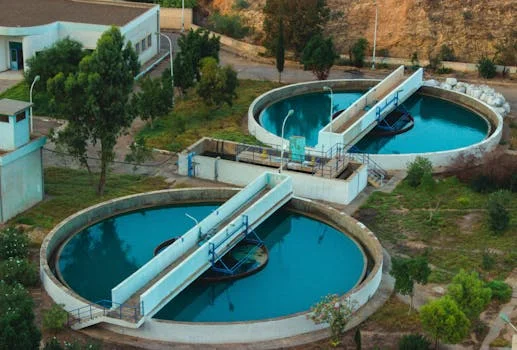
Package plants typically top out near about 2 MGD as modular trains, while much larger California facilities are site-built or multi-unit campuses. The South Bay International Wastewater Treatment Plant at about 25 MGD is a major regional facility, not a single package skid. Above roughly 2 MGD, buyers usually combine multiple package modules or shift to hybrid site-built tanks.
How much does a 100,000 GPD package plant cost in California?
A 100,000 GPD package plant in California typically costs about $500,000–$750,000 including installation and permitting in the 2025 cost notes used here. MBR configurations sit at the high end because membranes and higher specific energy raise both capital and O&M. Exact quotes still move with seismic detailing, disinfection class, and utility upgrades.
Do package plants meet California Title 22 requirements?
Package plants meet Title 22 only when designed and operated for the required recycled-water class. Common targets remain ≤10 mg/L BOD, ≤10 mg/L TSS, and ≤2 NTU turbidity for unrestricted reuse. Tertiary disinfection still needs CT ≥450 mg·min/L or an approved 5-log virus demonstration. MBR filtrate is the most consistent turbidity path on plants we commission.
What are the lead times for package plants in California?
Standard package plant fabrication lead times are typically 12–16 weeks, with custom builds near 20–24 weeks before freight. Permitting often adds another 6–12 months and usually controls the critical path more than steel fabrication. Order long-lead electrical gear early when generator or utility interconnect reviews are expected.
Can package plants be expanded?
Modular package plants can usually expand in about 10–20% steps by adding tanks or membrane cassettes with limited downtime. MBR expansions often add cassettes inside existing tanks when hydraulics allow. Conventional packages may add aeration volume or clarifier modules once civil pads and power are reserved in the first phase.