Why Chemical-Wastewater Clarification Is Not a One-Unit Decision
For chemical wastewater in Venice, Florida, factories should choose DAF when the objective is to remove floatable material, oils and fats, and conditioned solids; a conventional clarifier is generally better for heavier settleable solids. DAF uses microbubbles—30–50 microns in Clearwater systems and 20–30 microns in PEWE systems—to lift conditioned floc for surface skimming. A clarifier relies on gravity settling and usually occupies more floor space but is simpler to operate. Neither device alone removes dissolved contaminants.
The procurement error is treating “DAF” and “clarifier” as interchangeable names for a complete treatment system. They are separation mechanisms with different collection targets, not substitutes for characterization, chemical conditioning, polishing, or sludge management.
Doosan Heavy Industries & Construction states that industrial wastewater may contain toxic materials depending on the industry, making generic flow-based selection unsafe. The EPA’s 2011 vessel-graywater report identifies oil and grease, detergents, metals, solids, and nutrients as constituents that can occur in wastewater; that source is useful only as a general warning because a chemical factory’s actual production streams must be sampled.
The defensible sequence is:
- Segregate production streams by chemistry and contaminants.
- Characterize flow, solids, oil and grease, pH, toxicity indicators, metals, and relevant organics.
- Equalize variable flows where needed.
- Adjust pH and apply chemical coagulation and flocculation when required.
- Select DAF or gravity sedimentation for the separated fraction.
- Add biological, membrane, adsorption, oxidation, filtration, or other polishing for dissolved constituents.
- Manage the resulting sludge through thickening, dewatering, and an approved disposal route.
This distinction also applies in adjacent industries: see DAF versus clarifier selection for petroleum wastewater and DAF and clarifier selection for mining wastewater.
DAF and Conventional Clarifiers Separate Different Material
Dissolved air flotation separates by attaching bubbles to particles, while gravity sedimentation separates by allowing denser material to settle. Clearwater Industries describes its DAF process in its April 27, 2026 equipment source: 30–50 micron microbubbles attach to chemically conditioned solids, lift them to the surface, and carry them to a paddle skimmer. Heavier solids settle to the bottom collection zone and are removed through an auger.
PEWE describes a different bubble-generation arrangement in its 2026 product source. A Rogue regenerative turbine aeration pump forms 20–30 micron bubbles that attach to insoluble TSS, BOD, and FOG solids. Those solids form a floating bed, which a surface skimmer periodically removes. PEWE also positions industrial DAF as pretreatment before discharge to a municipal publicly owned treatment works, but that equipment description does not establish authorization to discharge in Venice.
A conventional clarifier has no flotation stage. Separation depends on particle size, density, settling behavior, residence time, and solids inventory. That makes it more suitable for heavy, readily settleable solids, while DAF is generally stronger for free oils, floatable material, FOG, and conditioned floc that would otherwise rise slowly or remain dispersed.
| Selection criterion | Dissolved air flotation | Gravity sedimentation |
|---|---|---|
| Separation mechanism | Bubbles attach to particles and lift them to the surface | Dense particles settle under gravity |
| Principal application | Floatable oils, FOG, and conditioned solids | Heavy settleable solids and grit |
| Documented bubble range | 30–50 microns in Clearwater systems; 20–30 microns in PEWE systems | Not applicable |
| Solids withdrawal | Surface skimmer, with heavier solids collected at the bottom | Bottom collection and sludge removal |
| Critical operating dependency | Chemical conditioning and bubble-to-floc contact | Settling characteristics and solids inventory |
| Project role in Doosan references | DAF at the Midland Dow chemical plant; DAF sludge thickening at Brisbane Luggage Point | Primary and secondary clarifiers at Brisbane Luggage Point |
Doosan’s references show why a separator should be assigned a specific role. Its industrial reference lists DAF for the Midland Dow chemical plant, completed in 2015. Its Brisbane Luggage Point wastewater project, completed in 2001, combines primary clarification, biological treatment, secondary clarification, and DAF sludge thickening. These are documented applications, not universal sizing rules or Venice permit demonstrations.
For a plant-level equipment review, compare the operating principles of an industrial dissolved air flotation system with a high-efficiency sedimentation tank.
Match Each Chemical-Plant Wastewater Stream to the Right Equipment
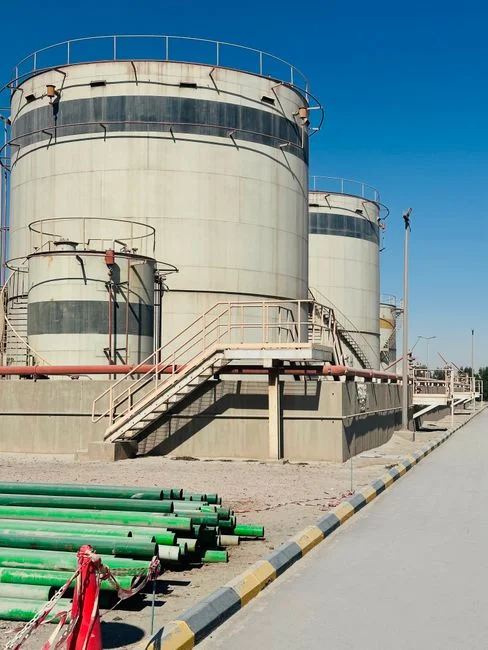
The best separator depends on the physical and chemical fraction entering the unit. Mixed plant wastewater should be segregated before an aggressive clarification device is asked to handle incompatible streams.
| Wastewater characteristic | Leading clarification decision | Required engineering checks |
|---|---|---|
| Free oil or floatable solvents | DAF is the leading option after equalization and appropriate conditioning | Recovered-material containment, chemical compatibility, skimming and sludge handling |
| Emulsified oil | DAF may be appropriate after source control, equalization, pH adjustment, and demulsification or conditioning | Jar or pilot testing; reagent selection; prove flotation response |
| High TSS with heavy grit | Start with screening or grit removal, then gravity clarification | Particle density, grit load, floor loading, solids withdrawal and abrasion |
| Light organic solids | DAF after coagulation and flocculation when low-density floc can be floated | Floc strength, floatability, pH, chemical demand and loading |
| FOG | DAF is the leading clarification option when the FOG is insoluble and floatable | Emulsion state, skimmer capacity, recovered-FOG fate |
| Dissolved salts or refractory organics | Neither DAF nor a clarifier is the final treatment | Site-specific biological, membrane, adsorption, oxidation, filtration, or concentrate-management train |
Clearwater states that proper coagulation and flocculation should precede DAF because conditioning increases particle size and bubble contact. For a mixed Venice factory stream, the key questions are whether incompatible products can be segregated, whether equalization will prevent chemical shocks, and which unit can receive the solids and chemicals selected for that fraction.
DAF capacity is also configuration-dependent. Clearwater’s April 27, 2026 source identifies the FPAC as a compact cross-flow design for small-to-medium flows with very high solids loads; the FPBC as a high-profile lamella-plate design for low-to-medium solids loads, including low-buoyancy particles; and the FPHF as a high-flow design for low-to-large solids loads. These product families are not interchangeable ratings.
Material selection is a separate process decision. Clearwater lists 304SS as standard and 316SS, polypropylene, and other materials as options. The bidder must demonstrate compatibility with the actual wastewater, chemicals, temperature, cleaning regime, and storage conditions. Include an PLC-controlled chemical dosing system in the train definition where controlled conditioning is required, and consider upstream solids exclusion such as a rotary mechanical bar screen where grit or coarse solids would overload the separator.
Size the System from Real Wastewater Data
Defensible sizing begins with a wastewater profile and ends with an integrated process guarantee; average daily flow alone is not a design basis.
| Procurement input | Information required | Why it affects selection |
|---|---|---|
| Hydraulic profile | Average flow, peak flow, batch-discharge periods, upset conditions, and storm or runoff entry where relevant | Determines equalization, hydraulic capacity, controls, and redundancy |
| Representative analysis | TSS, oil and grease, FOG, pH, COD, BOD, metals, toxicity indicators, and discharge-relevant constituents | Defines loadings, removal targets, and conditioning needs |
| Separability testing | Particle settleability, flotation response, and chemical-consumption testing where variability makes generic calculations inadequate | Shows whether gravity or flotation is technically suitable |
| Operating and site requirements | Redundancy, sludge withdrawal, controls, maintenance access, utilities, foundations, and expansion provisions | Prevents a quote that omits essential operating scope |
The product boundaries should be stated, not generalized. HydropureWater’s catalog range is 4–300 m³/h across 13 DAF models. Clearwater states that its COMPACT DAF uses one skid at 66 GPM or less and a modular two-skid configuration above that flow. Neither range proves that a particular unit will perform on a Venice wastewater; the selected design must follow the site’s flow, solids, chemistry, and treatment objective.
Ask every bidder to identify whether its quotation includes equalization, screening, pH adjustment, coagulation and flocculation, DAF or sedimentation, controls, installation, commissioning, operator training, and downstream sludge treatment. If those items are excluded, the bids are not comparable. The capacity-calculation guide provides a framework, but project testing remains necessary when wastewater is variable.
For industrial projects requiring final reuse, Doosan’s third-edition water-treatment reference describes combined clarification, biological treatment, filtration, reverse osmosis, and zero-liquid-discharge technologies. That combination illustrates when clarification is one stage in a larger train, not the final objective. A downstream plate-and-frame filter press should also be evaluated early if the clarified solids will require mechanical dewatering.
Build a Treatment Train That Supports Discharge or Reuse
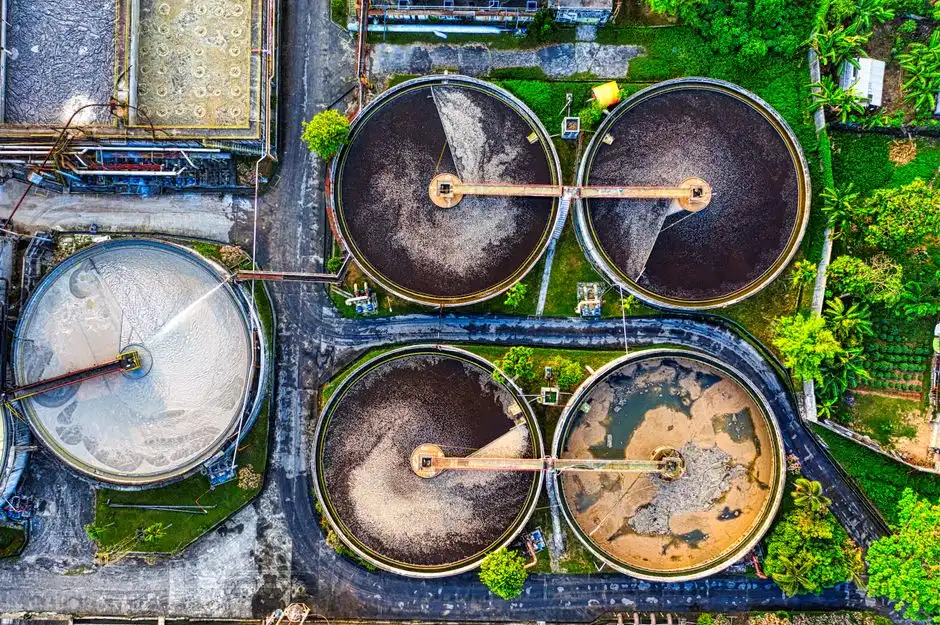
A practical chemical-plant treatment train usually progresses from segregated collection through screening or grit removal, equalization, pH adjustment, coagulation and flocculation, the selected separator, polishing, and sludge dewatering.
PEWE’s 2026 product source supports DAF as a process for insoluble TSS, BOD, and FOG and identifies industrial pretreatment before discharge to a municipal POTW. That supports DAF’s role in a clarification stage, but it does not show that DAF alone will meet a Venice discharge requirement.
Where compact gravity separation, flocculation, and sludge recirculation fit the project, a lamella clarifier may be appropriate. HydropureWater lists surface-loading rates of 20–40 m/h and chemical-consumption reduction of up to 30% as product specifications for its high-efficiency sedimentation tank. Those values are design inputs to verify against actual settling behavior, hydraulic loading, sludge properties, and chemical trials; they are not guaranteed site performance.
Sludge handling can become the bottleneck after a clarifier or DAF succeeds. Define how float, settled solids, oil-rich skimmings, waste chemicals, and washwater leave the unit, where they combine, what water leaves the dewatering operation, and what disposal route applies. If dewatering is required, compare the plate-and-frame filter press with the plant’s actual sludge characteristics rather than selecting it by nominal capacity alone.
Reuse changes the required treatment quality and therefore the downstream train. Doosan states that treating wastewater for reuse or recycling can cost less than other production methods while conserving water resources. The supplied reference provides no general recovery percentage for this application, so the factory must establish the required reuse quality and test whether the proposed biological, membrane, adsorption, or other polishing stages achieve it.
Plan for Venice Permitting and Sewer-Pretreatment Risk
The discharge route must be fixed before final equipment selection because sanitary sewer, industrial sewer, stormwater, surface-water discharge, and on-site reuse routes impose different documentation and treatment requirements.
| Permitting or pretreatment item | Buyer action | Evidence to retain |
|---|---|---|
| Receiving route | Identify the receiving sewer, water authority, surface-water outlet, or reuse system | Written confirmation of route and responsible authority |
| Wastewater characterization | Sample the actual plant streams and composites, including production, upset, and batch-discharge conditions | Laboratory reports, sampling plan, flow records, and constituent profile |
| Applicable limits | Obtain the current pretreatment or sewer-use requirements and permit conditions | Applicable limits, averaging bases, monitoring requirements, and permit references |
| Authority acceptance | Request written acceptance of proposed flow, constituent profile, and treatment performance | Approval correspondence or conditions incorporated into the purchase specification |
| Operating control | Specify dosing, pH, flow, sludge removal, alarms, and bypass prevention | Dosing records, pH records, flow logs, sludge records, and bypass-control procedure |
| Equipment claim | Do not treat a DAF or clarifier brochure as a permit demonstration | Guaranteed performance tied to the agreed influent basis and compliance conditions |
The supplied research does not provide Venice-specific numeric discharge or pretreatment limits. No defensible limit should be inferred from a general parameter table, a vendor case study, or another jurisdiction’s rules. Start with the chemical plant wastewater pretreatment requirements only as a due-diligence framework, then obtain the controlling requirements from the Venice site’s actual receiving authority.
The EPA’s November 2011 graywater report shows why characterization must cover multiple constituents, including metals, solids, nutrients, detergents, and oil and grease. It does not establish the limits for a Venice chemical factory. The factory’s own analytical data, discharge route, permit, and written authority correspondence control the procurement decision.
Compare Bids Using Lifecycle Criteria, Not Purchase Price Alone
The strongest bid states what the equipment will remove, what it will not remove, and how it integrates with the complete treatment and permit requirements.
Require each bidder to identify:
- The wastewater fractions the proposed DAF or clarifier will remove and the pollutants that require downstream treatment.
- A guaranteed design point based on characterized flow, constituent loadings, required removal objectives, chemical assumptions, and operating mode.
- Chemical consumption, compressed-air or recycle requirements, maintenance access, controls, corrosion protection, sludge handling, and operator workload.
- Material compatibility evidence and alternatives. Clearwater offers 304SS, 316SS, polypropylene, and other materials, confirming that construction suitability belongs in the technical evaluation.
- Whether the price includes equalization, dosing, flocculation, controls, installation, commissioning, operator training, and downstream sludge handling.
Vendor scale can help qualify bidders, but it cannot replace project-specific evidence. Clearwater’s April 27, 2026 source states that Sigmadaf Clarifiers had completed more than 800 projects in more than 25 countries since its founding in 1994. That record is a qualification aid only; it does not establish capacity, construction suitability, process performance, or Venice approval for any proposed system.
Compare the equipment boundary with a broader industrial treatment system scope and use the factory treatment-system question framework to expose omitted equalization, polishing, controls, service, and sludge scope. Purchase price should be evaluated alongside chemical use, utility demand, maintenance, operator time, downtime, disposal cost, and compliance exposure.
Frequently Asked Questions
What does a DAF or clarifier for chemical wastewater cost in Venice?
There is no defensible price range in the supplied research because cost depends on flow, solids and contaminant loading, material selection, chemical conditioning, controls, sludge handling, installation, and lifetime operating requirements. Request a scope-specific quote after characterization, and ask bidders to separate equipment, pretreatment, commissioning, utilities, chemicals, maintenance, and downstream sludge costs.
How should a Venice chemical factory size a DAF or clarifier?
Provide average and peak flow, batch and upset conditions, representative laboratory results, constituent loadings, the required removal objective, and the applicable permit or sewer conditions. A model should then be selected using verified hydraulic and solids duties, with redundancy and operating mode defined. Review an industrial dissolved air flotation system or gravity clarifier against those inputs, not merely against average daily flow.
Which supplier qualifications matter most for a chemical-wastewater separator?
Require a wastewater-specific proposal that identifies removable and non-removable pollutants, compatible materials, a defined design basis, process guarantees, controls documentation, installation and service scope, and integration with downstream treatment. Supplier project history is supporting evidence, not a substitute for process testing and reference review.
Can equipment performance establish discharge compliance in Venice?
No. A DAF or clarifier brochure does not authorize a discharge. The receiving authority, applicable pretreatment or permit conditions, characterized wastewater, and written acceptance of the proposed treatment performance determine compliance risk. Obtain those items before treating any vendor performance claim as a permitted result.
What determines the delivery lead time?
Lead time depends on the confirmed process design, material selection, controls integration, fabrication scope, site work, and approval status. Request a milestone schedule tied to those items, including drawing approval, manufacturing, FAT or equivalent verification, delivery, installation, commissioning, and operator acceptance. The supplied research does not support a standard lead-time figure.