
Who regulates pretreatment for chemical plants near Longview?
Federal authority starts with the Clean Water Act (33 U.S.C. §1251 et seq.) and EPA's General Pretreatment Regulations at 40 CFR Part 403, the same framework the Three Rivers Regional Wastewater Authority explicitly cites in its 21 January 2026 Discharge Pretreatment Policy (trrwa.org, 2026-01-21). The local layer is TRRWA itself, organized as a public agency under Washington State law and formed under the Revised and Restated Interlocal Agreement dated 15 December 2005 among the City of Longview, the City of Kelso, Beacon Hill Water & Sewer District, and Cowlitz County (ecode360.com, City of Longview Section 1).
That agreement places day-to-day permitting and enforcement with the TRRWA Plant Superintendent, who is designated as the Authority's agent under Section VII of the 2005 Interlocal and serves as the contact for any chemical plant seeking a Wastewater Discharge Permit. Because TRRWA runs an EPA-approved program, the Plant Superintendent is the primary regulator; EPA only becomes the default authority where a POTW has not been approved (pcwracolorado.org).
Industrial pretreatment protects the POTW from pass-through and interference, guards utility workers, prevents sewer corrosion, vapor toxicity, and explosions, and keeps the biosolids produced downstream usable for their intended disposal route (trrwa.org, 2026-01-21). A chemical plant in the Longview/Kelso service area should read its Local Limits as numerical translations of those six protection goals, not as arbitrary concentration thresholds.
What the 21 January 2026 TRRWA Discharge Pretreatment Policy changes
The TRRWA Board adopted a Discharge Pretreatment Policy on 21 January 2026 that sets uniform requirements for every User of the TRRWA POTW and is intended to be adopted by reference into the laws of the City of Longview, the City of Kelso, and Cowlitz County, and by policy resolution at Beacon Hill Water & Sewer District (trrwa.org, 2026-01-21). Before this Policy, obligations flowed through a patchwork of member-agency rules; after 21 January 2026, reporting and compliance obligations flow directly from a single TRRWA document. The Policy authorizes the issuance of Wastewater Discharge Permits, sets monitoring, compliance, and enforcement procedures, establishes administrative review procedures, requires User reporting, and allows TRRWA to set fees for cost recovery of the program (trrwa.org, 2026-01-21).
For a chemical plant already operating under a permit issued before 21 January 2026, the practical move is to request a gap review against the new Policy language. The 2026 text is where limits, sampling locations, and reporting cadence now live, and the 15 December 2005 Interlocal defines the boundary of TRRWA's jurisdiction rather than the day-to-day permit conditions (ecode360.com, City of Longview Section 1). A plant that has not revisited its permit since 2025 should treat 2026 as a fresh compliance trigger rather than a paperwork update.
How TRRWA classifies your chemical plant

User class drives whether you need a permit, what monitoring applies, and which Local Limit values you must hit. The 21 January 2026 Policy defines the tiers by discharge volume and by whether the discharge could interfere with the POTW (ecode360.com, City of Longview Section 1). A Significant Industrial User (SIU) is subject to a Categorical Pretreatment Standard or meets the volume and loading thresholds that require full permitting. A Potential Significant Industrial User does not yet meet SIU criteria but the Plant Superintendent has determined its discharge could interfere with the POTW, so monitoring and pretreatment can still be required. A Minor Industrial User discharges non-domestic sewage from a process that uses water to manufacture a product but does not rise to SIU status. A Commercial User does not generally use water to manufacture a product; if it discharges 800 gpd or less it is a Minor Commercial User, and above 800 gpd it is reclassified as a full Commercial User (ecode360.com, City of Longview Section 1). Industrial Users are further classified as Categorical, Significant, Potential Significant, or Minor depending on the volume and nature of their discharge.
| User class | Trigger | Permit / monitoring |
|---|---|---|
| Categorical Industrial User | Subject to a 40 CFR Part 403 categorical standard (e.g., chemical manufacturing subcategory) | Wastewater Discharge Permit; categorical limits apply alongside TRRWA Local Limits |
| Significant Industrial User (SIU) | Meets SIU volume/loading thresholds or is subject to a categorical standard | Wastewater Discharge Permit, full monitoring, reporting, 66% / 33% compliance math |
| Potential Significant Industrial User | Does not yet meet SIU criteria but Plant Superintendent finds interference potential | Monitoring and pretreatment may be required at the Plant Superintendent's discretion |
| Minor Industrial User | Manufactures a product with water; non-domestic discharge; below SIU thresholds | Permit or general control mechanism as set by TRRWA |
| Commercial / Minor Commercial User | Does not generally use water to manufacture a product; Minor threshold is 800 gpd | Compliance with Local Limits; grease trap/interceptor required for FOG discharges (trrwa.org, 2026-01-21) |
Limits a chemical plant must hit before sewer discharge
TRRWA's pretreatment framework layers three things on top of each other: discharge prohibitions, federal and state categorical standards under CWA Sections 307(b) and (c), and TRRWA's Local Limits (ecode360.com, City of Longview Section 1). The Maximum Allowable Discharge is defined as the daily maximum over a 24-hour period, expressed either as a concentration taken from the composite sample or as a mass calculated by multiplying the daily average concentration by total flow in the same 24-hour period and a unit conversion factor (ecode360.com, City of Longview Section 1). For grab-sample compliance against Local Limits, the standard is the same as the Daily Maximum standard.
Local Limits are set by the Plant Superintendent specifically to protect the POTW from pass-through, interference, vapor toxicity, explosions, sewer corrosion, and intended biosolids uses (ecode360.com, City of Longview Section 1). A Categorical Pretreatment Standard under 40 CFR Part 403 is independent of TRRWA's Local Limits and applies to chemical manufacturing subcategories with technology- or concentration-based effluent limits set by EPA. A chemical plant must hit the stricter of the two on every parameter, on every sample.
| Limit layer | Source | How it is evaluated |
|---|---|---|
| Discharge prohibitions | TRRWA Discharge Pretreatment Policy, 2026-01-21 (trrwa.org) | Any violation that causes, alone or in combination, Interference or Pass Through, including endangerment of POTW personnel or the public (ecode360.com) |
| Categorical Pretreatment Standards | 40 CFR Part 403 and subcategory parts, CWA Sections 307(b) and (c) | Daily Maximum and in some cases monthly average; independent of TRRWA Local Limits |
| TRRWA Local Limits | Set by TRRWA Plant Superintendent | Daily Maximum via 24-hour composite (concentration) or mass basis; grab samples use the same Daily Maximum value (ecode360.com) |
Equipment train used to meet those limits
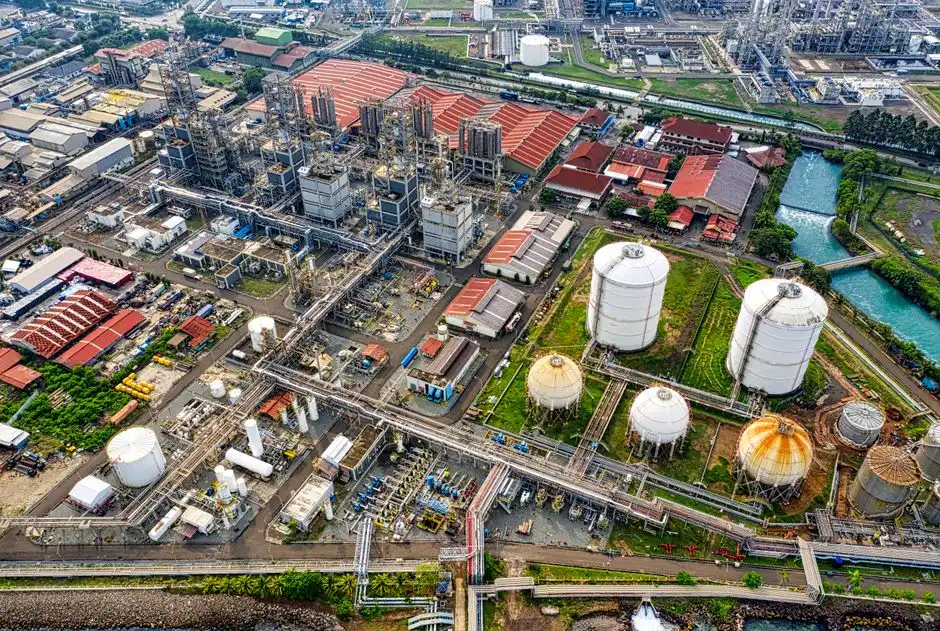
Unit operations translate TRRWA's six protection goals into functional equipment. Source control comes first: segregated acid, alkali, and caustic cleaning streams, plus segregated solvent streams, keep high-strength spikes out of the combined waste stream and out of the pass-through and interference path that Local Limits are written to prevent (ecode360.com, City of Longview Section 1). Equalization and pH adjustment then dampen batch swings so downstream separation and biological steps stay inside their operating envelopes. Coagulation, flocculation, and a DAF system for chemical plant wastewater remove suspended solids, FOG, and colloidal matter before the water reaches biological treatment. An automatic chemical dosing skid is used to feed coagulant and pH reagents consistently across batch swings rather than relying on operator titration. Biological treatment, either activated sludge or an MBR system for high-COD chemical streams, consumes biodegradable organics and reduces the high-COD loads that would otherwise trigger high-strength surcharge fees at typical POTW strength programs. A multi-media filter for RO protection acts as polishing for residual TSS ahead of any reuse or further polishing step. Finally, a plate and frame filter press for sludge dewatering dewaters the wasted biosolids for off-site disposal so the wastewater plant does not become a solids-handling bottleneck. For a side-by-side look at why DAF is the right suspended-solids step over gravity settling in this service, the DAF vs sedimentation comparison walks through the operating trade-offs.
| Process step | Unit operation | TRRWA protection goal addressed |
|---|---|---|
| Source control | Segregated acid/alkali/caustic and solvent streams | Pass-through, interference, vapor toxicity, explosions |
| Equalization / pH adjustment | EQ basin with chemical dosing skid | Interference from shock loads; sewer corrosion |
| Coagulation / flocculation / DAF | DAF system for chemical plant wastewater | Pass-through of suspended solids and FOG; biosolids quality |
| Biological treatment | Activated sludge or MBR system for high-COD chemical streams | Pass-through of biodegradable organics; high-strength surcharges |
| Polishing / disinfection | Multi-media filter and chemical or UV disinfection | Residual COD/BOD/TSS; intended biosolids uses |
| Solids handling | Plate and frame filter press for sludge dewatering | Off-site solids disposal; biosolids contamination control |
Sampling, reporting, and the chronic / TRC violation math
Daily Maximum limits are evaluated on a 24-hour composite sample for concentration-based limits, or on a mass basis calculated as daily average concentration times total flow times a conversion factor for mass-based limits (ecode360.com, City of Longview Section 1). A chronic violation is triggered when 66% or more of all measurements for the same pollutant parameter during a rolling six-month period exceed, by any magnitude, the numeric pretreatment standard, including instantaneous limits (ecode360.com). A Technical Review Criteria (TRC) violation is triggered when 33% or more of measurements during the same rolling six-month period equal or exceed the numeric standard multiplied by the applicable TRC factor (ecode360.com). A compliance schedule milestone failure (start construction, complete construction, or attain final compliance) more than 90 days past its scheduled date is itself a Significant Noncompliance event (ecode360.com).
Worked example for an SIU with monthly sampling: out of six monthly measurements for one parameter, five exceedances of the numeric standard trigger a chronic violation regardless of how small each exceedance is, and two exceedances at or above the TRC multiplier (for example, 1.4× the standard for a TRC of 1.4) trigger a TRC violation. The two metrics must be tracked separately because a plant can sit just above the TRC line for one parameter and just below the chronic line for another, while still being in Significant Noncompliance. A useful pre-audit is to pull the last six monthly DMRs, plot each parameter against its Daily Maximum and against the TRC threshold, and flag any parameter where either ratio is climbing toward the 33% or 66% trigger before the next sampling event.
Frequently Asked Questions
What does a TRRWA Wastewater Discharge Permit cost a chemical plant in 2026?
The 21 January 2026 Policy authorizes TRRWA to set fees for the equitable distribution of program costs, but the Policy and the supporting research do not publish a permit fee schedule (trrwa.org, 2026-01-21). A chemical plant should request the current fee schedule from the TRRWA Plant Superintendent and confirm whether the fee
Frequently Asked Questions
Does my chemical plant near Longview need a TRRWA wastewater discharge permit in 2026?
If your facility discharges process wastewater to the Three Rivers Regional Wastewater Authority (TRRWA) system and meets the federal definition of a Categorical Industrial User (CIU) or a Significant Industrial User (SIU), you are required to hold a pretreatment permit. Facilities are classified as SIUs if they discharge an average of 25,000 gallons per day or more of process wastewater, contribute a process waste stream which makes up 5% or more of the average dry weather hydraulic or organic capacity of the treatment plant, or are designated by the Control Authority as having a reasonable potential to adversely affect the wastewater treatment plant operation.
What are the TRRWA local limits for chemical plants discharging to the sanitary sewer?
Local limits are established based on the Maximum Allowable Headworks Loading (MAHL) to prevent interference with the biological treatment processes and pass-through of pollutants. For chemical plants, typical local limits often include mass-based or concentration-based caps for heavy metals such as Copper (typically < 1.0 mg/L), Zinc (< 2.0 mg/L), and Lead (< 0.5 mg/L), as well as specific pH ranges (usually 5.5 to 10.5 standard units). Facilities must consult the current TRRWA Sewer Use Ordinance and their specific individual permit for the precise pollutant limitations applicable to their discharge, as these can be adjusted based on the plant's specific industrial category.
How is a chronic violation calculated under the 2026 TRRWA pretreatment policy?
A chronic violation is defined as a situation where 66% or more of all measurements taken for the same pollutant parameter during a six-month period exceed the daily maximum or average permit limit. Under the 2026 guidelines, compliance is monitored through self-monitoring reports and periodic TRRWA inspections. Any exceedance of a numeric limit triggers a requirement for a formal notification and often necessitates a corrective action plan to demonstrate how the facility will return to compliance within a specified timeframe.
What equipment train is used to meet pretreatment limits for a chemical plant in Cowlitz County?
To meet stringent pretreatment standards, most chemical plants utilize a multi-stage physical-chemical treatment train. This typically begins with equalization tanks to dampen flow and concentration fluctuations, followed by pH adjustment (using sulfuric acid or caustic soda) and coagulation-flocculation tanks to destabilize suspended solids. The process usually concludes with dissolved air flotation (DAF) or inclined plate clarifiers for solids separation, and sometimes granular activated carbon (GAC) or ion exchange units if specific organic or heavy metal removal is required to meet local discharge limits.
How long does it take to get a TRRWA Significant Industrial User permit, and what does it cost in 2026?
The permitting process generally requires 90 to 180 days from the submission of a complete permit application, which must include a detailed wastewater characterization study and a description of pretreatment facilities. Costs in 2026 consist of a base administrative application fee, typically ranging from $1,500 to $3,000, plus additional recurring annual permit fees designed to cover the costs of TRRWA’s monitoring, inspection, and administrative oversight. Facilities should contact the TRRWA pretreatment coordinator directly for the most current fee schedule and application processing timelines.