
How to Calculate Capacity Step-by-Step
To calculate capacity step-by-step, start with average daily flow in m³/day or KLD, apply a peak factor of 1.5–3.0, then size biology with BOD5 and Population Equivalent. A 500 m³/day average flow at a 2.0 peak factor needs 1,000 m³/day (41.7 m³/h) hydraulic design capacity. Industrial plants must also convert pollutant load to PE so reactors match strength, not volume.
Hydraulic and organic loads both control compliance and cost. Measure or estimate flow, apply the site-specific peak factor, convert BOD5 load to PE, then set tank volume from hydraulic retention time (HRT).
What Wastewater Treatment Capacity Means for Plant Design
Wastewater treatment capacity is the maximum volume a plant can process effectively in 24 hours, expressed in m³/day or KLD. Undersized plants risk overflow and non-compliant discharge. Oversized plants raise CAPEX and OPEX, especially for energy-intensive Membrane Bioreactors (MBR) or Dissolved Air Flotation (DAF).
Earlier NJDEP Capacity Assurance Program guidance used an 80% of permitted flow trigger.Capacity planning must cover hydraulic load and organic load measured as BOD5 and COD.
Step 1: Determine Average Daily Wastewater Flow
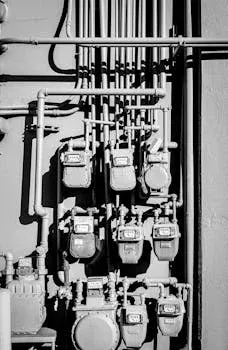
Average daily wastewater flow rate (Q) is the baseline for every capacity calculation. For residential or municipal sites, historical water-meter data is the most reliable source. About 90% of potable water use typically returns as sewage. If a community uses 1,000 m³/day of potable water, estimated average sewage flow is about 900 m³/day.
Industrial sites with variable processes should meter effluent for 7 to 30 days at the discharge point. For a food plant using 800 m³/day of water, estimated sewage is 0.9 × 800 = 720 m³/day when the municipal conversion rate applies. When meters are unavailable, use benchmarks: hospitals often generate 400–600 liters per bed per day, and factories may produce 50–200 liters per employee per day depending on process intensity.
Step 2: Apply Peak Flow Factor
Peak flow factor multiplies average daily flow so the plant can handle short-term surges without hydraulic overload. Continuous industrial discharge often uses factors near 1.5. Residential or municipal systems with morning and evening spikes commonly use factors up to 3.0. For an average flow of 720 m³/day and a peak factor of 2.0, minimum design capacity is 720 × 2.0 = 1,440 m³/day, or 60 m³/h.
Municipal designs usually rely on multi-day hourly flow studies. Industrial plants must review shift changes, batch cycles, and cleaning-in-place (CIP) events, which can spike both volume and strength. Skipping the peak factor invites bypass events and weak removal during the hours that matter most.
How Do You Size a Plant for 1,000,000 People?
A wastewater plant for 1,000,000 people is sized from per-capita flow and organic load, not from population count alone. Using 150–200 L per person per day at 20 °C design assumptions, average dry-weather flow is about 150,000–200,000 m³/day for a fully sewered city of one million residents. At the EU definition of 1 PE = 60 g BOD5 per person per day, domestic organic load equals about 1,000,000 PE when each resident contributes that BOD load.
Apply a municipal peak factor—often 1.5–2.5 depending on catchment size and diurnal pattern—to set hydraulic design capacity. Then size aeration tanks, clarifiers, and sludge handling from the PE load and the chosen process HRT. Large agglomerations need staged trains so one unit can leave service without dropping below treatment targets.
Step 3: Calculate Organic Load Using Population Equivalent (PE)
Population Equivalent converts industrial pollutant load into an equivalent number of people so biological units can be sized fairly. The formula is PE = (Q × BOD5) / P, where Q is average daily flow in m³/day, BOD5 is concentration in kg/m³, and P is per-capita BOD. According to Council Directive 91/271/EEC, 1 p.e. is the organic biodegradable load having a BOD5 of 60 g of oxygen per day (0.06 kg BOD5 per person per day).
For 500 m³/day at 0.2 kg/m³ BOD5 (200 mg/L), PE = (500 × 0.2) / 0.06 = 1,667 PE. Loads above about 1,000 PE often need extended aeration or MBR. Loads under about 500 PE can fit compact A/O packages such as HydropureWater's WSZ series. HydropureWater's WSZ series compact underground sewage treatment unit is rated for flows from 1–80 m³/h when hydraulic and organic loads align.
Step 4: Factor in Hydraulic Retention Time (HRT)
Hydraulic Retention Time sets the minimum biological tank volume needed for microbes to degrade pollutants. HRT = Tank Volume (V) / Flow Rate (Q). For conventional activated sludge or A/O systems, HRT typically ranges from 6 to 8 hours at design temperature near 20 °C to meet common BOD and COD targets. At a peak flow of 60 m³/h and an 8-hour HRT, minimum effective biological volume is 60 × 8 = 480 m³.
Too little HRT leaves BOD/COD high. Excess HRT inflates footprint and civil cost without matching gains. High-biomass high-efficiency MBR systems can often meet stricter effluent goals at HRTs near 4 hours, which helps space-limited sites.
Matching Calculated Capacity to Real Equipment
Equipment selection converts design flow and PE into purchasable trains. WSZ underground integrated units cover calculated flows from 1 to 80 m³/h, suited to average daily flows under 1,920 m³/day after peak factors. For higher-strength waste or tight footprints, DF-series MBR modules typically handle 32 to 135 m³/day each and can be added in parallel. Flows above 200 m³/h (4,800 m³/day) usually need multi-unit layouts or pre-treatment such as Dissolved Air Flotation (DAF) machines when SS or oil and grease are high.
Skid-mounted and containerized packages can cut on-site installation time by 40–60% versus conventional civil construction on comparable projects. The table below maps design flow and PE bands to system types used after you calculate capacity step-by-step for the duty.
| Calculated Design Flow (m³/day) | Organic Load (PE) | Suitable HydropureWater System Type | Key Advantages |
|---|---|---|---|
| 24 - 1,920 | Up to 500 | WSZ Series (Underground Integrated) | Compact footprint, low CAPEX, reliable A/O treatment, easy installation. |
| 32 - 135 (per module) | 500 - 5,000+ | MBR Systems (DF Series Modules) | High effluent quality, smaller HRT, handles high organic loads, modular for expansion. |
| > 4,800 (Multi-unit) | > 5,000 | Custom Engineered Solutions (e.g., DAF pre-treatment + MBR/A/O) | Tailored for complex industrial waste, high SS/O&G removal, scalable. |
Engineers and buyers should match calculated capacity to permit limits and site constraints. For an industrial sizing case on modular units, see Containerized Wastewater Treatment for Food Processing.
Selection checklist before you lock capacity:
- Confirm average daily flow from meters or a 7–30 day campaign.
- Document peak factor from hourly or shift data, not a generic default.
- Convert BOD5 load to PE with the 0.06 kg BOD5 per person per day basis where EU rules apply.
- Set HRT for the chosen process at design temperature and peak flow.
- Check headroom against local capacity-assurance thresholds (for example, NJDEP CAP at 95% of permitted flow).
- Include pre-treatment needs for high SS, oil, or grease before biology.
- Plan modular expansion if growth or batch campaigns are expected within five years.
Who this is for: plant engineers, EPC contractors, and procurement managers sizing municipal or industrial trains from flow and BOD data. Who should look elsewhere: teams needing only drinking-water plant hydraulics or stormwater detention without sewage biology. Next step: assemble flow, BOD5, and peak-factor data, then request a capacity match against WSZ, MBR, or DAF-plus-biology options for your duty.
Frequently Asked Questions
What is 20 KLD?
20 KLD means 20,000 liters per day, equal to 20 m³/day. That capacity often fits a small housing block, clinic, or commercial building with modest sewage generation. Always confirm whether the stated KLD is average flow or peak design capacity before comparing equipment quotes.
How does STP calculate KLD?
STP capacity in KLD starts from estimated average daily wastewater flow in kiloliters. The conversion is direct: 1 KLD equals 1 m³/day. Designers then apply a peak flow factor and organic-load checks so the final rated capacity covers both hydraulic peaks and BOD5 load.
What is the SVI formula?
SVI = (settled sludge volume in mL/L after 30 minutes) / (MLSS in g/L). It describes how well activated sludge settles in secondary clarification during routine plant checks. Well-settling sludge typically shows SVI of 50–150 mL/g under stable aeration and loading conditions.
How to calculate STP capacity in liters?
Multiply daily flow in m³/day by 1,000 to express capacity in liters per day. A 50 m³/day STP therefore equals 50,000 liters per day. State whether the figure is average or peak design flow so vendors size pumps and tanks correctly.
What is the STP design calculation formula?
Hydraulic design capacity (m³/day) = Average Daily Flow (m³/day) × Peak Flow Factor. For biology, PE = (Flow × BOD5) / (per-capita BOD), commonly 0.06 kg BOD5 per person per day under Council Directive 91/271/EEC. Reactor volume then follows from PE load and the process HRT at design conditions.